
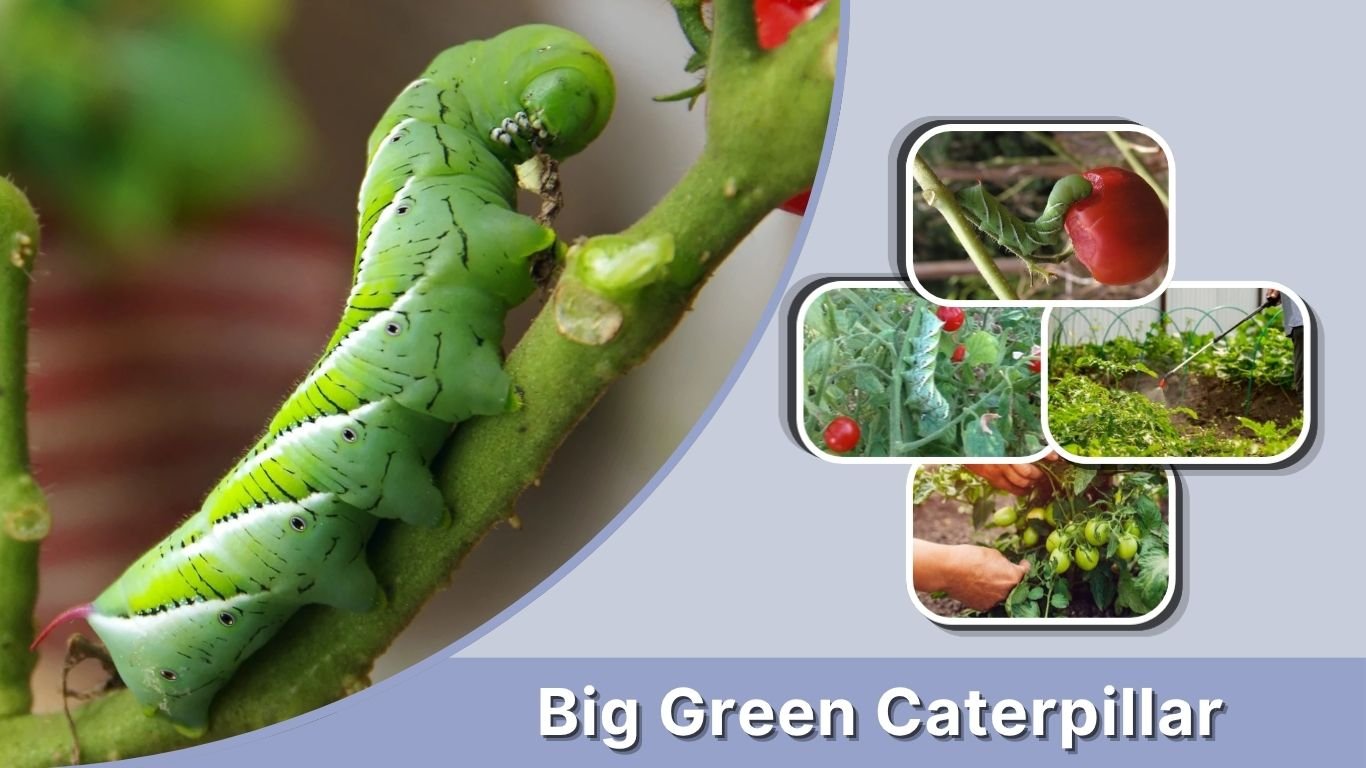
A big green caterpillar can look surprising when you find one on a tomato plant, tree leaf, garden stem, or sidewalk. Many people describe them as big fat green caterpillars, bright green caterpillars, or big green caterpillars with a horn. In many cases, the insect is a hornworm, luna moth caterpillar, or another large moth larva. The easiest way to identify it is by checking its horn, stripes, spots, body texture, and the plant it is eating.
What Is a Big Green Caterpillar?
A big green caterpillar is usually the larval stage of a moth or butterfly, not a separate insect species. The green color helps it blend into leaves, stems, and garden plants. Some are smooth and horned, while others have bumps, small hairs, red dots, yellow markings, or white stripes.
Many searches for “big green caterpillar with horn” point to hornworms, especially tomato hornworms and tobacco hornworms. Tomato hornworms can grow up to about 4 inches long and commonly feed on tomato, potato, eggplant, pepper, and related nightshade plants.
Quick Big Green Caterpillar Identification Guide
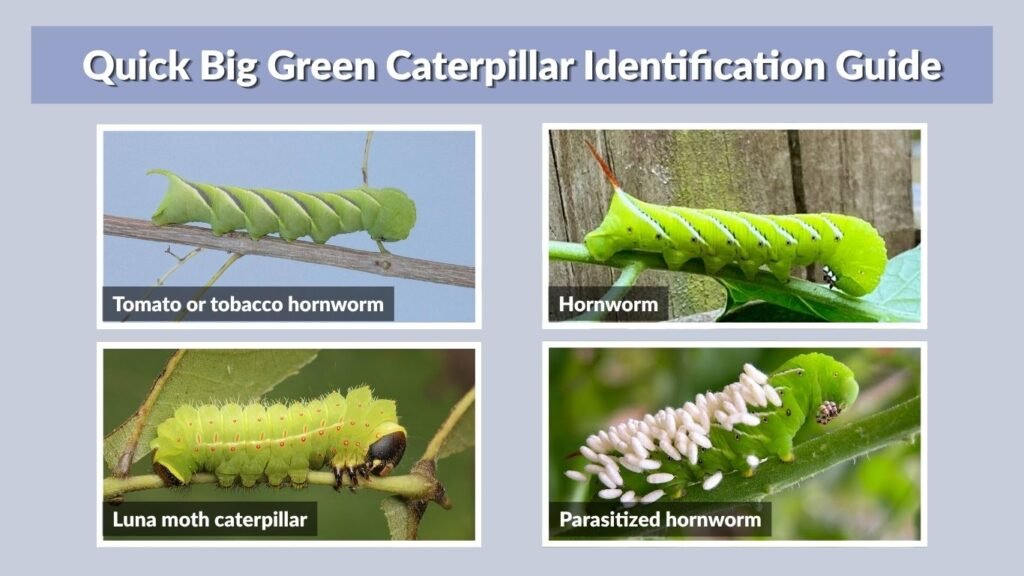
Before removing or touching the caterpillar, look closely at the body shape and markings. A phone photo can help you compare the insect without handling it.
| What You See | Possible Caterpillar | Common Clue |
| Big green caterpillar with horn | Tomato or tobacco hornworm | Often found on tomato, pepper, eggplant, or potato plants |
| Big green caterpillar with white stripes | Hornworm | Diagonal or V-shaped white markings |
| Big green caterpillar with red dots | Luna moth caterpillar | Usually on tree leaves, not tomato plants |
| Big green caterpillar with brown head | Luna moth or other moth larva | Check for yellow lines and reddish-orange dots |
| Big green caterpillar with white eggs on back | Parasitized hornworm | White structures are usually wasp cocoons, not eggs |
| Big green caterpillar with spikes | May be a giant silkworm moth caterpillar | Avoid touching until identified |
| Big green fuzzy caterpillar | Could be a stinging species | Do not handle with bare hands |
Big Green Caterpillar With Horn
A big green caterpillar with a horn is most often a hornworm. The “horn” is located at the rear end of the caterpillar, not the head. It may look sharp, but hornworms do not use it like a stinger.
Tomato Hornworm
The tomato hornworm is a large green caterpillar that often appears on tomato plants. It has pale markings along the body and a dark horn at the end of the abdomen. Tomato hornworms are known for feeding heavily on leaves and fruit, and fully grown caterpillars pupate in soil burrows.
You may find tomato hornworms by looking for:
- Missing tomato leaves
- Chewed fruit
- Dark droppings under the plant
- A thick green body blending with stems
- A horn-like tail at the rear
Tobacco Hornworm
The tobacco hornworm looks very similar to the tomato hornworm. It is also a large green caterpillar with a rear horn and feeds on plants in the nightshade family. Tobacco hornworms are the caterpillars of Carolina sphinx moths, and they have large appetites for leaves and fruit.
In a home garden, you do not always need to identify tomato and tobacco hornworms perfectly before taking action. If a big green caterpillar with a horn is eating tomato or pepper plants, treat it as a hornworm pest.
Big Green Caterpillar on Tomato Plant
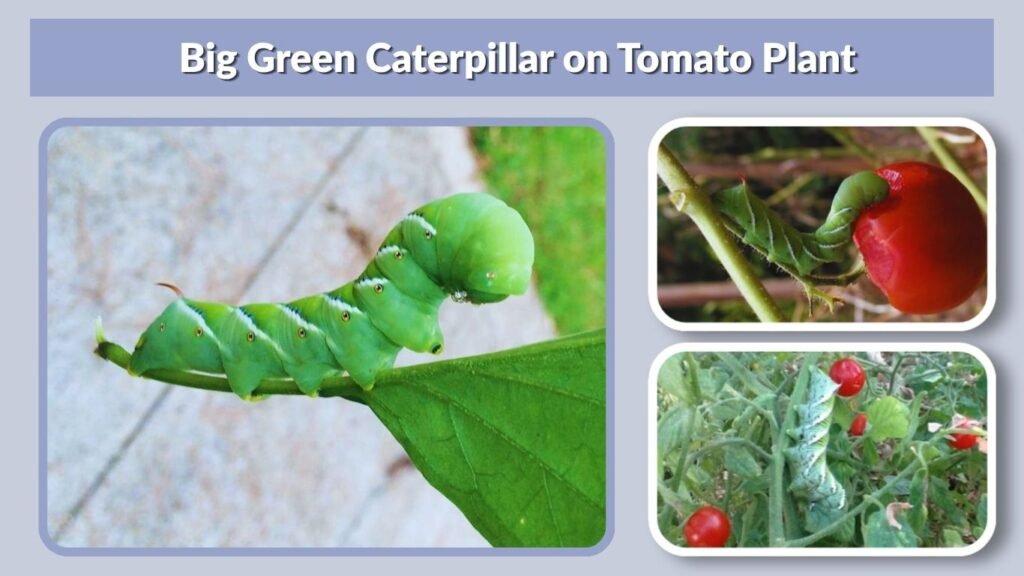
A big green caterpillar on a tomato plant is usually a tomato hornworm or tobacco hornworm. These caterpillars are difficult to see because their green bodies match tomato leaves and stems. Often, the plant damage is easier to notice than the insect itself.
Hornworms are often found chewing tomato leaves and fruit, and university extension guidance recommends hand-removing them from plants when practical. Spraying the plant with water can make the caterpillars move, which helps you spot them more easily.
Look for hornworms:
- Early in the morning
- Near stripped stems
- Under leaves
- Around damaged fruit
- Below fresh dark droppings
If you find only one or two, hand-picking is usually enough. Wear gloves, remove the caterpillar, and place it away from your vegetable garden or into soapy water if you are controlling garden damage.
What Does a Big Green Caterpillar Turn Into?
Most big green caterpillars turn into moths rather than butterflies. Hornworms become sphinx or hawk moths. Luna moth caterpillars become luna moths. Other large green caterpillars may become giant silkworm moths.
Tomato hornworm adults are large, heavy-bodied moths with narrow front wings, mottled gray-brown coloring, yellow spots along the abdomen, and a wingspread of about 4 to 5 inches.
Luna Moth Caterpillar
A big bright green caterpillar with red or orange dots may be a luna moth caterpillar. Luna moth caterpillars are lime green with yellow lines and reddish-orange spots along the sides. They feed on many trees, including birch, walnut, hickory, sweetgum, willow, and other host trees.
Unlike hornworms, luna moth caterpillars are not usually found eating tomato plants. If you see a big lime green caterpillar on a tree leaf rather than a vegetable plant, compare it with luna moth caterpillar features.
Giant Silkworm Moth Caterpillars
Some large green caterpillars with bumps, spikes, or unusual colors belong to the giant silkworm moth family. Saturniid caterpillars can be large, bumpy, knobbed, spiny, or hairy, and many feed on leaves of woody plants.
Because some spiny or hairy caterpillars can irritate skin, avoid touching any unknown big green caterpillar with spikes, colored bumps, or fuzzy hair.
Is a Big Green Caterpillar Poisonous?
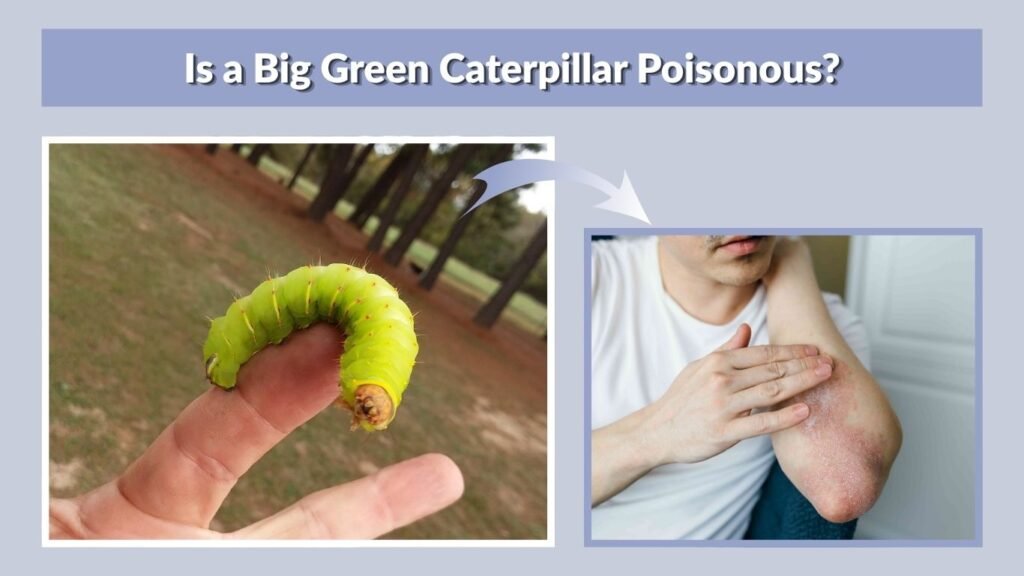
Most smooth green hornworms are not poisonous to people and do not sting. However, that does not mean every big green caterpillar is safe to touch. Some hairy or spiny caterpillars can cause irritation or painful reactions.
Use this simple rule: smooth horned caterpillar on tomato plants usually equals hornworm; fuzzy, hairy, or spiny caterpillars should not be handled bare-handed.
You should avoid touching a caterpillar if it has:
- Dense hair or fur
- Sharp-looking spines
- Bright warning colors
- Unknown identity
- Irritating fluid or odor
- Unusual black, yellow, red, or colored spikes
If you need to move it, use gloves, a leaf, or a small container.
Big Green Caterpillar With White Eggs on Back
A big green caterpillar with white eggs on its back is often a hornworm that has been parasitized by tiny beneficial wasps. The white objects are usually cocoons, not eggs. Parasitoid wasp larvae feed inside a host insect and later form pupae that may be visible outside the insect.
If you see a hornworm covered with white rice-like cocoons, leave it in the garden if possible. That caterpillar will usually stop feeding and die, while the wasps help control future hornworms naturally.
How to Get Rid of Big Green Caterpillars on Plants
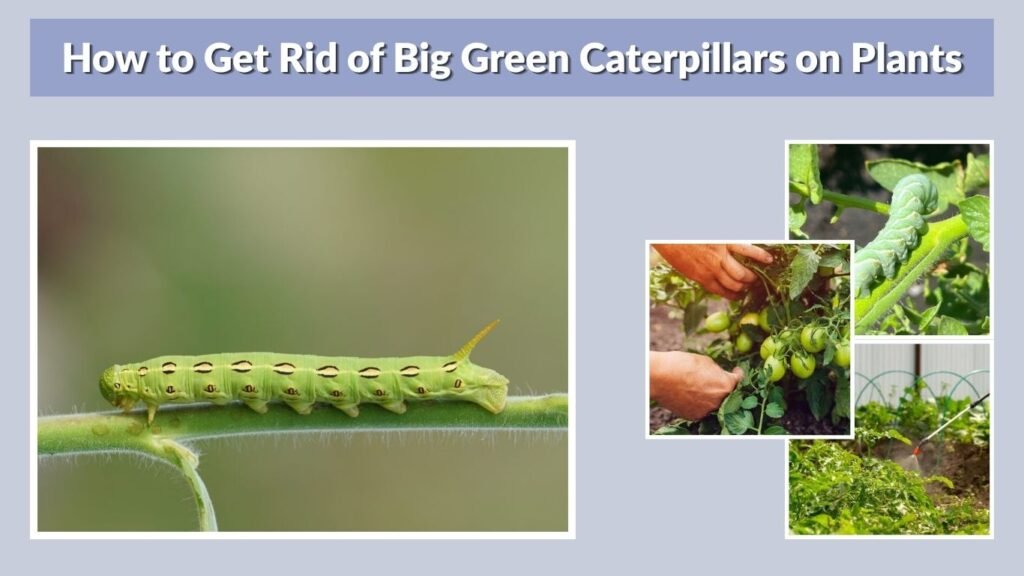
If the caterpillar is damaging vegetables, control it early. Large hornworms can strip leaves quickly, especially when they are close to full size.
Useful control steps include:
- Inspect tomato and pepper plants every few days.
- Look under leaves and along stems.
- Spray plants with water to make hidden hornworms move.
- Hand-pick caterpillars while wearing gloves.
- Leave parasitized hornworms with white cocoons in place.
- Avoid broad insecticides when beneficial insects are active.
- Remove weeds in the nightshade family near the garden.
Hornworms can defoliate plants quickly because they have large appetites, especially as they grow. For a small home garden, regular inspection and hand removal are often the most practical methods.
Big Green Caterpillar by Location
Searches such as big green caterpillars Texas, Arizona, Florida, California, Virginia, Michigan, Minnesota, Ohio, Pennsylvania, and North Carolina usually have the same identification problem: the caterpillar’s markings matter more than the state.
In warm regions, gardeners may see hornworms for a longer season. In wooded areas, people may find luna moth caterpillars or other large moth larvae on trees. On vegetable plants, focus on hornworms. On hardwood trees, compare the caterpillar with luna moth, polyphemus moth, cecropia moth, or other large moth larvae.
FAQs
What is the big green caterpillar with a horn?
A big green caterpillar with a horn is usually a tomato hornworm or tobacco hornworm. The horn is on the rear end, and these caterpillars often feed on tomato, pepper, potato, and eggplant plants.
What does a big green caterpillar turn into?
Most big green caterpillars turn into moths. Tomato hornworms become five-spotted hawk moths, tobacco hornworms become Carolina sphinx moths, and luna moth caterpillars become pale green luna moths.
Is a big green caterpillar poisonous?
A smooth green hornworm is not considered poisonous to people, but unknown caterpillars should still be handled carefully. Avoid touching fuzzy, hairy, spiny, or brightly marked caterpillars with bare hands.
Why is there a big green caterpillar on my tomato plant?
It is probably feeding on the plant. Hornworms chew tomato leaves and fruit and can be difficult to see because their green bodies blend into the foliage.
Should I remove a hornworm with white things on its back?
No, it is usually better to leave it. The white rice-like objects are usually parasitoid wasp cocoons, and those wasps can help reduce future caterpillar problems naturally.
