
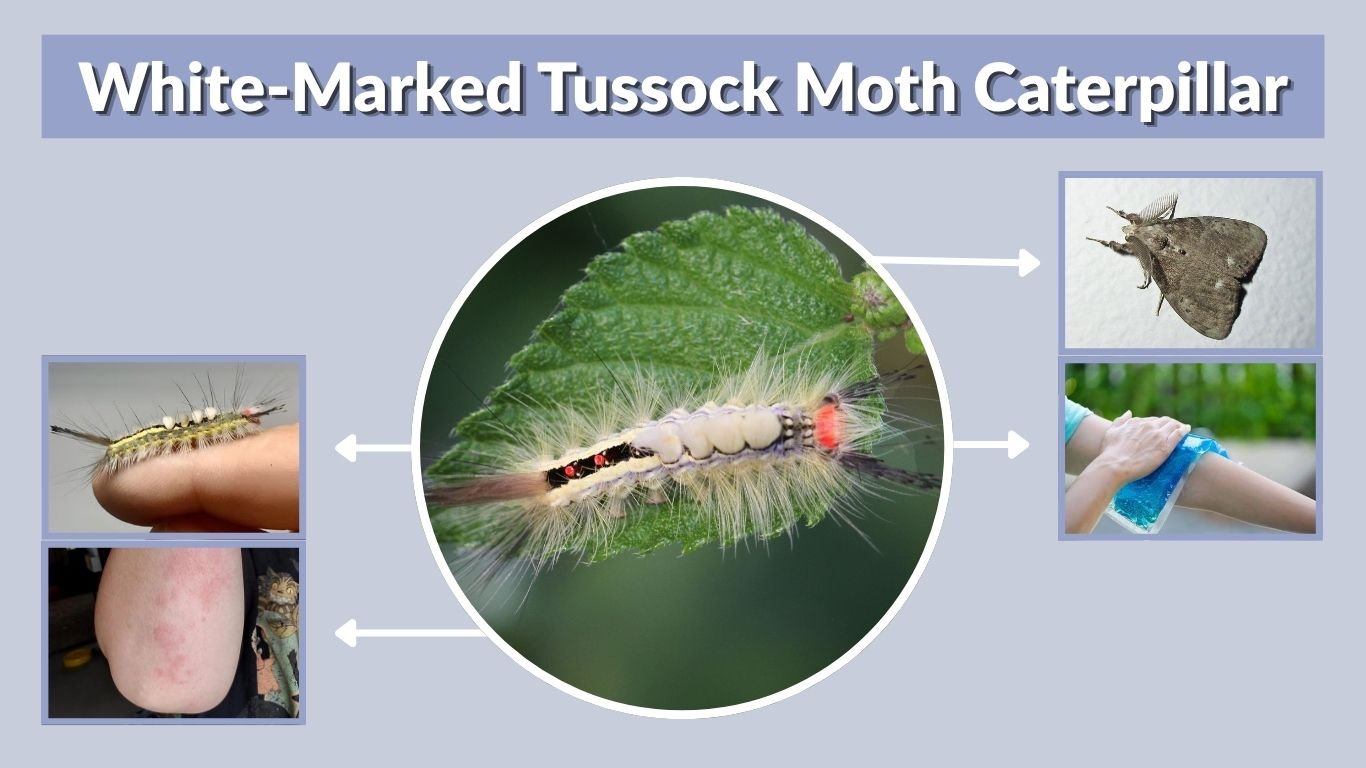
The white-marked tussock moth caterpillar is one of the most eye-catching hairy caterpillars in North America. Its bright head, white “toothbrush” tufts, black hair pencils, and yellowish body make it easy to notice on trees, fences, decks, and outdoor furniture. But this caterpillar should not be handled. It is not a stinging insect like a wasp, but its irritating hairs can cause itching, redness, and rash in sensitive people.
What Is a White-Marked Tussock Moth Caterpillar?
The white-marked tussock moth caterpillar is the larval stage of the moth Orgyia leucostigma. It is a native insect that can suddenly become locally abundant, especially when weather and food conditions support a large hatch. NC State Extension notes that this species overwinters as eggs, hatches in spring, feeds for several weeks, and later pupates in grayish cocoons.
Although people often search for “white marked tussock moth caterpillar poisonous,” the better word is irritating. The caterpillar does not chase, bite, or inject venom. The problem is its fine hairs, called setae. Some of these hairs can irritate skin and may cause dermatitis, especially in children or people with sensitive skin.
| Quick Fact | Details |
| Common name | White-marked tussock moth caterpillar |
| Scientific name | Orgyia leucostigma |
| Main concern | Irritating hairs that can cause rash |
| Common season | Spring to early summer, and again late summer/fall in some areas |
| Host plants | Many hardwood trees and some conifers |
| Should you touch it? | No, avoid direct contact |
White-Marked Tussock Moth Caterpillar Identification
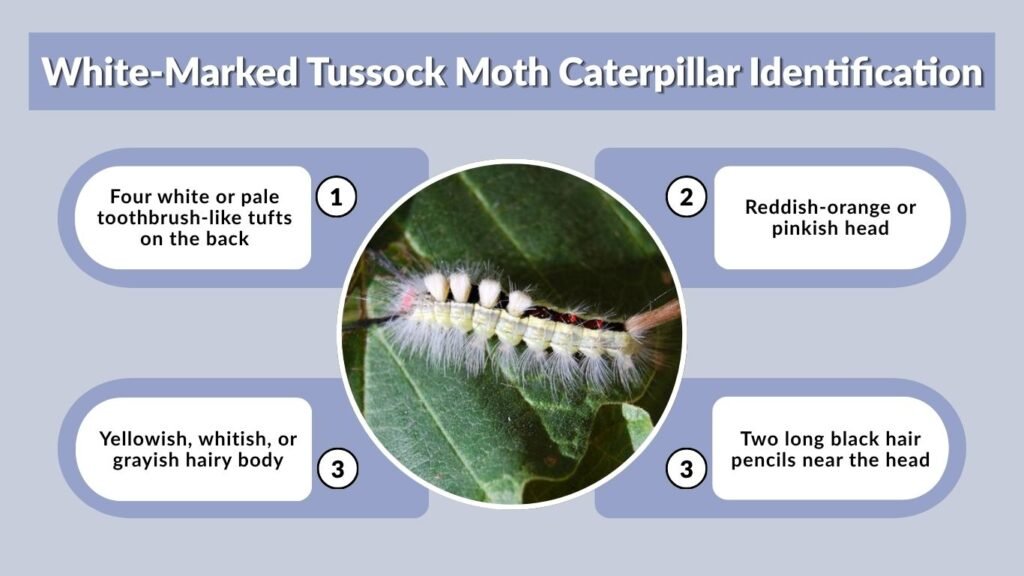
This caterpillar is colorful and easy to identify once you know the main features. It is often described as a “toothbrush caterpillar” because of the dense white tufts along its back. Mature caterpillars are usually around 1.3 to 1.5 inches long, with a reddish or pinkish head, long black hair pencils, and pale body hairs.
Key Identification Features
Look for these signs:
- Four white or pale toothbrush-like tufts on the back
- Reddish-orange or pinkish head
- Two long black hair pencils near the head
- One dark hair tuft at the rear end
- Yellowish, whitish, or grayish hairy body
- Black stripe or dark markings along the back
- Small red bumps or red spots on the body
These markings help separate it from woolly bears, hickory tussock moth caterpillars, fall webworms, and other fuzzy caterpillars. The white-marked tussock moth caterpillar has a more “decorated” look, while many other hairy caterpillars look more evenly fuzzy.
Is the White-Marked Tussock Moth Caterpillar Poisonous?
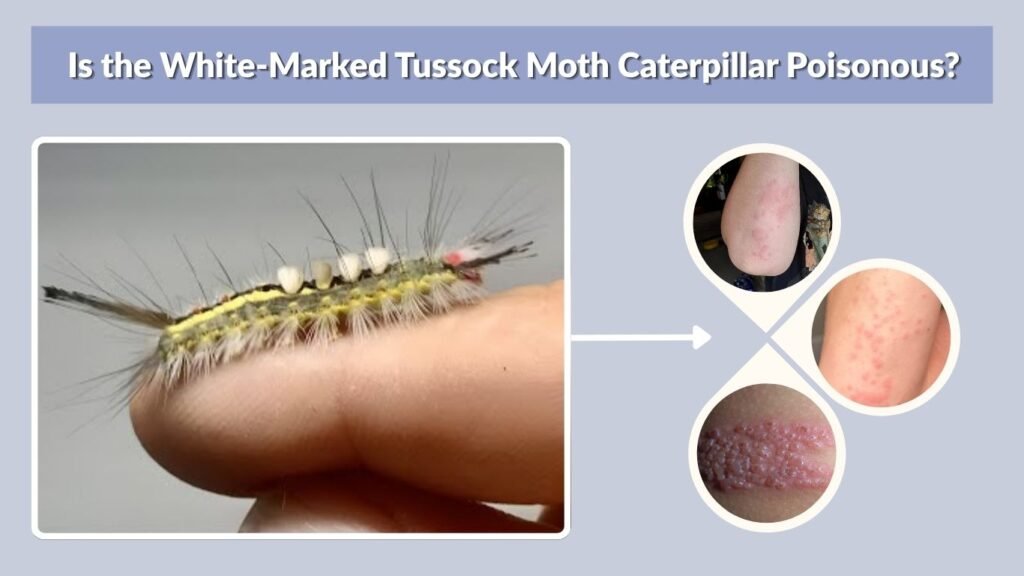
The white-marked tussock moth caterpillar is often called poisonous, venomous, or stinging online. In normal garden language, people use these words to mean “can hurt your skin.” Scientifically, it is not poisonous in the same way a toxic plant or venomous snake is. The real issue is contact with its irritating hairs.
Some of the hairs can break off and become embedded in the skin. ACEP Now describes the hairs of white-marked tussock moth caterpillars as structures that can injure skin, eyes, and mucous membranes, so they should be avoided rather than handled.
Sting, Bite, or Rash?
A white-marked tussock moth caterpillar does not truly sting like a bee. It also does not bite people in the usual sense. However, when its hairs touch skin, people may describe the feeling as a “sting” because it can burn, itch, or prickle.
| Search Term | Better Explanation |
| Caterpillar sting | Irritation from hairs, not a true sting |
| Caterpillar bite | Rarely accurate; rash is usually from hairs |
| Poisonous caterpillar | Better described as irritating or rash-causing |
| Venomous caterpillar | Not the best term for this species |
| Rash | Common reaction in sensitive people |
White-Marked Tussock Moth Caterpillar Rash Symptoms
A rash may appear within minutes to a few hours after contact. Symptoms can vary from mild to uncomfortable depending on skin sensitivity, contact area, and how many hairs touched the skin. Reactions may include:
- Redness
- Itching
- Burning or prickling feeling
- Small bumps
- Swelling
- Tender skin
- Irritation after touching clothes, furniture, or cocoons with hairs on them
Children are more likely to react because they may pick up colorful caterpillars or brush against them while playing. Cocoons may also contain irritating hairs and can cause symptoms even after the caterpillar is gone. NC State Extension notes that contact with cocoons can produce similar symptoms.
White-Marked Tussock Moth Caterpillar Rash Treatment
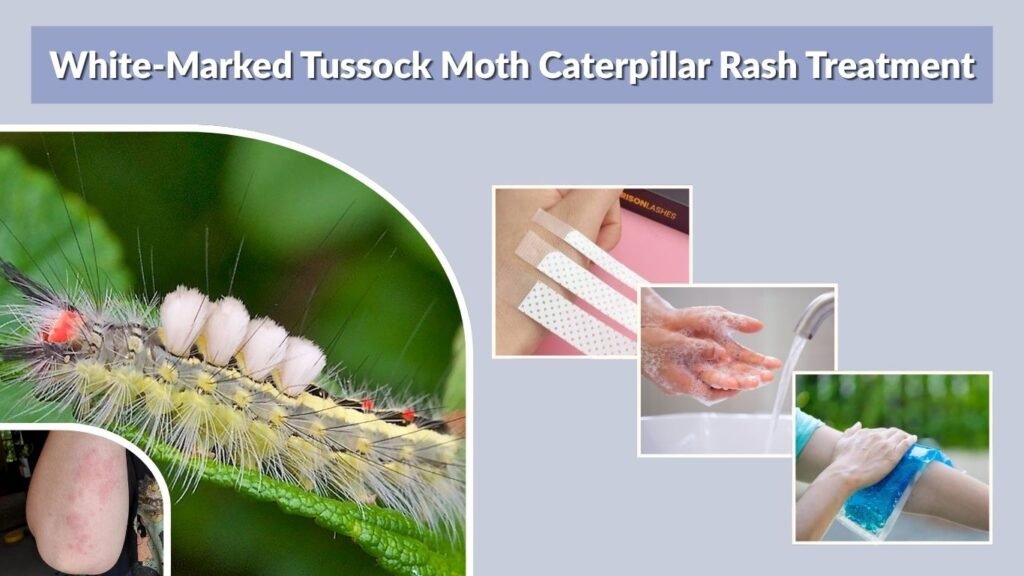
If you touch a white-marked tussock moth caterpillar, act quickly but gently. Do not rub the area because rubbing may push hairs deeper into the skin.
Poison Control recommends removing caterpillar hairs with tape, washing the area with soap and water, and treating the symptoms after the hairs are removed.
Step-by-Step Treatment
- Remove the caterpillar without bare hands. Use a stick, paper, gloves, or another object.
- Use tape on the skin. Place sticky tape over the affected area and lift it off to remove tiny hairs.
- Repeat with fresh tape. Do this several times if the area still feels prickly.
- Wash with soap and water. Clean the area gently.
- Apply a cold pack. Wrap ice in a cloth and place it on the skin for short periods.
- Use anti-itch support if needed. Over-the-counter hydrocortisone cream or an oral antihistamine may help some people, but follow label directions.
- Avoid scratching. Scratching can worsen irritation and may increase the chance of infection.
Get medical help if the rash is severe, spreads widely, involves the eyes or mouth, causes breathing trouble, or affects a young child or pet.
Where Do White-Marked Tussock Moth Caterpillars Live?
White-marked tussock moth caterpillars are common in eastern North America and may be found in yards, parks, wooded edges, schoolyards, orchards, and landscaped areas. They are often noticed when they wander away from host plants to find a safe place to spin a cocoon.
They may show up on:
- Tree trunks
- Decks and porches
- Patio furniture
- Fences
- Siding
- Outdoor toys
- Mailboxes
- Sidewalks under trees
University of Minnesota Extension lists them on many hardwood trees, including apple, basswood, birch, elm, maple, and poplar, and sometimes on conifers such as fir and spruce. It also notes they may be present from May to June and again from August to September in some regions.
What Does a White-Marked Tussock Moth Caterpillar Eat?
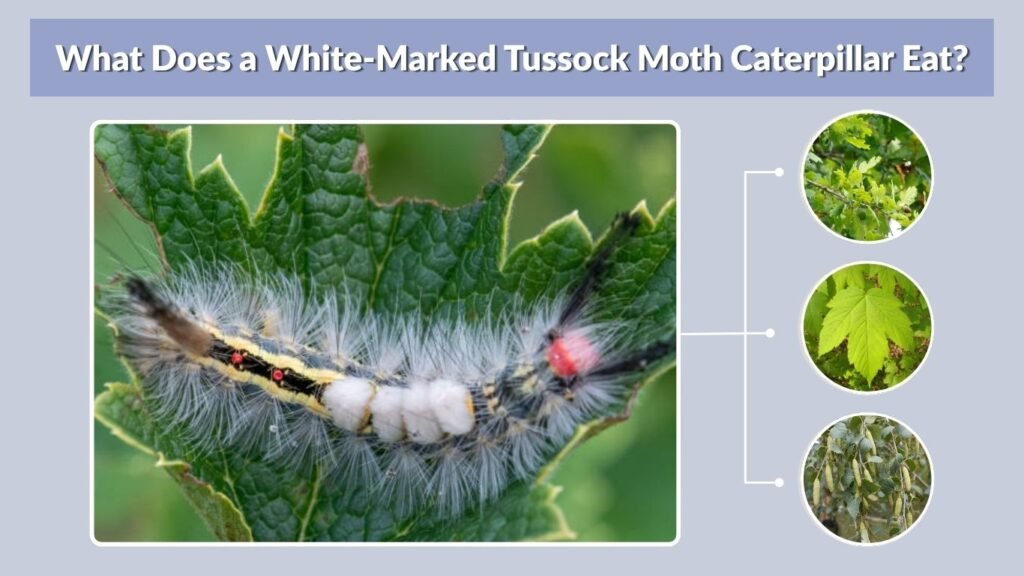
The white-marked tussock moth caterpillar feeds on the leaves of many trees and shrubs. It is not a picky eater. NC State Extension reports host records from plants in many genera, with oak, cherry, hackberry, and willow among common hosts in North Carolina.
Common host plants include:
- Oak
- Maple
- Birch
- Elm
- Apple
- Cherry
- Willow
- Poplar
- Basswood
- Hackberry
- Fir
- Spruce
Young caterpillars may scrape leaf surfaces, while older caterpillars chew larger sections of leaves. A few caterpillars usually do not cause serious plant damage. However, during local outbreaks, many caterpillars feeding together may cause noticeable defoliation.
White-Marked Tussock Moth Caterpillar Life Cycle
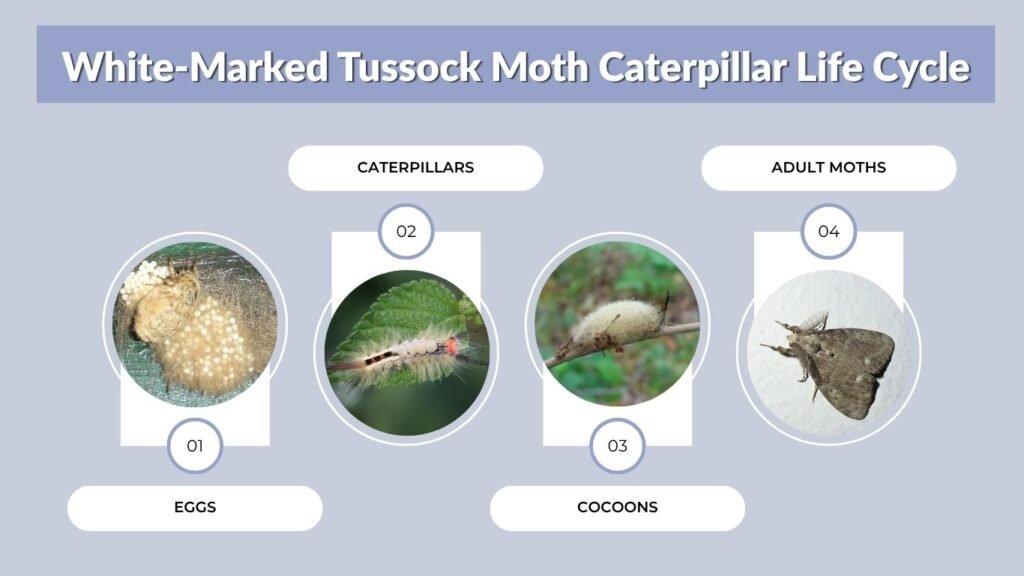
The life cycle helps explain why people may suddenly see many caterpillars at once. Eggs survive through winter, then hatch when warm weather and fresh leaves return.
Eggs
Females lay eggs in a mass on or near the old cocoon. Mississippi State University Extension explains that female moths are wingless, so they stay near the cocoon, mate, and lay eggs there under a protective covering.
Caterpillars
After hatching, the tiny caterpillars begin feeding. Some young caterpillars hang from silk threads and can be carried by wind, a process called ballooning. This helps them spread to new plants and can explain why they appear on decks, fences, or outdoor surfaces.
Cocoons and Adult Moths
Mature caterpillars spin cocoons in sheltered places. Adults emerge later. Male moths have wings and can fly, but female moths are wingless or nearly wingless. NC State Extension notes that females lay egg masses on the cocoon and cover them with a protective material.
How to Get Rid of White-Marked Tussock Moth Caterpillars
Control is usually only needed when caterpillars are numerous, close to children, causing repeated skin reactions, or damaging valuable plants. In many yards, the best approach is simple avoidance and removal of visible cocoons or caterpillars without touching them.
Safe Control Methods
Use these methods first:
- Do not handle caterpillars with bare hands. Wear gloves, long sleeves, and eye protection if removing them.
- Knock small numbers into soapy water. Use a stick or disposable tool.
- Remove old cocoons carefully. Cocoons may contain irritating hairs.
- Wash outdoor furniture and play equipment. This helps remove loose hairs.
- Keep children and pets away from infested trees or decks.
- Prune small infested branches when practical. Bag and discard them.
NC State Extension says sprays work best when caterpillars are young and actively feeding; mature wandering caterpillars are harder to control and may already be finished feeding. Bacillus thuringiensis products may help on young caterpillars, and pyrethroids can also affect young larvae when used according to label directions.
For tall trees or heavy outbreaks, contact a licensed arborist or pest control professional rather than trying to spray high into the canopy.
Are White-Marked Tussock Moth Caterpillars Dangerous to Dogs?
White-marked tussock moth caterpillars may irritate dogs if they sniff, lick, chew, or swallow them. The hairs can bother the mouth, nose, tongue, lips, or skin. A dog may drool, paw at its mouth, sneeze, cough, vomit, or act uncomfortable after contact.
If your dog touches one, remove any visible caterpillar material without rubbing, rinse the mouth gently if safe, and call a veterinarian if symptoms continue. Get urgent veterinary help if your dog has swelling around the face, trouble breathing, repeated vomiting, or eye contact.
FAQs
Is the white-marked tussock moth caterpillar poisonous?
It is better described as irritating rather than poisonous. Its hairs can cause rash, itching, and burning in sensitive people. Avoid touching it with bare skin.
Does the white-marked tussock moth caterpillar sting?
It does not sting like a bee or wasp. People often call it a sting because the hairs can cause a sharp, itchy, or burning reaction.
What should I do if I get a rash from one?
Use tape to lift off tiny hairs, wash the area with soap and water, apply a cold pack, and avoid scratching. Seek medical help for severe rash, eye contact, breathing symptoms, or reactions in young children.
What does the white-marked tussock moth caterpillar eat?
It eats many tree and shrub leaves, including oak, maple, birch, elm, apple, cherry, willow, poplar, basswood, and sometimes conifers such as fir and spruce.
How do I prevent them around my house?
Avoid handling them, remove visible cocoons with gloves, clean outdoor furniture and play equipment, keep children away from infested areas, and treat young caterpillars early if they are causing problems.
