
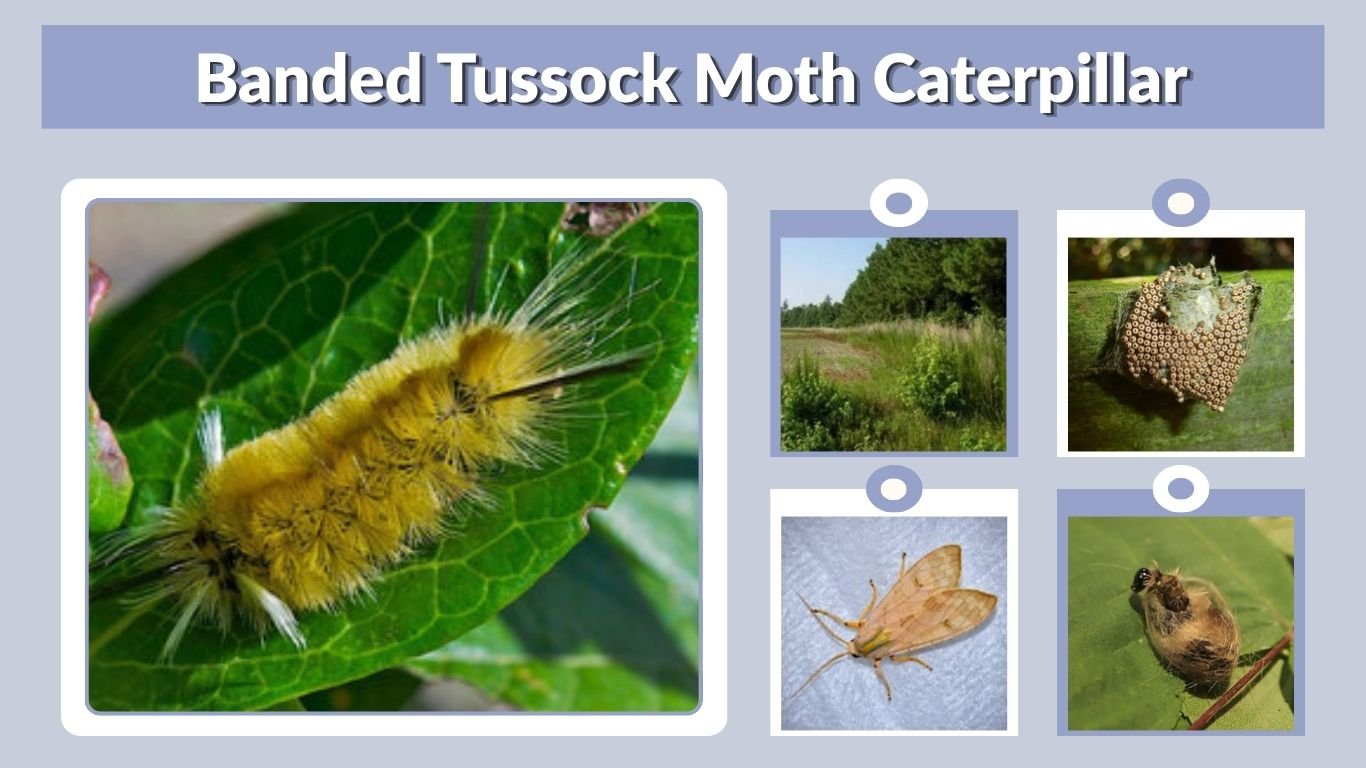
The banded tussock moth caterpillar is a fuzzy, eye-catching larva often found on trees and shrubs in late summer and fall. Many people notice its long black and white hair pencils and wonder whether it is poisonous, dangerous, or safe to touch. This caterpillar is not a stinging insect like a bee, but its hairs may irritate sensitive skin. This guide explains identification, habitat, diet, rash risk, life cycle, and safe handling.
What Is a Banded Tussock Moth Caterpillar?
The banded tussock moth caterpillar is the larval stage of the banded tussock moth, Halysidota tessellaris. It is also called the pale tiger moth in some references. The species belongs to the family Erebidae and subfamily Arctiinae, a group that includes many tiger moths and related fuzzy caterpillars.
Quick Facts
| Feature | Details |
| Common name | Banded tussock moth caterpillar |
| Scientific name | Halysidota tessellaris |
| Other common name | Pale tiger moth |
| Family | Erebidae |
| Caterpillar season | Usually July to October |
| Adult wingspan | About 40–45 mm |
| Main concern | Skin irritation from hairs |
| Diet | Leaves of many trees and shrubs |
Why It Is Called “Banded”
The adult moth has pale yellow-tan or cream-colored wings with a checkered, banded pattern. BugGuide explains that “tessellaris” comes from a Latin word connected with little square stones, referring to the mosaic-like wing pattern.
Banded Tussock Moth Caterpillar Identification
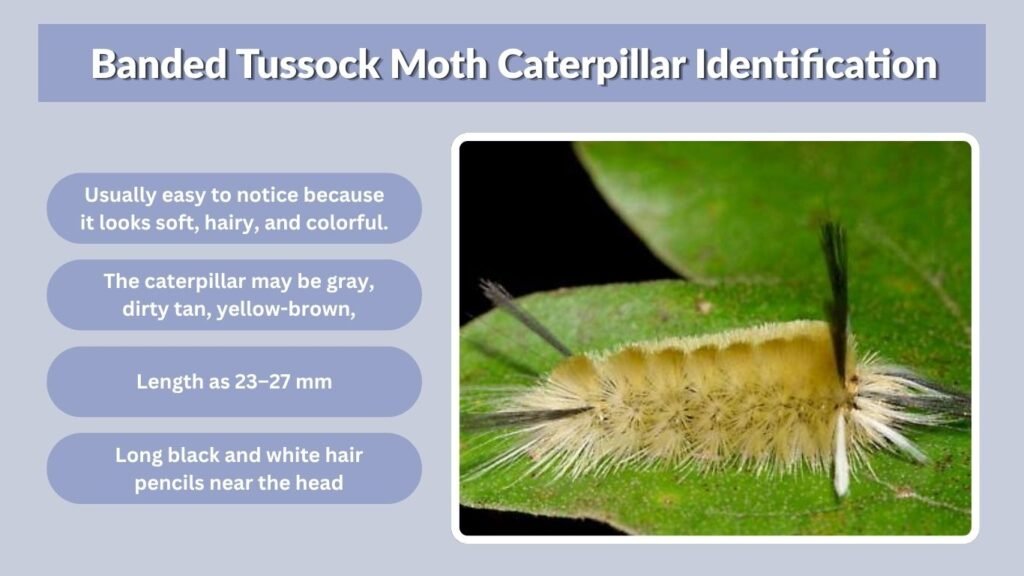
This caterpillar is usually easy to notice because it looks soft, hairy, and colorful. However, fuzzy caterpillars can be confusing, and several tussock moth species look similar. A good photo can often help identify the larva, but adults may be much harder to separate from related species.
Color and Markings
The caterpillar may be gray, dirty tan, yellow-brown, or pale yellowish. Its body is covered with dense feathery hairs. The most noticeable features are the long black and white hair pencils near the front and rear of the body. The Missouri Department of Conservation describes the caterpillar as having darker tufts along the middle of the back and black-and-white hair pencils.
Common identification points include:
- Fuzzy body covered with fine hairs
- Yellowish, gray, tan, or brown body color
- Long black and white hair pencils near the head
- Additional longer hair pencils near the rear
- Darker line or tufts along the back
- Bright orange or dark head may be partly hidden by hairs
Size
The adult moth has a wingspan of about 40–45 mm, while the caterpillar is a medium-sized fuzzy caterpillar when mature. BugGuide lists adult forewing length as 23–27 mm and notes that caterpillars are most often seen from July through October.
Similar Caterpillars
Banded tussock moth caterpillars may be confused with hickory tussock moth caterpillars, sycamore tussock moth caterpillars, white-marked tussock moth caterpillars, and other fuzzy larvae. The adult banded tussock moth is also very similar to the sycamore tussock moth, and specialists may need close examination to separate some adults.
Is the Banded Tussock Moth Caterpillar Dangerous?
The banded tussock moth caterpillar is not considered dangerously venomous like some medically important stinging caterpillars. The main risk is skin irritation from its hairs. The University of Maine Extension explains that prickly hairs on many tussock caterpillars are a defense mechanism and are not poisonous or venomous, although they can cause an itchy rash.
Does It Sting?
It does not sting like a wasp or bee. The “sting” people describe usually comes from irritating hairs or setae contacting the skin. DermNet notes that caterpillar and moth hairs can cause dermatitis, itchy bumps, swelling, redness, and sometimes blister-like reactions in sensitive people.
Is It Poisonous?
For people, the better word is “irritating,” not poisonous. You should avoid touching it because the hairs can break off and irritate skin, especially in children or sensitive individuals. Some adult tiger moths can carry defensive chemicals gained from host plants, but that does not mean the caterpillar should be handled casually. The Missouri Department of Conservation notes that the adult moth can accumulate toxic alkaloids from plants eaten as a caterpillar.
Banded Tussock Moth Caterpillar Rash
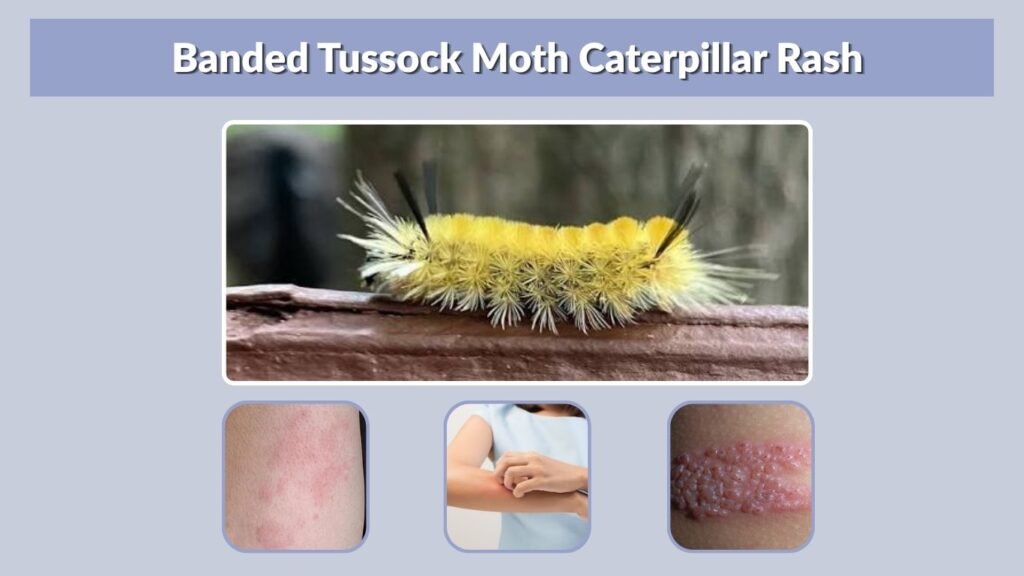
A rash from a fuzzy caterpillar can look like small red bumps, itching, swelling, or a burning sensation. Reactions vary widely. Some people barely react, while others develop a more uncomfortable rash.
Rash Symptoms
Possible symptoms include:
- Itching
- Red bumps
- Mild swelling
- Burning or stinging feeling
- Tender skin
- Blister-like irritation in sensitive people
The reaction may be short-lived, but some caterpillar-hair reactions can last longer depending on the species and the person’s sensitivity. University of Maine Extension notes that children may be more susceptible because they are more likely to handle showy caterpillars.
What to Do If You Touch One
If the hairs get on your skin, avoid rubbing or scratching. Use tape to gently lift off loose hairs, then wash the area with soap and water. Ice or a cool compress may help reduce itching and burning. University of Florida guidance for tussock moth irritation also mentions adhesive tape for removing remaining hairs and ice for pain and itching.
Seek medical advice if the rash spreads widely, becomes very painful, affects the eyes, causes breathing trouble, or does not improve.
Banded Tussock Moth Caterpillar Habitat and Range
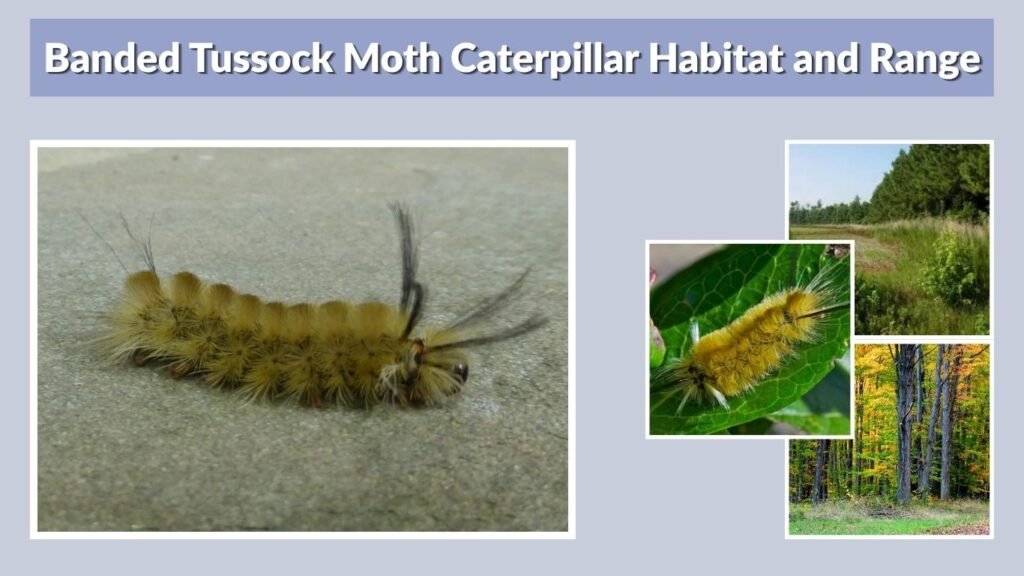
The banded tussock moth is mostly associated with deciduous woods, yards, forest edges, and places where its host trees and shrubs grow. BugGuide lists the range as the eastern three-quarters of North America, absent west of the Rockies.
Where You May Find It
You may see the caterpillar on:
- Oak trees
- Hickory trees
- Walnut trees
- Willow trees
- Birch trees
- Elm trees
- Shrubs and woody vines
- Leaves in yards, parks, and woodland edges
Adults are attracted to lights, so people may notice the moth near porch lights or outdoor lamps. BugGuide describes the habitat as deciduous woods and notes that adults are attracted to artificial light.
Banded Tussock Moth Caterpillar Diet and Food Plants
The banded tussock moth caterpillar feeds on leaves of many trees and shrubs. It is a generalist feeder, meaning it can use many host plants instead of depending on only one plant species.
What Do Banded Tussock Moth Caterpillars Eat?
BugGuide lists larval food plants including alder, ash, birch, elm, hazel, hickory, oak, poplar, tulip tree, walnut, and willow. Moths of North Carolina also describes the larvae as polyphagous on woody shrubs and trees and records host plants such as box-elder, milkweed, birch, hickory, persimmon, ash, walnut, sweetgum, tuliptree, muscadine, sourwood, oak, locust, willow, and elm.
| Food Plant Type | Examples |
| Common trees | Oak, hickory, walnut, ash, birch, elm |
| Wet-area trees | Willow, alder, poplar |
| Yard/forest trees | Tulip tree, sweetgum, locust |
| Shrubs/vines | Hazel, grape/muscadine, sourwood |
Does It Damage Trees?
Usually, it is not a major tree pest. A few caterpillars may chew leaves, but they rarely cause serious damage to healthy established trees. Late-season leaf feeding often looks more alarming than it is because trees are already near the end of their growing season.
Life Cycle of the Banded Tussock Moth
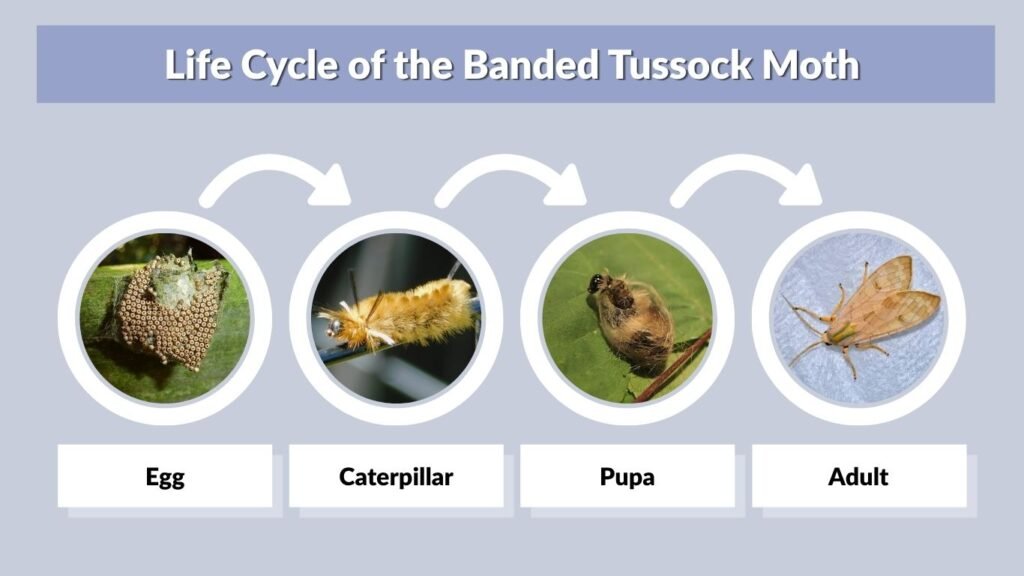
The banded tussock moth develops through the usual moth stages: egg, caterpillar, pupa, and adult. The caterpillar stage gets the most attention because it is fuzzy and more visible on leaves.
Caterpillar Season
Caterpillars are generally seen from July to October. Adults fly from May to August in many areas, and in the South they may fly later into the season. BugGuide notes one generation per year in the North and two generations in the South.
Cocoon and Pupa
When the caterpillar is ready to pupate, it spins a cocoon. Tussock moth cocoons can include larval hairs, which means cocoons may also irritate skin. University of Florida notes that hairs from tussock moth caterpillars can end up in cocoons and make the cocoons allergenic for some people.
Adult Moth
The adult moth is pale yellow-tan or cream-colored with checkered bands on the wings. The top of the thorax may show a pale orange stripe with thinner turquoise lines. This adult pattern is one reason the species is called “tessellated” or “banded.”
Can You Touch a Banded Tussock Moth Caterpillar?
It is best not to touch it with bare hands. Even if you do not react strongly, another person may develop itching or redness. Children should be taught to admire fuzzy caterpillars without picking them up.
Safe handling tips:
- Do not touch fuzzy caterpillars with bare skin.
- Use a leaf, stick, or paper to move one gently.
- Wear gloves if removal is needed.
- Do not crush caterpillars with bare hands.
- Avoid touching cocoons directly.
- Wash hands and clothing after contact with caterpillar hairs.
How to Remove One Safely
If a caterpillar is on a walkway, porch, or outdoor furniture, move it without direct contact. Use a leaf, cardboard, stick, or gloved hand. If there are many caterpillars on a small tree, avoid spraying unless they are causing serious damage. Most sightings are temporary and part of the normal seasonal life cycle.
For cocoons, wear long sleeves and gloves. University of Florida recommends protective clothing when removing tussock moth cocoons because exposed hairs can irritate skin.
FAQs
Are banded tussock moth caterpillars poisonous?
They are not considered poisonous or venomous to people in the usual sense. The main concern is that their hairs can irritate skin and cause an itchy rash in sensitive people.
Do banded tussock moth caterpillars sting?
They do not sting like bees or wasps. Their hairs can cause a sting-like, itchy, or burning skin reaction when they touch bare skin.
What do banded tussock moth caterpillars eat?
They eat leaves of many trees and shrubs, including oak, hickory, walnut, ash, birch, elm, willow, poplar, alder, hazel, and tulip tree.
When are banded tussock moth caterpillars active?
The caterpillars are usually seen from July through October. Adults fly mainly from May to August, with a longer season in warmer southern areas.
Can a banded tussock moth caterpillar rash be serious?
Most reactions are mild, but some people can develop stronger itching, swelling, or blister-like irritation. Get medical help if symptoms are severe, spread widely, affect the eyes, or involve breathing problems.
