
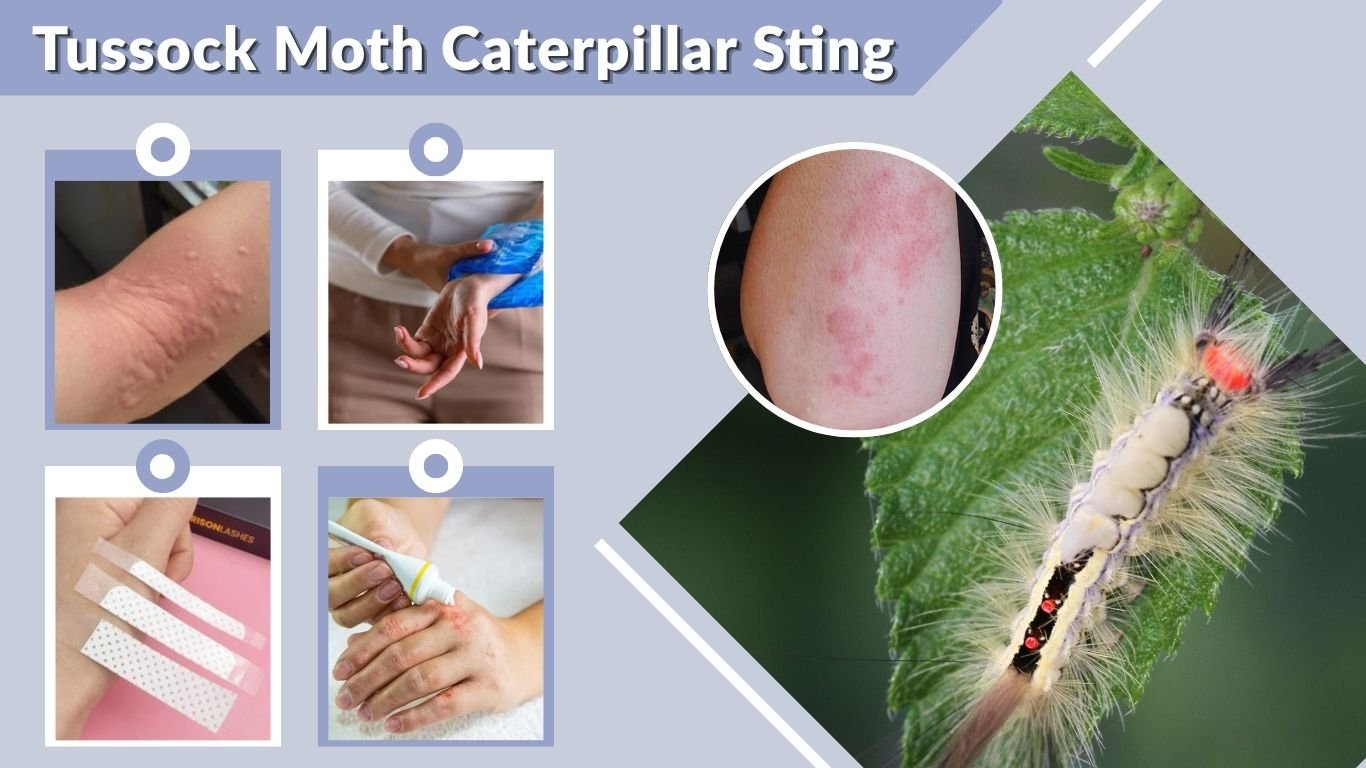
Tussock moth caterpillars look soft and harmless, but their fuzzy hairs can irritate skin. Many people call this a “sting,” although the reaction usually comes from tiny irritating hairs or spines touching the skin. Some species cause only mild itching, while others may cause burning, redness, swelling, or a rash. This guide explains tussock moth caterpillar sting symptoms, treatment, risky species, pet concerns, and how to avoid contact safely.
What Is a Tussock Moth Caterpillar Sting?
A tussock moth caterpillar sting is usually a skin reaction caused by contact with the caterpillar’s hairs, also called setae. These hairs can break off, stick in the skin, and cause irritation. DermNet explains that caterpillar and moth hairs can trigger reactions ranging from mildly itchy red bumps to more widespread blistering or eczema-like rashes in some people.
| Feature | Details |
| Main cause | Contact with irritating hairs or spines |
| Common symptoms | Itching, redness, burning, swelling |
| Most affected areas | Hands, arms, neck, face, legs |
| Serious reactions | Possible but uncommon |
| Best first step | Remove hairs, wash skin, apply cold compress |
Do Tussock Moth Caterpillars Really Sting?
Some tussock moth caterpillars do not sting in the same way as bees or wasps. They do not have a stinger, but their hairs can cause a sting-like feeling. The University of Florida notes that symptoms from stinging caterpillars can include burning, stinging, itching, redness, and inflammation.
Why Fuzzy Caterpillars Can Cause Rash
The fuzzy hairs are a defense system. When touched, the hairs can lodge in the skin or release irritating substances. Rubbing the area can make the irritation worse because it pushes hairs deeper into the skin.
Tussock Moth Caterpillar Sting Symptoms
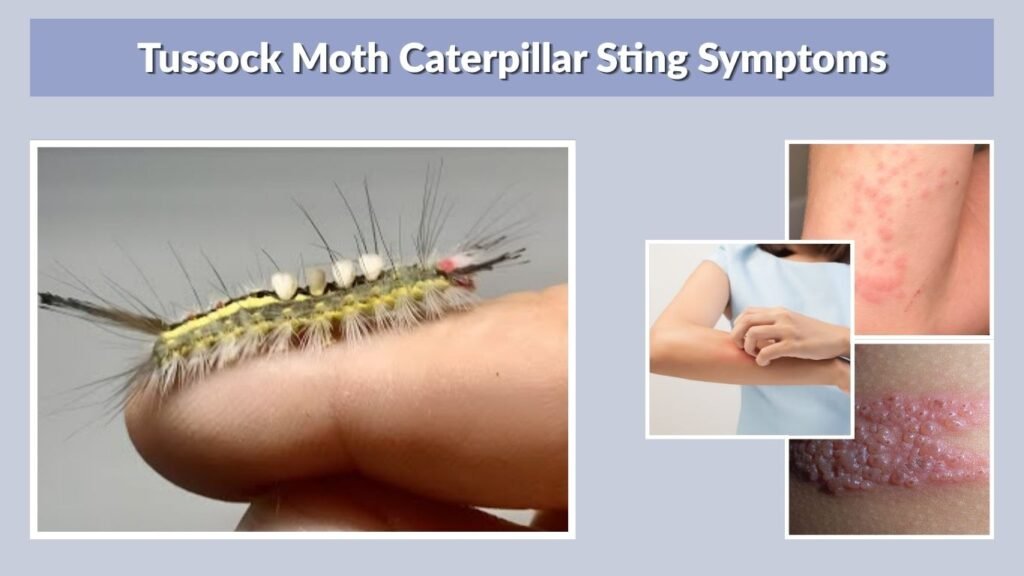
Symptoms can vary by species and by person. Some people feel only mild itching, while sensitive people may develop a stronger rash. The Eastern Ontario Health Unit says hickory tussock moth caterpillar contact can cause reactions similar to nettles or poison ivy, ranging from slight redness to burning, swelling, and pain.
Common Symptoms
A tussock moth caterpillar sting may cause:
- Itching
- Red bumps
- Burning feeling
- Stinging sensation
- Swelling
- Tenderness
- Mild pain
- Blister-like irritation in sensitive people
Symptoms That Need Medical Help
Most reactions are mild, but some need medical attention. Get help if the rash spreads widely, affects the eyes, causes breathing trouble, or comes with dizziness, nausea, severe swelling, or signs of infection.
Tussock Moth Caterpillar Sting Treatment
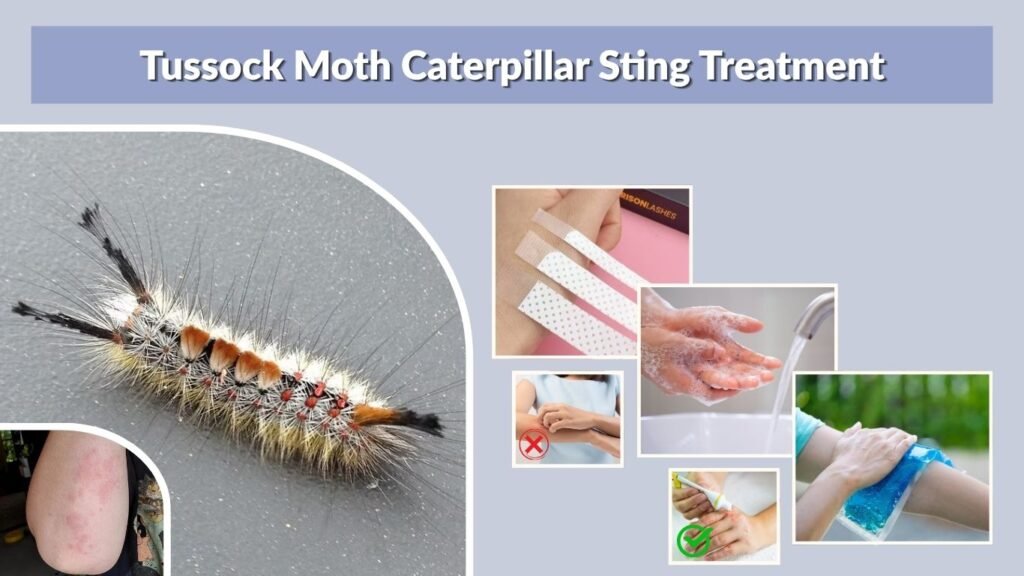
Treatment focuses on removing the hairs and calming the skin. Cleveland Clinic recommends removing caterpillar hairs with adhesive tape, washing the skin with soap and water, and applying ice to reduce swelling and pain.
Step-by-Step Treatment
- Do not rub the area.
- Use adhesive tape to lift hairs from the skin.
- Wash the area with soap and cool water.
- Apply an ice pack or cold compress.
- Use hydrocortisone cream for itching if safe for you.
- Take an oral antihistamine if itching is strong and you can use it safely.
- Wash clothing that may contain hairs.
What Not to Do
Do not scratch, scrape, or rub the rash. Do not use harsh chemicals, bleach, or strong home remedies. If hairs get into the eyes, rinse with clean water and contact a medical professional.
Common Tussock Moth Caterpillars That May Irritate Skin
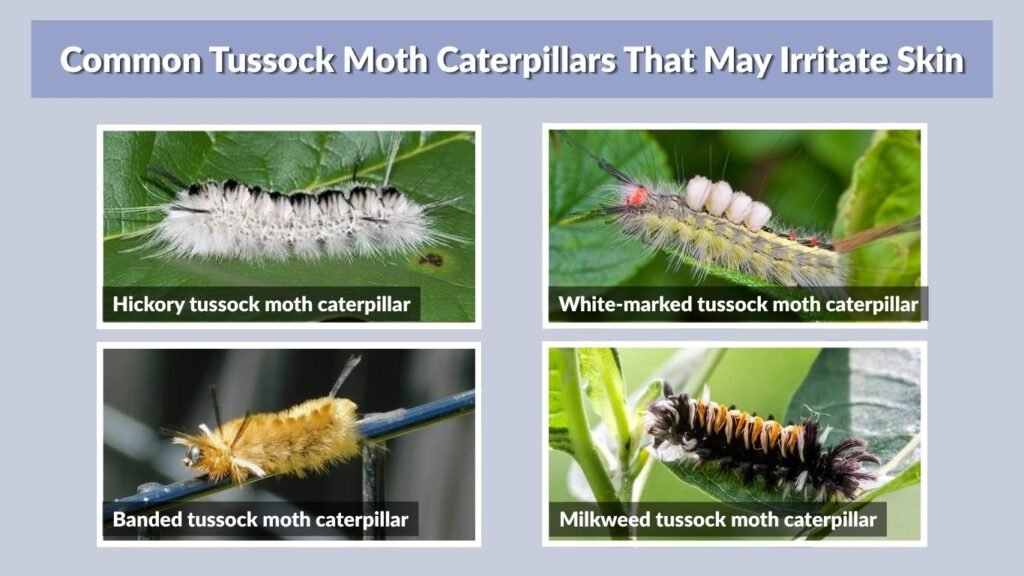
Not every tussock moth caterpillar causes the same reaction. Some are more irritating than others, but the safest rule is simple: do not touch fuzzy caterpillars with bare hands.
| Caterpillar | Sting/Rash Concern | Notes |
| Hickory tussock moth caterpillar | Moderate rash risk | White fuzzy caterpillar with black markings |
| White-marked tussock moth caterpillar | Irritating hairs | Common on many trees and shrubs |
| Banded tussock moth caterpillar | Skin irritation possible | Fuzzy tan, gray, or yellowish larva |
| Live oak tussock moth caterpillar | Common Florida concern | Often found around oak trees |
| Sycamore tussock moth caterpillar | Irritation possible | Often associated with sycamore trees |
| Fir tussock moth caterpillar | Sting-like reaction possible | One of Florida’s common tussock caterpillars |
Hickory Tussock Moth Caterpillar Sting
The hickory tussock moth caterpillar is one of the most searched species because it is white, fuzzy, and easy to notice. Touching it can cause a rash, itching, burning, swelling, or pain. Children are more likely to touch it because it looks soft.
White-Marked Tussock Moth Caterpillar Sting
The white-marked tussock moth caterpillar has a bright head, hair pencils, and noticeable tufts on its back. It may cause skin irritation if handled. Because it feeds on many trees, people often find it in yards, parks, and gardens.
Live Oak Tussock Moth Caterpillar Sting
Live oak tussock moth caterpillars are often noticed in Florida and other warm areas during seasonal outbreaks. News and extension reports from Florida describe these caterpillars as native insects that feed on oak leaves and can cause a painful, irritating skin reaction when touched.
What Does a Tussock Moth Caterpillar Rash Look Like?
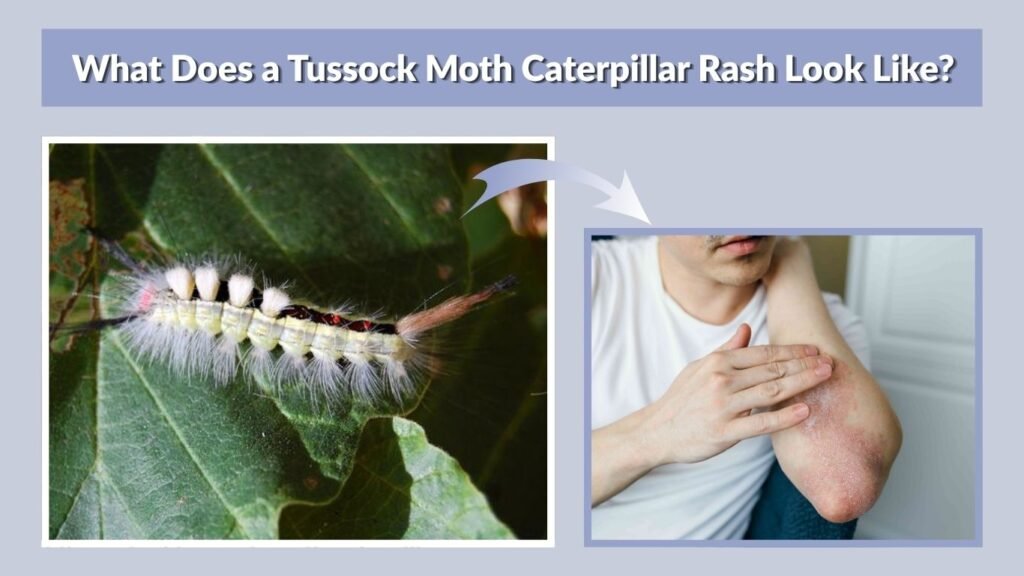
A rash may appear as small red bumps, raised welts, itchy patches, swelling, or blister-like irritation. It may show up quickly after contact, or it may become more noticeable after several hours. DermNet notes that caterpillar reactions can be mild and short-lived or more persistent in sensitive people.
Why Photos Can Be Misleading
Many people search for “tussock moth caterpillar sting pictures,” but a rash photo cannot identify the exact caterpillar. Poison ivy, ant bites, flea bites, mites, allergies, and infections can look similar. The best clue is a known contact with the caterpillar or its hairs.
Can Tussock Moth Cocoons Sting?
Yes, cocoons can also irritate skin. Some tussock moth caterpillars use their hairs when building cocoons. The University of Florida warns that tussock moth cocoons may cause allergic skin reactions in some people because irritating hairs can remain in the cocoon.
Safe Cocoon Removal
Wear gloves, long sleeves, and eye protection if removing cocoons from outdoor furniture, walls, playground equipment, or tree trunks. Do not handle them barehanded, and avoid brushing them against your face or arms.
Tussock Moth Caterpillar Sting and Cats
Cats may paw at, sniff, or mouth caterpillars. A tussock moth caterpillar can irritate a pet’s mouth, nose, paws, or skin. The biggest concern is direct contact with the hairs.
Call a vet if your cat has drooling, pawing at the mouth, facial swelling, vomiting, breathing trouble, eye irritation, or repeated licking after contact with a caterpillar. Do not give human medicine to cats unless a veterinarian tells you to.
How to Prevent Tussock Moth Caterpillar Stings
Avoiding direct contact is the best prevention. This is especially important for children, gardeners, pet owners, and anyone cleaning outdoor furniture or yard debris.
Prevention Tips
- Do not touch fuzzy caterpillars with bare hands.
- Teach children to look but not pick them up.
- Wear gloves while gardening.
- Shake out outdoor cushions, towels, and clothing.
- Avoid touching cocoons directly.
- Use a stick, leaf, cardboard, or gloves to move caterpillars.
- Keep pets away from caterpillars on patios or walkways.
- Wash exposed clothing after contact with caterpillar hairs.
Are Tussock Moth Caterpillars Poisonous?
Most tussock moth caterpillars are better described as irritating rather than poisonous to humans. The problem is usually skin contact with hairs, not a venomous bite. However, some caterpillars can cause stronger reactions, and allergic reactions are possible though not common.
The safest approach is to treat all hairy caterpillars as “do not touch,” even if they look attractive or harmless.
FAQs
Do tussock moth caterpillars sting?
They do not sting like bees, but their hairs can cause a sting-like skin reaction. Symptoms may include itching, burning, redness, swelling, and irritation.
How long does a tussock moth caterpillar sting last?
Mild irritation may improve within a few hours or days. Sensitive people may have itching or rash for longer, especially if hairs remain in the skin or the area is scratched.
What is the best treatment for a tussock moth caterpillar sting?
Use tape to remove hairs, wash the skin with soap and water, apply a cold compress, and use anti-itch treatment if needed. Seek medical help for severe or spreading symptoms.
Can a white-marked tussock moth caterpillar sting?
Yes, it can cause a sting-like rash through its irritating hairs. It should not be handled with bare hands.
Can tussock moth caterpillars hurt cats?
Yes, they may irritate a cat’s mouth, paws, nose, or skin. Call a vet if your cat shows swelling, drooling, vomiting, breathing trouble, eye irritation, or signs of pain after contact.
