

Termites are silent destroyers that can cause massive structural damage if left unchecked. With over 2,700 species globally, understanding the most significant ones is key to prevention and control. In this guide, I’ve listed 17 important termite types from around the world, including their appearance, how to identify them, what they eat, and where they thrive. Whether you’re a homeowner, gardener, or pest control professional, this detailed breakdown will help you recognize and respond to different termite threats more effectively.
1. Reticulitermes flavipes (Eastern Subterranean Termite)

The Eastern Subterranean Termite is one of the most common and destructive termite species in North America. They live in large underground colonies and are responsible for significant structural damage to homes and buildings by feeding on wood and other cellulose materials.
Appearance
Eastern Subterranean Termites are small, soft-bodied insects. The workers are pale and about 1/8 inch long, while soldiers have larger, dark heads with powerful mandibles. The swarmers, or winged reproductives, are dark brown to black and measure around 3/8 inch long with translucent wings.
Identification
- Lives in underground colonies and uses mud tubes to travel
- Most active in moist environments, especially near foundations
- Causes hollow-sounding or blistered wood
- Swarmers typically appear in spring to start new colonies
What Do Eastern Subterranean Termites Eat?
They feed on cellulose, which is found in wood, paper, cardboard, and even plant roots. Though they prefer decayed or damp wood, they can consume dry wood if a moisture source is nearby. Structural wood in homes is one of their primary targets.
Colony Behavior and Habitat
These termites form large colonies, often with hundreds of thousands of members. They build extensive tunnel systems underground and may forage as far as 300 feet from their nest. Their colonies are typically located in moist soil, and they enter structures through cracks, gaps, or plumbing access points.
2. Coptotermes formosanus (Formosan Subterranean Termite)
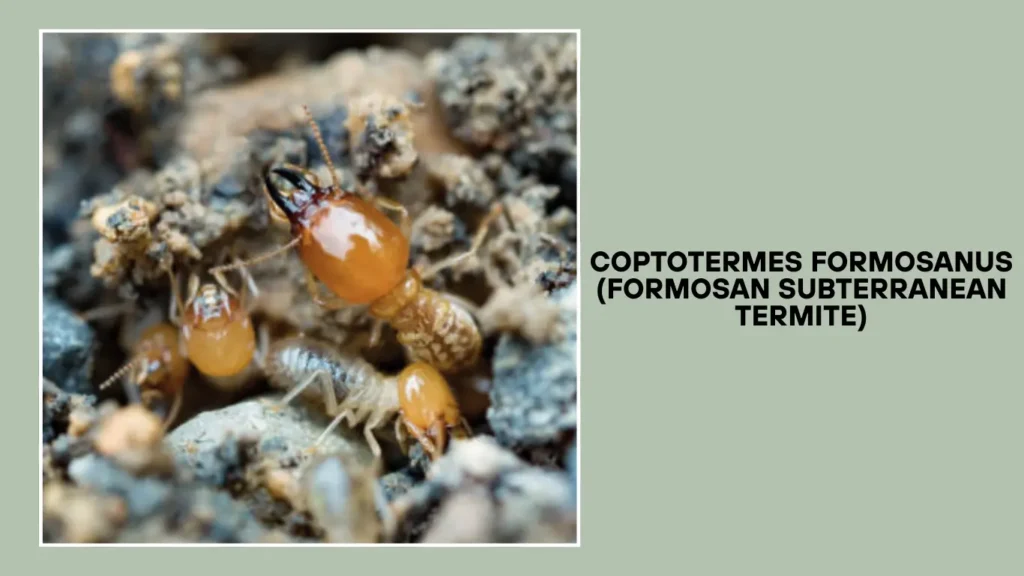
Often referred to as the “super termite,” Formosan Subterranean Termites are among the most aggressive and destructive termite species in the world. Native to East Asia, they have now spread to parts of the United States, especially the southern regions.
Appearance
Formosan termites are slightly larger than typical subterranean termites. Workers are creamy white and about 1/4 inch long. Soldiers have teardrop-shaped heads with curved mandibles. Swarmers are yellow-brown with slightly hairy wings and are around 1/2 inch long.
Identification
- Builds massive colonies with millions of termites
- Constructs carton nests inside walls, maintaining their own moisture
- Swarmers usually emerge at night, especially in warm, humid conditions
- Known for rapid wood consumption and extensive tunnel networks
What Do Formosan Subterranean Termites Eat?
They consume wood and anything that contains cellulose, such as paper, cardboard, and insulation. They can even chew through soft metals and plastic in search of food. Their aggressive feeding habits lead to structural failure faster than other species.
Colony Behavior and Habitat
Formosan termites build nests both underground and within structures. They are highly adaptive and can create aerial nests without soil contact. Their colonies can contain several million individuals, making infestations severe and difficult to eliminate without professional help.
3. Cryptotermes brevis (West Indian Drywood Termite)

The West Indian Drywood Termite is a major drywood pest in tropical and subtropical regions. Unlike subterranean termites, they don’t require soil contact or external moisture sources and are commonly found infesting wooden furniture, flooring, and structural timber.
Appearance
These termites are small and light-colored. Workers are not easily distinguishable. Soldiers have large, reddish-brown heads with short, thick mandibles. Swarmers are dark brown with smoky-gray wings and measure around 3/8 inch long.
Identification
- Lives entirely within dry wood, no contact with soil needed
- Produces small, hexagonal fecal pellets near infestation sites
- Swarmers appear in warm months and are attracted to lights
- Infestation signs include blistered or hollow-sounding wood
What Do West Indian Drywood Termites Eat?
They feed on dry, sound wood found in furniture, picture frames, cabinets, and structural timbers. They create small tunnels and chambers within the wood as they consume it.
Colony Behavior and Habitat
Colonies are smaller than subterranean species, usually a few thousand termites. They live directly in the wood they eat, and infestations are often localized. Because they don’t need moisture, they can infest any dry wood item in a building.
4. Incisitermes minor (Western Drywood Termite)

The Western Drywood Termite is one of the most common drywood termite species in the western United States. These termites do not require contact with soil and can live entirely within dry wood, making them a serious threat to homes and furniture.
Appearance
Western Drywood Termites are light brown to dark brown in color. Swarmers are about 7/16 inch long, including their wings. Soldiers have large mandibles and reddish-brown heads. Workers are pale and resemble nymphs.
Identification
- Found in dry, undecayed wood in homes and structures
- Leaves behind dry, six-sided fecal pellets
- Swarms typically occur in late summer or early fall
- Infested wood sounds hollow or may have blistering on the surface
What Do Western Drywood Termites Eat?
They consume dry, seasoned wood. This includes structural wood, furniture, doors, and window frames. They can survive with minimal moisture and don’t require soil for nesting.
Colony Behavior and Habitat
Colonies are relatively small, with a few thousand individuals. They expand slowly but can go undetected for years. These termites live inside the wood they infest and rarely show visible signs until significant damage has occurred.
5. Zootermopsis angusticollis (Pacific Dampwood Termite)

This species is commonly found in the Pacific Northwest and along the coast of California. As their name suggests, Pacific Dampwood Termites prefer wood with high moisture content and are typically found in decaying logs or damp structural wood.
Appearance
These termites are among the largest in North America. They range from light to dark brown. Swarmers can reach up to 3/4 inch in length. Soldiers have large heads and strong mandibles, and their bodies appear more robust than those of drywood or subterranean termites.
Identification
- Found in wet, decaying wood like fallen trees, stumps, or leaky wooden structures
- No mud tubes; infest wood directly in damp areas
- Swarm during late summer or early fall
- Presence of large swarmers and damp wood damage are key indicators
What Do Pacific Dampwood Termites Eat?
They feed on decayed, moisture-rich wood. While they rarely infest dry, structural timber, they can be a problem in areas with chronic leaks or poor drainage.
Colony Behavior and Habitat
Colonies are moderate in size and live within the wood they consume. These termites are not as aggressive as subterranean species but can still cause localized damage if conditions allow. Infestations usually indicate moisture problems in the building.
6. Neotermes connexus

Neotermes connexus is a species of dampwood termite commonly found in tropical and subtropical regions. They typically infest wet or decaying wood in forests and coastal areas, and are known for their preference for high-moisture environments.
Appearance
These termites are medium to large in size. Swarmers are dark brown with long, transparent wings. Soldiers have large heads and strong, curved mandibles. Nymphs and workers are creamy-white to light brown.
Identification
- Found in decaying trees, logs, or wet wooden structures
- Requires high moisture for survival
- No need for soil contact or mud tubes
- Common in coastal and humid regions
What Do Neotermes connexus Eat?
They feed on decaying wood that contains high moisture content. This includes logs, stumps, and occasionally damp wooden sections of homes exposed to leaks or humidity.
Colony Behavior and Habitat
These termites live entirely within the damp wood they consume. Colonies tend to be smaller and slower growing than subterranean termites. Infestations usually point to water damage or excessive moisture in wooden structures.
7. Reticulitermes virginicus
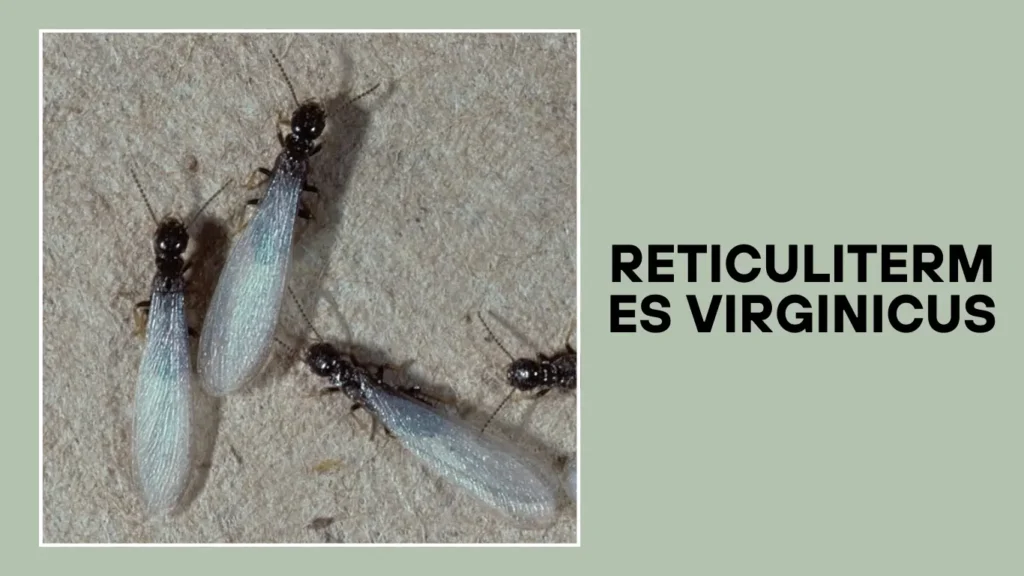
Reticulitermes virginicus is a subterranean termite species primarily found in the eastern United States. They are destructive pests that live underground and forage for wood and other cellulose materials in homes and buildings.
Appearance
Workers are small and cream-colored, about 1/8 inch long. Soldiers have rectangular, yellow-brown heads with powerful jaws. Swarmers are dark brown to black and measure up to 3/8 inch long with two pairs of equal-length wings.
Identification
- Builds mud tubes to travel between colony and food source
- Typically nests underground but can infest above-ground wood
- Swarms in spring, usually during daylight hours
- Signs include soft wood, mud tubes, and discarded wings
What Do Reticulitermes virginicus Eat?
They feed on wood, paper, and other cellulose-rich materials. Structural timber, wooden furniture, and cardboard are common targets.
Colony Behavior and Habitat
Colonies are large and persistent. They often live below the frost line to survive winter and maintain tunnels to reach food. Because of their underground nature, infestations may go undetected for long periods, leading to significant damage.
8. Reticulitermes hageni

Reticulitermes hageni is a subterranean termite species commonly found in the southeastern United States. Like other members of the Reticulitermes genus, it lives underground and can cause serious structural damage by feeding on wood in contact with the soil.
Appearance
Workers are white to light brown and measure about 1/8 inch long. Soldiers have large, yellow-brown heads with straight mandibles. Swarmers are dark brown to black, about 3/8 inch long, and have two pairs of equal-length wings.
Identification
- Builds protective mud tubes between colony and food source
- Nests underground, especially near moist soil
- Swarmers emerge in spring and are drawn to light
- Damage includes hollowed wood and visible tunnels
What Do Reticulitermes hageni Eat?
They consume wood, cardboard, and other cellulose-containing materials. These termites prefer moist or decaying wood but will attack dry wood if a water source is available.
Colony Behavior and Habitat
Colonies can contain thousands to hundreds of thousands of individuals. They are typically found in moist soil near homes and enter structures through foundation cracks or plumbing. Infestations can be long-lasting and difficult to detect early.
9. Nasutitermes corniger (Conehead Termite)

Nasutitermes corniger, known as the Conehead Termite, is an invasive species native to the Caribbean and parts of Central and South America. It has gained attention for its aggressive behavior and ability to rapidly infest and destroy structures.
Appearance
These termites are medium-sized. Soldiers have a distinct pointed “cone-shaped” head and release a sticky defensive chemical. Swarmers are dark-bodied with long wings. Workers are pale yellowish-white.
Identification
- Known for above-ground foraging trails, not just mud tubes
- Soldiers have a unique cone-shaped head
- Builds large, visible nests above ground or in trees
- Swarmers appear in warm, humid weather
What Do Conehead Termites Eat?
They eat a wide variety of cellulose materials including wood, paper, plant stems, and roots. They are known to attack both living and dead wood with extreme speed and intensity.
Colony Behavior and Habitat
Colonies grow quickly and build both underground and aerial nests. They forage openly on the ground, making them more visible than other termite species. This visibility allows early detection, but their aggressive spread makes them difficult to control once established.
10. Heterotermes indicola
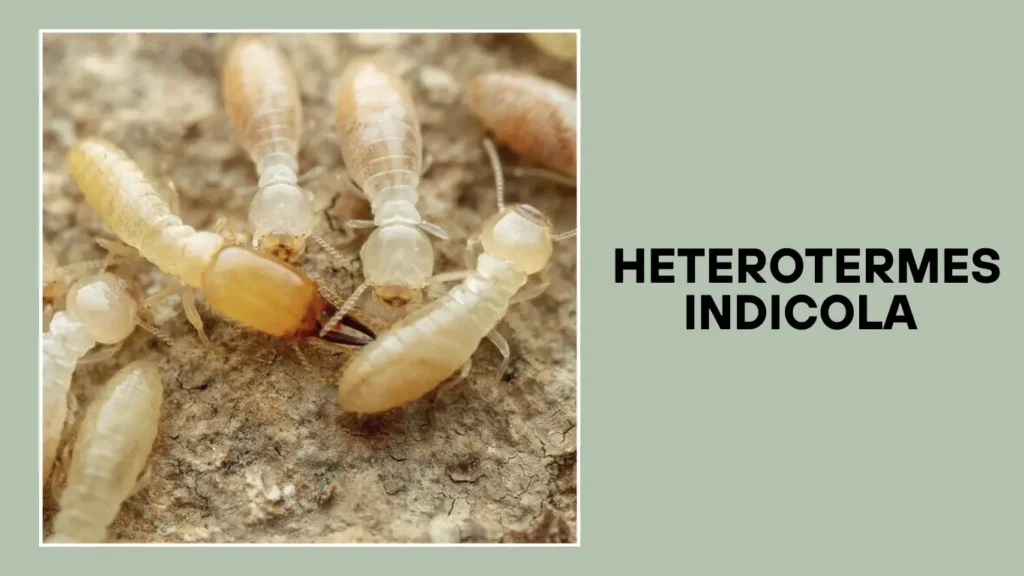
Heterotermes indicola is a destructive subterranean termite species widely found in South Asia, especially in India, Pakistan, and surrounding countries. It poses a significant threat to wooden structures, furniture, and even crops in agricultural areas.
Appearance
Workers are pale cream to light brown and about 1/8 inch in length. Soldiers have elongated, rectangular heads with strong mandibles. Swarmers are dark brown to black with translucent wings and are slightly larger than workers.
Identification
- Builds underground colonies and mud tubes to reach wood
- Swarms usually occur during the rainy season
- Causes blistering and hollow sounds in infested wood
- Found near building foundations, tree stumps, or moist areas
What Do Heterotermes indicola Eat?
They feed on cellulose-rich materials like wood, cardboard, plant roots, and paper. These termites can destroy both living plants and structural timber if conditions are favorable.
Colony Behavior and Habitat
Colonies are typically found underground and may extend several meters from the main nest. They prefer warm, humid environments and often infest buildings, agricultural fields, and even railway tracks. Control is difficult once they become established.
11. Odontotermes obesus
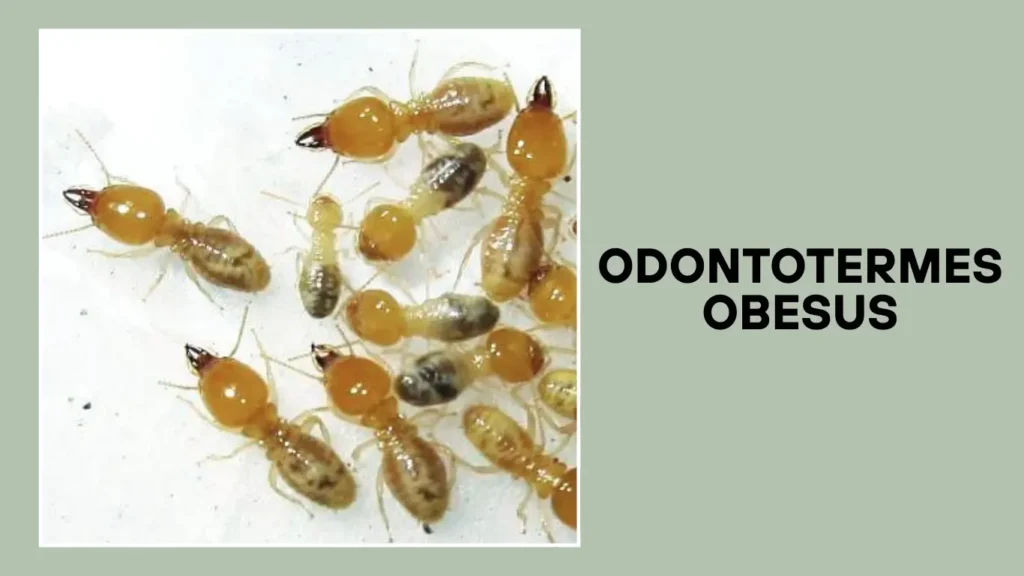
Odontotermes obesus is a fungus-growing termite species common in India and Southeast Asia. Unlike most termites, it builds large, visible mounds and plays a role in breaking down organic material in the soil.
Appearance
These termites are slightly larger than other subterranean species. Workers are pale, and soldiers have dark, rounded heads with curved mandibles. Swarmers are dark brown to black with long wings and measure up to 1/2 inch.
Identification
- Builds large earthen mounds in open fields or near trees
- Prefers tropical and subtropical climates
- Swarming occurs mainly during monsoon months
- Commonly found in farmlands and forested areas
What Do Odontotermes obesus Eat?
They feed on decomposed wood, leaf litter, and dead plant matter. They also cultivate fungi on plant debris inside their nests, which they use as a primary food source.
Colony Behavior and Habitat
Colonies live in complex underground tunnel systems and surface mounds. Their activity helps recycle nutrients in the soil, but they can also damage crops, trees, and wooden structures if colonies grow large. Their social structure is highly organized with thousands of members.
12. Microcerotermes diversus

Microcerotermes diversus is a small to medium-sized termite species commonly found in arid and semi-arid regions, particularly in the Middle East and parts of South Asia. They are known for building above-ground nests on trees, wooden poles, or even buildings.
Appearance
These termites are light brown to pale yellow. Workers are small and soft-bodied. Soldiers have elongated heads with narrow mandibles. Swarmers are darker and have long, transparent wings that extend beyond the body.
Identification
- Builds small carton nests above ground on wood, trees, or buildings
- Often found in dry, hot climates
- Swarmers appear seasonally, usually after rain
- Signs include soft, crumbly wood and carton-like material on surfaces
What Do Microcerotermes diversus Eat?
They primarily feed on dry and decaying wood. They also consume cellulose from paper, cardboard, and plant debris, often preferring exposed wooden surfaces like fences, trees, and dead branches.
Colony Behavior and Habitat
Colonies are relatively small compared to subterranean termites. They are often found in exposed wooden structures or trees, with visible nests. Because of their outdoor habits, they are more easily spotted than other termites, although damage can still occur indoors if wooden elements are connected.
13. Kalotermes flavicollis
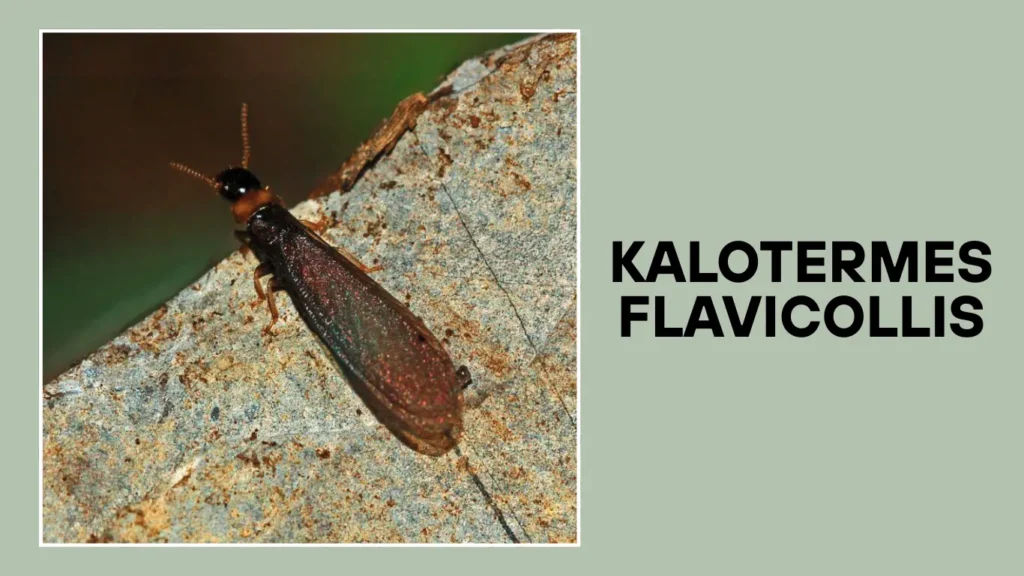
Kalotermes flavicollis is a drywood termite species native to the Mediterranean region, especially southern Europe and northern Africa. It thrives in warm, dry climates and infests wood without the need for soil contact.
Appearance
Swarmers are dark brown to black with yellowish markings behind the head. Soldiers have large, rounded heads with strong mandibles, while workers are pale and soft-bodied. Swarmers are about 3/8 inch long with long, smoky wings.
Identification
- Lives in dry, undecayed wood like roof beams, doors, and furniture
- Produces distinct hexagonal fecal pellets near infestation sites
- Swarms during warm evenings in summer
- Infested wood shows blistering and produces a hollow sound when tapped
What Do Kalotermes flavicollis Eat?
They feed on dry, seasoned wood with low moisture content. This includes beams, floors, furniture, and old trees. They rarely need external water sources and extract moisture from the wood they consume.
Colony Behavior and Habitat
Colonies are relatively small but capable of long-term infestation due to their hidden nature. They live and reproduce entirely within the wood they infest, making detection difficult until damage is advanced. Their spread is often limited by climate and wood availability.
14. Glyptotermes dilatatus
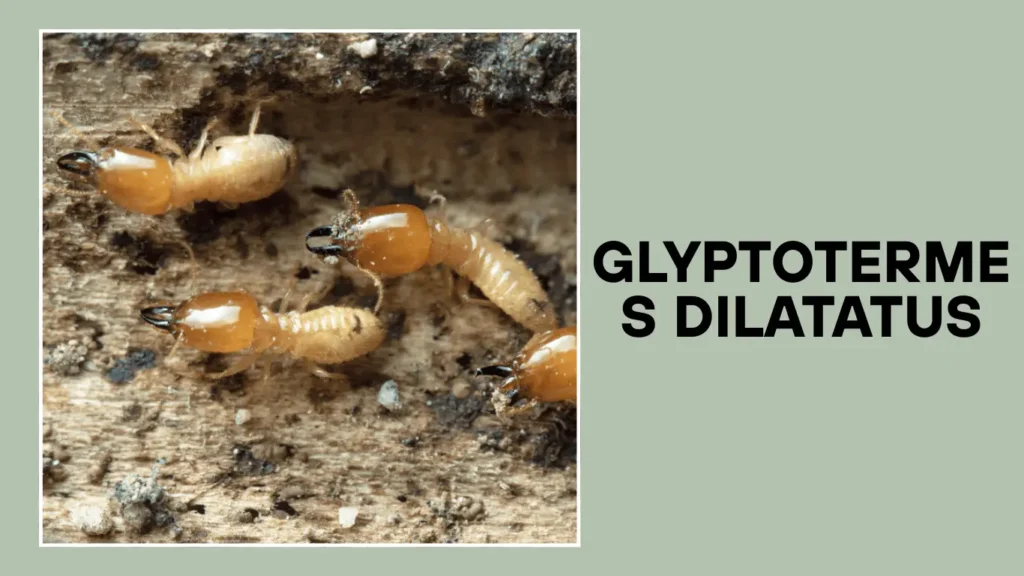
Glyptotermes dilatatus is a lesser-known drywood termite species, typically found in tropical and subtropical forests. They prefer natural habitats like dead tree trunks and branches, but occasionally infest wooden structures in humid environments.
Appearance
These termites are small to medium in size. Soldiers have large, dark heads with distinctive grooves or ridges. Workers are pale and soft-bodied, while swarmers are darker with well-developed wings and compact bodies.
Identification
- Inhabits dead or fallen logs in humid forests
- Prefers high humidity and decaying dry wood
- Swarming usually occurs during warm, moist conditions
- Not commonly found in urban structures, but possible near forests
What Do Glyptotermes dilatatus Eat?
They feed on decayed or slightly moist deadwood, fallen branches, and forest litter. They do not require contact with soil or external moisture sources, but they prefer wood with some natural dampness.
Colony Behavior and Habitat
Colonies are usually small and localized. These termites play a role in breaking down organic material in forest ecosystems. While not a major urban pest, they may infest wooden structures located close to forested or natural areas.
15. Anacanthotermes vagans
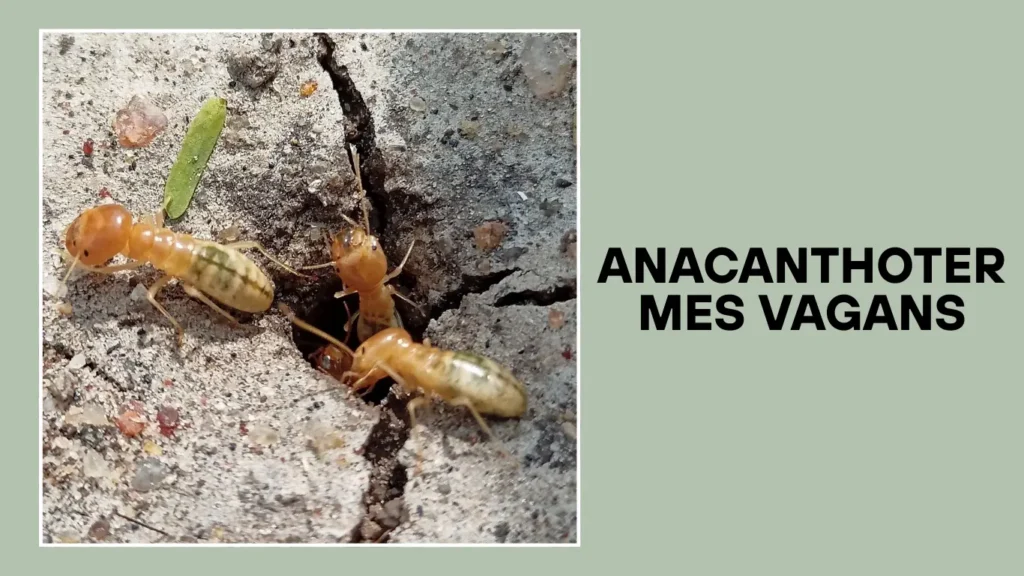
Anacanthotermes vagans is a termite species found primarily in arid and semi-arid regions such as deserts and dry grasslands. Adapted to extreme dryness, these termites build nests underground and forage above ground when humidity conditions are favorable.
Appearance
Workers are creamy-white and slender. Soldiers have rounded heads and short mandibles. Swarmers are small, dark-colored, and winged, appearing mainly during short humid periods.
Identification
- Found in arid deserts and dry plains
- Builds underground nests with surface-level tunnels
- Swarming happens after rare rains in dry climates
- Rarely encountered in urban areas unless in dry environments
What Do Anacanthotermes vagans Eat?
They feed on dry plant material such as dead grass, woody shrubs, and desert litter. They can also consume cellulose from dry wooden structures when accessible.
Colony Behavior and Habitat
Colonies are well-adapted to survive with minimal moisture. They build deep nests to maintain humidity and may forage during the night or after rainfall. Though not a major structural pest, they are ecologically significant in arid ecosystems.
16. Schedorhinotermes intermedius

Schedorhinotermes intermedius is a highly destructive subterranean termite species found mainly in Australia. Known for its aggressive feeding habits, it can cause extensive damage to wooden structures and is considered a serious pest in urban environments.
Appearance
Workers are small and creamy-white. Soldiers come in two forms: major soldiers with large, dark heads and powerful mandibles, and minor soldiers with smaller heads. Swarmers are dark brown to black with two pairs of wings and are around 3/8 inch in length.
Identification
- Builds underground nests and mud tubes
- Infestation often begins in moist wood near foundations
- Swarmers usually emerge in summer after rain
- Damage includes hollowed-out timber and visible mud tracks
What Do Schedorhinotermes intermedius Eat?
They feed on hardwood and softwood timber, including structural wood in buildings. They also consume other cellulose-rich materials such as cardboard and paper products, often attacking furniture and floorboards.
Colony Behavior and Habitat
Colonies can be extensive, spreading across large areas underground. They are known to forage aggressively and can enter structures through minute cracks or gaps. Infestations may go unnoticed until severe structural damage occurs.
17. Mastotermes darwiniensis (Giant Northern Termite)

Mastotermes darwiniensis is considered the most primitive and one of the most destructive termite species. Native to northern Australia, it’s known for its large size and aggressive destruction of wood, crops, and even rubber and leather products.
Appearance
These termites are the largest known species. Workers are robust, pale brown, and about 1/2 inch long. Soldiers have large heads and powerful jaws. Swarmers are dark with smoky wings, reaching nearly 1 inch in length.
Identification
- Found only in northern Australia
- Builds underground nests with wide foraging trails
- Swarms in warm, wet months—especially after rain
- Known to damage not only wood but also plastic, leather, and electrical wiring
What Do Giant Northern Termites Eat?
They consume a wide range of materials including living trees, wooden structures, paper, cloth, leather, and synthetic materials. Their appetite and wide diet make them a major threat in both urban and rural settings.
Colony Behavior and Habitat
Colonies are enormous, with millions of individuals. They build large subterranean nests and forage long distances. Their activity is aggressive, and control is difficult once established. They are considered a pest of both agriculture and infrastructure.
