
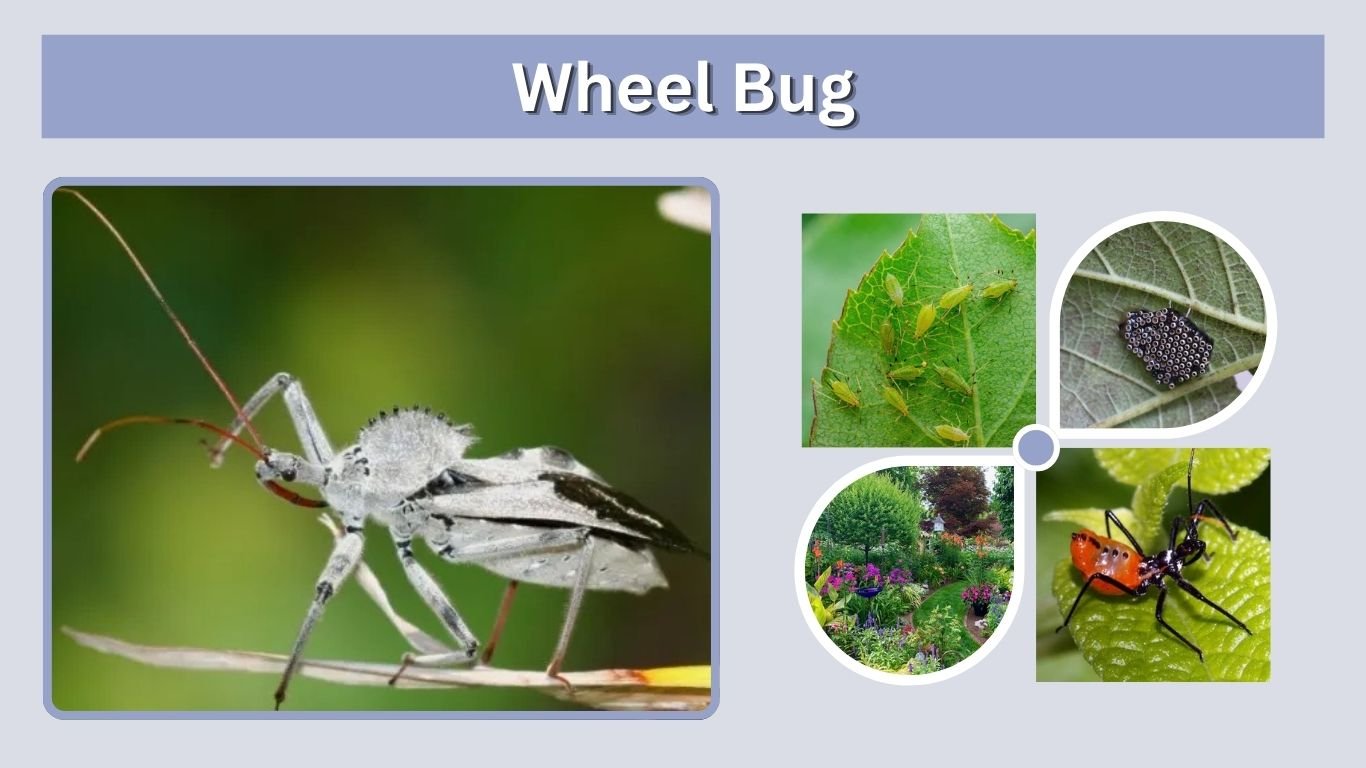
The wheel bug (Arilus cristatus) is a large North American assassin bug recognized by the cogwheel-shaped crest rising from an adult’s back. Despite its unusual and intimidating appearance, it is a beneficial predator that helps control caterpillars, beetles, aphids, and other insects. Wheel bugs do not seek out people, but both adults and nymphs can deliver an intensely painful bite when trapped, squeezed, or handled. The safest approach is to observe them without touching them.
Wheel Bug Overview
Wheel bugs are true bugs belonging to the assassin bug family, Reduviidae. They use piercing mouthparts to capture prey and consume its liquefied tissues.
| Feature | Details |
| Scientific name | Arilus cristatus |
| Family | Reduviidae |
| Order | Hemiptera |
| Adult size | About 1–1.5 inches |
| Adult color | Gray, brown, or dark gray |
| Nymph color | Red or orange with dark legs |
| Diet | Other insects |
| Wings | Adults have functional wings |
| Bite risk | Very painful when mishandled |
| Generations | Usually one per year |
| Garden role | Beneficial predator |
Adults are among the largest assassin bugs in North America. Their distinctive cog-shaped crest makes them difficult to confuse with most other insects once they reach maturity.
What Does a Wheel Bug Look Like?
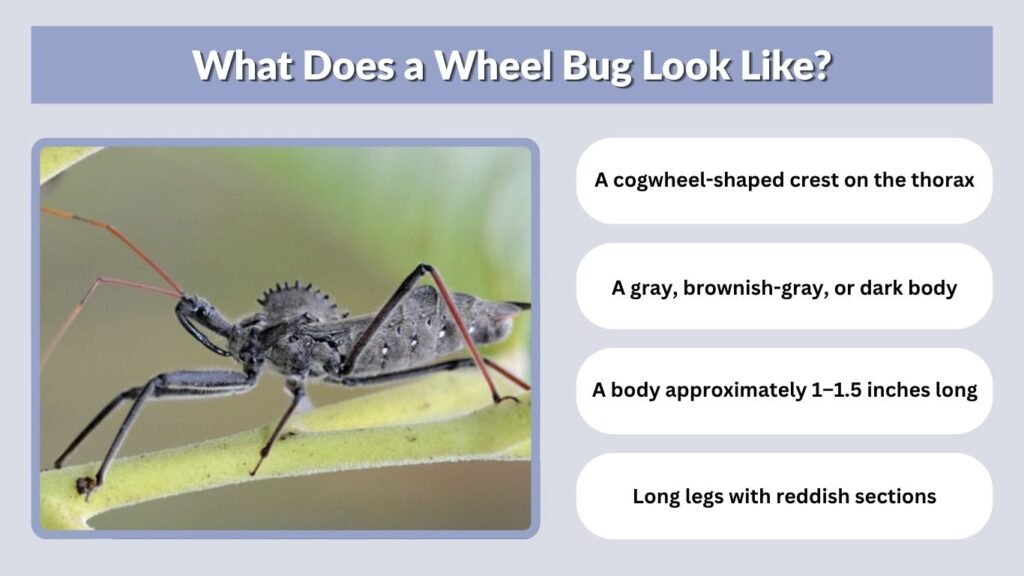
Adult wheel bugs have elongated bodies, long legs, narrow heads, and a curved feeding beak folded beneath the head. Their overall appearance can seem prehistoric.
Adult Identification
Look for these characteristics:
- A cogwheel-shaped crest on the thorax
- A gray, brownish-gray, or dark body
- A body approximately 1–1.5 inches long
- Long reddish-brown or dark antennae
- A narrow head with a noticeable “neck”
- Long legs with reddish sections
- Folded wings covering most of the abdomen
- A thick, curved beak beneath the head
The raised “wheel” is found only on adults. It consists of a semicircular ridge with several teeth or projections. No other commonly encountered North American true bug has the same feature.
Brown, Black, and Blue Wheel Bugs
Adults vary somewhat in color. Some look pale gray, while others appear brown, charcoal, or nearly black. Lighting can give the wings or body a slightly bluish appearance.
Names such as “black wheel bug” or “blue wheel bug” usually describe color variation or lighting rather than separate North American species. Identification should be based on the cog-shaped crest and overall anatomy, not color alone.
Wheel Bug Nymph Identification
Young wheel bugs are called nymphs. They look dramatically different from adults because they lack developed wings and the characteristic wheel-shaped crest.
Newly hatched nymphs often have bright red or orange abdomens, dark heads, and long black legs. Their abdomens may curve upward, giving them a spider-like appearance. As they grow, their bodies become darker and more similar to adults.
Identification Features
- Red, orange, or orange-red abdomen
- Black or dark gray head
- Long black legs
- Narrow waist-like area behind the head
- Curved piercing beak
- No cogwheel crest
- No fully developed wings
Wheel bug nymphs are sometimes confused with spotted lanternfly nymphs, boxelder bugs, or other red-and-black insects. Unlike spotted lanternfly nymphs, they do not have a rounded body covered with distinct white spots. They also have a narrow predatory head and long legs.
Nymphs can bite just like adults. Never pick one up simply because it is smaller or lacks the intimidating wheel.
What Do Wheel Bugs Eat?
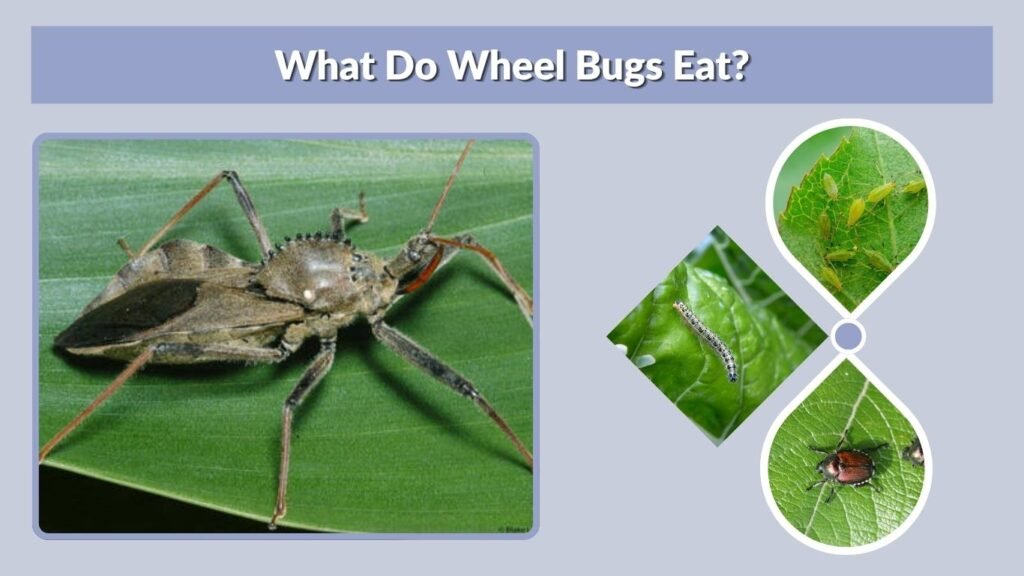
Wheel bugs are generalist predators. They capture many insects they can physically overpower, including both destructive garden pests and occasional beneficial insects.
Common prey includes:
- Caterpillars
- Aphids
- Japanese beetles
- Leaf beetles
- Stink bugs
- Sawfly larvae
- Moths
- Flies
- Grasshoppers
- Other true bugs
- Honey bees and other pollinators
The wheel bug slowly approaches its target, grabs it with the front legs, and inserts its three-segmented beak. Its saliva immobilizes the prey and contains digestive substances that break down internal tissues. The bug then draws the liquefied material through its mouthparts.
Are Wheel Bugs Good or Bad?
Wheel bugs are generally considered beneficial because they eat numerous plant-feeding insects. They do not feed on leaves, roots, wood, fabric, stored food, or human blood.
However, they are not selective biological-control agents. They may consume bees, lady beetles, and other beneficial insects along with pests. Their numbers are usually too low to create a major threat to pollinators or completely control a serious pest infestation.
Gardeners normally do not need to kill or remove wheel bugs. Leave them undisturbed and avoid handling plants with bare hands when one is present.
Are Wheel Bugs Dangerous?
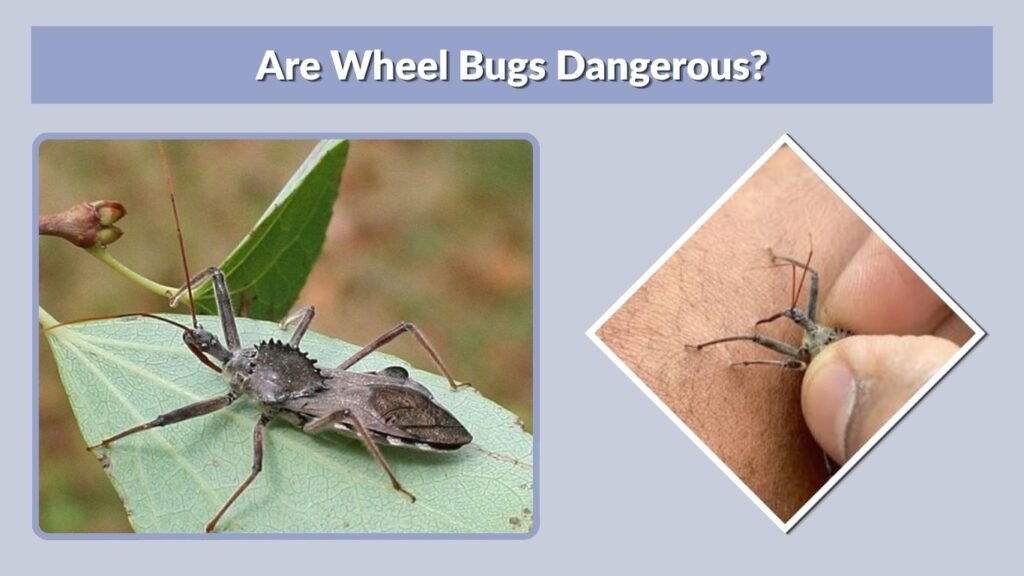
Wheel bugs are not aggressive toward people and do not chase or deliberately attack humans. They usually attempt to walk or fly away when given room.
A bite can occur when someone:
- Picks up the insect
- Traps it against the skin
- Squeezes it accidentally
- Reaches into vegetation without seeing it
- Handles firewood or garden material containing one
- Allows a child or pet to play with it
Wheel bugs do not have stingers, so the frequently searched “wheel bug sting” is actually a puncture made with their beak.
What Does a Wheel Bug Bite Feel Like?
A wheel bug bite is often described as more painful than a typical bee or wasp sting. The puncture may cause immediate sharp or burning pain, followed by redness, warmth, swelling, numbness, or a hardened area around the wound.
Symptoms can persist for several days, and healing may take approximately two weeks. Prolonged reactions are more likely when the wound becomes infected or the person has an unusual sensitivity.
Wheel Bug Bite Treatment
Wash the area thoroughly with soap and clean water. Apply a wrapped cold pack for approximately 10–20 minutes to reduce pain and swelling. Avoid scratching, cutting, squeezing, or applying unsafe home remedies.
Seek medical advice when:
- Pain or swelling continues increasing
- Redness spreads well beyond the puncture
- Pus, drainage, or red streaks appear
- The bite is near an eye or inside the mouth
- Numbness persists or worsens
- Fever or other signs of infection develop
- The person experiences hives or facial swelling
- Breathing or swallowing becomes difficult
Difficulty breathing, throat swelling, faintness, or a widespread allergic reaction requires emergency care.
Wheel Bug Life Cycle
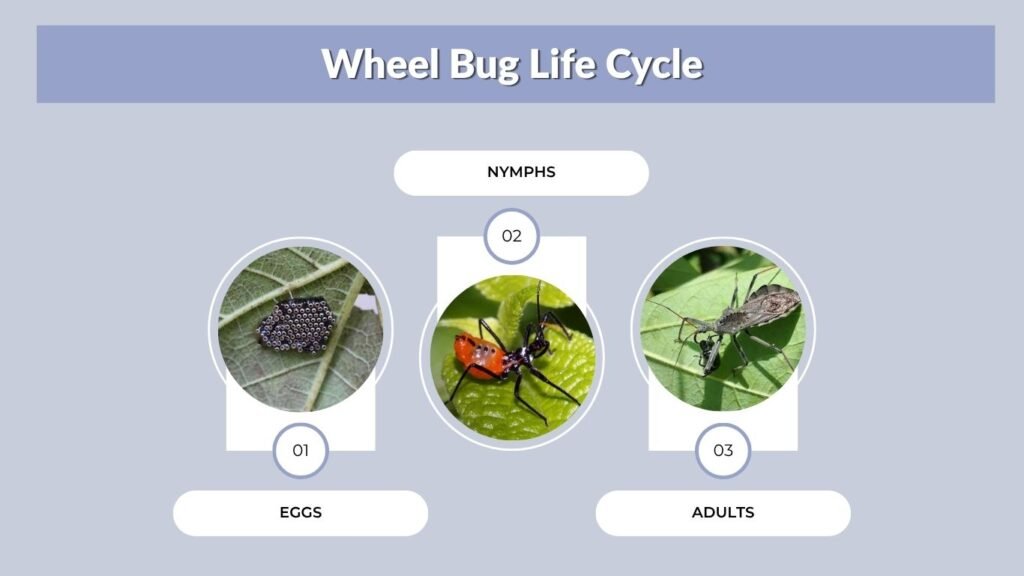
Wheel bugs undergo incomplete metamorphosis through three main stages: egg, nymph, and adult. There is no caterpillar-like larva or pupal stage.
Eggs
Females deposit clusters of small, bottle- or barrel-shaped eggs during fall. The eggs are arranged closely together and covered with a protective material, producing a formation that may resemble a miniature honeycomb.
Egg masses may be attached to:
- Tree bark
- Twigs and branches
- Fence posts
- Outdoor furniture
- Building surfaces
- Other protected structures
The eggs remain dormant during winter and normally hatch the following spring.
Nymphs
Newly emerged nymphs gather briefly near the egg mass before dispersing to hunt. They pass through several developmental stages, called instars, and become larger after each molt.
Nymphs feed on small insects and gradually change from bright red and black to darker gray-brown. Development from hatching to adulthood takes approximately three months under suitable conditions.
Adults
Adults commonly appear during summer and remain active through fall. They mate and produce the egg masses that survive winter, completing a cycle that usually produces one generation annually.
Can Wheel Bugs Fly?
Adult wheel bugs can fly. Their wings remain folded flat across the abdomen when the insect is resting.
They are not graceful or continuously active fliers, but they may fly between plants, escape danger, search for prey, or approach areas where insects gather. Adults are occasionally found near outdoor lights because prey insects concentrate there.
Nymphs cannot fly because they do not yet have functional adult wings.
Where Do Wheel Bugs Live?
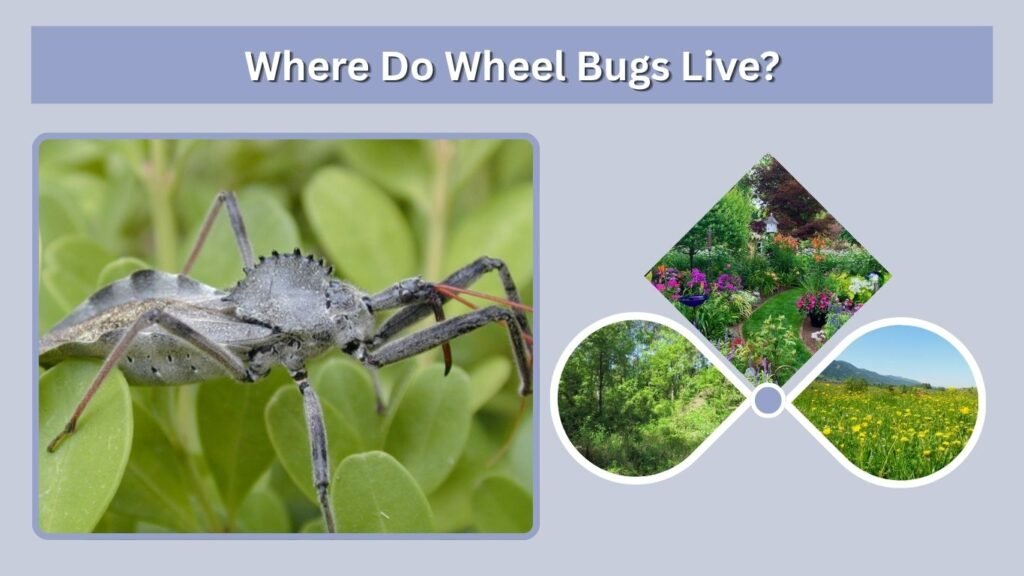
The North American wheel bug occurs primarily across eastern and central North America, extending from parts of southern Canada through much of the United States and into Mexico and Central America. Scattered records also occur farther west.
Wheel bugs are commonly found in:
- Gardens
- Forest edges
- Meadows
- Orchards
- Parks
- Shrubs
- Trees
- Agricultural fields
- Areas around outdoor lights
They are especially likely to occur where caterpillars and other prey are abundant. They may be seen in states such as Florida, Texas, Ohio, Indiana, Pennsylvania, Kentucky, and many surrounding areas.
Wheel Bug vs. Kissing Bug
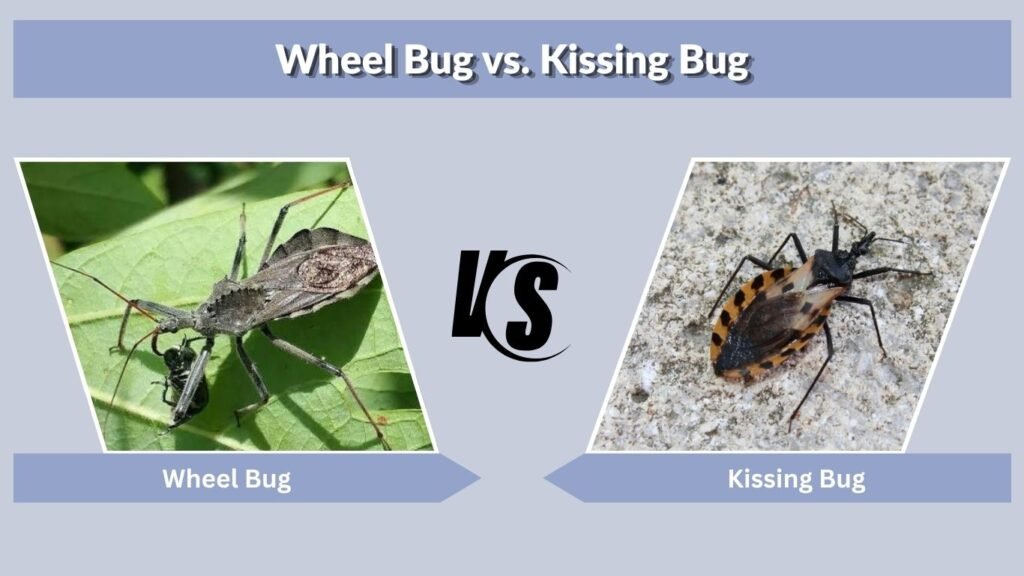
Wheel bugs and kissing bugs belong to the same family, but their behavior and importance to humans are very different.
| Feature | Wheel Bug | Kissing Bug |
| Main food | Other insects | Blood from vertebrates |
| Adult crest | Large cog-shaped wheel | Absent |
| Body shape | Tall and angular | Flatter and oval |
| Human contact | Bites defensively | May feed on sleeping people |
| Disease concern | Not a Chagas disease vector | Some species can transmit the parasite |
| Garden role | Beneficial predator | Blood-feeding insect |
A mature wheel bug is easily identified by the cogwheel crest. Young wheel bugs lack the crest but usually have long dark legs and a bright red or orange abdomen. Kissing bugs often have orange or red markings along the outer edges of a flattened abdomen.
Wheel Bug vs. Other Assassin Bugs
Every wheel bug is an assassin bug, but most assassin bugs are not wheel bugs. “Assassin bug” describes a large family containing thousands of predatory and blood-feeding species.
Adult Arilus cristatus can be separated from other North American assassin bugs by its raised wheel. Nymph identification is harder because the crest has not developed. The insect’s location, body shape, coloration, and feeding beak should be examined together.
FAQs
Do wheel bugs bite humans?
Yes, but usually only when trapped, squeezed, or handled. They do not feed on human blood. Their defensive bite can be intensely painful, so adults and nymphs should always be left alone.
Are wheel bugs poisonous?
Wheel bugs are not poisonous to touch or venomous in the same way as a snake. However, they inject saliva through their beak when biting. This saliva helps immobilize prey and can cause significant pain and irritation in people.
Should I kill a wheel bug?
Usually not. Wheel bugs are beneficial predators that consume caterpillars, beetles, stink bugs, and other insects. Give the insect space or move away rather than handling it.
What should I do if a wheel bug enters my house?
Do not pick it up. Place a container over it, slide a stiff piece of paper underneath, and release it outdoors away from doors and walkways. Wear closed shoes and keep your hands away from the insect.
Can wheel bug nymphs bite?
Yes. Nymphs have piercing mouthparts and can inflict painful defensive bites. Their small size and lack of a wheel-shaped crest do not make them safe to handle.
The supplied topic set prioritizes wheel bug nymphs, bites, danger, flight, eggs, diet, and comparisons with kissing and assassin bugs.
