
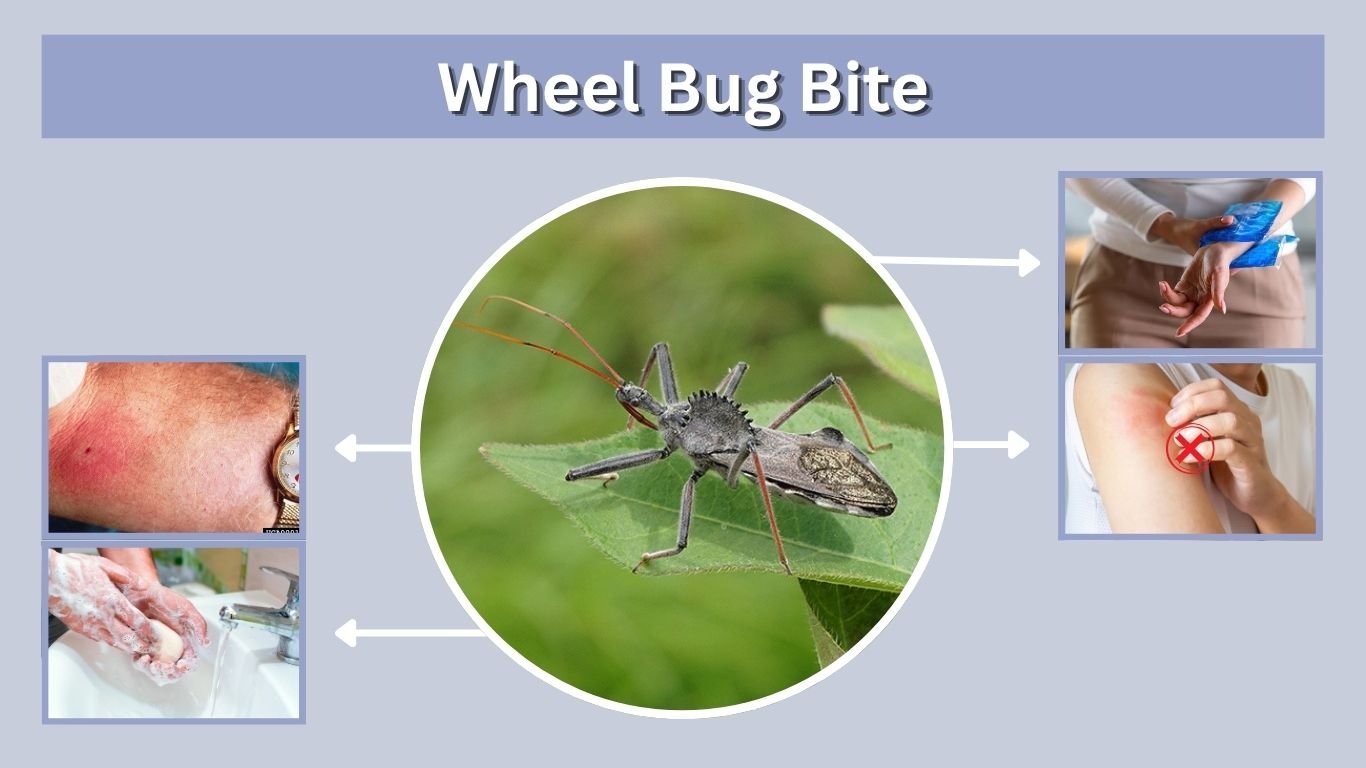
A wheel bug bite can cause immediate, intense pain followed by redness, swelling, warmth, or temporary numbness. Wheel bugs do not hunt people or feed on blood, but they may bite defensively when handled, squeezed, trapped against the skin, or disturbed. Both adults and nymphs can bite. Most cases heal with basic wound care, although worsening swelling, infection, or a body-wide allergic reaction requires medical attention.
Do Wheel Bugs Bite Humans?
Yes. The North American wheel bug, Arilus cristatus, is a large predatory assassin bug equipped with a curved, piercing mouthpart called a rostrum. It normally uses this structure to immobilize insects, but it can puncture human skin when defending itself.
Wheel bugs do not have stingers. Therefore, what people commonly call a “wheel bug sting” is actually a defensive bite. They are not naturally aggressive toward humans and usually bite only after being picked up, pressed against the body, or handled carelessly.
| Question | Answer |
| Do adults bite? | Yes |
| Do wheel bug nymphs bite? | Yes |
| Do they sting? | No |
| Do they feed on blood? | No |
| Is the bite painful? | Often extremely painful |
| Does the insect spread Chagas disease? | Wheel bugs are not blood-feeding kissing bugs |
| Typical healing time | Several days to about two weeks |
| Main complications | Infection or an unusual allergic reaction |
How Does a Wheel Bug Bite?
A wheel bug normally captures caterpillars, beetles, stink bugs, aphids, and other insects. It inserts its rostrum into the prey and injects saliva containing substances that paralyze the insect and begin breaking down its tissues.
When the same mouthpart punctures human skin, the physical injury and saliva can cause immediate burning pain and localized inflammation. Because the mouthpart is beneath the head, the insect may appear to bend its head downward while biting.
The bug does not remain attached like a tick, and it does not leave behind a stinger. A single defensive puncture may happen quickly when someone tries to pick up the insect.
What Does a Wheel Bug Bite Look Like?
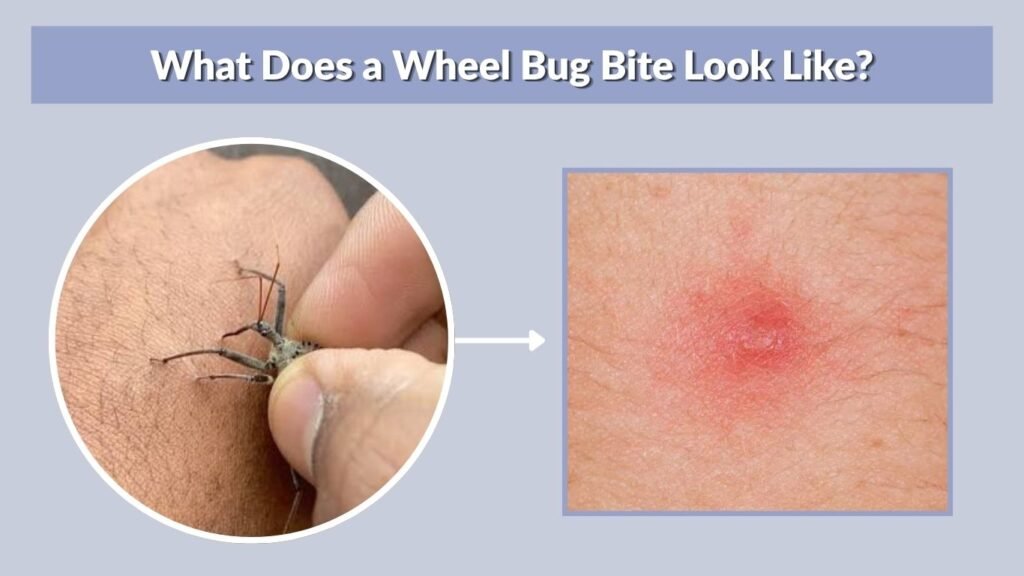
A wheel bug bite does not always produce a distinctive pattern. Its appearance can change during the hours and days following the puncture.
Common Appearance
The affected skin may develop:
- A small central puncture
- Localized redness
- Swelling around the wound
- A warm or burning sensation
- A pale or hardened center
- Temporary numbness
- Tenderness when touched
Older medical descriptions note that the area may initially become red and hot, then develop a pale, firm center. Occasionally, damaged tissue at the puncture may separate and leave a small opening. However, not every bite follows this pattern.
A photograph alone usually cannot confirm a wheel bug bite. Mosquitoes, spiders, wasps, ants, ticks, and skin infections can produce similar marks. Identification is more reliable when the person saw the wheel bug deliver the bite.
How Painful Is a Wheel Bug Bite?
A wheel bug bite is widely described as more painful than a typical bee, wasp, or hornet sting. Pain may feel sharp, burning, or similar to a deep needle puncture. It can be followed by soreness or numbness that persists after the initial pain decreases.
There is no medically established numerical “wheel bug bite pain scale.” Personal reports and demonstration videos cannot predict how another person will react. Bite depth, body location, the amount of saliva introduced, and individual sensitivity can all affect the experience.
Sensitive areas such as the fingers, face, lips, and neck may be especially painful or concerning because swelling can interfere with normal movement, vision, or breathing.
Wheel Bug Bite Symptoms
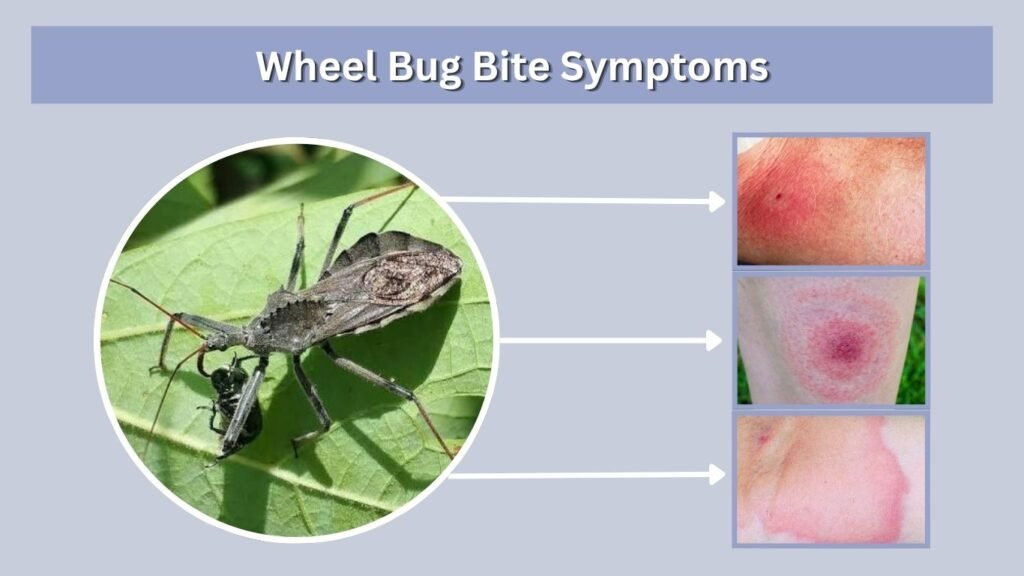
Most symptoms remain limited to the skin surrounding the puncture.
Expected Local Symptoms
Common effects include:
- Sudden, severe pain
- Burning or stinging
- Redness and warmth
- Localized swelling
- Tenderness
- Numbness or tingling
- A small firm lump
Symptoms may remain noticeable for several days. UF/IFAS reports that healing can take approximately two weeks in some cases, although duration varies. Serious or prolonged problems have historically been linked mainly to secondary infection or individual hypersensitivity.
Signs of Infection
Scratching, squeezing, or repeatedly touching the wound can introduce bacteria. Contact a healthcare professional if the area develops increasing pain, expanding redness, pus, drainage, red streaks, fever, or worsening swelling.
Allergic-Reaction Symptoms
Rarely, an insect bite may trigger a serious body-wide reaction. Seek emergency assistance for difficulty breathing or swallowing, swelling of the face, tongue, mouth, or throat, widespread hives, severe dizziness, fainting, repeated vomiting, or collapse.
How to Treat a Wheel Bug Bite
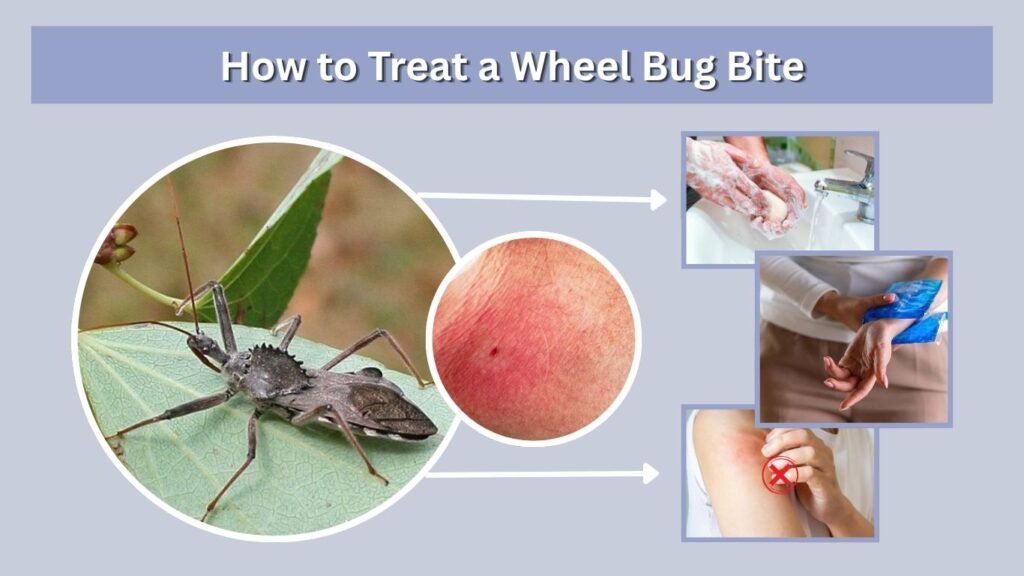
Most uncomplicated bites can initially be treated with basic first aid. This information does not replace medical advice for severe or worsening symptoms.
1. Wash the Wound
Wash the puncture carefully with soap and water. This removes dirt and reduces the risk of secondary infection.
2. Apply a Cold Compress
Place ice inside a cloth or use a cold compress for 10–20 minutes. Do not apply ice directly to the skin. Cold can reduce pain and swelling.
3. Protect the Skin
Avoid scratching, cutting, squeezing, or attempting to suck material from the wound. Keep it clean and cover it lightly if clothing continually rubs against it.
4. Consider Symptom Relief
A healthcare professional or pharmacist may recommend an appropriate pain reliever, antihistamine, hydrocortisone cream, or calamine lotion based on the person’s age, medical conditions, and medications. Follow product directions and avoid giving medicine to a child without appropriate guidance.
5. Monitor the Area
Watch the bite over the next several days. Take a clear photograph shortly after the bite so you can compare swelling or redness later.
When Should You Seek Medical Care?
Contact a healthcare professional when:
- Pain remains severe or continues increasing
- Swelling spreads significantly
- Numbness does not improve
- The bite is near an eye or inside the mouth
- The skin becomes increasingly hot or tender
- Pus, red streaks, or fever develops
- The person has a history of severe reactions
- Symptoms affect areas beyond the bite site
Call the local emergency number immediately for breathing difficulty, throat tightness, facial swelling, fainting, confusion, or a rapidly spreading reaction.
Can a Wheel Bug Bite Cause Chagas Disease?
Wheel bugs are assassin bugs, but they are not the blood-feeding kissing bugs commonly associated with Chagas disease. Wheel bugs prey on insects and bite people only in defense.
Kissing bugs belong to a different group within the same insect family. Their bites may be relatively painless because they are adapted to taking blood, whereas a defensive wheel bug bite is characteristically painful.
Can a Wheel Bug Nymph Bite?
Yes. Wheel bug nymphs possess the same basic piercing mouthparts used by adults. They lack wings and the cogwheel-shaped crest but can still deliver painful defensive bites.
Young nymphs commonly have bright red or orange abdomens with dark heads and legs. Never allow children to pick one up because it appears small or colorful.
Wheel Bug Bites on Dogs and Cats
Published veterinary information specifically about wheel bug bites is limited. However, a curious dog or cat may be bitten after sniffing, pawing at, or placing the insect in its mouth.
Possible signs include sudden yelping, pawing at the face, localized swelling, licking, tenderness, or reluctance to eat. Contact a veterinarian promptly for a bite around the mouth, nose, or eye, or when swelling is substantial.
Breathing difficulty, facial swelling, vomiting, weakness, shaking, or collapse requires emergency veterinary care. Do not give human antihistamines, pain relievers, or creams unless a veterinarian confirms the exact product and dose are safe.
How to Prevent Wheel Bug Bites
Wheel bugs are beneficial garden predators and usually do not need to be killed. Prevent bites by leaving them undisturbed and checking plants, gloves, outdoor furniture, firewood, and clothing before touching them.
When one enters a building, place a container over it, slide stiff paper underneath, and release it outdoors. Do not handle it directly, even when it appears inactive.
FAQs
Are wheel bug bites dangerous?
Most cause localized pain, redness, swelling, or numbness rather than life-threatening illness. However, secondary infection and severe allergic reactions are possible. Monitor the wound and seek help when symptoms spread or worsen.
How long does a wheel bug bite last?
Pain may decrease within hours, while swelling, tenderness, numbness, or a hardened mark can last several days. Some bites take approximately two weeks to heal completely.
Do wheel bugs bite without being provoked?
They rarely bite people unless handled, squeezed, trapped against the skin, or otherwise threatened. Their normal behavior is hunting other insects, not attacking humans.
What is the fastest relief for a wheel bug bite?
Wash the wound and apply a wrapped cold compress for 10–20 minutes. A pharmacist or healthcare professional can advise whether an antihistamine, hydrocortisone cream, or pain reliever is appropriate.
Should you kill a wheel bug after a bite?
Killing it is unnecessary. Wheel bugs help control garden pests. Once the injured person is safe, move the insect outdoors with a container rather than touching it directly.
