
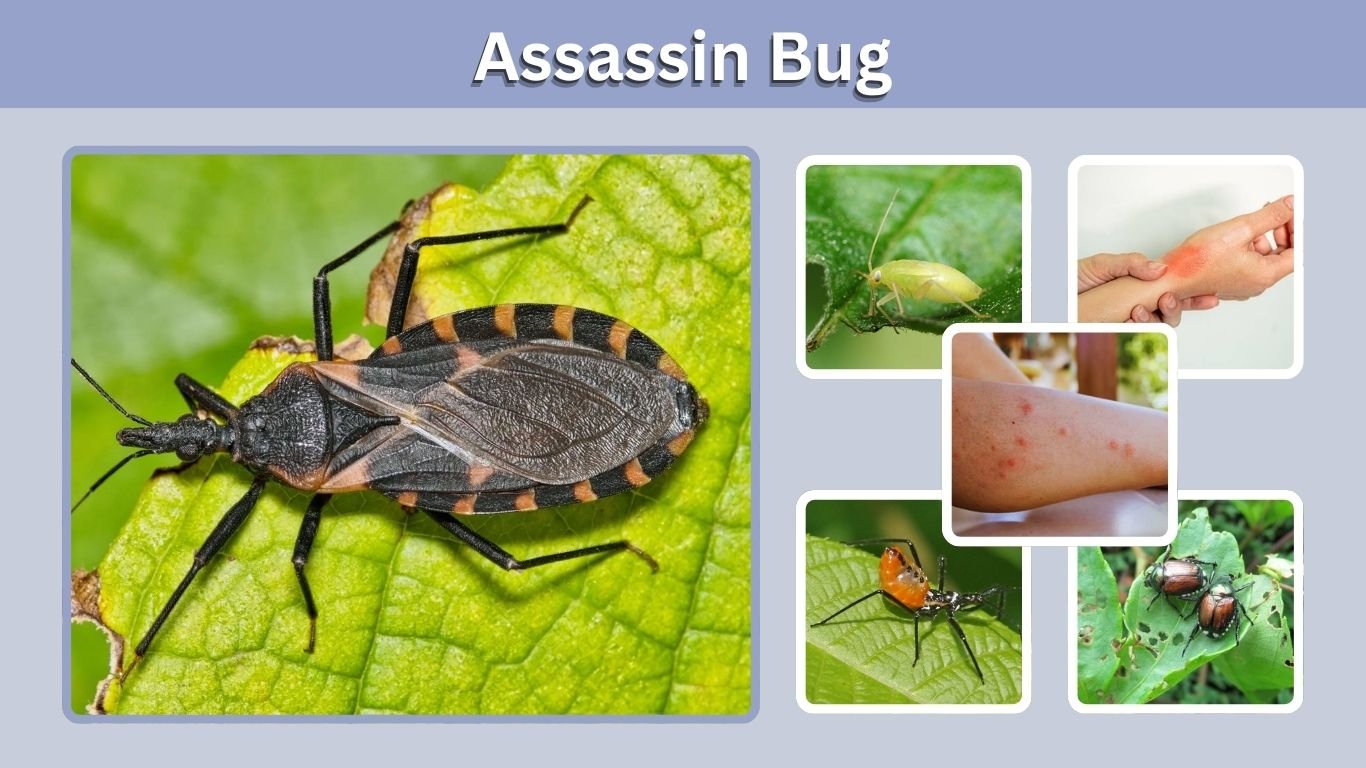
Assassin bugs are predatory insects known for ambushing other insects and piercing them with a curved, needle-like mouthpart. Most species are beneficial garden hunters that feed on caterpillars, flies, beetles and other pests. However, they can deliver a painful defensive bite when trapped against the skin or handled carelessly. Assassin bugs do not sting, and most species are not the same as blood-feeding kissing bugs. Understanding their shape, behavior and markings can help you identify them safely.
Assassin Bug Quick Facts
| Feature | Details |
| Scientific family | Reduviidae |
| Insect type | Predatory true bug |
| Main food | Other insects and arthropods |
| Mouthpart | Curved piercing beak |
| Activity | Varies by species |
| Bite risk | Painful but usually defensive |
| Sting | No |
| Common relative | Wheel bug |
| Dangerous subgroup | Kissing bugs |
What Is an Assassin Bug?
An assassin bug is a member of the insect family Reduviidae. Thousands of species occur worldwide, ranging from small, slender insects to large wheel bugs with distinctive crests.
Most assassin bugs are active predators. They approach prey slowly, grab it with their front legs and insert a sharp beak called a rostrum. Saliva injected through the beak helps immobilize the prey and break down its internal tissues, which the bug then consumes as liquid.
Assassin bugs can be useful around gardens because they prey on insects that damage plants. However, they are generalist hunters and may also capture beneficial insects such as bees, lacewings and other natural predators.
How to Identify an Assassin Bug
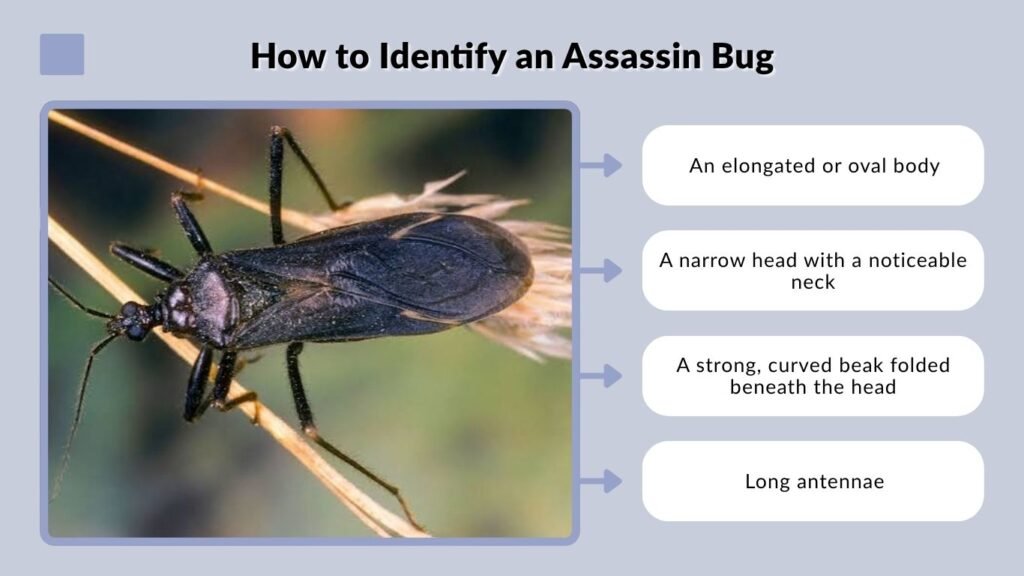
Assassin bugs vary greatly in color, but most share several structural features.
Common Identification Features
Look for:
- An elongated or oval body
- A narrow head with a noticeable neck
- A strong, curved beak folded beneath the head
- Long antennae
- Six relatively long legs
- Grasping front legs in some species
- Wings lying flat across the back in adults
- Slow, deliberate movement while stalking prey
Colors may include brown, black, gray, orange, red or green. Some species have brightly colored abdominal edges, while others blend with bark, soil or leaves.
The piercing beak is one of the best identification clues. It is shorter and heavier than the feeding tube of a mosquito and is usually held beneath the head when not in use.
Assassin Bug vs Kissing Bug
Kissing bugs are technically assassin bugs, but they behave differently from the predatory species commonly found in gardens.
Kissing bugs belong to the assassin bug subfamily Triatominae. Instead of hunting insects, they feed on the blood of mammals, birds and reptiles. They may enter houses and feed on sleeping people or pets.
| Feature | Typical assassin bug | Kissing bug |
| Main diet | Insects and arthropods | Blood |
| Common location | Gardens, plants and trees | Animal nests and sometimes homes |
| Body shape | Highly variable | Usually flattened and elongated |
| Head | Often narrow | Long, cone-shaped head |
| Abdominal edge | May be plain or patterned | Often marked with red or orange bands |
| Main concern | Painful defensive bite | Possible disease transmission |
Can Kissing Bugs Spread Disease?
Some kissing bugs can carry the parasite responsible for Chagas disease. The parasite is usually spread through infected bug feces rather than directly through the bite.
A kissing bug may feed and then defecate near the bite. Infection can occur if contaminated material is rubbed into the wound, eyes or mouth. Not every kissing bug carries the parasite, and simply seeing an assassin bug does not mean there is a Chagas disease risk.
Avoid crushing a suspected kissing bug with bare hands. Place it in a closed container for identification when appropriate.
Assassin Bug vs Wheel Bug
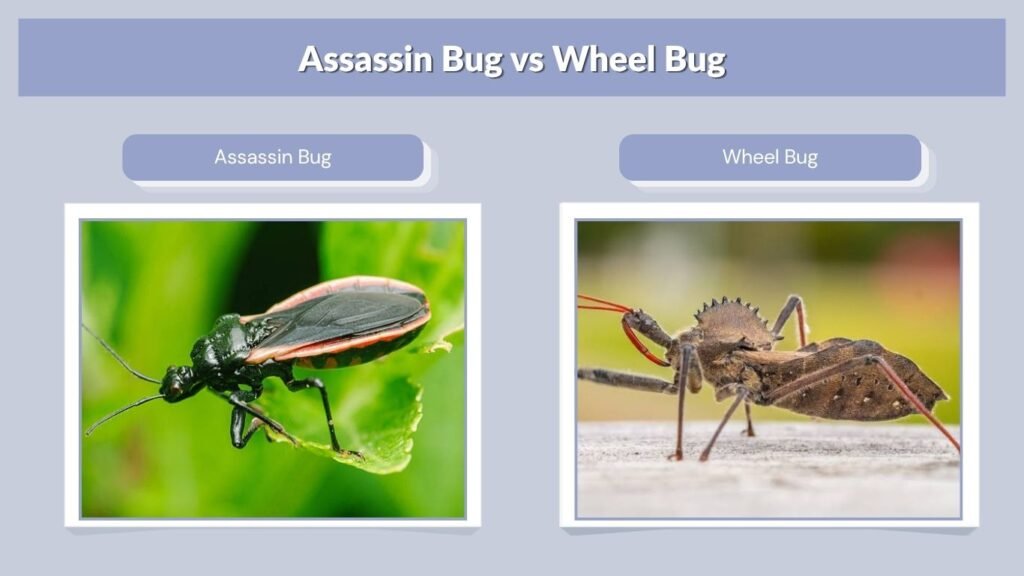
The wheel bug is one of the largest and most recognizable assassin bugs in North America. Its scientific name is Arilus cristatus.
Adult wheel bugs have a raised, gear-shaped structure on the back. No other common North American insect has the same wheel-like crest.
| Feature | General assassin bug | Wheel bug |
| Classification | Large family of insects | One assassin bug species |
| Adult crest | Usually absent | Large cogwheel-shaped crest |
| Color | Highly variable | Mostly gray or brown |
| Size | Small to large | Relatively large |
| Bite | Possible | Particularly painful |
Young wheel bugs do not have a developed wheel. Their nymphs often have red or orange abdomens with dark legs and heads, causing them to look very different from adults.
Wheel bugs feed on caterpillars, beetles and other insects. They should not be handled because their defensive bite can cause intense pain.
Do Assassin Bugs Bite or Sting?
Assassin bugs bite; they do not sting. They have no stinger like a bee or wasp.
The bite is delivered with the rostrum—the same piercing mouthpart used to subdue prey. A bug usually bites a human only when it is:
- Picked up
- Pressed against the skin
- Trapped inside clothing
- Stepped on
- Disturbed while hiding
- Handled during removal
Assassin bugs do not normally chase people or seek human blood. Kissing bugs are the exception because they feed on vertebrate blood, although their bites may initially be less noticeable.
What Does an Assassin Bug Bite Feel Like?
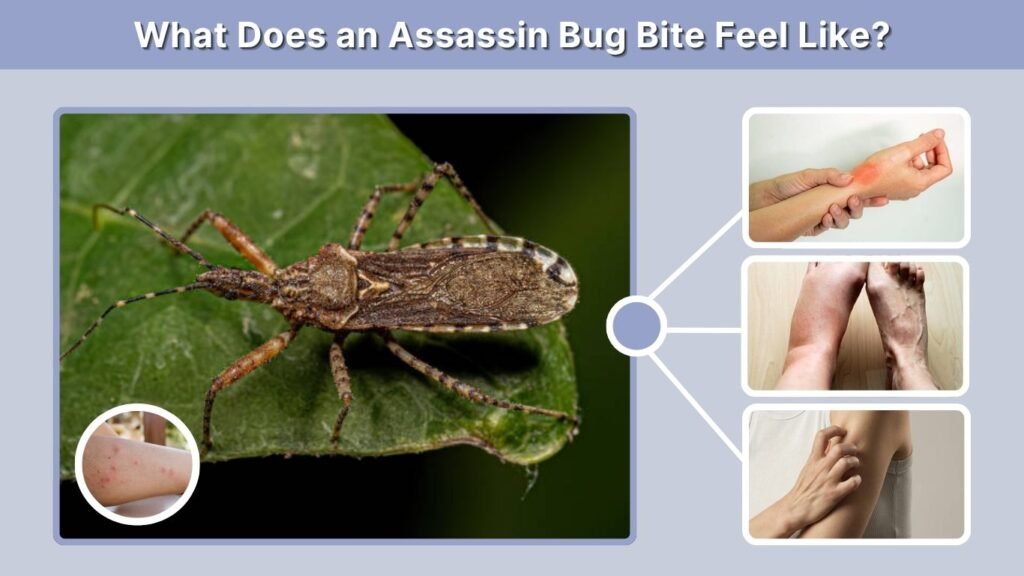
A defensive assassin bug bite may cause immediate, sharp or burning pain. Some people compare it to a bee or wasp sting, even though no stinger is involved.
Possible symptoms include:
- Sudden pain
- Redness
- Local swelling
- Itching
- A small puncture mark
- Tenderness around the bite
- Warmth or irritation
The appearance is not always distinctive. An assassin bug bite mark may resemble a bite from another insect, a minor puncture or a localized allergic reaction. A photo alone may not confirm the cause unless the insect was seen biting.
How Long Do Symptoms Last?
Mild discomfort may improve within several hours, while redness, tenderness or swelling can last for a few days. Individual reactions vary according to bite location, species and personal sensitivity.
Seek urgent medical care if the person develops breathing difficulty, facial swelling, severe dizziness or other signs of a serious allergic reaction. Medical advice is also appropriate when pain worsens, redness spreads or the wound shows signs of infection.
What to Do After an Assassin Bug Bite
Wash the affected area with soap and water. Apply a cold pack wrapped in cloth for short periods to reduce pain and swelling.
Avoid scratching because damaged skin can become infected. A nonprescription pain reliever or anti-itch treatment may help when medically appropriate for the person using it.
Do not cut the wound, attempt to suck out venom or apply harsh household chemicals. Assassin bugs do not inject venom in the same manner as snakes, but their saliva can still cause considerable local irritation.
Assassin Bug Nymph Identification
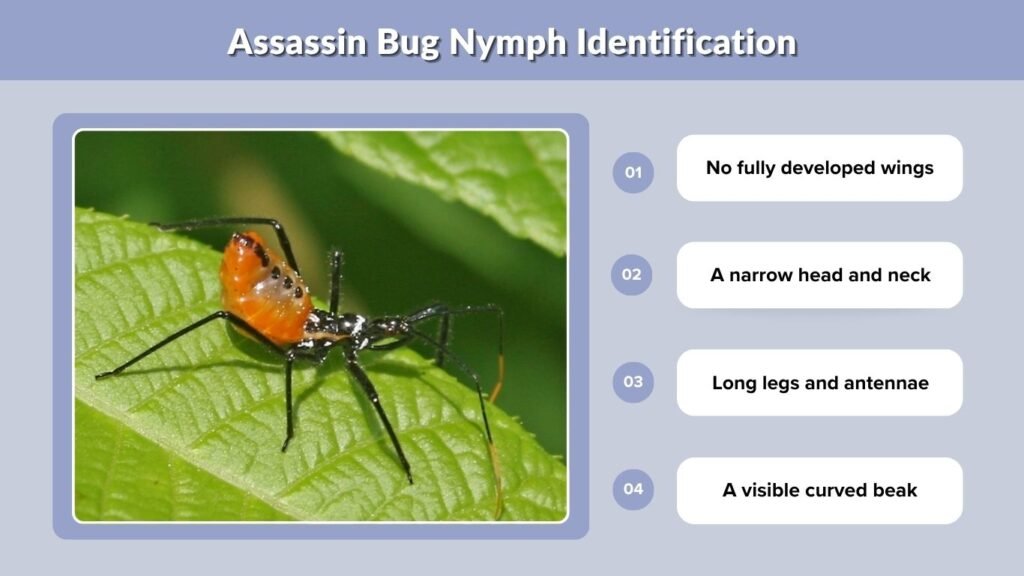
Assassin bugs undergo incomplete metamorphosis. Their life cycle includes egg, nymph and adult stages without a pupal stage.
Nymphs resemble small wingless adults but may have dramatically different colors. Depending on the species, they may be red, orange, black, green or brown.
Typical Nymph Features
An assassin bug nymph may have:
- No fully developed wings
- A narrow head and neck
- Long legs and antennae
- A visible curved beak
- Bright warning colors
- A rounded or exposed abdomen
- Developing wing pads in later stages
Young assassin bugs are still predators and can bite defensively. They should be observed without touching.
Wheel bug nymphs are especially noticeable because they often have bright red abdomens and black legs. The characteristic wheel develops only after the final molt into adulthood.
What Do Assassin Bugs Eat?
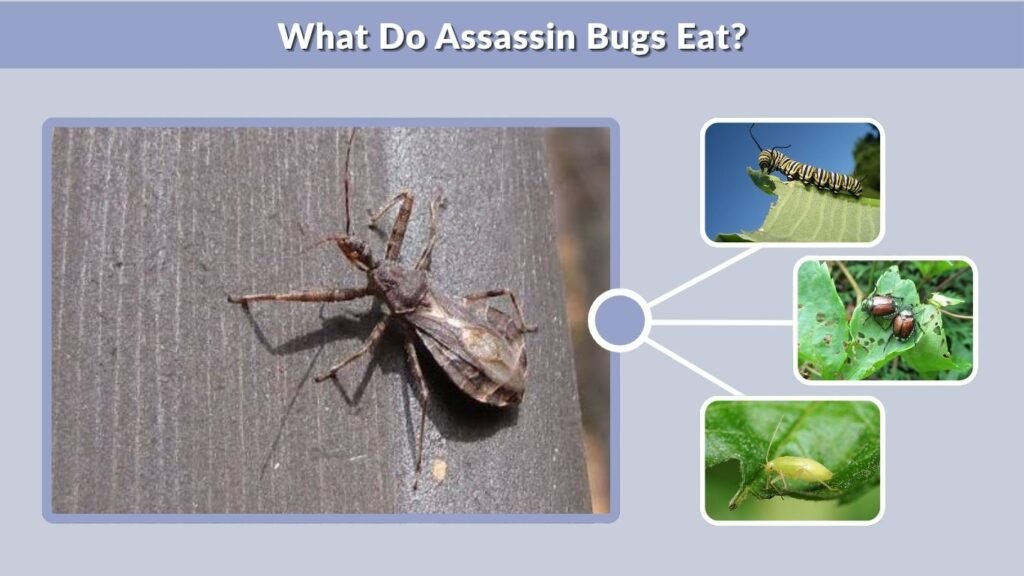
Most assassin bugs feed on other small animals, particularly insects.
Common prey includes:
- Caterpillars
- Beetles
- Flies
- Aphids
- Leafhoppers
- Grasshoppers
- Moths
- Other true bugs
- Small spiders
- Insect eggs and larvae
They often wait motionless on flowers, leaves, bark or stems until prey approaches. Some species actively stalk insects, while others use camouflage or cover themselves with dust and debris.
Assassin bugs can help limit pest populations, but they do not distinguish between harmful and beneficial prey.
Assassin Bugs in Florida
Florida has numerous assassin bug species because its warm climate supports a wide variety of insects throughout much of the year.
Commonly encountered types may include wheel bugs, milkweed assassin bugs and several smaller predatory species. Kissing bugs also occur in parts of Florida, making accurate identification important when a suspicious insect is found indoors.
Garden assassin bugs are often seen on:
- Shrubs
- Flowering plants
- Tree trunks
- Vegetable plants
- Porch screens
- Outdoor lights
- Fences and walls
A brightly colored assassin bug outdoors is not automatically a kissing bug. Examine the head shape, abdominal markings and feeding behavior rather than relying only on red or orange coloration.
How to Remove an Assassin Bug Safely
Do not pick up the insect with bare fingers. Place a container over it, slide stiff paper underneath and release it outdoors away from doors and frequently used areas.
Wear gloves if moving objects where assassin bugs may be hiding. Shake out garden gloves, clothing and shoes that have been left outside.
Pesticides are usually unnecessary for an occasional assassin bug. Sealing gaps around windows, doors and utility openings can help prevent outdoor insects from entering the home.
FAQs
Are assassin bugs dangerous to humans?
Most assassin bugs are not seriously dangerous, but they can deliver a painful defensive bite. Kissing bugs require greater caution because some may carry the parasite associated with Chagas disease.
Is an assassin bug bite poisonous?
Assassin bugs inject saliva that helps them subdue prey. In humans, it may cause pain, redness and swelling, but typical predatory assassin bug bites are not generally considered life-threatening.
How can I tell a kissing bug from a wheel bug?
An adult wheel bug has a large gear-shaped crest on its back. Kissing bugs lack this wheel and usually have flattened bodies, cone-shaped heads and colored markings along the abdomen’s outer edge.
Can assassin bug nymphs bite?
Yes. Nymphs have piercing mouthparts and can bite when handled or trapped against the skin. Their small size and bright colors do not make them safe to touch.
Should I kill assassin bugs in my garden?
Usually not. Predatory assassin bugs consume many plant pests and normally leave people alone. Relocation may be appropriate when one appears near a doorway, play area or inside the home.
