
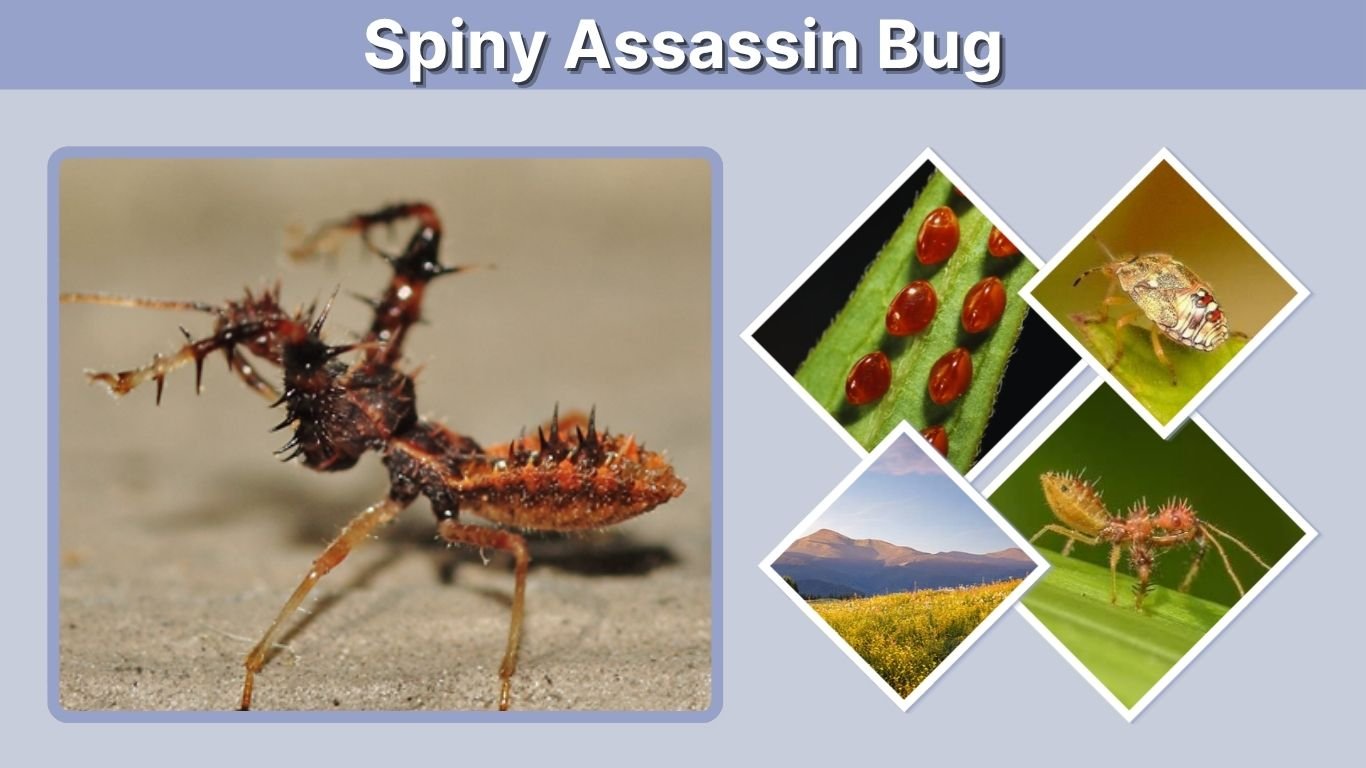
The spiny assassin bug is a small predatory insect recognized by its narrow head, piercing beak, and thorn-covered front legs. In North America, the name usually refers to Sinea spinipes, a brown assassin bug measuring approximately half an inch long. It hunts stink bugs, beetles, caterpillars, and other insects in gardens, meadows, and woodland-edge vegetation. Although beneficial, it should not be handled because it can deliver a painful defensive bite. The much larger black-and-orange giant spiny assassin bug is a separate African species commonly kept by exotic-insect enthusiasts.
What Is a Spiny Assassin Bug?
The North American spiny assassin bug, Sinea spinipes, belongs to the Reduviidae family. Assassin bugs are true bugs with a three-segmented, clawlike beak that folds into a groove beneath the body. They use this beak to inject prey-subduing saliva and consume the liquefied tissues of captured insects.
| Feature | North American spiny assassin bug |
| Scientific name | Sinea spinipes |
| Family | Reduviidae |
| Size | About ½ inch |
| Main color | Mottled brown or gray-brown |
| Diet | Other insects |
| Development | Egg, five nymph stages, and adult |
| Human risk | Painful defensive bite |
| Garden role | Generalist insect predator |
The name can be confusing. Sinea diadema is often called the spined assassin bug, while Sinea spinipes is called the spiny assassin bug. Both are covered with projections, and their common names are not reliable enough for identification by themselves.
How to Identify a Spiny Assassin Bug
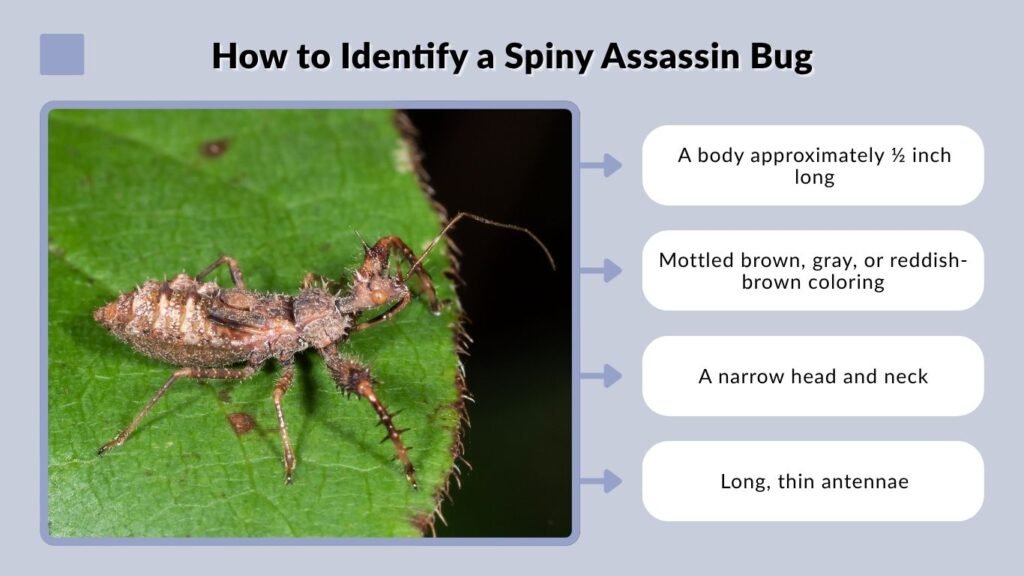
Adult Sinea spinipes has a slender brown body that blends easily with dry stems, bark, leaf litter, and dead vegetation. It has a narrow head, long antennae, folded wings, and thickened front legs lined with noticeable spines.
Main Identification Features
Look for:
- A body approximately ½ inch long
- Mottled brown, gray, or reddish-brown coloring
- A narrow head and neck
- Long, thin antennae
- A short, curved beak beneath the head
- Thick, spiny front legs
- Wings forming a flat pattern over the back
- An abdomen that may extend slightly beyond the wings
The front portion of an adult Sinea spinipes has relatively blunt tubercles rather than the sharper pronotal spines seen on Sinea diadema. This feature applies mainly to adults and may require a close photograph or expert examination.
Spiny Assassin Bug Nymph
A spiny assassin bug nymph resembles a tiny, wingless adult but often appears more dramatic because its legs, thorax, and abdomen carry prominent spines. Young nymphs may look like a combination of an ant and a small praying mantis.
Nymph Identification
A nymph typically has:
- No fully developed wings
- Long, thin antennae
- A narrow head
- Strong, heavily spined front legs
- A rounded or elongated abdomen
- Brown, black, orange, or reddish markings
- A short piercing beak beneath the body
The spines on the front tibiae are an important clue for identifying a nymph as a member of the genus Sinea. However, nymphs of Sinea spinipes and Sinea diadema can be extremely similar and generally cannot be identified confidently to species from a photograph alone.
Nymphs pass through five immature stages. They become larger after each molt, and functional wings appear only after the final molt into adulthood.
What Do Spiny Assassin Bugs Eat?
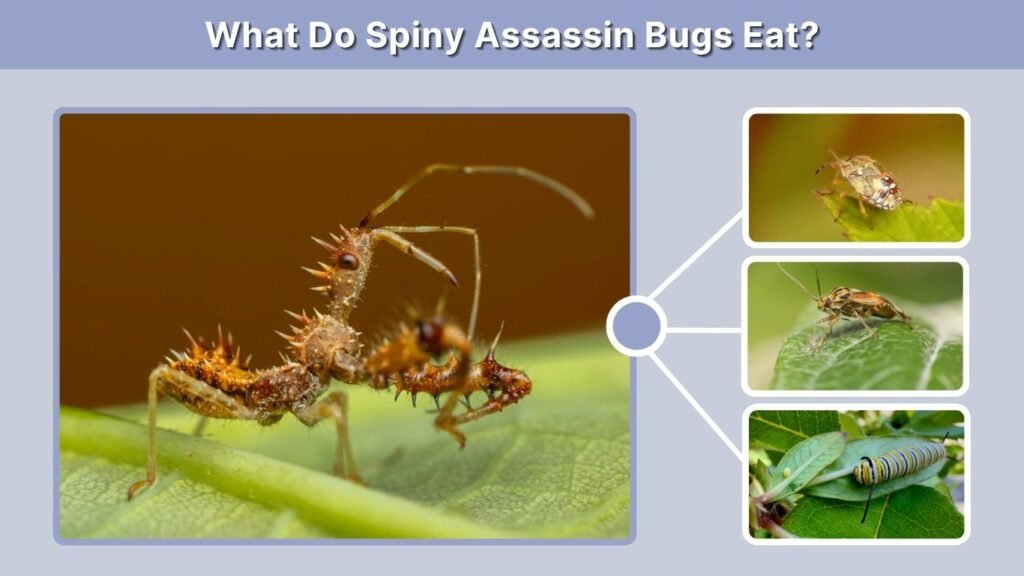
Spiny assassin bugs are generalist predators. They walk, hop, or fly through vegetation and capture insects with their strong front legs before piercing them with the beak.
Recorded prey includes:
- Stink bug nymphs
- Tarnished plant bugs
- Cotton fleahoppers
- Boll weevils
- Soldier or cantharid beetles
- Caterpillars
- Other small insects
Field and laboratory research has documented Sinea spinipes feeding on green stink bug nymphs, beetles, the Say stink bug, tarnished plant bugs, cotton fleahoppers, and boll weevils.
Are They Beneficial?
Spiny assassin bugs can benefit gardens and farms by eating plant-feeding insects. They do not chew leaves, drink plant sap, or damage fruit. However, they are generalists and may occasionally capture beneficial insects as well as pests. Their usually low numbers mean they are helpful members of the predator community rather than a complete pest-control solution.
Spiny Assassin Bug Eggs and Life Cycle
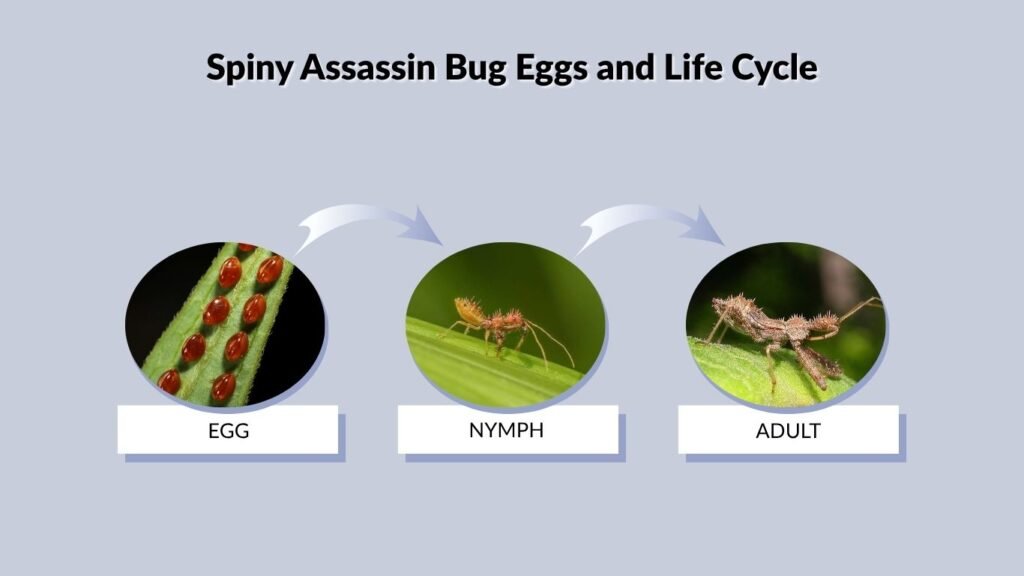
The species undergoes incomplete metamorphosis, meaning that it develops from an egg into several wingless nymph stages and then into a winged adult. It does not have a caterpillar or pupal stage.
1. Eggs
Females lay brownish eggs in compact clusters, often arranged in rows and glued to the surface and to one another. Laboratory clusters averaged around seven eggs, although cluster size varied considerably. The incubation period averaged approximately 15 days under controlled conditions.
2. Nymphs
The hatchlings pass through five nymphal stages. Each stage hunts live prey and resembles a smaller, wingless adult. The spines and body proportions become more pronounced as the nymph grows.
3. Adults
Research in southern Illinois indicates that Sinea spinipes usually produces one generation per year and overwinters as an adult beneath dead leaves and other sheltered debris. Adults emerge during spring, females lay eggs from spring into summer, and new adults appear later in the season.
Where Do Spiny Assassin Bugs Live?
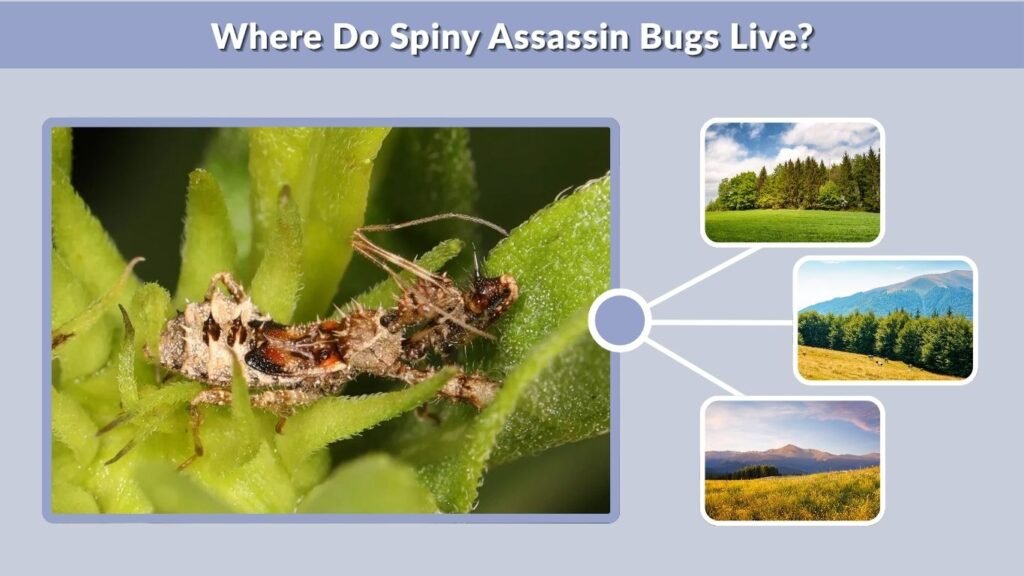
Spiny assassin bugs are commonly associated with shaded herbaceous vegetation, forest edges, open fields near trees, roadsides, meadows, and weedy areas. Individuals have been collected from goldenrod, Queen Anne’s lace, black-eyed Susan, evening primrose, woodland sunflower, elm, oak, rose, and other vegetation.
Their brown camouflage makes them difficult to notice unless they move. They may be found sitting on stems, leaves, flowers, or small branches while waiting for prey.
Spiny Assassin Bug Bite
Spiny assassin bugs do not feed on human blood and do not seek people as prey. However, their piercing mouthparts can puncture skin when an insect is picked up, squeezed, trapped in clothing, or slapped while resting on the body.
A defensive bite may cause:
- Sudden sharp or burning pain
- Localized redness
- Swelling
- Tenderness
- Itching
- Temporary numbness or throbbing
Assassin bugs are generally considered beneficial, but wildlife authorities advise against handling them because bites can be painful. Brushing the insect away gently is safer than crushing it against the skin.
Bite Treatment
Wash the area thoroughly with soap and water. Apply a cold pack wrapped in cloth to reduce pain and swelling, and avoid scratching the puncture.
Obtain medical advice if pain or swelling worsens, redness spreads, the wound produces pus, or symptoms do not improve. Difficulty breathing, facial or tongue swelling, fainting, or throat tightness requires emergency medical care.
Is the Spiny Assassin Bug Venomous?
Assassin bugs deliver prey-subduing secretions through their beaks. These secretions immobilize insects and help break down their tissues before feeding. In that biological sense, assassin bugs possess venom used against prey.
However, Sinea spinipes is not considered comparable to medically important venomous animals. The main concern for humans is a painful localized defensive bite rather than serious systemic poisoning. It should still be treated respectfully and never handled with bare hands.
Giant Spiny Assassin Bug
The giant spiny assassin bug is not a larger form of Sinea spinipes. It is a separate African species called Psyttala horrida. The frequently used spelling “Psytalla horrida” is considered incorrect; taxonomic research supports restoring the original spelling Psyttala.
| Feature | Sinea spinipes | Psyttala horrida |
| Common name | Spiny assassin bug | Giant spiny assassin bug |
| Region | North America | Tropical Africa |
| Appearance | Small and mottled brown | Large, black, orange, and heavily armored |
| Typical status | Wild garden predator | Often kept in captivity |
| Handling | Not recommended | Strongly discouraged |
The giant species has a broad black body, orange leg sections, orange abdominal markings, and large spines on the thorax. Studies of captive specimens describe eggs and five nymphal stages.
Giant Spiny Assassin Bug Care and Feeding
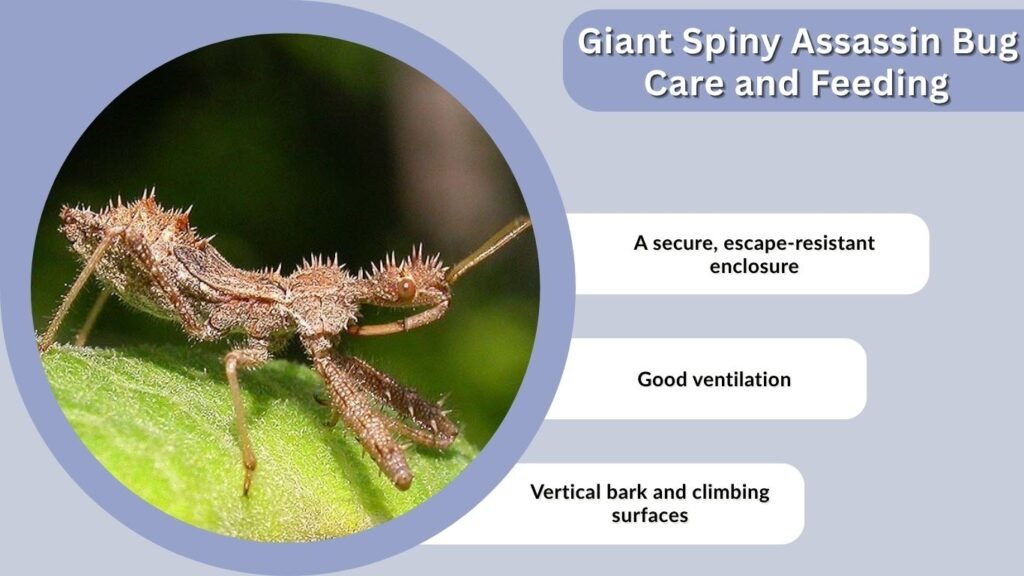
People searching for a spiny assassin bug for sale are usually looking for Psyttala horrida, not the small North American species. It is an advanced predatory-insect pet because it requires live prey and can inflict a painful defensive bite.
Basic captive-care considerations include:
- A secure, escape-resistant enclosure
- Good ventilation
- Vertical bark and climbing surfaces
- Sufficient space for safe molting
- Appropriate warmth and humidity
- Regular live insect prey
- Long feeding tools instead of hand feeding
- Separation when cannibalism becomes a concern
Prospective keepers should purchase only captive-bred insects from lawful sources and check local import, possession, and shipping rules. Wild North American assassin bugs should not be collected simply for resale or casual handling.
FAQs
Can a spiny assassin bug fly?
Adult spiny assassin bugs have functional wings and can fly, although they also walk and hop while hunting. Nymphs cannot fly because they lack developed wings.
Is a spiny assassin bug dangerous?
It is not aggressive or blood-feeding, but it can inflict a painful defensive bite. Avoid picking it up, squeezing it, or trapping it against bare skin.
Do spiny assassin bugs carry Chagas disease?
Sinea spinipes is a predatory assassin bug, not a blood-feeding kissing bug. It is not associated with transmission of the parasite responsible for Chagas disease.
Should I kill a spiny assassin bug?
Killing one is normally unnecessary. It is a beneficial predator that eats several plant pests. Leave it alone outdoors or move it with a container rather than using bare hands.
What does a spiny assassin bug nymph eat?
Nymphs consume small live insects, including young stink bugs, caterpillars, beetles, and other soft-bodied prey. They use their spiny front legs to hold prey while feeding through the piercing beak.
