
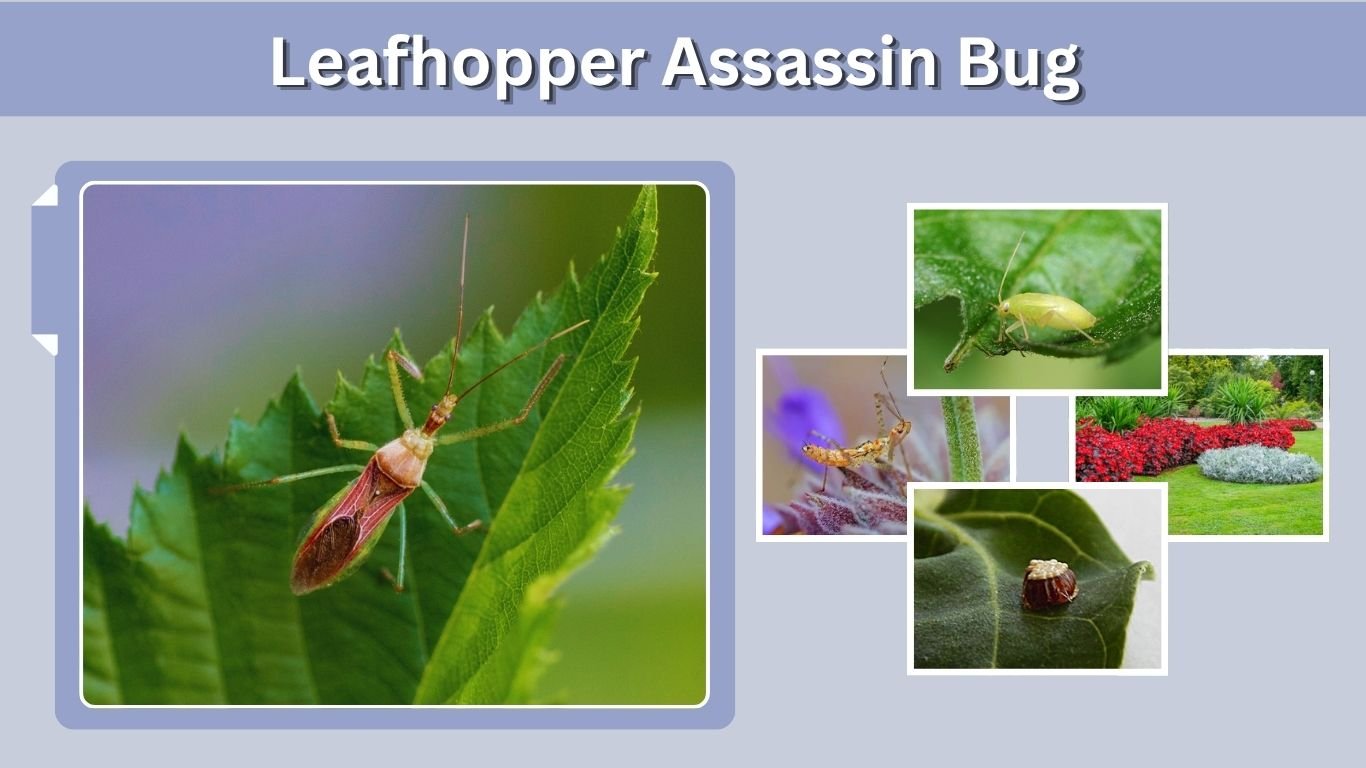
The leafhopper assassin bug (Zelus renardii) is a predatory insect commonly found on garden plants, shrubs, and agricultural crops. Despite its intimidating name, this insect can be beneficial because it hunts leafhoppers, aphids, caterpillars, beetles, and various other small insects. However, leafhopper assassin bugs have a sharp piercing mouthpart and can deliver a painful bite if handled or disturbed. They are especially common in California and other parts of the Western Hemisphere. Here is everything you should know about their identification, nymphs, eggs, life cycle, bites, and potential danger.
What Is a Leafhopper Assassin Bug?
The leafhopper assassin bug is a species of true bug belonging to the assassin bug family Reduviidae. Its scientific name is Zelus renardii, placing it within the genus Zelus.
Unlike plant-feeding bugs, leafhopper assassin bugs are predators. They stalk or ambush other insects and capture them using specialized piercing mouthparts. Once prey is caught, the assassin bug injects substances that immobilize the victim and begin breaking down its tissues before feeding.
| Feature | Leafhopper Assassin Bug |
| Scientific name | Zelus renardii |
| Family | Reduviidae |
| Genus | Zelus |
| Diet | Predatory |
| Adult size | Up to about 3/4 inch |
| Life stages | Egg, nymph, adult |
| Human danger | Can cause a painful defensive bite |
| Chagas disease vector | No |
| Common in California | Yes |
Leafhopper Assassin Bug Identification
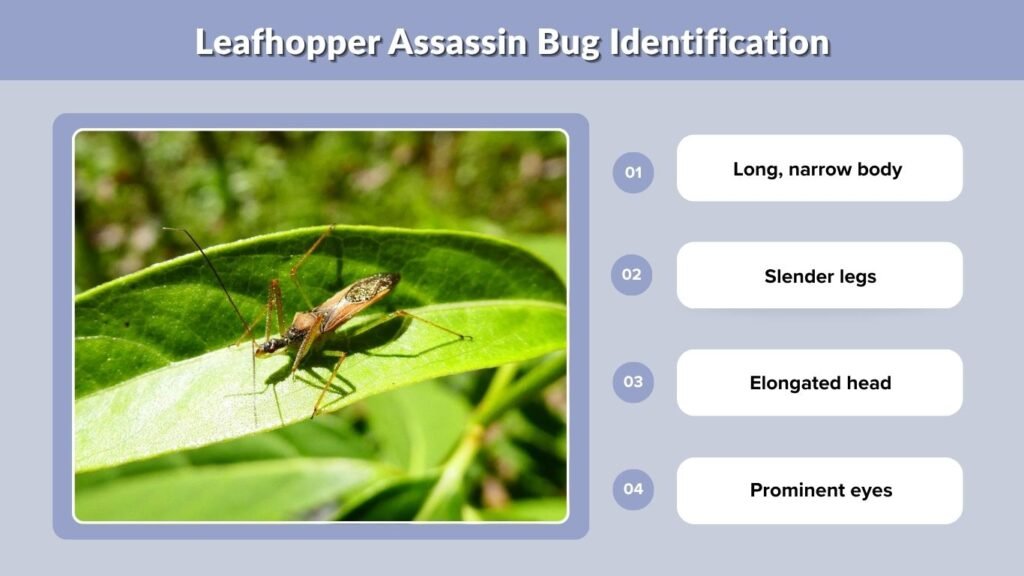
Adult leafhopper assassin bugs have a slender, long-legged appearance that can make them look somewhat like a combination of a small mantis and a true bug.
How to Identify a Leafhopper Assassin Bug
Look for these characteristics:
- Long, narrow body
- Slender legs
- Elongated head
- Prominent eyes
- Curved, needle-like beak beneath the head
- Wings covering the abdomen in adults
- Brown, yellowish, reddish, or greenish coloration
- Adult length reaching approximately 3/4 inch
Their piercing beak, called a rostrum, is one of the most important identification features. It is used for capturing prey rather than feeding on plants. Adult Zelus renardii may reach around three-quarters of an inch long.
Leafhopper Assassin Bug Nymph
A leafhopper assassin bug nymph is an immature individual that has not yet developed full wings.
Nymphs can look quite different from adults and are sometimes mistaken for other garden insects. They have long legs and antennae and may display lighter or brighter coloration.
UC IPM notes that Zelus nymphs can be confused with young leaffooted bugs. One useful difference is that Zelus nymphs typically have pale-colored legs and antennae, whereas leaffooted bug nymphs have darker legs and antennae.
Are Leafhopper Assassin Bug Nymphs Beneficial?
Yes. Nymphs are predators just like adults.
They hunt small insects living on vegetation and use their piercing mouthparts to feed. Leafhopper assassin bugs can capture various garden insects, including aphids and other plant-feeding pests.
Zelus renardii also produces a sticky substance that helps it capture prey.
Because nymphs have piercing mouthparts, however, they should still be observed rather than picked up with bare hands.
Leafhopper Assassin Bug Bite
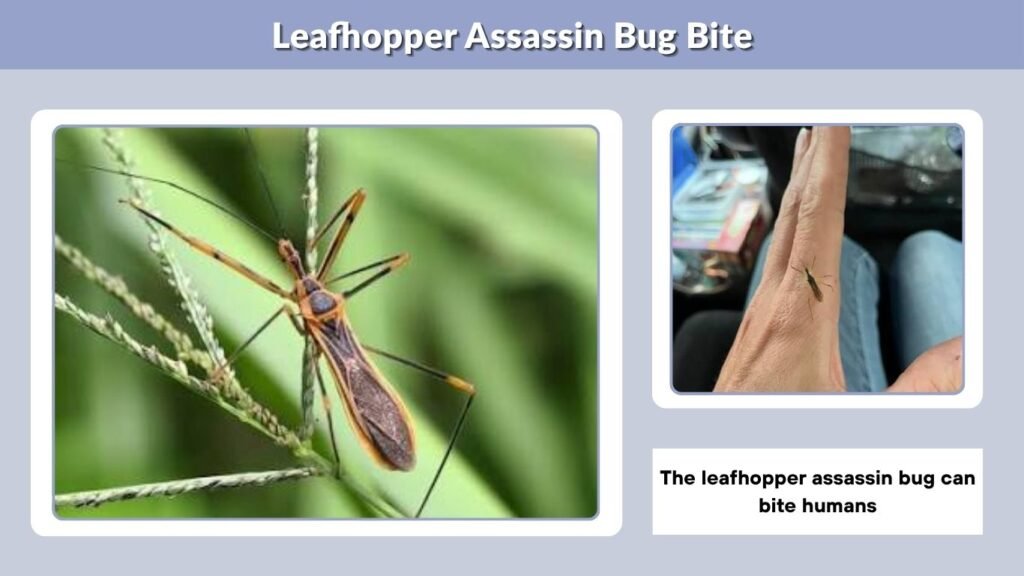
The leafhopper assassin bug can bite humans, particularly when it is trapped, handled, squeezed, or otherwise disturbed.
Its mouthpart is designed to pierce insect prey, so a defensive bite can be surprisingly painful.
UC Master Gardeners describes the bite of Zelus renardii as potentially intensely painful.
Why Do Leafhopper Assassin Bugs Bite?
They do not normally hunt humans or seek people as food.
Most leafhopper assassin bugs are predators of other insects. A human bite is generally defensive and may happen when someone:
- Picks up the insect
- Traps it against their skin
- Handles plants where one is hiding
- Accidentally squeezes one
- Tries to remove one by hand
Leaving the insect alone greatly reduces the chance of being bitten.
Are Leafhopper Assassin Bugs Dangerous?
For most people, a leafhopper assassin bug is better regarded as a potentially painful garden predator than a highly dangerous insect.
Its appearance and the word “assassin” can make it sound threatening, but its hunting behavior is directed primarily toward other insects.
However, you should avoid deliberately handling one because its piercing mouthpart can produce a painful defensive bite.
A severe or unusual reaction following any insect bite—such as trouble breathing, extensive swelling, faintness, or rapidly worsening symptoms—should receive prompt medical attention.
Do Leafhopper Assassin Bugs Carry Chagas Disease?
Leafhopper assassin bugs are not the kissing bugs responsible for transmitting Chagas disease.
This distinction is important because both insects belong to the large assassin bug family Reduviidae.
Chagas disease is associated with infected triatomine bugs, commonly known as kissing bugs. The CDC states that transmission occurs when feces from an infected triatomine bug containing Trypanosoma cruzi enter the body through a wound, the eyes, or the mouth.
Leafhopper assassin bugs such as Zelus renardii are insect predators, whereas kissing bugs are specialized blood feeders belonging to the subfamily Triatominae. UC IPM specifically distinguishes these blood-feeding assassin bugs from predatory species such as Zelus.
Therefore, finding a leafhopper assassin bug does not mean that you have found a Chagas disease vector.
Leafhopper Assassin Bug Eggs
Leafhopper assassin bug eggs can often be found attached directly to plants.
They are relatively distinctive when viewed closely.
What Do the Eggs Look Like?
Eggs of Zelus renardii are:
- Oblong or barrel-like
- Dark brown
- Topped with a pale or white cap
- Arranged together in groups
- Glued onto plant surfaces
UC IPM describes Zelus renardii eggs as oblong, dark brown eggs with white caps occurring in groups attached to vegetation.
The clustered arrangement can sometimes make them look like a miniature group of tightly packed barrels.
Leafhopper Assassin Bug Life Cycle
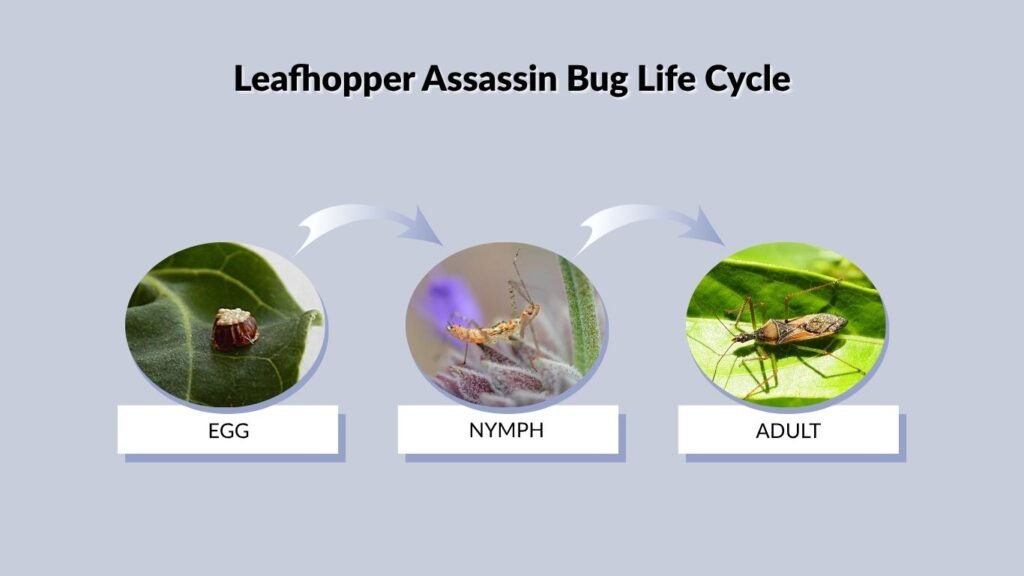
The leafhopper assassin bug life cycle involves three main stages:
Egg → Nymph → Adult
Unlike butterflies or beetles, leafhopper assassin bugs do not undergo a pupal stage.
1. Egg Stage
Females deposit groups of eggs on vegetation. The developing insect remains protected within the egg until hatching.
2. Nymph Stage
A small wingless nymph emerges from the egg. As it grows, it passes through five nymphal instars, becoming larger with each molt.
3. Adult Stage
After the fifth nymphal stage, the insect molts into a winged adult.
UC IPM reports that assassin bugs generally have one or two generations annually, although the exact timing depends on species and location. Zelus species may overwinter as adults.
Leafhopper Assassin Bug Habitat
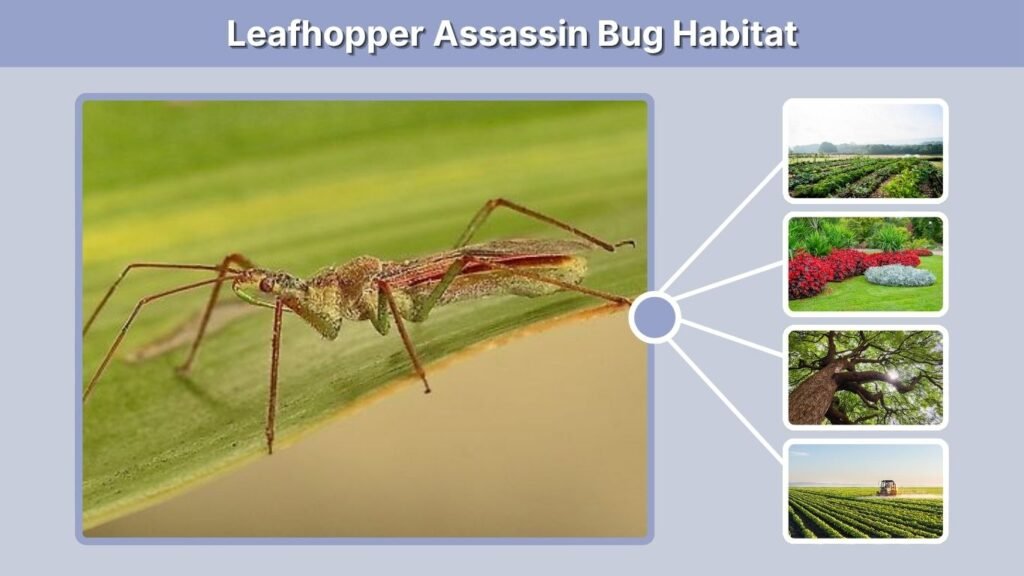
Leafhopper assassin bugs spend much of their lives on vegetation where other insects are abundant.
They can occur in:
- Home gardens
- Vegetable gardens
- Flower beds
- Shrubs
- Trees
- Agricultural fields
- Orchards
- Landscaped areas
- Wild vegetation
Assassin bugs can inhabit almost any terrestrial plant habitat where suitable prey is available.
They often sit quietly on leaves or stems and wait for potential prey to approach.
Leafhopper Assassin Bug in California
The leafhopper assassin bug is particularly common in California.
UC IPM reports that Zelus renardii occurs throughout California as well as more broadly across the Western Hemisphere. California contains several species belonging to the genus Zelus.
Gardeners may encounter them on ornamental plants, vegetables, flowering plants, and shrubs.
They can help reduce some pest insects, although they are generalist predators rather than selective pest-control agents.
What Do Leafhopper Assassin Bugs Eat?
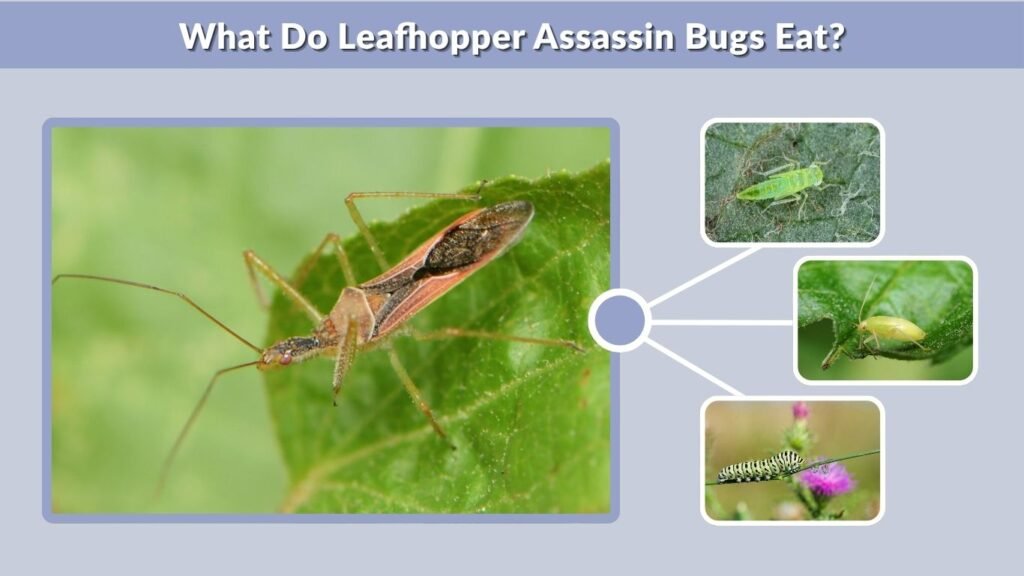
The name suggests that they primarily hunt leafhoppers, but their diet is considerably broader.
Leafhopper assassin bugs may prey on:
- Leafhoppers
- Aphids
- Caterpillars
- Beetles
- Other true bugs
- Small insect larvae
- Lacewings
- Lady beetles
- Bees
UC sources note that Zelus renardii can prey on garden pests such as aphids, caterpillars, and cucumber beetles. However, it may also capture beneficial insects such as bees, lacewings, and lady beetles.
For this reason, it is best described as a generalist predator rather than a predator that only kills pests.
Leafhopper Assassin Bug in the House
Occasionally, a leafhopper assassin bug may enter a house, particularly when seeking shelter.
UC IPM notes that Zelus assassin bugs may overwinter as adults and can sometimes be observed around walls and windows during fall while seeking protected areas.
Finding a single individual indoors usually does not mean that the home has a serious infestation.
Avoid picking it up directly. It can instead be carefully moved outside without crushing or handling it against bare skin.
FAQs
Are leafhopper assassin bugs good or bad?
Leafhopper assassin bugs can be beneficial because they prey on aphids, leafhoppers, caterpillars, beetles, and other garden insects. However, they are generalist predators and may also kill beneficial insects such as bees, lacewings, and lady beetles.
Does a leafhopper assassin bug bite hurt?
Yes. A defensive bite from a leafhopper assassin bug can be quite painful. They do not normally seek out humans, but a bite may occur if the insect is grabbed, trapped against the skin, or otherwise disturbed.
Are leafhopper assassin bugs poisonous?
Leafhopper assassin bugs are not considered poisonous to people. They use specialized mouthparts and injected substances to immobilize insect prey. Their primary concern for humans is the possibility of a painful defensive bite.
Can leafhopper assassin bugs transmit Chagas disease?
No. Zelus renardii is a predatory assassin bug, not a blood-feeding triatomine or kissing bug. The CDC identifies infected triatomine bugs as the insects involved in vector transmission of Trypanosoma cruzi, the parasite that causes Chagas disease.
What does a leafhopper assassin bug nymph look like?
Nymphs are smaller and wingless compared with adults. Zelus nymphs have relatively long legs and antennae, and UC IPM notes that their legs and antennae are generally pale-colored, helping distinguish them from similar-looking young leaffooted bugs.
