
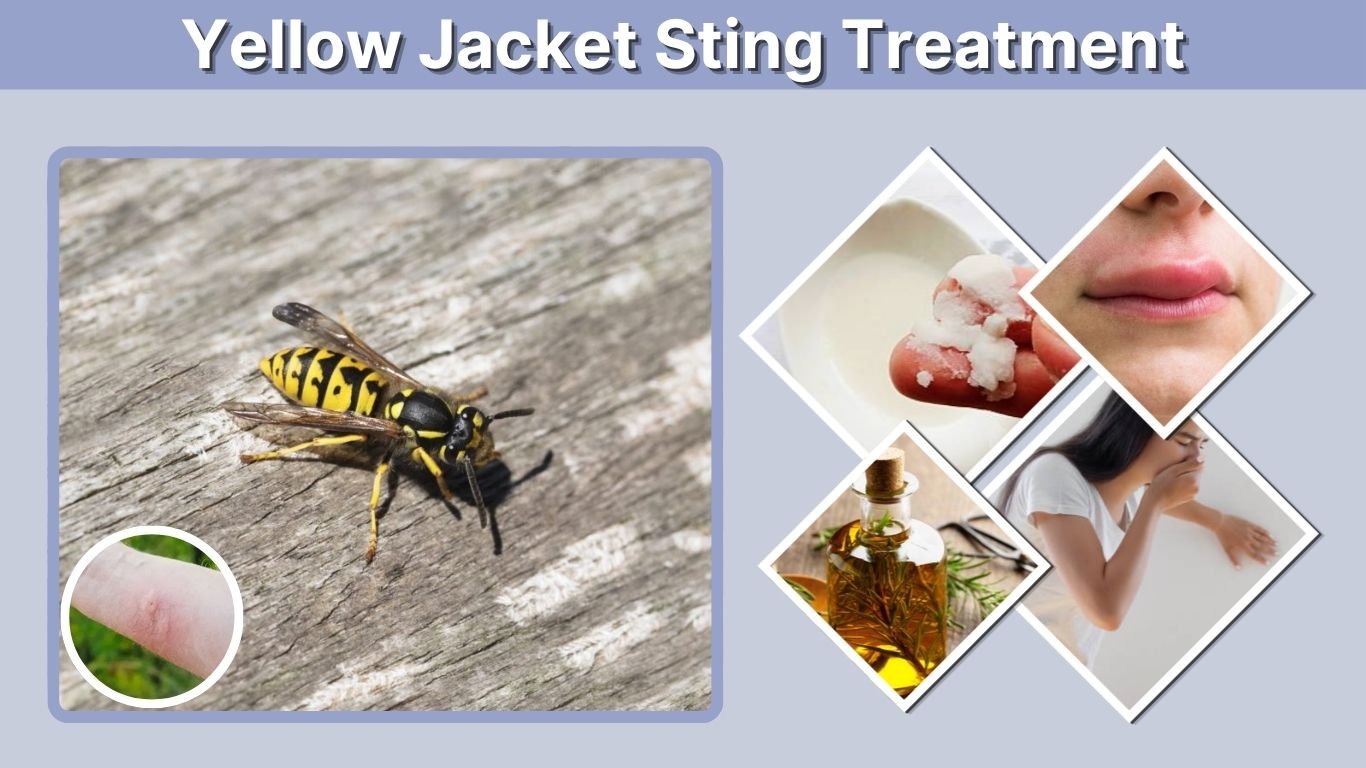
Yellow jacket sting treatment usually begins with washing the area, applying a cold compress, and using appropriate over-the-counter treatments for pain, itching, or swelling. Yellow jackets are wasps rather than bees, and they can sting repeatedly because they normally do not leave their stinger behind. Most reactions remain limited to temporary pain and swelling, but yellow jacket venom can cause life-threatening anaphylaxis in susceptible people. Knowing the difference between a normal local reaction and an emergency is therefore essential.
Immediate Yellow Jacket Sting Treatment
Most uncomplicated yellow jacket stings can be managed at home. The first priorities are getting away from the insects, cleaning the skin, controlling swelling, and watching for signs of an allergic reaction. Pain may start immediately, while redness, tenderness, itching, and swelling can continue afterward. Unlike honeybees, yellow jackets usually withdraw their stingers and may sting several times.
Yellow Jacket Sting First Aid
For a mild reaction:
- Move away from the nest or insects to prevent additional stings.
- Wash the affected area gently with soap and water.
- Check for a stinger, although yellow jackets usually do not leave one behind.
- Apply a cloth-covered cold pack for about 10–20 minutes.
- Elevate an affected arm or leg when practical.
- Remove rings or tight jewelry if swelling is developing.
- Avoid scratching, which can damage the skin and increase infection risk.
Treatment for Yellow Jacket Sting Pain and Itching
Cold therapy is one of the simplest ways to ease immediate pain and swelling. For lingering discomfort, commonly used nonprescription options include acetaminophen or ibuprofen when they are safe for that individual.
Itching may respond to calamine lotion, 0.5% or 1% hydrocortisone cream, or an oral antihistamine such as cetirizine, loratadine, or fexofenadine. Follow product directions and consider medical or pharmacist advice for children, pregnancy, medication interactions, or existing medical conditions.
Yellow Jacket Sting Treatment Home Remedies
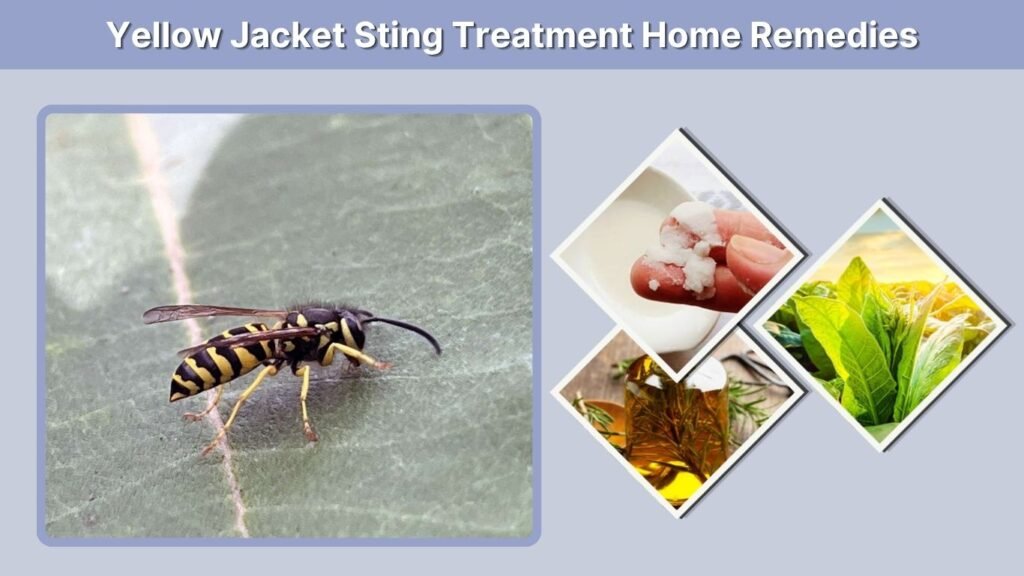
Many people search for vinegar, baking soda, essential oils, tobacco, and other natural treatments after a sting. The most dependable home care, however, is much simpler: clean the site, cool it, avoid scratching, and use established itch or pain treatments when needed. Home remedies should never delay epinephrine or emergency treatment when symptoms suggest a severe allergic reaction.
Best Home Treatment for Swelling
A cold compress can reduce both discomfort and swelling. Never place ice directly on bare skin; wrap it in a cloth or use a cool damp cloth instead. Mayo Clinic recommends applying cold for approximately 10–20 minutes at a time.
If the sting is on an arm or leg, keeping the limb elevated may also help limit swelling. Large local reactions can look dramatic and may take several days to improve.
Baking Soda, Vinegar and Other Remedies
Common home remedies include:
- Baking soda paste: Mayo Clinic lists a baking soda-and-water paste as an option for easing mild local irritation.
- Vinegar: It is not a standard evidence-based treatment for yellow jacket venom and may irritate damaged skin.
- Essential oils: They are not substitutes for proven first aid and can irritate sensitive skin.
- Tobacco: There is no good reason to place tobacco on a sting wound.
- Aspirin paste: Avoid applying crushed medication directly to irritated skin unless specifically advised by a clinician.
Simple cold therapy, appropriate topical products, and observation are usually more predictable approaches.
Yellow Jacket Sting Reaction and Allergy Symptoms
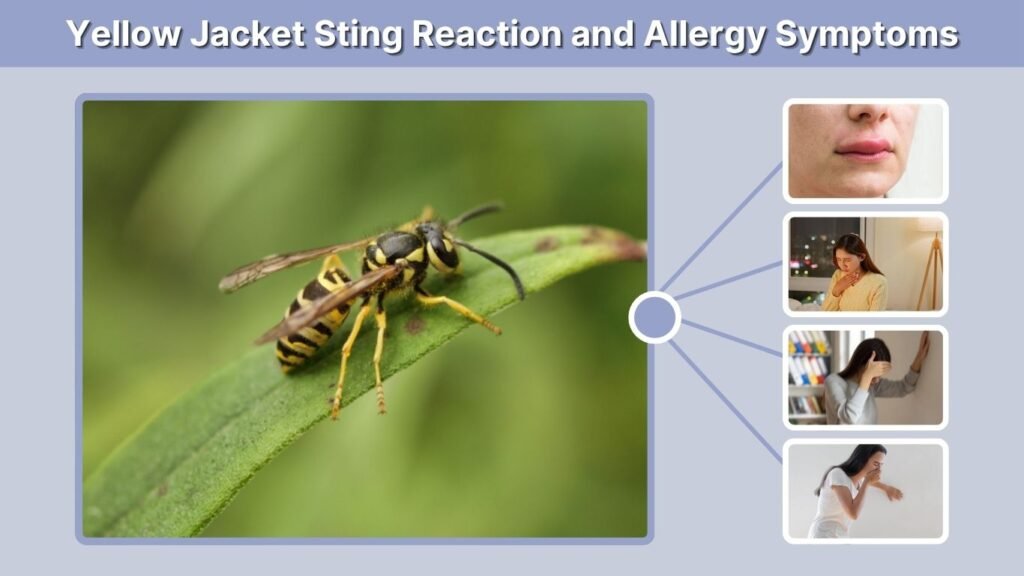
Yellow jacket venom normally produces a local inflammatory reaction around the sting. In people with venom allergy, however, the immune response may spread beyond the sting site and develop into anaphylaxis. A previous mild sting does not guarantee that every future reaction will also be mild, so rapidly developing whole-body symptoms deserve immediate attention.
Normal Sting Symptoms vs Allergic Reaction
A typical local reaction may cause:
- Sharp pain or burning
- Redness
- Local swelling
- Itching
- Tenderness around the sting
Warning signs of a serious allergic reaction include:
- Trouble breathing or wheezing
- Swelling of the tongue, lips, face, or throat
- Widespread hives
- Difficulty swallowing
- Dizziness or fainting
- Weak, rapid pulse
- Vomiting, diarrhea, or abdominal symptoms
- Collapse or loss of consciousness
Treatment for an Allergic Yellow Jacket Sting
Anaphylaxis is a medical emergency. Use a prescribed epinephrine auto-injector immediately if one is available and call your local emergency medical service. Epinephrine is the key emergency treatment; antihistamines should not be used as a replacement for it.
Someone with a previous serious insect-venom reaction should discuss allergy evaluation and future prevention with an allergy specialist.
Yellow Jacket Sting Swelling and Infection
Swelling after a yellow jacket sting does not automatically mean infection. Venom itself can cause significant redness, warmth, itching, and swelling, including a large local reaction around the affected area. Infection becomes more concerning when symptoms become increasingly painful, hot, or tender rather than gradually settling, particularly if systemic illness or fever develops.
How Long Can Swelling Last?
Mild sting symptoms often improve within a few days, although larger local reactions may persist longer. MedlinePlus notes that people without a venom allergy generally recover within about a week.
Try not to scratch the area because broken skin provides a route for bacteria. Continue keeping the skin clean and monitor whether the overall trend is improving rather than worsening.
Yellow Jacket Sting Cellulitis and Infection Signs
Seek medical evaluation if the sting develops concerning signs such as:
- Increasingly painful, hot, swollen skin
- Redness that continues spreading with worsening tenderness
- Fever or chills
- Swollen lymph nodes
- Blistering or significant skin breakdown
- Feeling generally unwell
Cellulitis is a bacterial infection and may require antibiotics; it should not be treated simply as an allergic sting reaction.
Multiple Stings, Face Stings and Special Situations
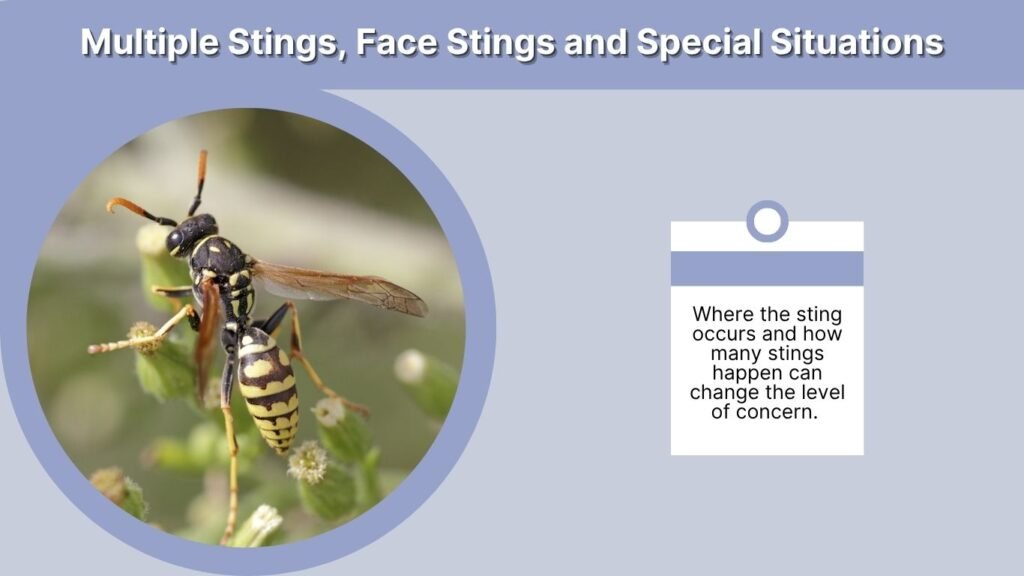
Where the sting occurs and how many stings happen can change the level of concern. Yellow jackets can sting repeatedly, so disturbing a nest may lead to numerous venom injections. Stings inside the mouth or throat are particularly concerning because swelling can interfere with breathing. Children and pets also require care tailored to their size and medical circumstances.
Multiple Yellow Jacket Stings or Stings on the Face
Multiple stings deserve greater caution, especially when dozens of stings occur or the affected person develops weakness, vomiting, dizziness, breathing problems, or other systemic symptoms.
A sting inside the mouth or throat warrants urgent medical assessment because even localized swelling can threaten the airway. Facial or eyelid swelling should also be monitored carefully, especially when it is rapidly increasing or accompanied by breathing or swallowing difficulty.
Yellow Jacket Sting Treatment for Dogs
Dogs may also be stung while sniffing around yellow jacket nests. Swelling around the face or mouth, difficulty breathing, weakness, repeated vomiting, or collapse requires urgent veterinary attention.
Do not give a dog human antihistamines, painkillers, or other medicines without veterinary guidance because appropriate products and doses depend on the animal’s weight, health, and other medications.
FAQs
Most yellow jacket sting questions focus on how quickly symptoms resolve, what helps itching, and when swelling signals something more serious. While uncomplicated stings can usually be managed with straightforward first aid, allergic reactions and infections require a different approach. The following answers cover five of the most common concerns about yellow jacket sting treatment.
1. What Is the Best Treatment for a Yellow Jacket Sting?
For a mild sting, wash the area, apply a cold compress for about 10–20 minutes, elevate the limb if possible, and use appropriate itch or pain relief.
2. Does Benadryl Help a Yellow Jacket Sting?
Diphenhydramine can reduce itching associated with a mild allergic response, but it can cause drowsiness and is not a substitute for epinephrine during anaphylaxis. Other less-sedating antihistamines may also be options.
3. How Long Does Yellow Jacket Sting Swelling Last?
Minor reactions often improve in a few days. Larger local reactions can last longer, but the overall trend should eventually improve. Worsening pain, heat, fever, or progressive tenderness should be medically assessed.
4. Should You Remove a Yellow Jacket Stinger?
Yellow jackets normally do not leave their stinger because they can sting repeatedly. If a stinger is visible, however, remove it promptly and clean the skin.
5. When Should I Go to the ER for a Yellow Jacket Sting?
Seek emergency care for trouble breathing or swallowing, swelling of the tongue or throat, widespread hives with systemic symptoms, dizziness, fainting, collapse, or other signs of anaphylaxis. Use prescribed epinephrine immediately while emergency help is being contacted.
