
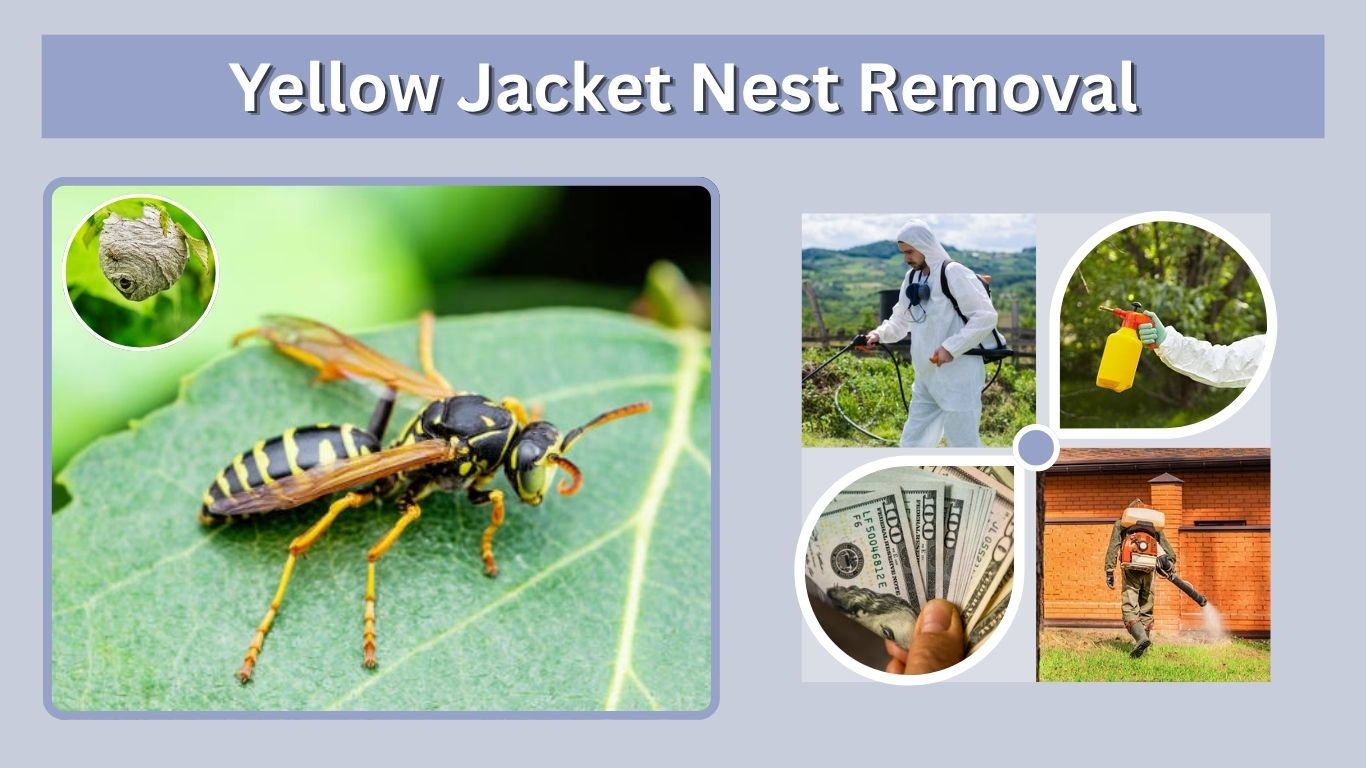
Yellow jacket nest removal requires caution because these social wasps aggressively defend their colony and can sting repeatedly when disturbed. Nests may be underground, inside wall voids, beneath decks, in attics, or occasionally in other protected spaces around a home. The safest removal method depends heavily on the nest’s location, size, and accessibility. This guide explains yellow jacket ground nest removal, wall and attic treatments, professional removal costs, winter removal, DIY limitations, and important mistakes to avoid when dealing with an active colony.
When Does a Yellow Jacket Nest Need Removal?
Not every yellow jacket nest needs immediate treatment. A nest located far from people may sometimes be left alone until cold weather naturally ends the colony. However, removal becomes more important when yellow jackets are nesting close to entrances, sidewalks, play areas, patios, or other places where people regularly pass.
Signs Removal May Be Necessary
Consider professional removal when:
- Yellow jackets repeatedly enter and leave one location
- The nest is near a doorway, patio, walkway, or play area
- Wasps are entering siding, roofing, or a wall opening
- Someone nearby has a known severe sting allergy
- The colony is large or highly defensive
- Yellow jackets are appearing inside the house
Yellow jackets are wasps rather than bees, so “yellow jacket bee nest removal” generally refers to removal of a social wasp colony.
When Can a Nest Be Left Alone?
If a nest is located well away from people and pets, waiting for freezing temperatures can sometimes be reasonable. In temperate climates, workers and the old queen generally die as winter approaches, while newly produced queens overwinter elsewhere. The old nest is normally not reused the following year.
Yellow Jacket Ground Nest Removal
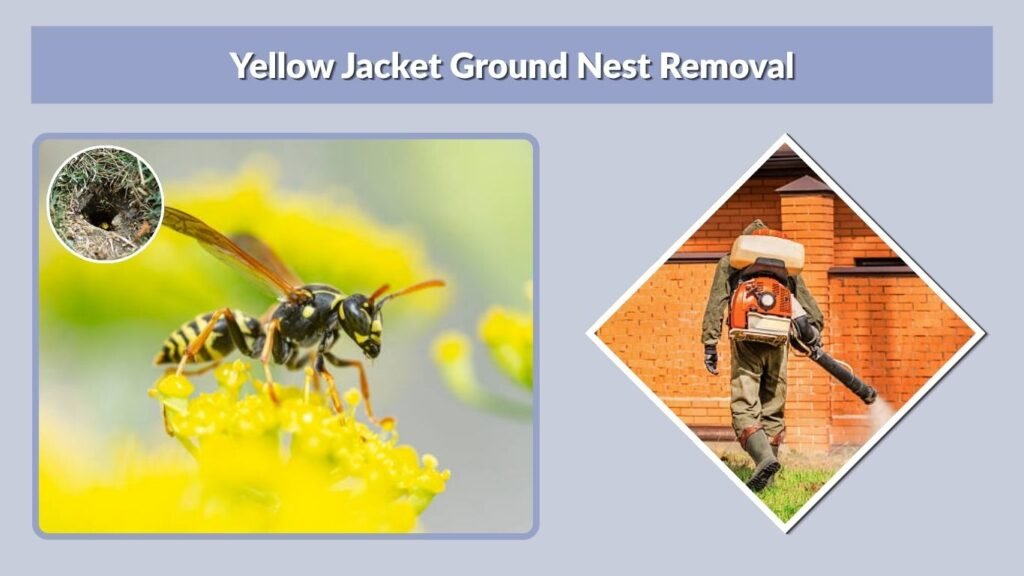
Underground nests are common because yellow jackets often use abandoned rodent burrows and other existing cavities. The visible entrance may be only a small hole, while the actual colony can extend deeper beneath the surface. Disturbing the ground, mowing nearby, or trying to dig out an active nest can trigger a rapid defensive response from many workers.
Safer Approach to an Underground Nest
For an active ground nest:
- Keep children and pets away from the area
- Clearly mark the location from a safe distance
- Avoid mowing, digging, or vibrating equipment nearby
- Never pour gasoline, kerosene, or other fuel into the opening
- Use only pesticide products specifically labeled for wasps or yellow jackets
- Follow all product-label directions and protective-equipment instructions
- Consider professional treatment for large or highly active colonies
Extension guidance commonly recommends treating when yellow jackets are less active, such as late evening or early morning.
Why Gasoline Should Never Be Used
Gasoline is not an appropriate yellow jacket nest treatment. It creates a serious fire hazard, can contaminate soil, damage vegetation, and exposes people and animals to unnecessary chemical risks. Penn State Extension specifically warns against using gasoline for ground-nesting wasps.
Yellow Jacket Nest in Wall Removal
Wall nests are significantly more complicated than exposed or ground colonies. Yellow jackets may enter through a tiny gap in siding, soffits, vents, or other exterior openings and build their nest well away from the visible entrance. Improperly blocking that entrance can cause trapped wasps to search for another route, potentially sending them into living spaces.
Do Not Seal an Active Entrance
One of the most important rules is not to seal the exterior opening while the colony is still active. Yellow jackets trapped inside a wall can chew or search for another exit.
Professional pest-control operators can identify the nest location, apply an appropriate treatment, confirm that activity has stopped, and determine whether the void needs to be opened for nest cleanup or structural repairs.
What About Nests in an Attic?
An attic colony should also be approached cautiously, especially if access requires climbing, entering a confined area, or working close to electrical systems. Structural yellow jacket colonies may be large and difficult to reach with ordinary consumer equipment, so Purdue Extension recommends professional control for these situations.
DIY Yellow Jacket Nest Removal
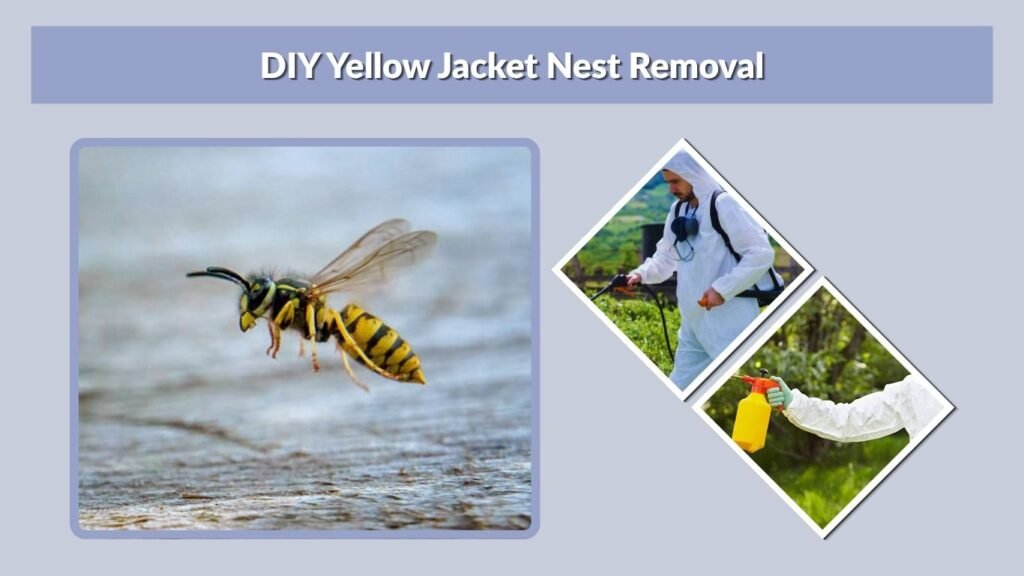
DIY treatment may be practical only in limited circumstances. Nest size, access, colony activity, and the homeowner’s ability to retreat safely all matter. Yellow jackets vigorously defend their nesting area, so anyone with a history of serious reactions to stings should not attempt removal.
Basic Safety Considerations
Before considering DIY control:
- Confirm that the insects are actually yellow jackets
- Keep a clear escape route
- Avoid standing directly over an underground entrance
- Wear appropriate protective clothing
- Never treat from an unstable ladder
- Never burn a nest
- Never flood the nest with fuel
- Use only products labeled for the intended location and pest
If treatment fails or activity remains high, stop disturbing the colony and contact a professional rather than repeatedly approaching the entrance.
Can a Vacuum Be Used?
Some extension guidance discusses specialized vacuum methods, but these techniques require protective equipment, careful setup, and experience. They can expose an inexperienced person to large numbers of defensive yellow jackets. For most homeowners, a professional approach is considerably safer.
Yellow Jacket Nest Removal Cost
Professional yellow jacket removal prices vary considerably across the United States. Nest location, colony size, accessibility, local labor rates, required equipment, structural work, and whether follow-up treatment is included all affect the final quote.
Typical Professional Cost
Published 2026 consumer estimates differ substantially. Angi places professional wasp-nest removal broadly around 300–700, while its yellow-jacket-specific estimate can be higher for difficult infestations. This Old House reports an even wider yellow jacket range of roughly 500–1,300. These figures should be treated as broad U.S. estimates rather than fixed prices.
What Makes Removal More Expensive?
Common cost factors include:
- A nest hidden inside a wall or ceiling
- Difficult roof or attic access
- Large late-season colonies
- Multiple nest entrances
- Structural opening and repair
- Emergency or same-day service
- Follow-up visits
- More than one active colony
A straightforward accessible nest can cost substantially less than a colony hidden deep inside a house.
Yellow Jacket Nest Removal in Winter
Winter can simplify yellow jacket management in climates with prolonged freezing temperatures. Most workers die as cold weather arrives, and newly produced queens typically leave the old colony to overwinter elsewhere. Because old nests normally are not reused, inactive nests may often be removed or access points repaired after colony activity has ended.
Should You Remove an Old Nest?
Removing an abandoned nest is not always necessary, especially underground. However, nests inside walls or roof spaces may sometimes justify cleanup because dead insects and nest material can produce odors, attract scavenging insects, or expose damaged insulation.
Preventing Future Nests
After confirming that a colony is completely inactive, repair exterior gaps, damaged screens, siding openings, and other potential entry points. Old ground cavities can also be filled after activity has stopped. Never perform exclusion while an active colony remains trapped inside.
When to Call a Yellow Jacket Nest Removal Service
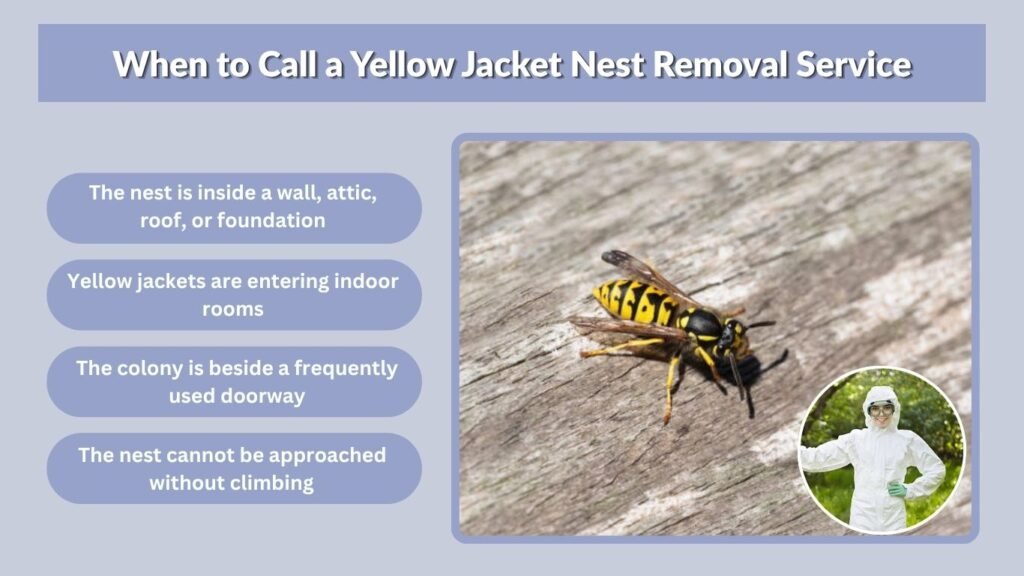
Professional help is often the best option when the colony is large, hidden, difficult to access, or located where an attack could put people at immediate risk. Pest-control technicians have protective equipment, application tools, and experience locating colonies that may be several feet from their visible entrance.
Professional Removal Is Especially Appropriate When
- The nest is inside a wall, attic, roof, or foundation
- Yellow jackets are entering indoor rooms
- The colony is beside a frequently used doorway
- The nest cannot be approached without climbing
- Several entrances are visible
- Previous DIY treatment failed
- Anyone nearby has a serious sting allergy
When searching for “yellow jacket nest removal near me,” compare licensing where applicable, treatment approach, follow-up coverage, and whether structural cleanup is included rather than choosing solely by price.
FAQs
1. What is the safest way to remove a yellow jacket nest?
For a large, hidden, or difficult-to-access colony, professional pest control is generally the safest approach. Small accessible nests may sometimes be treated with a properly labeled product, but the label instructions and safety precautions should be followed exactly.
2. How do you remove a yellow jacket nest from the ground?
Avoid digging into an active colony. Keep people away and use an appropriately labeled yellow jacket treatment according to its instructions, or hire a pest-control professional. Never pour gasoline into the entrance.
3. Can I seal a yellow jacket nest inside a wall?
Do not seal an active entrance. Trapped yellow jackets may find another route and enter the house. The colony should be eliminated first, and openings can be sealed after activity has completely stopped.
4. How much does yellow jacket nest removal cost?
U.S. prices vary widely according to location and complexity. Current published estimates range from a few hundred dollars for simpler jobs to $1,000 or more for difficult yellow jacket infestations involving structural access or cleanup.
5. Will yellow jackets leave their nest in winter?
In climates with freezing winters, most workers and the old queen die as cold weather arrives. Newly produced queens overwinter elsewhere and establish new colonies the following spring, so the previous nest normally is not reused.
