
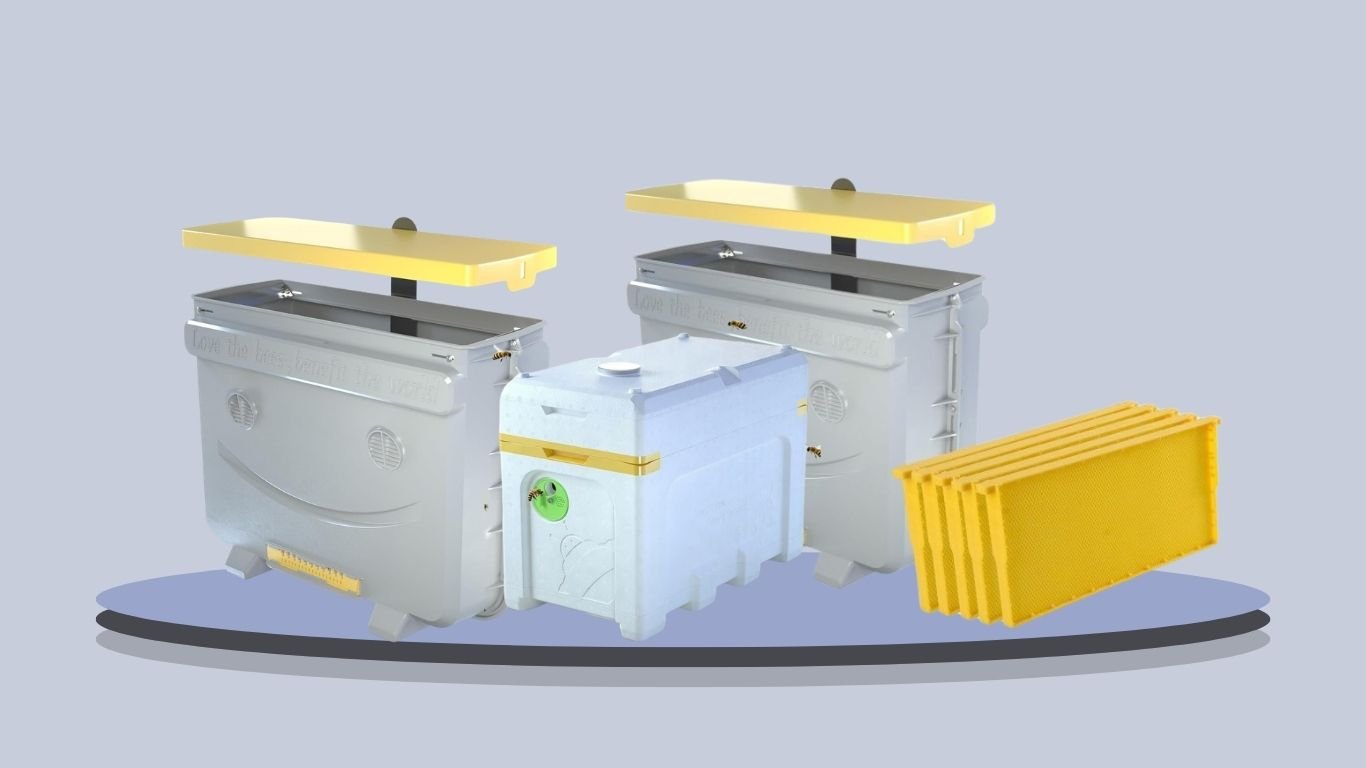
Catching a honey bee swarm can be much easier with the right trap, especially during peak swarming season when colonies are actively searching for a new home. The best honey bee swarm traps offer enough interior space, convenient mounting, weather-resistant construction, and compatibility with standard beekeeping equipment. Some models also double as nuc boxes or temporary hive setups, adding extra value for beekeepers. In this guide, we review 5 honey bee swarm traps designed to help attract, capture, and manage swarms more efficiently.
1. Benefitbee Langstroth-Compatible Honey Bee Swarm Trap
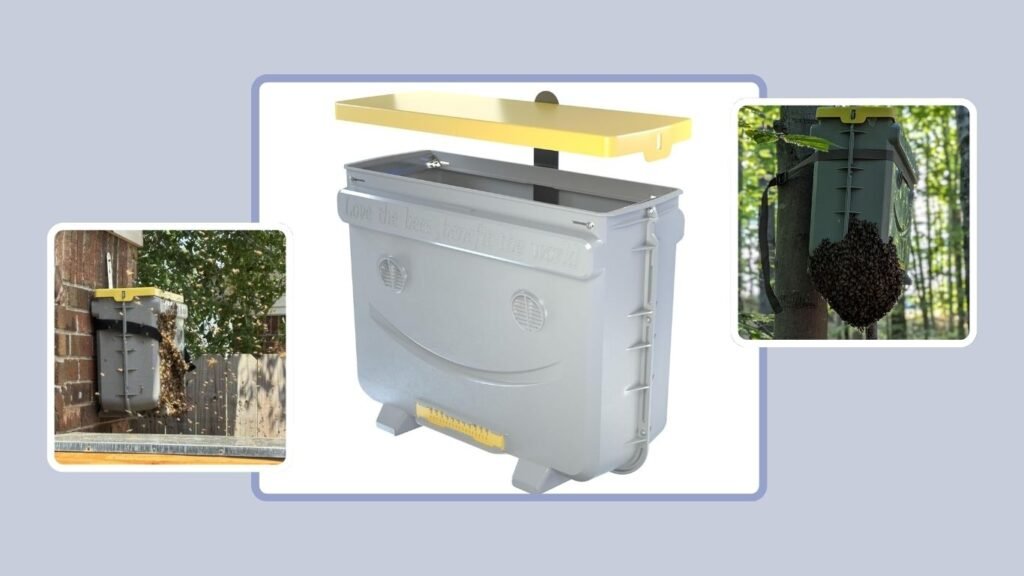
The Benefitbee Langstroth-Compatible Honey Bee Swarm Trap is designed for beekeepers who want a reusable, frame-compatible trap for collecting honey bee swarms with less hassle. Its approximately 48-liter internal capacity falls within a commonly recommended swarm-trap range, while the adjustable interior can accommodate several popular frame standards. The rugged PP and glass-fiber body, stainless-steel hardware, ventilation system, and sliding entrance make it especially suitable for seasonal outdoor placement and repeated use.
Key Features
- Approximately 48-liter capacity
- Holds up to 5 frames
- Compatible with Langstroth, Dadant, and British National frames
- PP material reinforced with glass fiber
- Stainless-steel mounting hardware
- Adjustable frame-support system
- Sliding hive entrance
- Front and rear ventilation ports
- Approximately 2.5 kg overall weight
- Designed for quick assembly and repeated outdoor use
Why It’s Best for Flexible Swarm Catching
The biggest advantage of this trap is compatibility. Beekeepers using different frame systems can adjust the internal setup instead of dedicating the trap to only one hive standard. This is particularly useful when captured swarms need to be transferred into an existing Langstroth, Dadant, or National hive.
Its 48-liter volume is also well suited to swarm trapping, since bait-hive guidance commonly favors cavities around 40–60 liters.
Performance & Outdoor Durability
Benefitbee uses a reinforced plastic body rather than traditional wood, helping reduce weight while improving resistance to moisture and repeated outdoor exposure. Two ventilation openings promote airflow, while the sliding entrance lets beekeepers adjust access as needed. The stainless-steel mounting hardware also adds confidence when the trap is positioned in elevated outdoor locations.
Setup, Versatility & Overall Verdict
The trap can be assembled quickly and provides open space beyond the installed frames, giving incoming swarms room to settle. Beekeepers can also add beeswax or an appropriate swarm lure according to their preferred setup.
Overall Verdict: The Benefitbee Langstroth-Compatible Honey Bee Swarm Trap stands out for its 48-liter capacity, multi-frame compatibility, weather-ready materials, and practical ventilation. For beekeepers who want a purpose-built swarm trap that integrates easily with standard hive equipment, its flexible design makes it a particularly useful option for spring and early-summer swarm season.
2. Benefitbee Universal Langstroth Honey Bee Swarm Trap
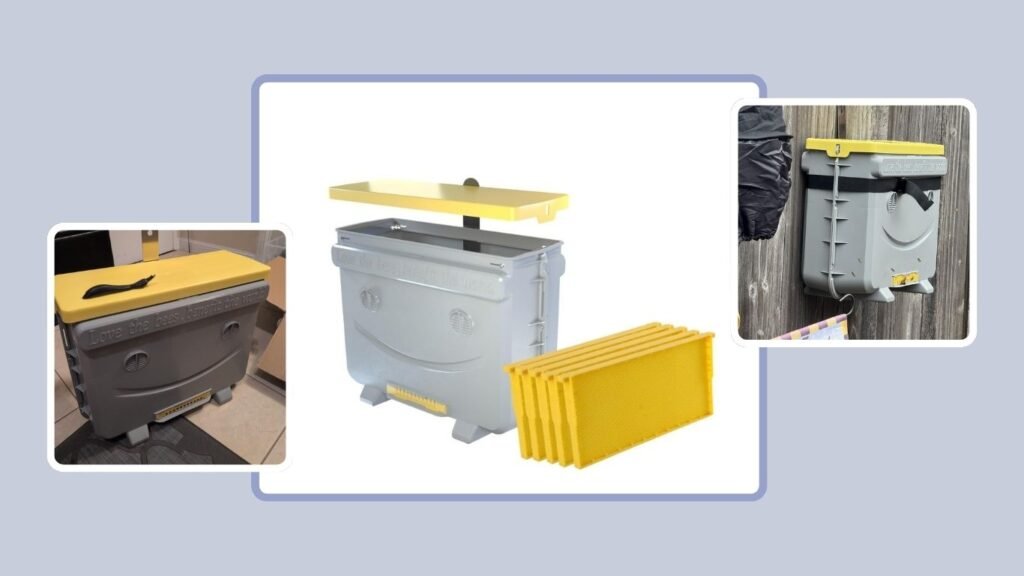
The Benefitbee Universal Langstroth Honey Bee Swarm Trap is designed for beekeepers who want a reusable bait-hive system that works naturally with standard hive equipment. Its enclosed cavity provides scout bees with a potential nesting site during swarm season, while frame compatibility can simplify transferring a captured colony into a permanent hive. The lightweight, weather-ready construction also makes the trap easier to position around an apiary, orchard, farm, or other suitable swarm-catching location.
Key Features
- Designed specifically for honey bee swarm trapping
- Compatible with Langstroth-style beekeeping equipment
- Reusable construction for multiple swarm seasons
- Internal space for hive frames
- Lightweight design for easier positioning
- Ventilation for better airflow
- Adjustable entrance area
- Suitable for use with swarm attractants
- Outdoor-oriented construction
Why It’s Best for Langstroth Beekeepers
Frame compatibility is particularly useful because a swarm that begins building comb on standard frames can be transferred with less disturbance than bees occupying an empty container.
This makes the trap especially attractive to beekeepers who already operate Langstroth equipment and want their swarm-catching setup to integrate naturally with their existing apiary.
Performance & Outdoor Durability
A good swarm trap must provide more than an entrance—it needs a sheltered cavity that scout bees can evaluate as a potential nest site. Positioning it before the main swarm season and adding appropriate used comb, beeswax scent, or a swarm lure may improve its attractiveness.
Its reusable construction also means it can be cleaned, prepared, and deployed again in future seasons.
Setup, Flexibility & Overall Verdict
The straightforward design makes it useful for both newer and experienced beekeepers. Once a colony occupies the trap, compatible frames can help simplify relocation.
Overall Verdict: The Benefitbee Universal Langstroth Honey Bee Swarm Trap is especially appealing for beekeepers who value frame compatibility, reusable construction, and easy colony transfer. Its purpose-built design provides a more organized alternative to improvised swarm boxes.
3. Benefitbee 3-in-1 6-Frame Langstroth Beehive & Swarm Trap
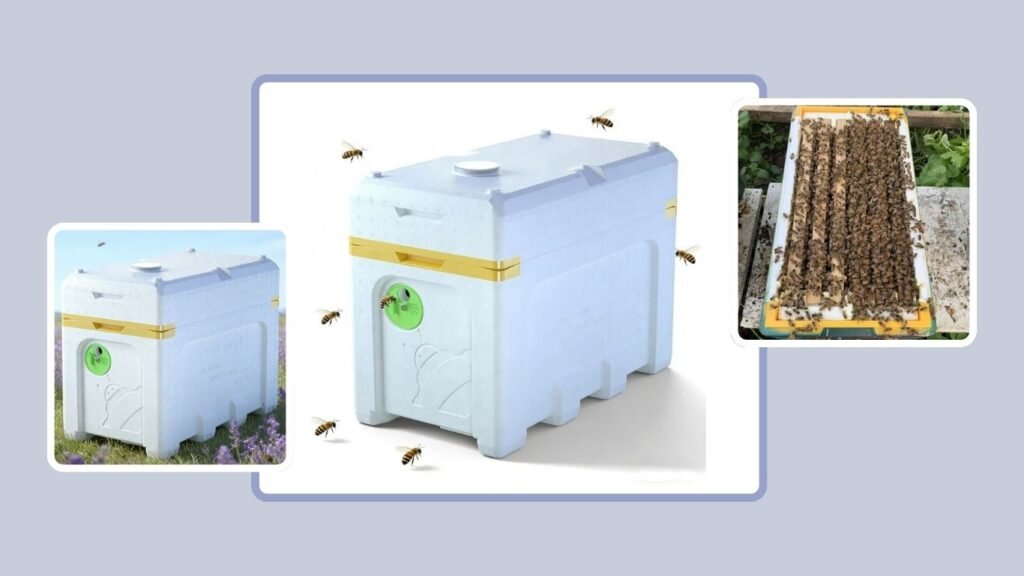
The Benefitbee 3-in-1 6-Frame Langstroth Beehive is more versatile than a conventional swarm-catching box. It can function as a swarm trap, queen-mating nuc, or small hive while accepting standard Langstroth frames. The design uses high-density food-grade EPS for thermal insulation and includes an integrated top feeder. Its multifunctional construction can be particularly useful for beekeepers who want equipment that remains useful even after swarm season ends.
Key Features
- Holds up to 6 standard Langstroth frames
- 3-in-1 swarm trap, mating nuc, and hive design
- High-density EPS construction
- Integrated top feeder
- Lightweight compared with many wooden hive boxes
- Designed for rapid assembly
- Approximately 10-minute setup
- Suitable for direct colony expansion
- Frames are not included
Why It’s Best for Multi-Purpose Beekeeping
Its main advantage is versatility. A dedicated swarm trap may spend most of the year in storage, but this model can continue serving as a nuc or small hive after swarm-catching duties are finished.
Standard Langstroth compatibility also means frames can transition directly into larger hive equipment, making colony management more straightforward.
Performance & Outdoor Durability
The high-density EPS body is designed to provide thermal insulation while keeping weight manageable. That can be useful when moving a swarm trap or transporting a newly captured colony.
The integrated feeder also provides additional flexibility when a new swarm needs supplemental feeding after it has settled.
Versatility, Value & Overall Verdict
The ability to perform several beekeeping jobs helps distinguish this model from simpler hanging traps. It may be particularly attractive to small-scale and hobby beekeepers who want equipment that adapts as colony needs change.
Overall Verdict: The Benefitbee 3-in-1 6-Frame Langstroth Beehive & Swarm Trap offers excellent functional flexibility. Its frame compatibility, feeder, insulated construction, and multiple operating roles make it an appealing option for beekeepers who want more than a single-purpose swarm catcher.
4. WSBXBB 2-Pack Honey Bee Swarm Trap Hanger
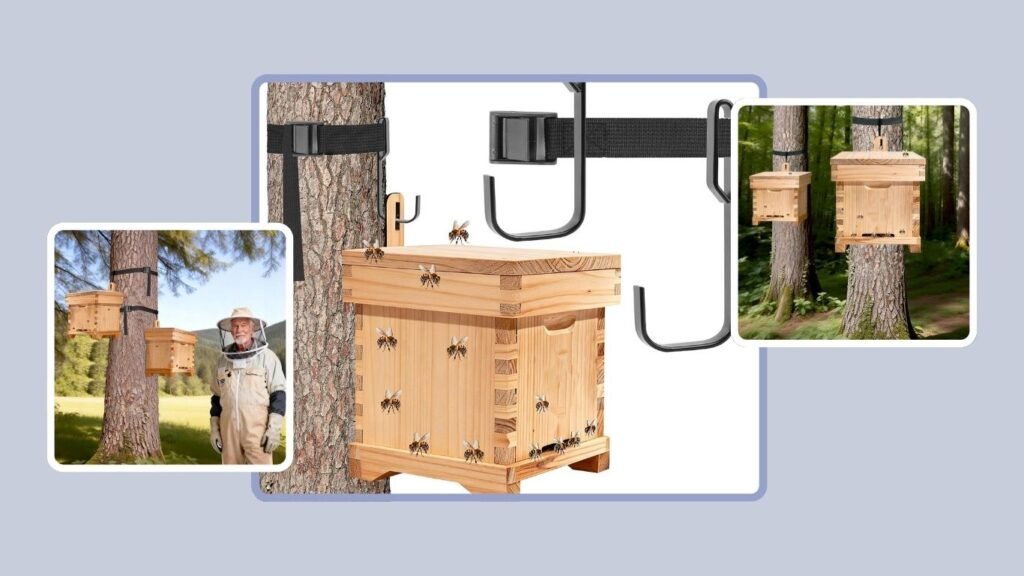
The WSBXBB 2-Pack Honey Bee Swarm Trap Hanger is technically an accessory rather than a complete swarm trap, but it can make installing bait hives much easier. The system uses adjustable straps to support swarm traps on trees without driving nails or screws into the trunk. Each strap is approximately four feet long and is intended to fit trees up to around 15 inches in diameter, providing a reusable mounting option for seasonal swarm trapping.
Key Features
- Includes 2 swarm-trap hangers
- No nails required for installation
- Helps avoid damaging tree bark
- Approximately 4-foot adjustable straps
- Fits trees up to about 15 inches in diameter
- Reusable design
- Quick installation and removal
- Useful for hanging bait hives and swarm boxes
- Suitable for seasonal relocation
Why It’s Best for Tree-Mounted Swarm Traps
Many beekeepers position bait hives on trees because scout bees naturally inspect elevated cavities. A reliable mounting system can make this setup easier while avoiding permanent hardware.
The adjustable straps also allow beekeepers to relocate a trap as swarm activity changes without leaving nails behind.
Performance & Practical Durability
The strap-based design spreads support around the trunk instead of concentrating force on a single screw or nail. This is useful when traps need to remain mounted for several weeks during swarm season.
Because the system is reusable, it can be moved from one tree to another and stored between seasons.
Installation, Convenience & Overall Verdict
The WSBXBB system should be viewed as a swarm-trap mounting accessory, not a trap by itself. A separate bait hive or swarm box is still required.
Overall Verdict: The WSBXBB 2-Pack Swarm Trap Hanger is a practical addition for beekeepers who regularly mount bait hives on trees. Its tree-friendly strap system, quick adjustment, and reusable construction can make seasonal trap deployment considerably easier.
5. Hxszk Large-Capacity Honey Bee Swarm Trap
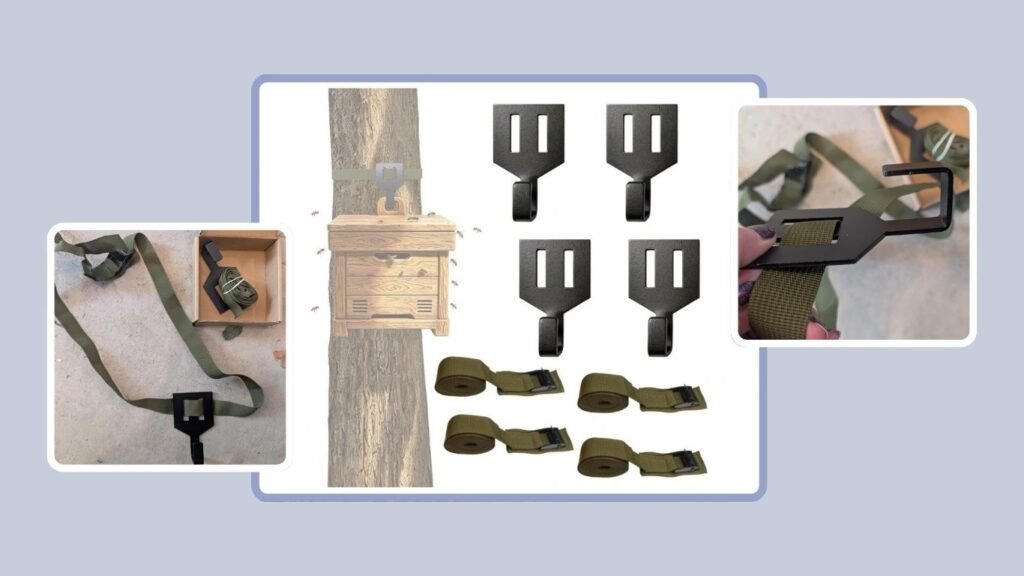
The Hxszk Large-Capacity Honey Bee Swarm Trap is intended for beekeepers who want a portable container for attracting and temporarily holding swarming honey bees. Its roomy design gives an incoming swarm space to cluster while the trap can be positioned in likely swarm locations. This type of trap is especially useful during spring and early summer when established colonies reproduce by swarming and scout bees actively searching for suitable new nesting cavities.
Key Features
- Large-capacity swarm-catching design
- Intended specifically for honey bees
- Portable outdoor construction
- Suitable for seasonal bait-hive placement
- Can be positioned near apiaries, orchards, or bee flight paths
- Designed for temporary swarm collection
- Reusable from season to season
- Compatible with common swarm-attractant techniques
- Suitable for hobby and small-scale beekeepers
Why It’s Best for Capturing Larger Swarms
Space matters when a substantial swarm arrives. A larger cavity gives thousands of bees room to cluster without immediately becoming overcrowded.
That can make the trap particularly useful when established colonies in the surrounding area are likely to produce strong swarms during peak season.
Performance & Seasonal Durability
The trap’s effectiveness depends heavily on preparation and location. Placing it before swarm season, keeping the interior dry, and using familiar hive odors or an appropriate swarm lure can make the cavity more attractive to scout bees.
Routine inspections are important because a captured swarm should eventually be transferred into a properly managed hive rather than left indefinitely in a temporary swarm trap.
Capacity, Practicality & Overall Verdict
A portable large-capacity trap provides flexibility because it can be moved between promising locations from season to season. It is particularly useful for beekeepers who want to expand colony numbers through natural swarms rather than relying solely on purchased colonies.
Overall Verdict: The Hxszk Large-Capacity Honey Bee Swarm Trap is a practical option for beekeepers prioritizing roomy swarm accommodation and straightforward outdoor deployment. Its greatest value comes during active swarm season when a prepared, well-positioned trap can provide scout bees with an appealing temporary home.
FAQs
1. What size swarm trap is best for honey bees?
A cavity around 40 liters is widely used for honey bee swarm traps, although traps somewhat above or below that size can still attract swarms. The entrance, cavity dryness, scent, location, and availability of suitable nesting sites nearby can all influence whether scout bees accept the trap.
2. Where should I place a honey bee swarm trap?
A swarm trap is usually placed in a visible, shaded or partially shaded location where scout bees can find it easily. Trees, structures near an apiary, orchard edges, and established bee flight areas can all be useful locations. The trap should also remain safely accessible for inspection and removal.
3. What should I put inside a honey bee swarm trap?
Beekeepers commonly use an old brood comb, beeswax scent, propolis odor, or a commercial honey bee swarm lure. Used hive material can make a box smell like an established bee cavity. Avoid filling the trap with excessive material that reduces the open clustering space.
4. When should honey bee swarm traps be put out?
Set traps out before local swarm season begins, commonly during spring as colonies expand rapidly. Having traps prepared early gives scout bees time to discover and inspect them before a swarm leaves its original colony.
5. How often should I check a honey bee swarm trap?
Checking every several days to about once a week is generally practical during active swarm season. Frequent disturbance is unnecessary, but regular checks help identify scout-bee activity or a newly captured swarm. Once a colony has settled, plan an appropriate transfer into permanent hive equipment while minimizing disruption.
