
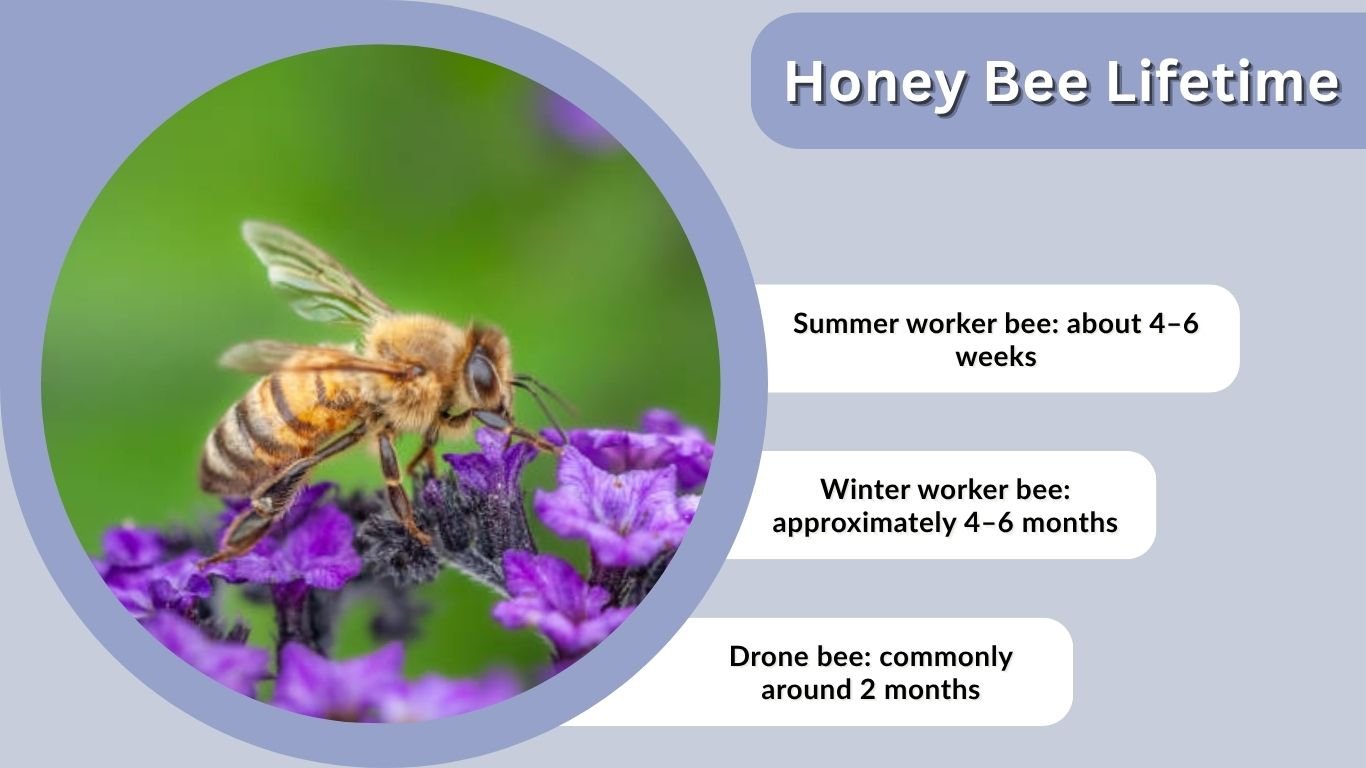
The honey bee lifetime varies dramatically depending on whether the bee is a worker, queen, or drone. A summer worker may live only a few weeks, while a healthy queen can survive for several years. During her short working life, an average worker contributes only a tiny amount of honey, yet thousands of bees working together can fill an entire hive. Understanding honey bee lifespan, development, foraging, and lifetime honey production reveals how efficiently these highly social insects function as one coordinated colony.
How Long Is the Honey Bee Lifetime?
There is no single lifespan that applies to every honey bee. A bee’s role, season, workload, food availability, weather, disease pressure, and colony conditions all influence longevity. Workers generally have the shortest working lives during the active season, drones usually survive for weeks or months, and queens can potentially live for several years.
Average Lifespan by Type of Honey Bee
- Summer worker bee: about 4–6 weeks
- Winter worker bee: approximately 4–6 months
- Drone bee: commonly around 2 months under favorable conditions
- Queen bee: potentially several years; documented sources note seven years or more can occur
- Active foragers: generally represent the later stage of a worker’s adult life
USDA information describes spring and summer workers as living roughly 28–35 days, while winter workers can survive for 4–6 months.
Why Worker Bees Have Such Short Lives
Worker bees perform nearly every labor-intensive job required to keep a colony functioning. Young adults initially work inside the hive, caring for brood, maintaining comb, handling food, and performing other colony duties.
As they age, workers transition into foraging. Flying repeatedly between flowers and the hive requires enormous physical effort. Their wings and bodies gradually wear, helping explain why active-season workers have much shorter lives than winter workers that spend less time intensively foraging.
Honey Bee Life Cycle From Egg to Adult
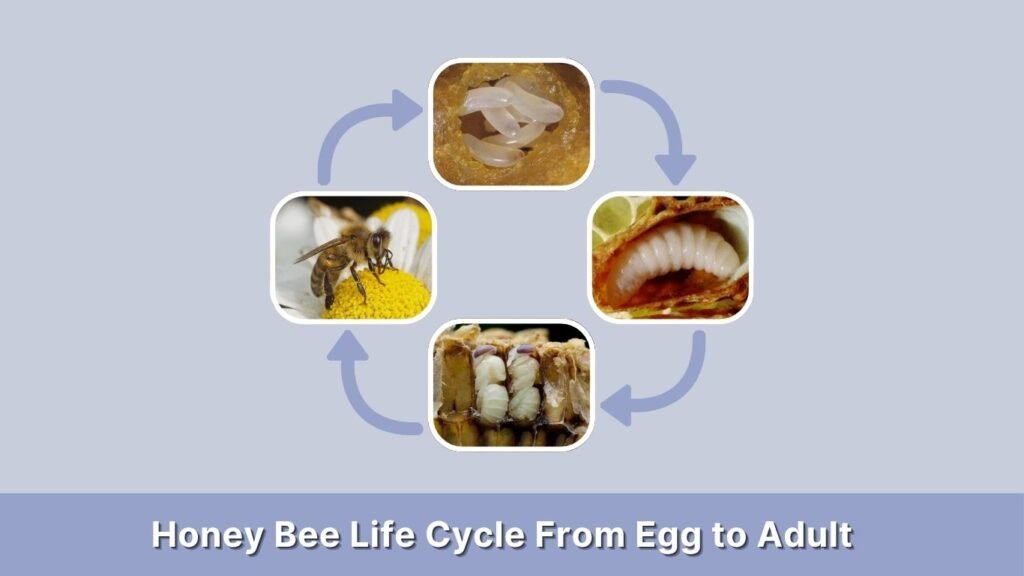
Every honey bee begins as an egg laid by the queen, but its developmental path depends on sex and nutrition. Female workers and queens develop from fertilized eggs, while male drones develop from unfertilized eggs. Worker development from egg to emerging adult takes about 21 days, whereas queens develop faster, emerging in roughly 16 days.
Main Stages of Honey Bee Development
- Egg: The queen lays an egg inside a wax cell.
- Larva: The egg hatches and worker bees feed the developing larva.
- Pupa: The cell is capped while the bee undergoes major transformation.
- Adult: The mature bee emerges and begins duties appropriate to its caste.
- Worker development: approximately 21 days from egg to adult.
- Queen development: approximately 16 days.
- Drone development: approximately 24 days.
What Happens During a Worker’s Adult Life?
A newly emerged worker does not immediately fly out to gather nectar. Workers normally perform different jobs as they age. Younger bees remain largely inside the colony, where they can participate in brood care, comb-related tasks, food handling, cleaning, and colony defense.
Later, workers become foragers and leave the hive to collect nectar, pollen, water, and other resources. USDA’s honey bee reference describes this division of labor as strongly associated with worker age.
Worker, Queen, and Drone Lifespans
The three honey bee castes have completely different responsibilities, and their lifespans reflect those roles. Workers maintain the colony and forage, the queen specializes in reproduction, and drones exist primarily to mate with queens. The queen’s potential longevity is especially striking when compared with the brief adult life of a summer worker.
Worker Bee Lifetime
Worker bees are female and form the majority of a colony.
- Summer workers generally survive about 4–6 weeks.
- Winter workers can survive several months.
- Young workers mainly perform hive duties.
- Older workers generally become foragers.
- Intensive flying and foraging contribute to their comparatively short active-season lives.
Winter bees live considerably longer because their role is different. They help maintain the colony through cold periods when regular nectar foraging is limited.
Queen Bee Lifetime
A queen honey bee can live far longer than any worker. Penn State notes that queens can survive seven or more years, although their reproductive productivity generally declines after the first year or two. In managed colonies, beekeepers may therefore replace a queen long before she reaches her maximum biological lifespan.
During peak conditions, a productive queen can lay more than 2,000 eggs in a single day, making her longevity and reproductive health crucial to colony survival.
Drone Bee Lifetime
Drones are male honey bees whose primary biological function is reproduction. USDA material describes a typical drone lifespan of around two months in cooler climates. Drones that successfully mate die afterward, while many remaining drones are expelled from colonies as winter approaches because they no longer provide an immediate reproductive benefit.
How Much Honey Does a Bee Make in Its Lifetime?
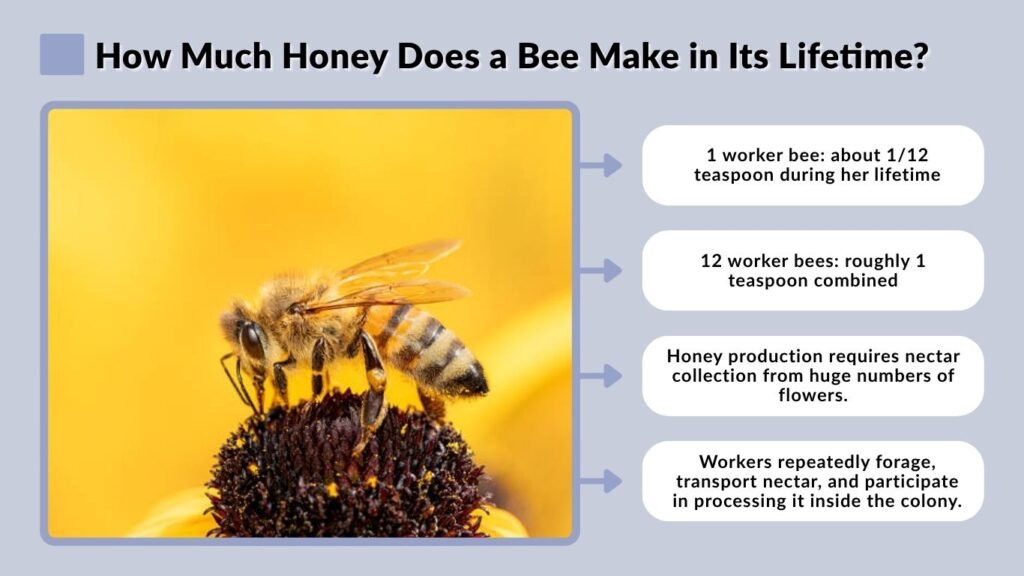
A widely cited estimate is that an average worker honey bee contributes about 1/12 teaspoon of honey during her lifetime. This surprisingly small quantity demonstrates why honey production depends on thousands of workers rather than individual bees. The estimate is also reported in educational materials derived from honey bee information resources.
Honey Production by the Numbers
- 1 worker bee: about 1/12 teaspoon during her lifetime
- 12 worker bees: roughly 1 teaspoon combined
- Honey production requires nectar collection from huge numbers of flowers.
- Workers repeatedly forage, transport nectar, and participate in processing it inside the colony.
- A bee’s actual contribution varies with forage availability, weather, colony health, and season.
The figure should therefore be understood as an average educational estimate rather than an exact amount every individual bee produces.
Why One Bee Produces So Little Honey
A worker spends only part of her adult life actively collecting nectar. Even then, she must repeatedly travel between the hive and flower patches while carrying relatively small loads.
Once nectar reaches the colony, honey production becomes a cooperative process. Nectar is transferred, processed, deposited in comb cells, and dehydrated until its water content is low enough for storage. What appears to be the work of one bee is actually the combined activity of an entire colony.
What Affects a Honey Bee’s Lifetime?
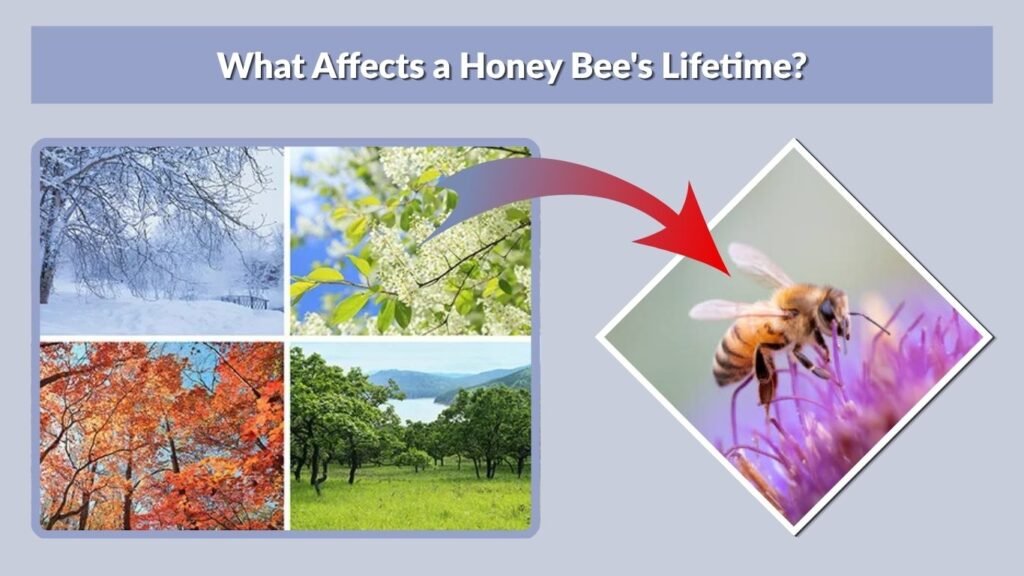
Honey bee longevity is flexible rather than fixed. Two genetically similar workers can have very different lifespans depending on the season and colony environment. Summer workers experience intense physical demands, while winter workers conserve energy and remain within the colony for much longer. Disease, parasites, pesticides, nutritional stress, weather, and queen health can also influence colony survival.
Season and Workload
Season is one of the clearest factors influencing worker longevity. Active-season bees frequently perform demanding flights to gather nectar and pollen, which accelerates physical wear. Winter bees can survive several months because they have a different physiological state and usually perform less intensive foraging.
Colony Health and Food
Adequate nectar and pollen provide the energy and nutrients bees need. Strong colonies also depend on healthy brood, effective queen reproduction, and protection from serious threats such as parasites and disease.
The colony itself can survive much longer than any individual worker. Honey bee colonies are perennial, meaning generations of workers continuously replace one another while the colony persists from year to year.
FAQs
The honey bee lifespan becomes easier to understand when workers, queens, and drones are considered separately. Their different roles explain why one bee may survive only several weeks while another lives for years. The following common questions cover honey production, worker longevity, queen survival, and other aspects of the honey bee life cycle.
1. What is the average lifetime of a honey bee?
A summer worker generally lives around 4–6 weeks, whereas winter workers can survive about 4–6 months. Queens can live for several years, and drones commonly survive for weeks to a few months depending on season and whether they mate.
2. How much honey does one bee make in its lifetime?
A commonly cited average is approximately 1/12 teaspoon of honey per worker bee over her lifetime. Actual individual contribution varies with environmental and colony conditions.
3. How much honey can 12 bees produce in their lifetimes?
Using the 1/12-teaspoon estimate, 12 worker bees would collectively contribute approximately one teaspoon of honey during their lifetimes.
4. How long does a queen honey bee live?
A queen can potentially live several years. Penn State reports that queens can live seven years or longer, although reproductive performance commonly declines after the first one or two years.
5. Why do winter honey bees live longer than summer workers?
Winter workers experience less intensive foraging and have physiological adaptations that allow them to survive for months while maintaining the colony. Summer workers perform demanding tasks and extensive flights, so their bodies and wings experience much faster wear.
