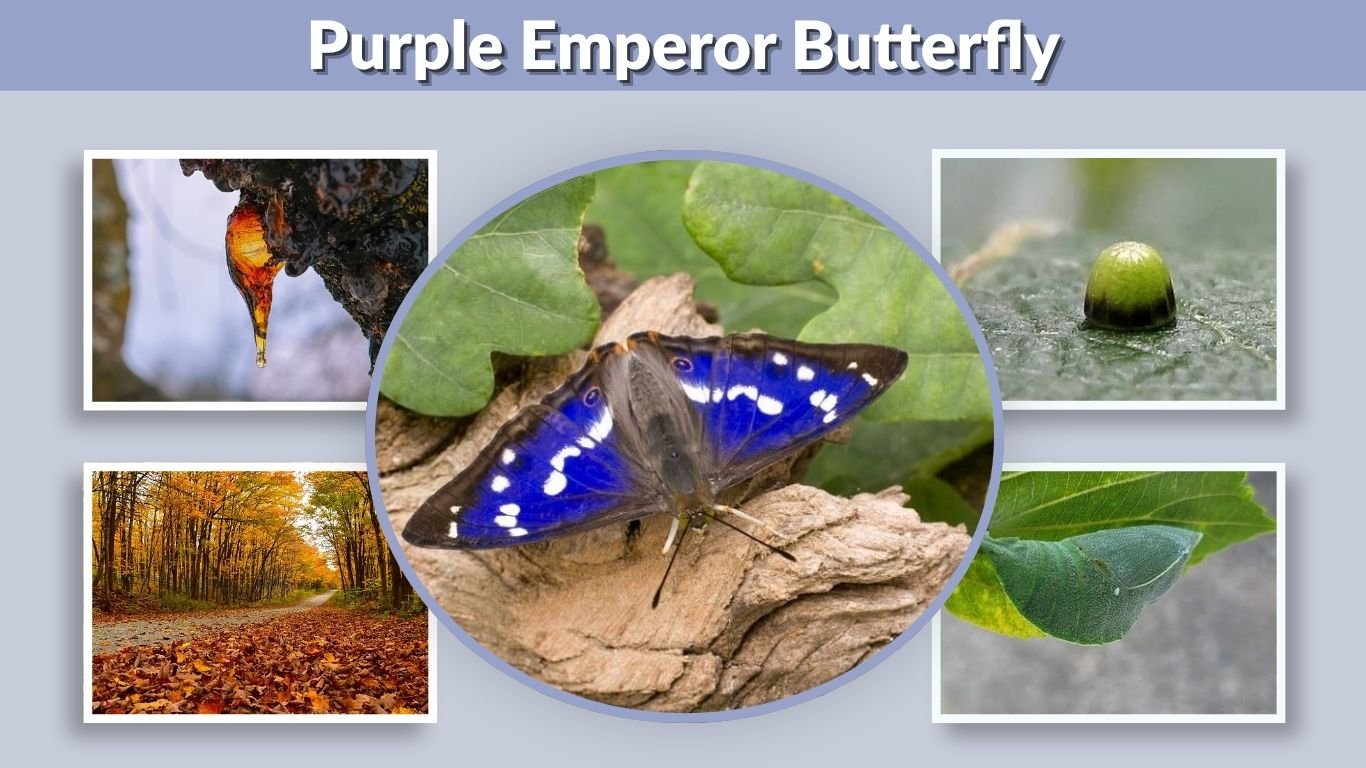
The Purple Emperor butterfly (Apatura iris) is one of the most beautiful and fascinating butterflies found in European woodlands. Famous for its shimmering purple-blue wings, this remarkable species attracts butterfly enthusiasts and wildlife photographers. Unlike many butterflies that regularly visit flowers, the Purple Emperor spends much of its time high in the treetops, making it difficult to observe. Understanding its appearance, habitat, feeding habits, and life cycle can help you appreciate this extraordinary insect and recognize it in its natural environment.
What Is a Purple Emperor Butterfly?
The Purple Emperor butterfly is a large woodland butterfly belonging to the Nymphalidae family. Its scientific name is Apatura iris, and it is particularly famous for the brilliant purple iridescence displayed by males. Despite its colorful appearance, it spends most of its adult life among tall trees.
Purple Emperor Butterfly Facts
- Scientific name: Apatura iris
- Family: Nymphalidae
- Common name: Purple Emperor
- Wingspan: Approximately 7–9 cm
- Color: Dark brown with white markings; males show purple iridescence
- Habitat: Mature deciduous woodlands
- Caterpillar food: Mainly goat willow and grey willow
- Adult diet: Honeydew, tree sap, and mineral-rich substances
- Flight season: Mostly late June through August
- Generations: Usually one generation annually
These characteristics make the Purple Emperor one of the most recognizable large butterflies in suitable European woodland habitats.
Purple Emperor Butterfly Identification
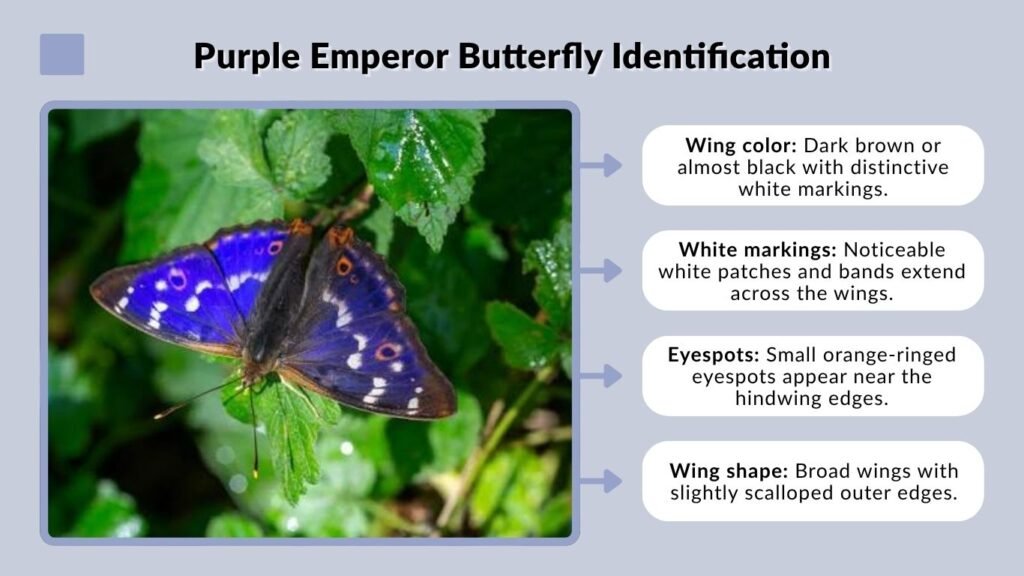
Identifying a Purple Emperor butterfly requires observing its size, wing markings, and coloration. Although males are famous for their purple wings, their appearance changes depending on the direction of sunlight. Females look noticeably different and can easily be mistaken for other woodland butterflies.
Physical Appearance and Wing Patterns
- Wing color: Dark brown or almost black with distinctive white markings.
- Purple shine: Males display brilliant violet-blue reflections when light strikes their wings at certain angles.
- White markings: Noticeable white patches and bands extend across the wings.
- Eyespots: Small orange-ringed eyespots appear near the hindwing edges.
- Wing shape: Broad wings with slightly scalloped outer edges.
- Body: A relatively sturdy body with dark coloration and fine hairs.
Male vs. Female Purple Emperor Butterfly
Male Purple Emperors have striking purple-blue iridescence across their upper wings. This reflective effect comes from microscopic structures in their wing scales rather than ordinary purple pigment.
Female Purple Emperors lack the brilliant purple shine. Their wings appear primarily dark brown, with broad white markings. Females are also generally larger than males.
Both sexes have similar patterns on their undersides, consisting of brown, grey, orange, and pale markings that provide camouflage when resting.
Where Does the Purple Emperor Butterfly Live?

Purple Emperor butterflies inhabit mature woodland environments containing tall trees and suitable caterpillar host plants. Their distribution extends across parts of Europe and temperate Asia, although local populations vary considerably. In Britain, the species is especially associated with woodland landscapes in southern and central England.
Natural Habitat and Distribution
The Purple Emperor prefers established deciduous woodlands, particularly those containing mature oak trees and abundant willow plants.
Woodland clearings, sheltered rides, and connected groups of smaller woods can also provide suitable environments.
Males often occupy the upper canopy of prominent trees, while females visit willow foliage to lay eggs.
Purple Emperor Butterfly in the UK
In the United Kingdom, the Purple Emperor is an elusive butterfly most frequently encountered in southern and central England.
Its range has expanded into some northern areas in recent years, including parts of the East Midlands.
The best opportunities for sightings generally occur during warm summer weather, especially in woodlands where mature oak trees grow near goat willow.
What Do Purple Emperor Butterflies Eat?
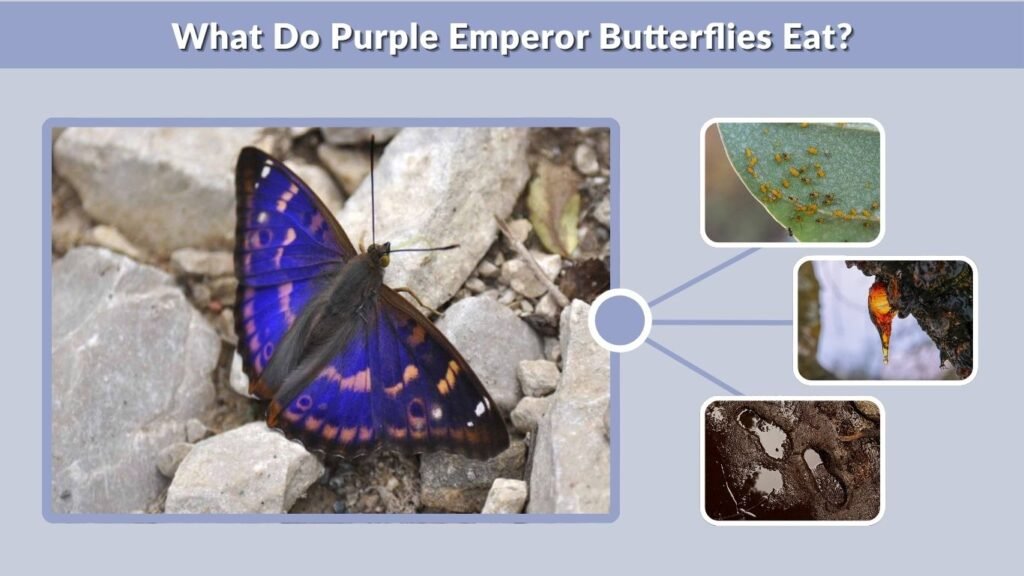
Unlike many familiar garden butterflies, Purple Emperors do not rely primarily on flower nectar. Instead, adults obtain nutrients from naturally occurring sugary substances and mineral-rich materials. Their unusual feeding habits sometimes bring males down from the treetops, allowing observers to see them closely.
Adult Purple Emperor Butterfly Diet
- Aphid honeydew: A sugary substance produced by sap-feeding insects.
- Tree sap: Provides sugars and other nutrients.
- Animal droppings: Supply dissolved nutrients and mineral salts.
- Damp soil: Offers moisture and essential minerals.
- Decaying animal matter: Can provide minerals and other nutrients.
Although adults occasionally visit flowers, they are far more strongly associated with honeydew, sap, and mineral feeding than typical nectar-feeding butterflies.
What Do Purple Emperor Caterpillars Eat?
Purple Emperor caterpillars primarily feed on willow leaves, especially goat willow (Salix caprea) and grey willow (Salix cinerea).
Young caterpillars often rest along the central veins of leaves, where their green coloration makes them difficult to detect.
These host plants are essential because females select suitable leaves for egg-laying, allowing newly hatched caterpillars to begin feeding nearby.
Purple Emperor Butterfly Life Cycle
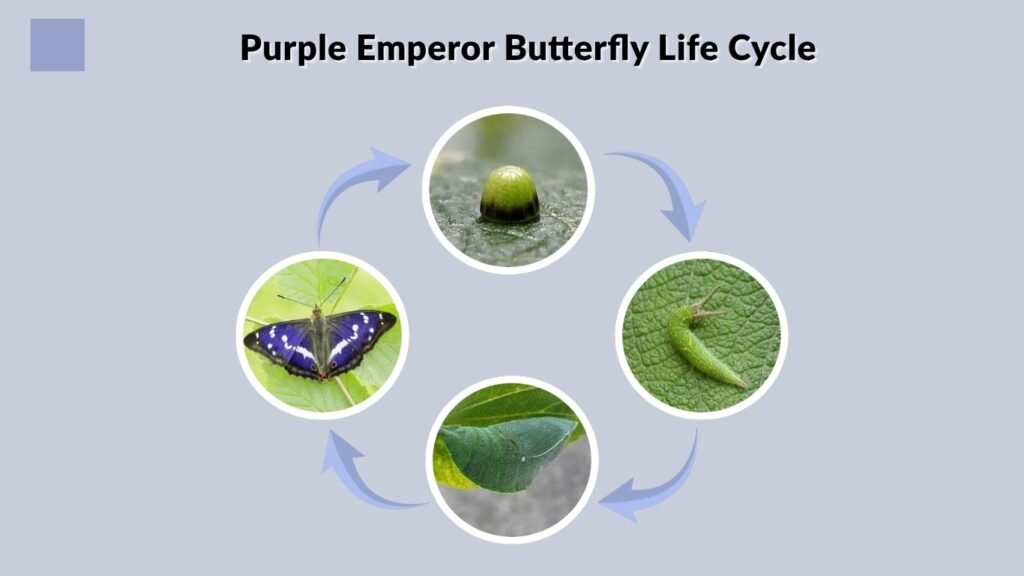
The Purple Emperor butterfly undergoes complete metamorphosis, passing through four developmental stages: egg, caterpillar, chrysalis, and adult. In much of its range, it produces only one generation each year. The species survives winter in the caterpillar stage before completing development during the following spring and summer.
Egg Stage
Female Purple Emperors deposit eggs individually on suitable willow leaves, usually in sheltered woodland locations.
The small, pale-green eggs have a rounded shape and finely textured surface. After roughly one to two weeks, depending on environmental conditions, tiny caterpillars emerge and begin feeding.
Caterpillar Stage
Purple Emperor caterpillars are especially interesting because of their unusual appearance. They have green bodies, pale diagonal markings, and two prominent horn-like projections on their heads.
These projections create a distinctive shape that resembles a miniature slug with horns.
During autumn, developing caterpillars settle onto willow twigs, where they remain dormant throughout winter. They resume feeding when fresh foliage becomes available in spring.
Chrysalis Stage
After completing its growth, the caterpillar forms a green chrysalis, generally suspended beneath a willow leaf.
The chrysalis closely resembles surrounding foliage, helping conceal it from predators. Inside, the insect undergoes the transformation that produces its adult wings, antennae, and reproductive structures.
Adult Butterfly Stage
Adult Purple Emperors usually emerge between late June and August, depending on location and seasonal weather.
Their adult lives typically last only a few weeks. During this period, they feed, establish territories, find mates, and reproduce, completing the annual cycle.
Purple Emperor Butterfly Behavior
Purple Emperor butterflies are known for their unusual behavior, particularly the activities of territorial males. Although they spend much of their time hidden among treetops, their movements during the breeding season occasionally make them easier to observe.
Territorial Behavior and Fighting
Male Purple Emperors often gather around prominent trees sometimes called master trees.
They defend these elevated territories against rival males and may chase other butterflies or even passing birds.
These confrontations are generally aerial pursuits rather than physical fights. Establishing a favorable territory helps males encounter females during the breeding season.
How to Spot a Purple Emperor Butterfly
The best time to look for Purple Emperors in Britain is generally late June through July, although sightings can continue into August.
Warm, relatively calm mornings provide good opportunities to observe males descending to woodland paths for minerals.
Look around tall oak trees, woodland rides, and sheltered clearings near willow growth. Binoculars can be useful because adults frequently remain high in the canopy.
Avoid disturbing the butterflies or damaging their habitat while observing them.
Is the Purple Emperor Butterfly Rare?
The Purple Emperor is locally uncommon and difficult to observe in Britain, partly because it occupies large woodland areas and spends considerable time above ground level. Although its distribution has expanded in some regions, protecting suitable woodland habitats remains essential for supporting established and developing populations.
Threats and Conservation
Habitat fragmentation, woodland clearance, and the removal of willow plants can reduce suitable breeding environments.
Conservation work focuses on maintaining connected woodland habitats, preserving mature trees, and encouraging suitable willow growth.
Protecting both adult feeding locations and caterpillar food plants is important because the butterfly depends on different resources throughout its life cycle.
Purple Emperor vs. Great Purple Emperor Butterfly
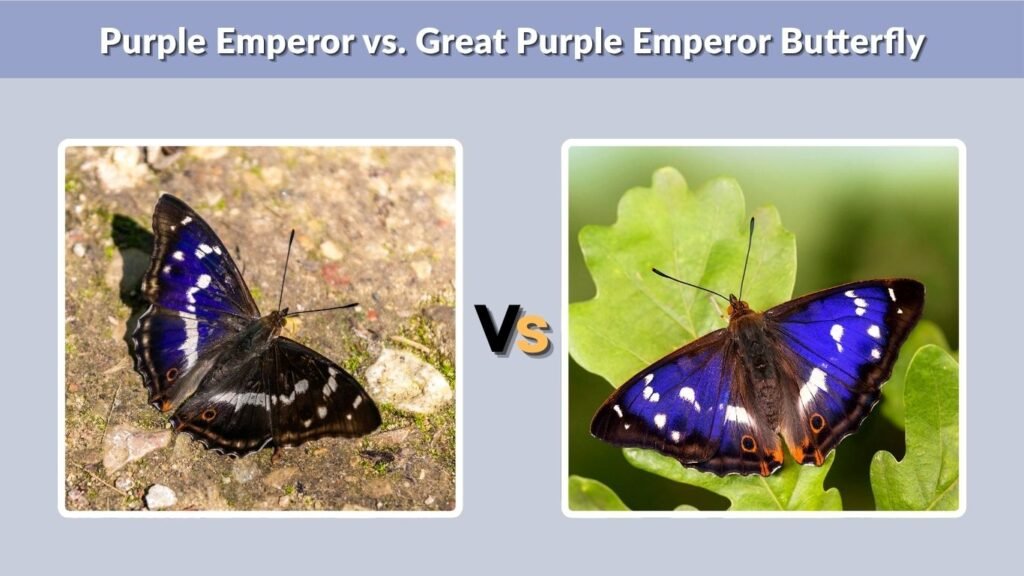
The Purple Emperor (Apatura iris) is sometimes confused with the Great Purple Emperor (Sasakia charonda), but they are separate species.
The Great Purple Emperor is native to East Asia and is recognized as Japan’s national butterfly. Its caterpillars primarily feed on hackberry trees rather than the willow plants favored by Apatura iris.
Another related species, the Lesser Purple Emperor (Apatura ilia), also has iridescent males but differs in its wing markings, including an orange-ringed eyespot on the upper forewing.
FAQs
1. Is the Purple Emperor Butterfly Really Purple?
Male Purple Emperors appear purple-blue when sunlight strikes their wings at certain angles. This appearance results from microscopic structures reflecting light. Females do not display the same brilliant iridescence.
2. How Long Does a Purple Emperor Butterfly Live?
Adult Purple Emperor butterflies generally live for approximately two to three weeks. However, their complete life cycle lasts around a year because caterpillars survive through winter before developing into adults.
3. Where Can You Find Purple Emperor Butterflies?
They occur in suitable woodland habitats across parts of Europe and temperate Asia. In Britain, they are mainly associated with mature deciduous woodlands in southern and central England.
4. What Does a Purple Emperor Caterpillar Look Like?
A Purple Emperor caterpillar has a green body, pale diagonal markings, and two distinctive horn-like projections on its head. Its coloration helps it blend into willow leaves.
5. Why Are Purple Emperor Butterflies Difficult to See?
Purple Emperors spend much of their time high in woodland canopies. Their short annual flight season and preference for secluded woodland environments make sightings relatively uncommon, even where healthy populations exist.