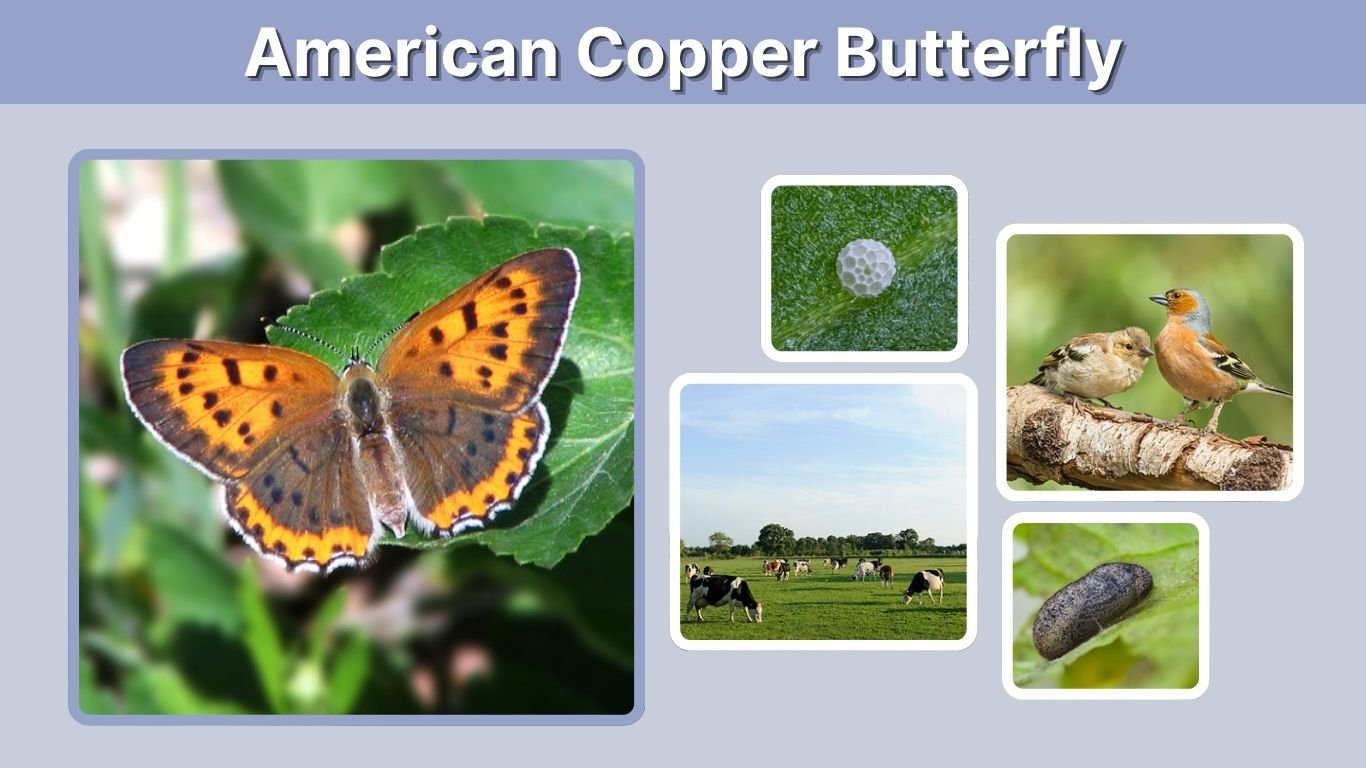
The American copper butterfly (Lycaena phlaeas) is a small, colorful butterfly known for its bright orange wings, dark spots, and quick movements. Commonly found in open grasslands, meadows, and roadsides, this butterfly belongs to the Lycaenidae family. Despite its tiny size, it plays an important role in local ecosystems by visiting flowers and supporting natural food chains. Understanding the American copper butterfly’s habitat, diet, host plants, life cycle, and behavior can help nature enthusiasts identify this beautiful species and appreciate its fascinating characteristics.
American Copper Butterfly Facts
The American copper butterfly is one of the smaller members of the gossamer-winged butterfly family. Its distinctive orange-and-black coloration makes it relatively easy to recognize when its wings are open. This butterfly prefers sunny environments where flowering plants and suitable caterpillar host plants grow naturally. It is active during warmer months and may produce several generations annually.
| Feature | Description |
| Common Name | American Copper Butterfly |
| Scientific Name | Lycaena phlaeas |
| Family | Lycaenidae |
| Subfamily | Lycaeninae |
| Wingspan | 0.9–1.4 inches (2.2–3.5 cm) |
| Wing Color | Orange-red, brown, and gray |
| Habitat | Meadows, grasslands, fields, roadsides |
| Caterpillar Diet | Sheep sorrel, curly dock |
| Adult Diet | Flower nectar |
| Distribution | Eastern and northern North America, with additional arctic and western mountain populations |
| Active Season | Spring through fall, depending on location |
American Copper Butterfly Identification
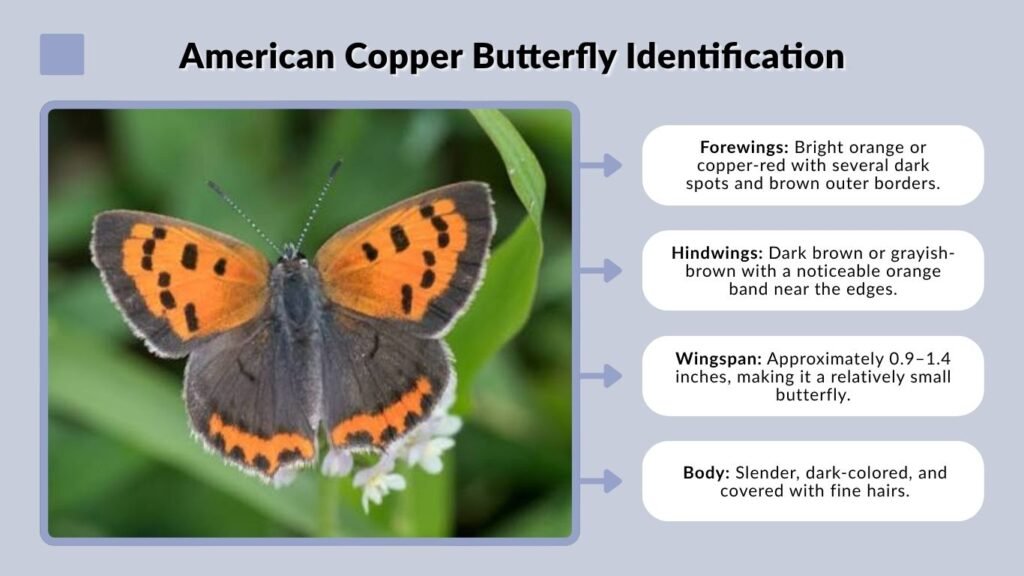
Identifying an American copper butterfly is relatively simple because of its distinctive wing colors and compact body. Although several copper butterfly species share similar markings, the American copper has recognizable patterns on both sides of its wings. Observing its wing shape, coloration, and flight behavior can help distinguish it from related butterflies.
Physical Appearance and Wing Shape
- Forewings: Bright orange or copper-red with several dark spots and brown outer borders.
- Hindwings: Dark brown or grayish-brown with a noticeable orange band near the edges.
- Wingspan: Approximately 0.9–1.4 inches, making it a relatively small butterfly.
- Body: Slender, dark-colored, and covered with fine hairs.
- Antennae: Thin, club-shaped antennae with alternating light and dark markings.
- Wing Shape: Rounded to slightly angular wings that appear compact when resting.
American Copper Butterfly Underside
The underside of the American copper butterfly looks different from its brightly colored upper wings.
Its forewing underside is pale orange with black spots and grayish outer margins. The hindwing underside is mostly light gray, decorated with small black spots and a narrow reddish-orange zigzag line near the outer edge.
These subtle colors help the butterfly blend into dry vegetation and surrounding surfaces when its wings are closed.
American Copper Butterfly Habitat and Range
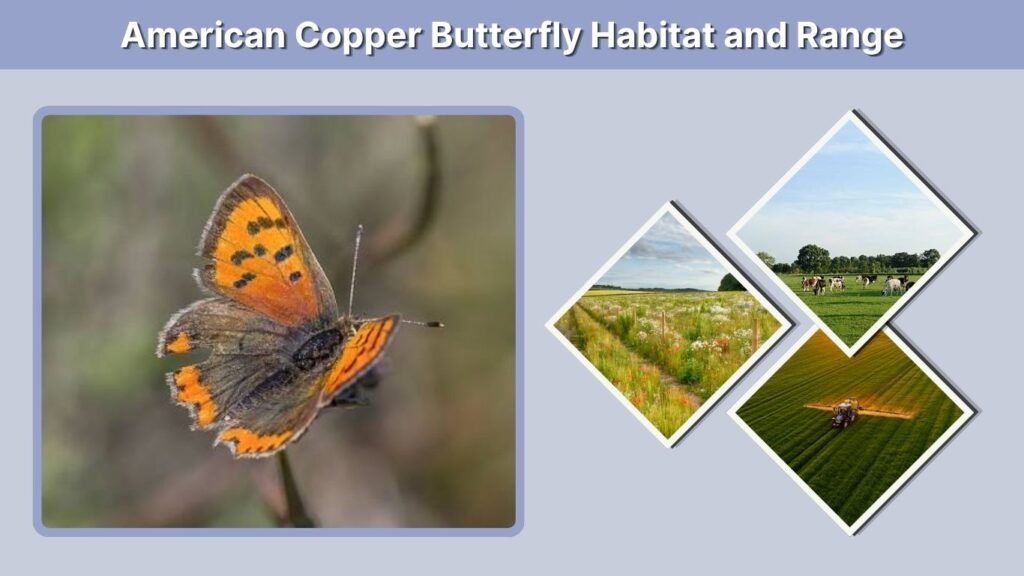
The American copper butterfly thrives in sunny, open habitats with accessible nectar sources and suitable plants for its caterpillars. Unlike butterflies that depend heavily on forests, this species frequently inhabits disturbed landscapes. Its distribution varies geographically, with populations occupying lowland fields, northern environments, and high-elevation mountain habitats.
Where Does the American Copper Butterfly Live?
American copper butterflies are commonly associated with the following habitats:
- Open grasslands and wildflower meadows
- Agricultural fields and pastures
- Roadsides and grassy pathways
- Abandoned lots and disturbed land
- Sunny gardens and woodland edges
- Rocky alpine areas and arctic tundra
These locations provide sunlight, shelter, and the plants necessary for reproduction.
American Copper Butterfly Range
In eastern North America, the species ranges from Nova Scotia southward to parts of Georgia, Tennessee, and Arkansas, extending westward through the Great Lakes region toward North Dakota.
Separate populations inhabit northern arctic regions and western mountain environments.
The butterfly is also closely related to populations found throughout Europe and parts of Asia, where Lycaena phlaeas is commonly called the small copper.
American Copper Butterfly in Georgia
In the U.S. state of Georgia, the American copper butterfly is relatively uncommon and occurs primarily in northern counties.
It has been recorded in places such as Rabun, Walker, Chattooga, and Catoosa counties. Open meadows containing sheep sorrel and curly dock provide suitable conditions for its survival.
Georgia populations may produce three seasonal flights, typically between spring and autumn. The species is not widely distributed across the southern part of the state.
What Does the American Copper Butterfly Eat?
The American copper butterfly’s diet changes significantly during its development. Caterpillars consume leaves from specific host plants, while adults obtain energy from flower nectar. Both food sources are essential because host plants support larval growth, whereas nectar supplies the energy needed for flying, mating, and reproducing.
American Copper Butterfly Caterpillar Diet
Young caterpillars primarily feed on plants belonging to the buckwheat family, Polygonaceae.
Their preferred food sources include sheep sorrel, curly dock, and certain other related plants.
Newly hatched larvae often feed from the underside of leaves, creating small holes or shallow feeding channels. As they grow, their feeding marks become more noticeable.
Adult American Copper Butterfly Diet
Adult butterflies feed mainly on nectar from flowering plants such as white clover, common buttercup, butterfly weed, yarrow, and oxeye daisy.
They use their long, flexible proboscis to extract nectar from flowers.
During feeding, they may transfer pollen between blossoms, contributing modestly to pollination.
American Copper Butterfly Host Plants
Host plants are essential for the American copper butterfly because females deposit eggs on vegetation that developing caterpillars can eat. Without suitable plants, successful reproduction becomes difficult. Most host plants belong to the dock and sorrel groups, which frequently grow in open fields, roadsides, and disturbed environments.
Important American copper butterfly host plants include:
- Sheep Sorrel (Rumex acetosella): One of the most important host plants, commonly growing in sandy or acidic soils.
- Curly Dock (Rumex crispus): A widespread plant that provides leaves for developing caterpillars.
- Alpine Sorrel (Oxyria digyna): A host plant associated with some northern and mountain populations.
- Other Sorrel and Dock Species: Certain related Rumex plants may support larvae depending on the local butterfly population.
Sheep sorrel is especially important in many eastern North American habitats.
American Copper Butterfly Life Cycle
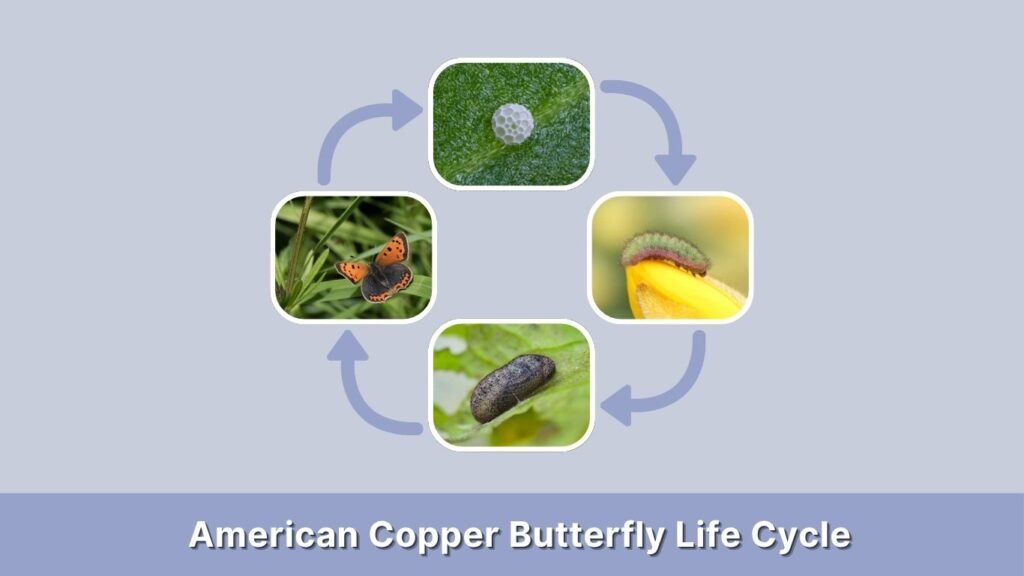
The American copper butterfly undergoes complete metamorphosis, progressing through four developmental stages: egg, larva, pupa, and adult. Each stage serves a different purpose in the butterfly’s development. Environmental temperature, food availability, and geographic location influence how quickly individuals develop and how many generations appear during a growing season.
Egg Stage
Female American copper butterflies usually lay individual eggs on the leaves or stems of suitable host plants.
These tiny eggs develop until the caterpillars are ready to emerge. Their development rate depends largely on environmental conditions.
American Copper Butterfly Caterpillar
After hatching, the caterpillar begins feeding on its host plant.
American copper caterpillars are generally green, sometimes displaying pinkish or reddish markings and short, fine hairs.
Their coloring helps them remain relatively inconspicuous against plant leaves.
As caterpillars grow, they shed their outer skin several times before becoming fully developed.
Pupa and Adult Butterfly
Once mature, the caterpillar forms a chrysalis, where its body undergoes metamorphosis.
The adult eventually emerges with folded, soft wings that expand and harden before flight.
In temperate regions, the species survives winter in an immature stage, with pupal overwintering reported and larval overwintering also documented in some populations.
Depending on latitude, American copper butterflies can have one, two, or three generations per year.
American Copper Butterfly Behavior and Migration
American copper butterflies are active, sun-loving insects commonly observed flying close to the ground. Their behavior includes territorial defense, flower feeding, courtship, and egg-laying. Although their flight appears rapid and unpredictable, many individuals remain associated with relatively small areas where suitable host plants and nectar-producing flowers are available.
Flight and Territorial Behavior
Male American copper butterflies are notably territorial.
They often perch on grass stems, bare ground, or low vegetation while watching for females.
When another butterfly enters their territory, males may quickly chase the visitor away before returning to their original location.
Does the American Copper Butterfly Migrate?
The American copper butterfly is not known for long-distance seasonal migration like the monarch butterfly.
Instead, populations generally remain near suitable breeding habitats, although individuals may disperse to nearby areas.
Their seasonal appearances reflect local breeding cycles rather than large annual migrations.
American Copper Butterfly Predators
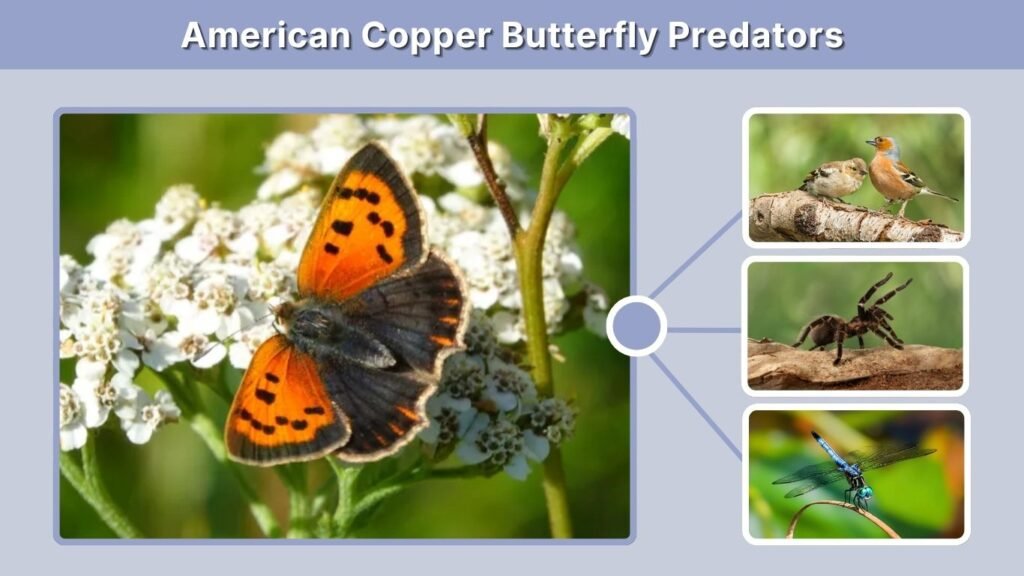
Despite their bright wing colors and quick flight, American copper butterflies face numerous natural predators. Their small bodies make them vulnerable throughout their development, from eggs and caterpillars to fully grown adults. Different predators target different life stages, helping maintain the balance of local insect populations.
Common Predators
Predators that may feed on American copper butterflies include:
- Birds: Insect-eating birds may capture adult butterflies.
- Spiders: Flower-dwelling spiders can ambush visiting butterflies.
- Dragonflies: Some species capture small butterflies during flight.
- Predatory Insects: Assassin bugs and other hunters may attack adults or larvae.
- Parasitoid Wasps and Flies: Certain species develop in butterfly eggs or caterpillars.
The butterfly’s rapid flight, small size, and muted underside coloration provide some protection against predators.
Interesting American Copper Butterfly Facts
The American copper butterfly has several fascinating characteristics that distinguish it from many larger butterfly species. Its territorial habits, adaptability, and distinctive wing patterns make it an interesting subject for butterfly watchers and photographers. The following facts highlight some of its most remarkable features.
- Small but Aggressive: Male American coppers may chase butterflies considerably larger than themselves.
- Bright Copper-Colored Wings: Their striking orange-red forewings give the species its common name.
- Multiple Generations: Populations in warmer regions can produce several broods in a single year.
- Adaptable Habitat: They can survive in disturbed environments, including vacant lots and roadsides.
- Different Wing Patterns: Their grayish wing undersides contrast strongly with the colorful upper surfaces.
- Low Flight: Adults frequently fly just above grass and other short vegetation.
How to Attract American Copper Butterflies
Creating an appropriate butterfly habitat can encourage American coppers to visit areas within their natural range. These butterflies need a combination of nectar-rich flowers, sunny spaces, and caterpillar host plants. Gardens that provide these resources while minimizing pesticide exposure may offer valuable feeding and breeding opportunities.
Provide Nectar-Rich Flowers
Planting flowers such as butterfly weed, yarrow, asters, and native mountain mints can provide food for adult butterflies.
A variety of flowers blooming at different times helps maintain nectar availability throughout the active season.
Protect Suitable Host Plants
Allowing patches of sheep sorrel or appropriate dock species to grow can support caterpillar development where these plants already occur.
Because some dock species spread aggressively, select and manage host plants according to local gardening and conservation recommendations.
Avoid unnecessary insecticide applications and leave some sunny, undisturbed vegetation where butterflies can complete their life cycles.
FAQs
1. What is the scientific name of the American copper butterfly?
The scientific name is Lycaena phlaeas. It belongs to the Lycaenidae family, commonly known as the gossamer-winged butterflies.
2. How big is the American copper butterfly?
The American copper butterfly typically has a wingspan of approximately 0.9–1.4 inches (2.2–3.5 cm). Its small size distinguishes it from many larger copper butterfly species.
3. What does the American copper butterfly caterpillar eat?
American copper caterpillars primarily eat sheep sorrel, curly dock, and certain other plants in the buckwheat family. These plants provide the nutrients required for larval development.
4. Is the American copper butterfly rare?
The American copper butterfly is relatively common in some parts of its range but uncommon in others. Its abundance depends on suitable habitat, host plant availability, and regional environmental conditions.
5. How long does the American copper butterfly live?
An adult American copper butterfly generally lives for a relatively short period, often around one to several weeks. Its complete life cycle takes longer and varies with temperature, food availability, seasonal conditions, and overwintering stage.