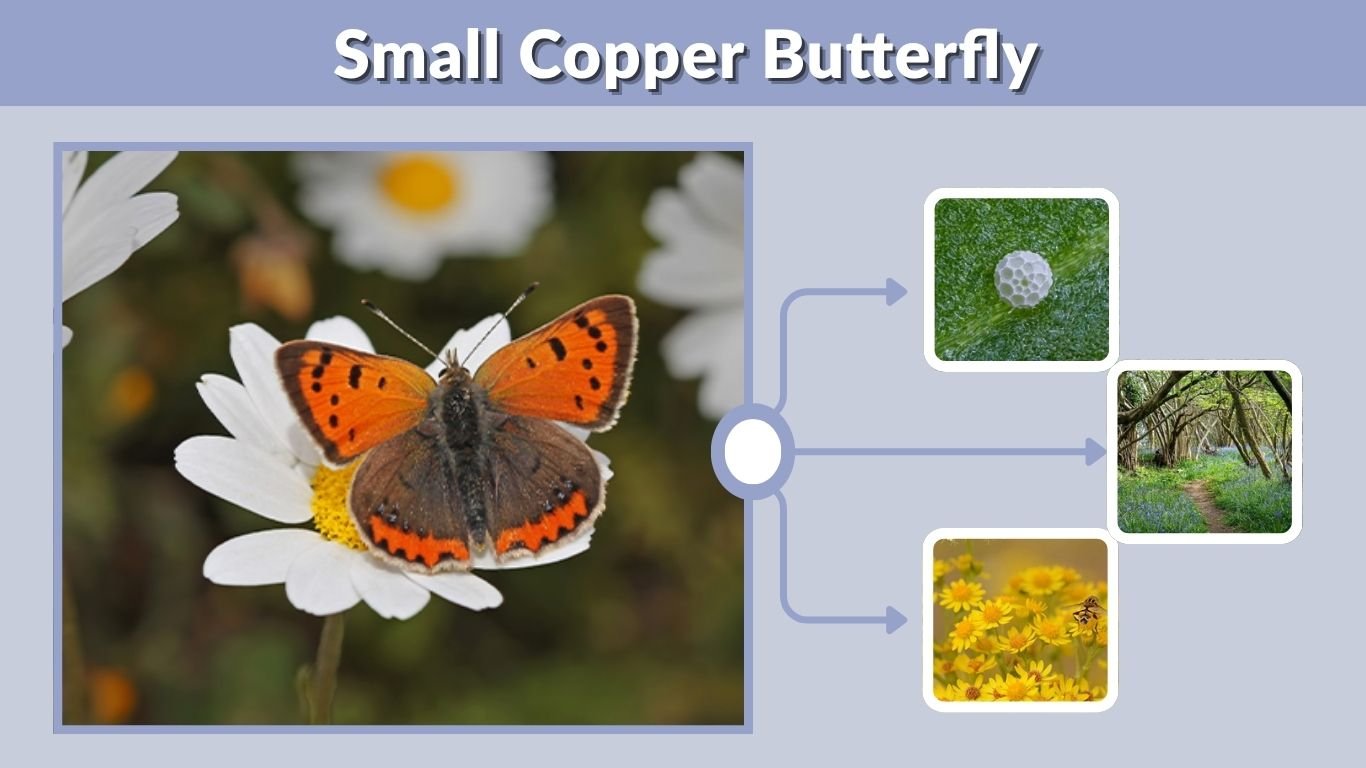
The small copper butterfly is a beautiful insect recognized for its bright orange-red wings, dark markings, and quick, energetic flight. Commonly found across Europe, including the United Kingdom and Ireland, this butterfly inhabits grasslands, gardens, and sunny woodland edges. Despite its small size, its striking copper-colored wings make it easy to recognize. The species also has an interesting life cycle, distinctive caterpillars, and unusual territorial behavior. Understanding its identification, habitat, diet, lifespan, and reproduction helps butterfly enthusiasts appreciate this fascinating member of the natural world.
What Is a Small Copper Butterfly?
The small copper butterfly (Lycaena phlaeas) belongs to the family Lycaenidae, which includes coppers, blues, and hairstreak butterflies. It is a widespread species found across Europe, parts of Asia, North Africa, and North America.
Its brilliant copper-orange wings distinguish it from many other small butterflies. The species favors warm, sunny habitats containing sorrel plants, which provide food for its developing caterpillars.
Small Copper Butterfly Size
Adult small copper butterflies typically have a wingspan of 26–36 millimeters (1–1.4 inches).
Females are often slightly larger than males. However, their similar wing patterns make distinguishing the sexes difficult without close examination.
How to Identify a Small Copper Butterfly
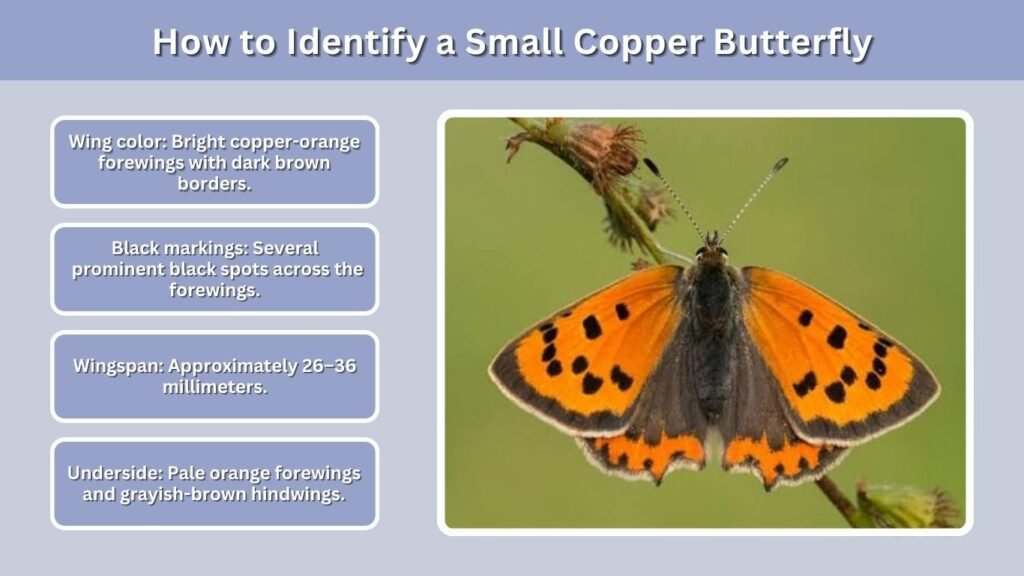
Small copper butterflies have distinctive wing patterns that make them relatively easy to recognize. Their upper wings display brilliant orange coloration combined with dark brown borders and black spots. The undersides are considerably paler, helping the butterflies blend into surrounding vegetation while resting.
Key Identification Features
- Wing color: Bright copper-orange forewings with dark brown borders.
- Black markings: Several prominent black spots across the forewings.
- Hindwings: Dark brown with a bright orange band along the outer edges.
- Wingspan: Approximately 26–36 millimeters.
- Underside: Pale orange forewings and grayish-brown hindwings.
- Antennae: Thin, dark antennae with clubbed tips.
- Body: Small, slender, and covered with fine hairs.
Male vs. Female Small Copper Butterfly
Male and female small copper butterflies look remarkably similar.
Females are generally slightly larger and may have less intense copper coloration. Some individuals also display small blue spots near the orange bands on their hindwings.
This blue-spotted variation is often called caeruleopunctata and is not a separate species.
Small Copper Butterfly Caterpillar and Eggs
The small copper butterfly begins life as a tiny egg deposited on a suitable host plant. Its caterpillars develop primarily on sorrel leaves and are difficult to notice because their coloration closely resembles surrounding vegetation.
Recognizing these early stages helps identify breeding populations in grasslands and gardens.
What Does a Small Copper Butterfly Caterpillar Look Like?
Small copper caterpillars have short, flattened bodies that resemble tiny green slugs.
They occur in two common color forms: entirely green or green with pinkish-red stripes along their backs and sides.
Mature caterpillars generally reach approximately 15 millimeters in length. Their small size and effective camouflage make them difficult to locate.
Where Do Small Copper Butterflies Lay Eggs?
Female small copper butterflies lay eggs individually on common sorrel, sheep’s sorrel, and occasionally related dock plants.
The eggs are tiny, pale, and rounded with finely patterned surfaces. They may be deposited on either leaf surface, with many observations recording eggs underneath leaves.
Small Copper Butterfly Life Cycle
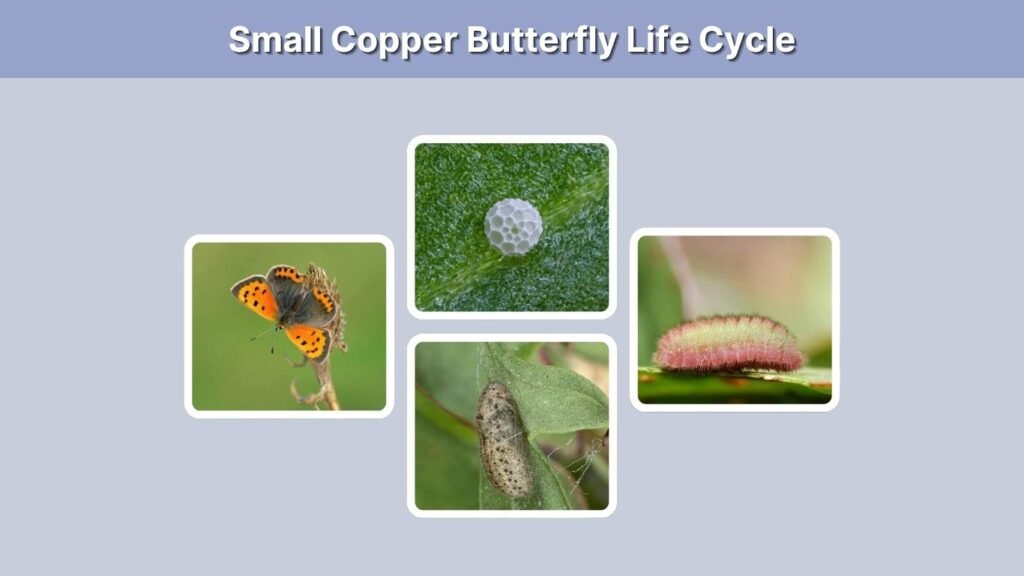
The small copper butterfly undergoes complete metamorphosis through four developmental stages: egg, caterpillar, chrysalis, and adult. Development depends on environmental temperatures and the availability of suitable host plants.
In Britain, the species commonly produces two or three generations annually, sometimes more during favorable weather.
Four Stages of the Life Cycle
- Egg stage: Females deposit individual eggs on suitable sorrel leaves. Eggs generally hatch within one to two weeks.
- Caterpillar stage: Young larvae feed on leaf tissue and grow through several molts.
- Chrysalis stage: Mature caterpillars pupate near ground level, often among vegetation or leaf litter.
- Adult stage: Fully developed butterflies emerge, expand their wings, and begin feeding and reproducing.
How Do Small Copper Butterflies Survive Winter?
In Britain, small copper butterflies generally overwinter as caterpillars.
Their development slows during cold weather, and they remain sheltered close to their host plants. As temperatures rise in spring, they resume feeding before pupating.
Where Do Small Copper Butterflies Live?
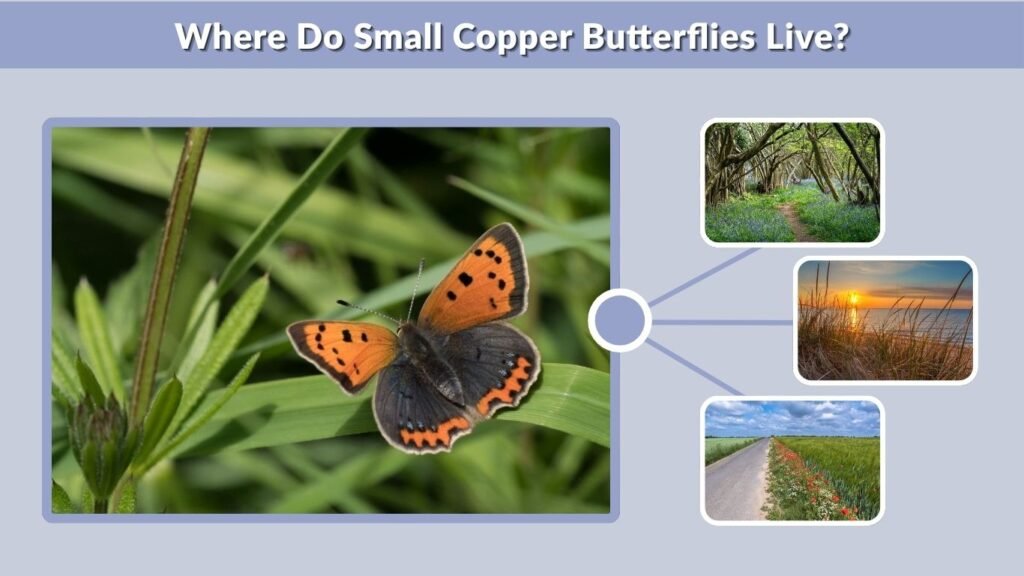
Small copper butterflies favor open, sunny habitats containing abundant nectar sources and suitable caterpillar food plants. They frequently inhabit grasslands, heathlands, coastal dunes, woodland clearings, and roadside verges.
Their populations are often concentrated in small colonies rather than evenly distributed across large landscapes.
Small Copper Butterfly Habitat in the UK
The species is widespread across England, Wales, and parts of Scotland. It also occurs throughout Ireland, although abundance varies regionally.
Adults are generally visible between April and October, with seasonal peaks depending on local temperatures.
Small Copper Butterflies in Australia
The name small copper is also used for an Australian butterfly, Lucia limbaria, commonly called the chequered copper.
This Australian species belongs to a different genus and should not be confused with Lycaena phlaeas. Its caterpillars have a particularly close relationship with ants.
What Do Small Copper Butterflies Eat?
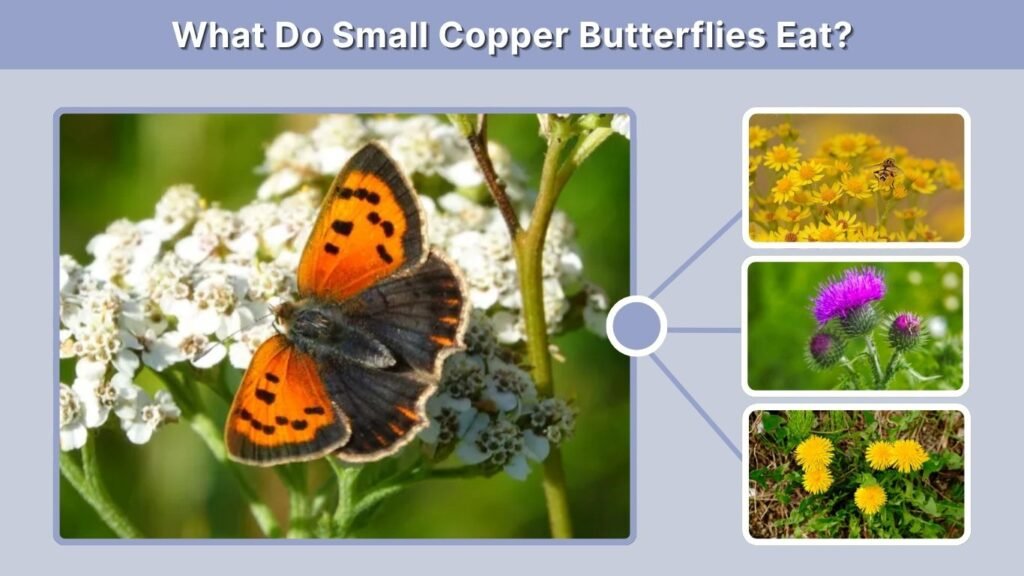
Small copper butterflies have different diets during their larval and adult stages. Caterpillars consume the leaves of specific host plants, while adults drink nectar from flowers.
This feeding specialization makes the availability of sorrel and nectar-rich vegetation important for maintaining healthy populations.
Small Copper Butterfly Host Plants
Common caterpillar food plants include:
- Common sorrel (Rumex acetosa): A primary food plant in Britain.
- Sheep’s sorrel (Rumex acetosella): Frequently used in dry, acidic grasslands.
- Curled dock (Rumex crispus): Used by some populations.
- Other dock species: Occasionally support larval development.
Adult Small Copper Butterfly Diet
Adults feed on nectar from ragwort, thistles, dandelions, yarrow, and other flowering plants.
They are particularly attracted to sunny locations with low-growing flowers. Their feeding activities also contribute to pollination.
Small Copper Butterfly Behavior and Adaptations
Small copper butterflies are active insects known for their rapid flight and territorial behavior. Males frequently occupy sunny patches of bare ground or low vegetation, defending these areas against approaching butterflies.
Their distinctive behavior makes them entertaining subjects for wildlife observation.
How Do Small Copper Butterflies Protect Themselves?
Their rapid, unpredictable flight helps them escape predators. They may also remain motionless with closed wings, using their muted undersides as camouflage.
Male butterflies aggressively chase intruders from preferred territories, although this behavior is primarily associated with competition rather than protection from predators.
How to Attract Small Copper Butterflies
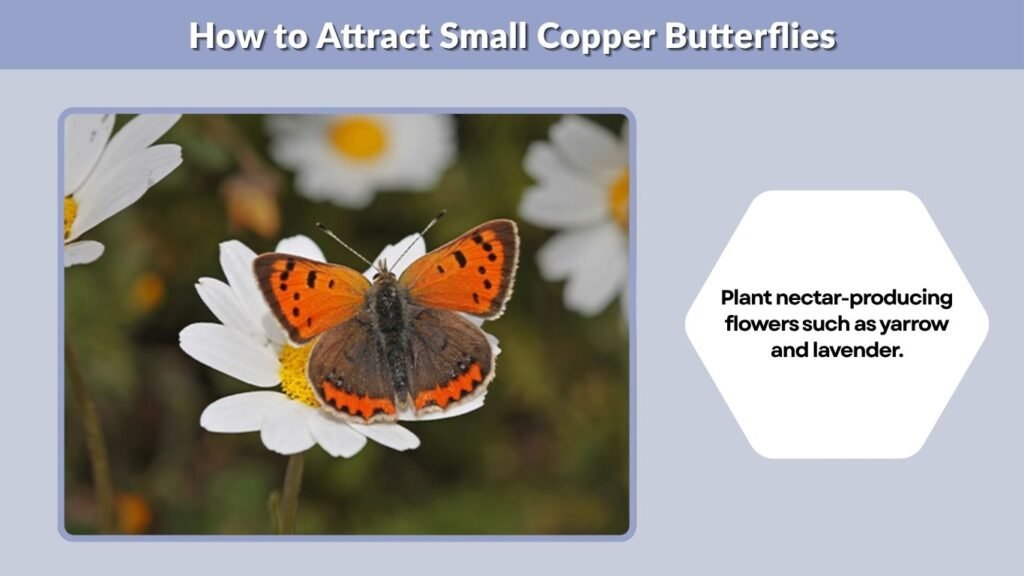
Creating suitable habitat can encourage small copper butterflies to visit gardens and nearby grasslands. Providing their preferred host plants and nectar sources is particularly important.
These butterflies benefit from sunny, relatively undisturbed environments containing varied vegetation.
Butterfly-Friendly Gardening Tips
- Grow common sorrel and sheep’s sorrel as caterpillar food plants.
- Plant nectar-producing flowers such as yarrow and lavender.
- Maintain sunny grassland patches with low vegetation.
- Avoid excessive mowing during the breeding season.
- Reduce unnecessary pesticide applications.
- Preserve natural ground cover where caterpillars can overwinter.
Small Copper Butterfly Spiritual Meaning
The small copper butterfly is sometimes associated with transformation, hope, warmth, and positive change.
Its brilliant reddish-orange wings may symbolize energy, confidence, and personal growth in modern spiritual interpretations.
However, these meanings are cultural beliefs rather than scientific facts. Seeing a small copper butterfly usually indicates suitable habitat and favorable environmental conditions.
FAQs
1. Is the Small Copper Butterfly Rare?
The small copper butterfly is widespread across much of Europe and is not generally considered rare. However, some regional populations have declined because of habitat loss and environmental changes. Its abundance varies depending on suitable grassland conditions and host plants.
2. How Long Do Small Copper Butterflies Live?
Adult small copper butterflies usually live for a few weeks, depending on weather conditions, food availability, and predators. Their complete life cycle takes longer, particularly in colder regions where caterpillars overwinter before completing their development in spring.
3. What Does a Small Copper Butterfly Caterpillar Eat?
Small copper caterpillars primarily feed on common sorrel and sheep’s sorrel. They occasionally use other dock species belonging to the genus Rumex. Young caterpillars often feed on the undersides of leaves, creating distinctive translucent feeding marks.
4. Are Male and Female Small Copper Butterflies Different?
Male and female small copper butterflies have similar copper-orange and dark brown wing patterns. Females are often slightly larger and sometimes appear less brightly colored. Accurate identification of the sexes may require careful examination of body structure and wing characteristics.
5. What Does Seeing a Small Copper Butterfly Mean?
Seeing a small copper butterfly may symbolize renewal, energy, or positive transformation in some cultural interpretations. Scientifically, its presence usually indicates a sunny habitat containing suitable nectar sources and caterpillar food plants. It does not predict future events.