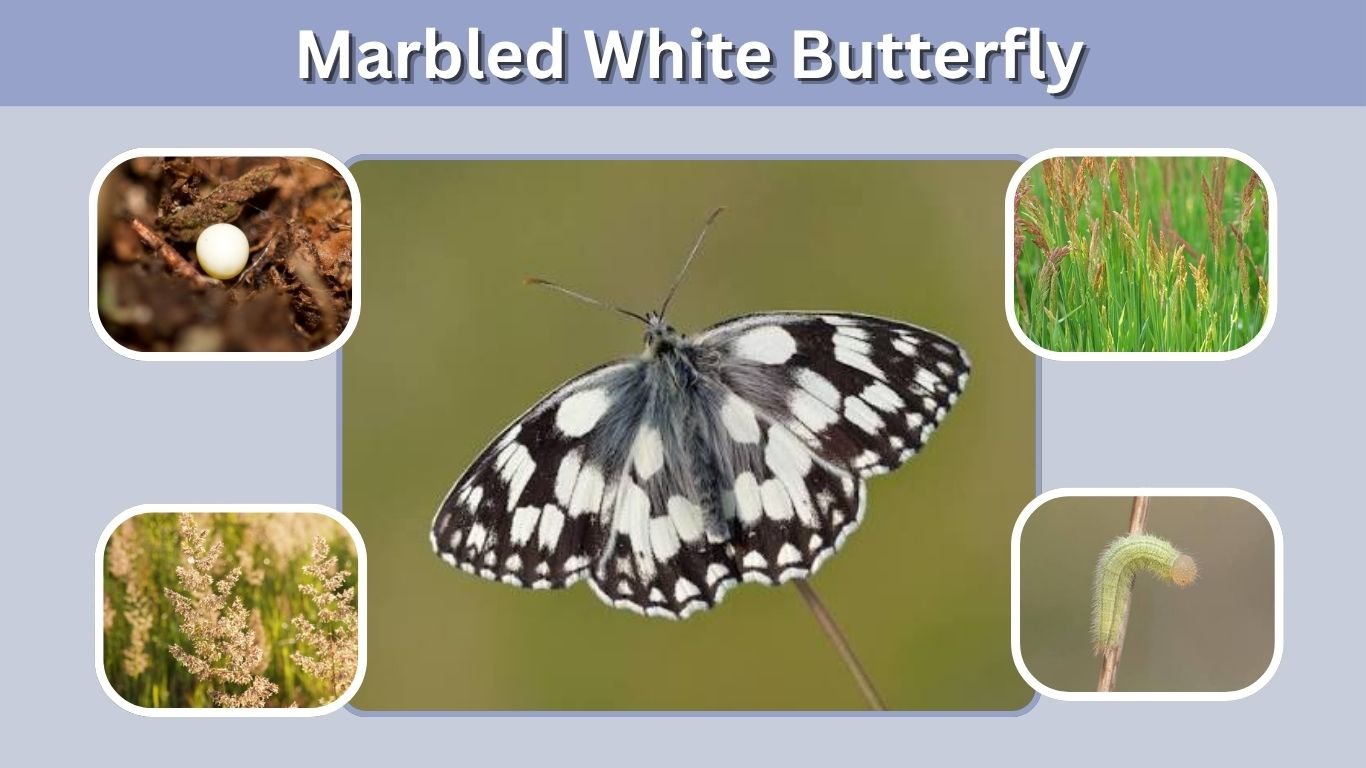
The marbled white butterfly (Melanargia galathea) is a striking grassland butterfly with bold black-and-white wings that resemble a delicate checkerboard. Common in parts of southern Britain and widespread across much of Europe, it favors sunny meadows, chalk grasslands, and flower-rich field margins. Despite its appearance, this species belongs to the brown butterfly group rather than the typical white butterflies. Its unusual egg-laying behavior, grass-feeding caterpillars, and brief summer flight season make it especially interesting. This guide explores its identification, habitat, diet, life cycle, and conservation.
What Is a Marbled White Butterfly?
The marbled white butterfly is a medium-sized butterfly belonging to the family Nymphalidae and subfamily Satyrinae. Its scientific name is Melanargia galathea. Despite its black-and-white appearance, it belongs to the group commonly known as brown butterflies.
Scientific Classification
The species belongs to the order Lepidoptera, which includes butterflies and moths. Its distinctive wing patterns distinguish it from most other European butterflies.
Marbled whites are primarily associated with open grasslands rather than dense woodland, where suitable grasses support caterpillar development.
Marbled White Butterfly Identification
The marbled white butterfly is easily recognized by its contrasting black-and-white wing markings. Both males and females display intricate patterns resembling marble or a chessboard.
Physical Appearance and Characteristics
Important identification features include:
- Wingspan: Approximately 53–58 mm.
- Wing color: White or creamy-white with bold dark markings.
- Upper wings: Distinctive black-and-white checkerboard patterns.
- Underside: Paler markings with several small eyespots.
- Body: Slender with fine grayish hairs.
- Antennae: Dark, slender, and clubbed at the tips.
- Flight pattern: Slow, fluttering movements over grassland.
Male vs Female Marbled White Butterfly
Male and female marbled whites appear similar, although females are generally slightly larger.
Females may display warmer brownish or yellowish markings on their hindwing undersides. Males often have darker gray markings and actively search grassy habitats for potential mates.
Marbled White Butterfly Habitat
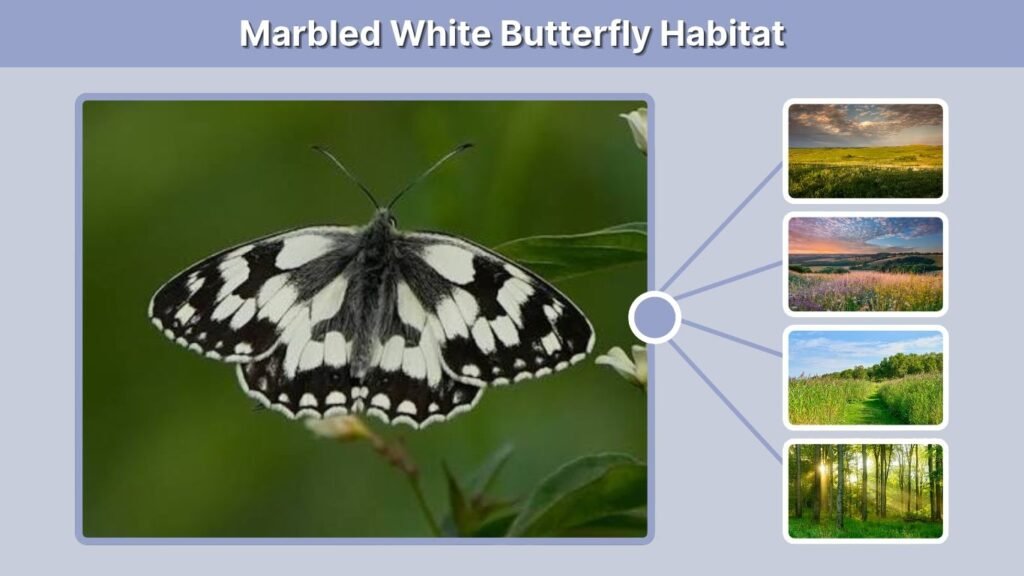
Marbled white butterflies prefer warm, open grasslands containing abundant wildflowers and grasses. They are especially associated with traditional meadows and limestone or chalk grasslands.
Suitable habitats provide nectar for adults and grasses for developing caterpillars.
Preferred Natural Habitats
Common habitats include:
- Chalk and limestone grasslands.
- Wildflower meadows with tall grasses.
- Sheltered woodland rides and clearings.
- Roadside verges with natural vegetation.
- Abandoned railway embankments.
- Rough grasslands and field margins.
Can Marbled White Butterflies Live in Gardens?
Marbled whites occasionally visit gardens, particularly those near established grassland colonies.
Gardens with wildflower patches, native grasses, and nectar-producing plants may attract adults during summer. However, extensive lawns and heavily maintained landscapes provide limited breeding opportunities.
Marbled White Butterfly Distribution
The marbled white butterfly is distributed across much of Europe and extends into parts of western Asia and North Africa.
Its geographical range depends on suitable grasslands, warm summer conditions, and the availability of larval food plants.
Marbled White Butterfly in Britain
In Britain, marbled whites are particularly common in southern England and south Wales. Populations have expanded northward into additional regions over recent decades.
They are frequently observed in flower-rich meadows, chalk downs, and grassy woodland clearings.
Marbled White Butterfly Life Cycle
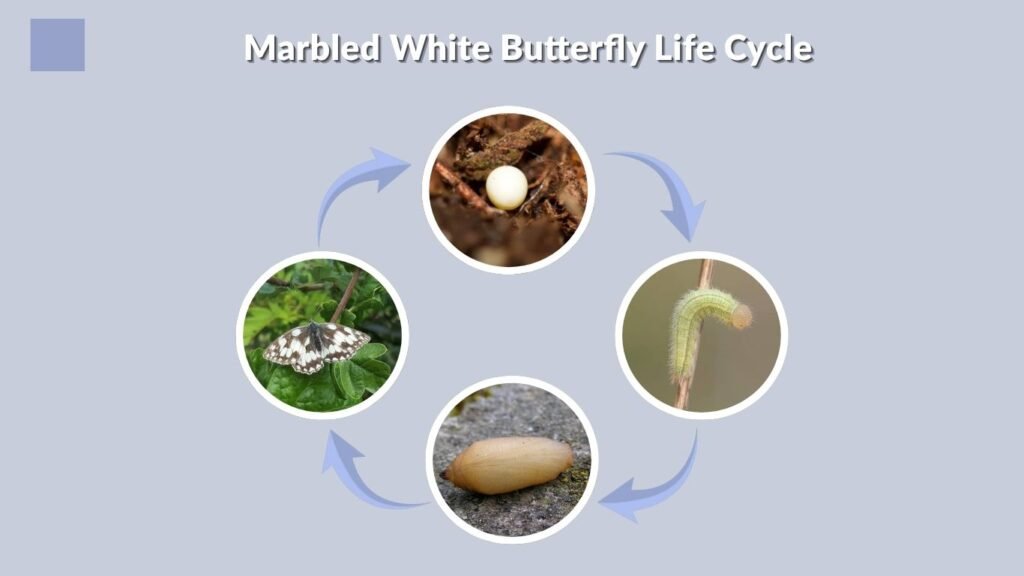
The marbled white butterfly undergoes complete metamorphosis, passing through four developmental stages: egg, caterpillar, pupa, and adult.
Unlike butterflies producing several generations annually, marbled whites generally complete one generation each year.
Egg Stage
Female marbled whites release their eggs among suitable grasses rather than carefully attaching them to individual leaves.
The small, rounded eggs fall into surrounding vegetation. They typically hatch after approximately two to three weeks, depending on environmental conditions.
Caterpillar Stage
Newly hatched marbled white caterpillars usually consume their eggshells before entering a resting period.
They overwinter while still small and begin feeding on grasses during the following spring.
Mature caterpillars are greenish or brownish, with subtle stripes that provide camouflage among grass stems.
Pupa Stage
After completing larval development, caterpillars form pupae near ground level, usually concealed within grass tussocks or surrounding vegetation.
The chrysalis is generally brownish or yellowish. Metamorphosis continues inside until the adult butterfly is ready to emerge.
Adult Butterfly Stage
Adult marbled whites usually emerge during early summer.
After their wings expand and harden, they begin searching for nectar and mating opportunities. Their reproductive cycle produces the next generation of caterpillars, which survives through winter.
What Do Marbled White Butterflies Eat?
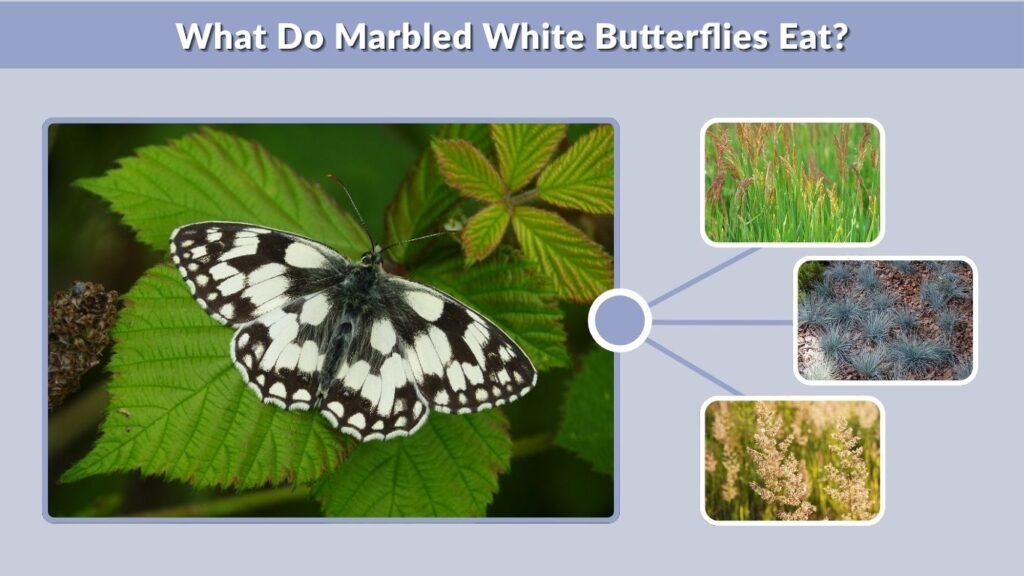
Marbled white butterflies depend on different food sources during their adult and caterpillar stages.
Adults consume flower nectar, while caterpillars feed on grasses. Both food sources are essential for completing their annual life cycle.
Adult Butterfly Diet
Adult marbled whites frequently visit purple and pink wildflowers, particularly common knapweed, field scabious, and wild marjoram.
They use their long proboscis to extract nectar, which provides energy for flying, mating, and other activities.
Marbled White Caterpillar Food Plants
Important caterpillar food plants include:
- Red fescue: One of the most important larval grasses.
- Sheep’s fescue: A fine-leaved grass found in open grasslands.
- Yorkshire fog: A soft grass used by developing caterpillars.
- Tor-grass: A potential food source in suitable habitats.
- Cock’s-foot: Another grass species used by larvae.
These grasses support caterpillar development during spring and early summer.
When Are Marbled White Butterflies Active?
Marbled white butterflies are mainly active from June through August in Britain, with peak numbers commonly occurring during July.
Their appearance varies with geographical location, temperature, and seasonal weather conditions.
Flight and Resting Behavior
Marbled whites fly slowly over grasslands, frequently stopping at nectar-rich flowers.
During cooler conditions, they rest on grass stems or flower heads with their wings folded. Their contrasting wing patterns make them relatively easy to observe.
Interesting Facts About Marbled White Butterflies
The marbled white is unusual because its appearance closely resembles members of the white butterfly family, although it belongs to the brown butterfly group.
Its distinctive wing pattern is visible even during flight. Another remarkable characteristic is its habit of dropping eggs into grassy vegetation rather than attaching them directly to host plants.
Several related species, including the Spanish marbled white, share similar patterns but are separate butterflies.
How to Protect Marbled White Butterflies
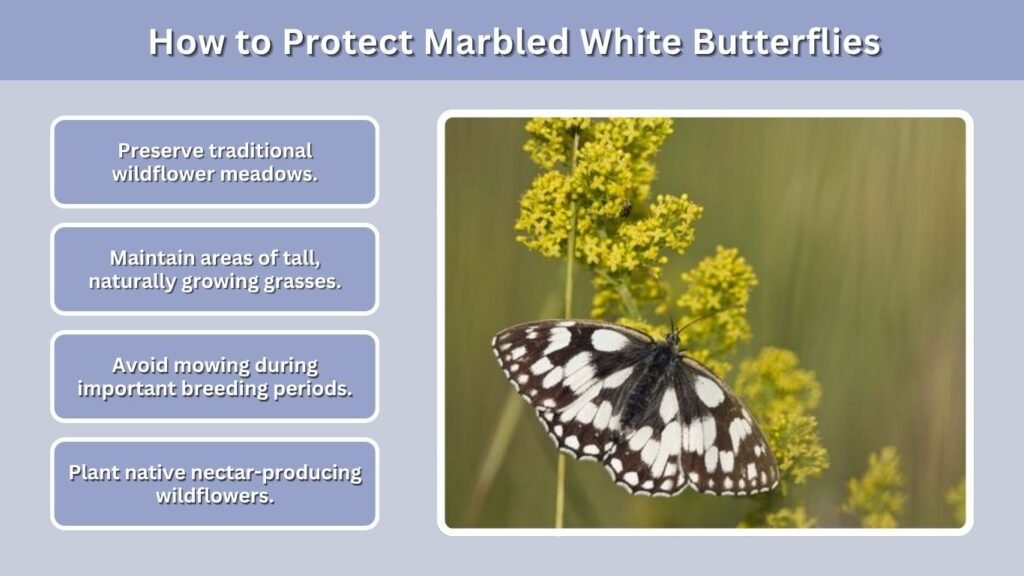
Conserving marbled white butterflies requires protecting flower-rich grasslands and maintaining appropriate vegetation.
Although the species is common in many regions, intensive farming, excessive mowing, and habitat fragmentation can threaten local colonies.
Butterfly-Friendly Conservation Practices
Useful conservation measures include:
- Preserve traditional wildflower meadows.
- Maintain areas of tall, naturally growing grasses.
- Avoid mowing during important breeding periods.
- Plant native nectar-producing wildflowers.
- Reduce unnecessary pesticide applications.
- Protect grassland corridors between established colonies.
Appropriate grassland management supports both adult butterflies and developing caterpillars.
Marbled White Butterfly Meaning and Symbolism
The marbled white butterfly is sometimes associated with balance, transformation, and personal growth.
Its contrasting black-and-white markings may symbolize harmony between opposing forces in personal spiritual interpretations.
However, these meanings are subjective beliefs rather than scientifically established characteristics of the species.
FAQs
1. Are marbled white butterflies rare?
Marbled white butterflies are generally common in suitable grasslands across southern England and parts of Europe. Their range has expanded northward in Britain. However, local populations depend on suitable habitats, nectar-producing flowers, and grasses needed for caterpillar development.
2. How long do marbled white butterflies live?
Adult marbled white butterflies usually survive for a few weeks, although individual lifespans vary with environmental conditions. Their complete life cycle lasts approximately one year because caterpillars overwinter before continuing development and emerging as adults during summer.
3. Is the marbled white a butterfly or moth?
The marbled white is a butterfly belonging to the family Nymphalidae. Although its contrasting wing patterns may resemble certain moths, its clubbed antennae, daytime flying habits, and biological classification clearly identify it as a true butterfly.
4. What flowers attract marbled white butterflies?
Marbled white butterflies are particularly attracted to purple and pink wildflowers, including common knapweed, field scabious, and wild marjoram. These flowers provide nectar during summer. Maintaining flower-rich meadows can help support adults throughout their flight season.
5. What is the spiritual meaning of a marbled white butterfly?
The marbled white butterfly may symbolize balance, renewal, transformation, or adaptability in personal spiritual interpretations. Its contrasting wing colors are sometimes associated with harmony. These symbolic meanings reflect individual beliefs rather than universally recognized traditions or scientific evidence.