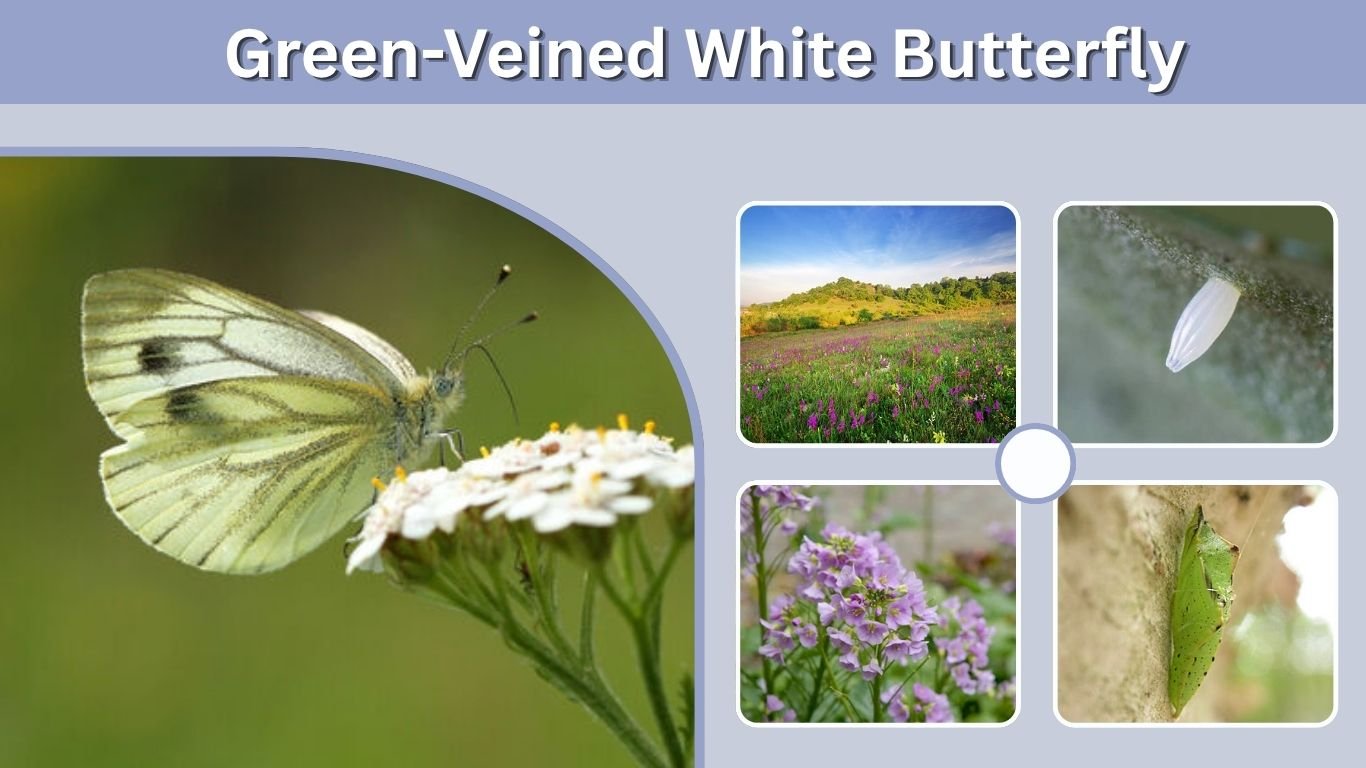
The Green-veined White butterfly (Pieris napi) is a delicate species recognized by its creamy-white wings and distinctive greenish-gray veins. Commonly found across the United Kingdom and Europe, this butterfly prefers damp meadows, woodland edges, gardens, and grassy habitats. Although it resembles the Small White butterfly, its noticeable underside wing markings make identification easier. Green-veined Whites are important pollinators, and their caterpillars primarily feed on wild plants belonging to the cabbage family. This guide explores their appearance, caterpillars, eggs, life cycle, habitat, feeding habits, and interesting characteristics.
What Is a Green-Veined White Butterfly?
The Green-veined White is a medium-sized butterfly belonging to the Pieridae family. Its scientific name is Pieris napi, and it is one of the most widespread white butterfly species in Britain. Unlike the Large White, it primarily uses wild cabbage-family plants for reproduction and is rarely considered a serious agricultural pest.
Green-Veined White Butterfly Facts
- Scientific name: Pieris napi
- Family: Pieridae
- Common name: Green-veined White
- Wingspan: Approximately 40–52 mm
- Wing color: White or creamy yellow with dark markings
- Distinctive feature: Greenish-gray veins underneath the wings
- Caterpillar color: Green with fine yellow markings
- Habitat: Meadows, wetlands, woodland edges, gardens
- Adult food: Flower nectar
- UK flight season: Usually April to October
- Conservation status: Least Concern in Great Britain
Green-Veined White Butterfly Identification
The Green-veined White butterfly has pale wings with subtle dark markings that become more noticeable when it rests. Its most distinctive characteristic is the greenish-gray shading along the veins underneath its hindwings. These markings distinguish it from other common white butterflies, particularly the Small White.
Green-Veined White Butterfly Appearance
The upper wings are mainly white with dark gray or black markings near the forewing tips. Depending on sex and season, one or two dark spots may appear on each forewing.
The undersides are pale yellowish or creamy white, with greenish-gray scales outlining the veins. These darker scales create the characteristic green-veined appearance.
Spring butterflies often have more pronounced vein markings than individuals emerging during summer.
Male vs. Female Green-Veined White Butterfly
Male and female Green-veined Whites look similar, but their upper-wing patterns differ.
Males usually have one dark spot on each upper forewing, while females commonly have two. Females also tend to show stronger dark markings along their wing veins.
However, wing markings vary between seasonal generations. Examining the underside remains the most reliable identification method.
Green-Veined White vs. Small White Butterfly
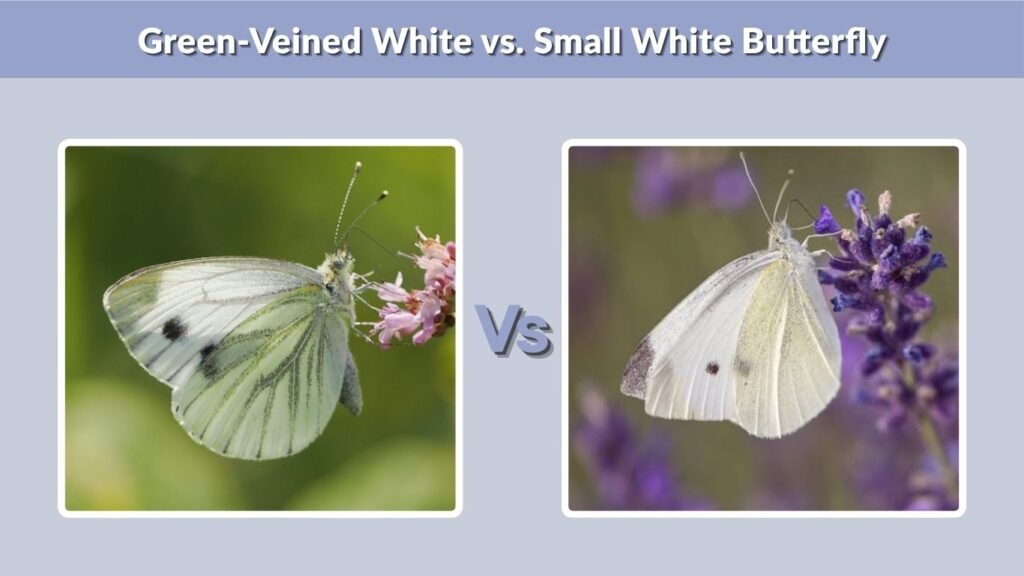
The Green-veined White and Small White butterflies are frequently confused because both have pale wings, dark forewing tips, and similar body sizes. They also share some habitats and food plants. However, several physical and behavioral differences help distinguish these closely related species.
Key Differences Between Green-Veined and Small White
- Wing veins: Green-veined Whites have prominent greenish-gray lines underneath their hindwings. Small Whites lack these strong markings.
- Wing coloration: Green-veined Whites often have cream or pale-yellow undersides with darker veins.
- Habitat: Green-veined Whites particularly favor damp meadows and woodland margins, while Small Whites frequently occur in cultivated gardens.
- Caterpillar appearance: Green-veined White caterpillars are green with fine yellow markings, while Small White caterpillars are velvety green with subtle stripes.
- Feeding behavior: Green-veined White larvae mainly use wild cruciferous plants, whereas Small White caterpillars frequently feed on cultivated brassicas.
Green-Veined White Butterfly Eggs and Caterpillars
Green-veined White butterflies reproduce by depositing eggs on suitable host plants. Their caterpillars develop through several growth stages before transforming into chrysalises. Unlike Large White caterpillars, which often feed in groups, Green-veined White larvae generally develop individually on their host plants.
Green-Veined White Butterfly Eggs
Female butterflies typically lay eggs individually on the undersides of leaves.
The eggs are small, elongated, and pale yellowish when freshly deposited. They have fine vertical ridges that become visible under magnification.
Females select suitable wild cabbage-family plants, ensuring their newly hatched larvae have immediate access to food.
Hatching usually occurs within approximately one to two weeks, depending on temperature.
Green-Veined White Caterpillar Identification
Green-veined White caterpillars have slender green bodies that blend naturally with leaves and stems. Their coloration helps protect them from predators.
They possess fine hairs and subtle yellowish markings along their bodies.
Unlike the brightly patterned Large White caterpillars, they are relatively inconspicuous.
As they mature, the larvae continue feeding on foliage before searching for suitable locations to pupate.
Green-Veined White Butterfly Life Cycle
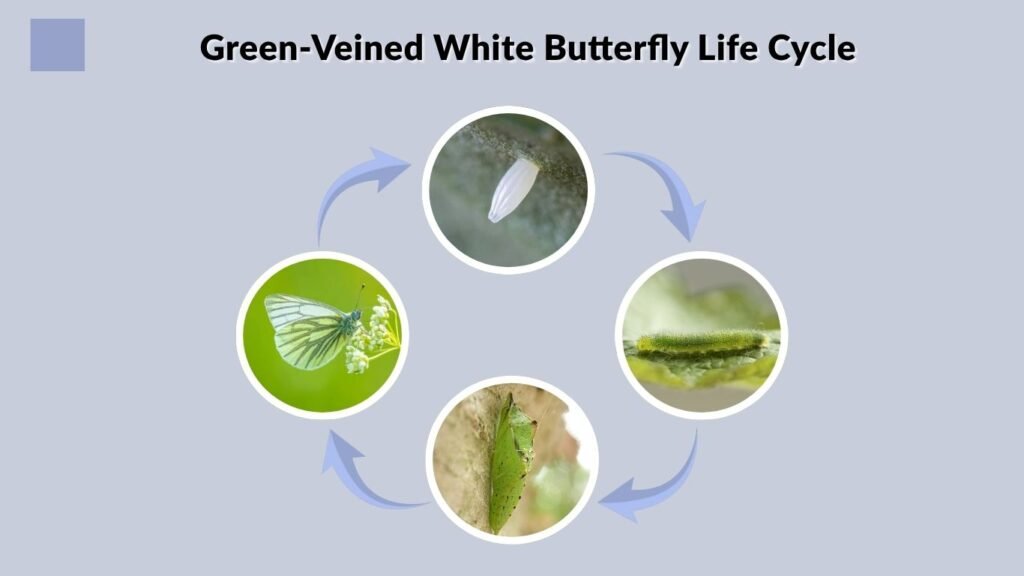
The Green-veined White undergoes complete metamorphosis, developing through four stages: egg, caterpillar, chrysalis, and adult butterfly. Its development depends on environmental temperature and food availability. In the UK, the species usually produces two generations annually, although a partial third generation may occur in favorable conditions.
Four Stages of the Green-Veined White Life Cycle
- Egg stage: Females deposit individual eggs on suitable host plants. The eggs hatch after several days to approximately two weeks.
- Caterpillar stage: The newly emerged larvae feed on leaves and grow through successive molts. Development normally takes several weeks.
- Chrysalis stage: Mature caterpillars attach themselves to sheltered surfaces and transform into pupae. Some remain in this stage throughout winter.
- Adult stage: Fully developed butterflies emerge, expand their wings, and begin feeding on nectar. Adults eventually reproduce, starting another generation.
Green-Veined White Chrysalis
The chrysalis is usually greenish or brownish with an angular body shape. It is secured to a supporting surface using silk.
In temperate climates, Green-veined Whites commonly survive winter as pupae, emerging as adults when spring temperatures become favorable.
Where Do Green-Veined White Butterflies Live?
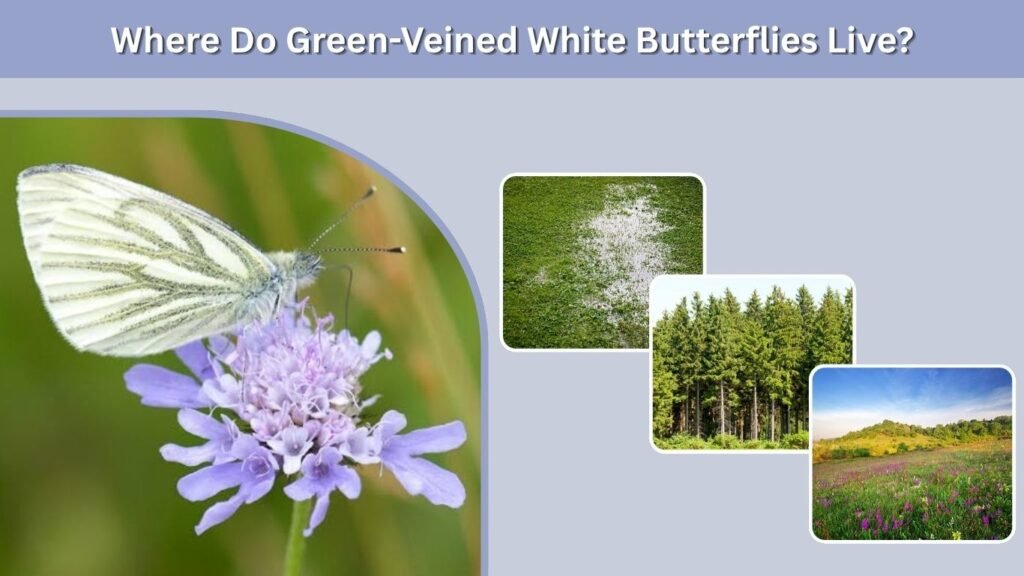
Green-veined White butterflies inhabit a wide variety of environments, although they particularly favor moist areas with abundant vegetation. Their distribution includes much of Europe and parts of temperate Asia. Suitable habitats provide nectar sources for adults and wild cabbage-family plants for developing caterpillars.
Green-Veined White Butterfly Habitat
These butterflies commonly inhabit damp grasslands, woodland edges, hedgerows, riverbanks, and flower-rich meadows.
They are also found in gardens and parks, particularly where wildflowers and undisturbed vegetation are present.
Their relatively gentle, fluttering flight makes them noticeable around flowers during warm, sunny weather.
Green-Veined White Butterfly in the UK
The Green-veined White is widespread throughout much of Britain, including England, Wales, and Scotland.
Adults usually appear between April and October, with population peaks commonly occurring during late spring and midsummer.
Its preference for damp environments makes it particularly frequent near streams, wet grasslands, and sheltered woodland margins.
What Do Green-Veined White Butterflies Eat?
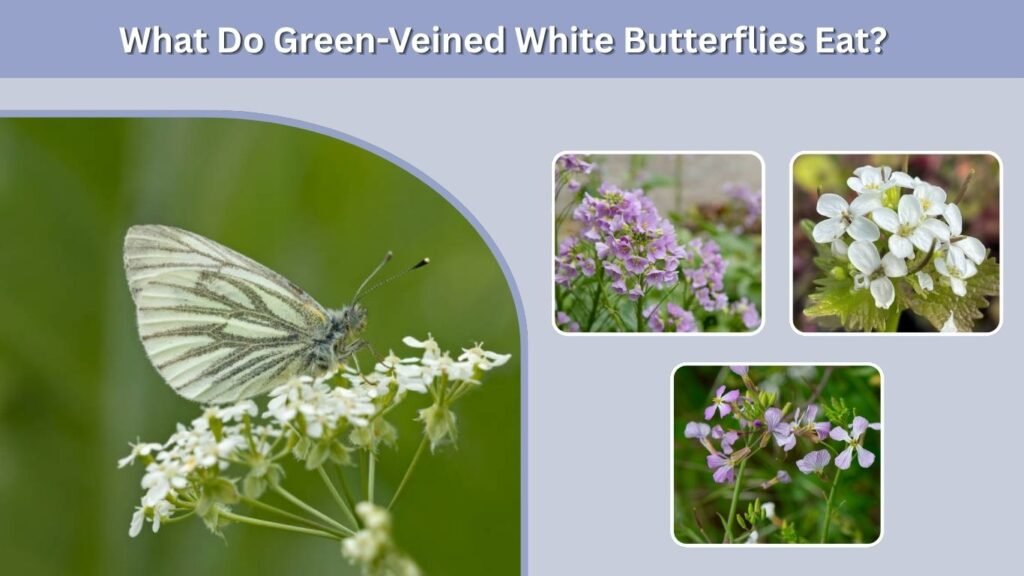
Adult Green-veined White butterflies and their caterpillars consume different foods. Adults primarily drink nectar from flowering plants, while caterpillars feed on selected members of the cabbage family. These feeding relationships influence their habitat preferences and help maintain local butterfly populations.
Green-Veined White Caterpillar Food Plants
Common caterpillar host plants include:
- Cuckooflower: A frequently used host plant in damp grasslands.
- Garlic Mustard: Common along hedgerows and woodland edges.
- Hedge Mustard: Provides food in disturbed habitats.
- Watercress: An important host plant in wet environments.
- Charlock: A wild mustard found in open countryside.
- Wild Radish: Another suitable plant belonging to the cabbage family.
Adult Green-Veined White Butterfly Diet
Adult butterflies visit nectar-rich flowers such as thistles, bluebells, buttercups, and knapweed.
They use their long proboscis to extract nectar, obtaining energy for flight and reproduction.
Males may also visit muddy ground to obtain minerals and salts.
FAQs
1. Is the Green-Veined White Butterfly Rare?
No. The Green-veined White is common and widespread throughout much of the United Kingdom. It frequently inhabits damp meadows, woodland edges, and gardens. Its abundance varies depending on weather, habitat conditions, and the availability of suitable host plants.
2. What Does a Green-Veined White Caterpillar Look Like?
A Green-veined White caterpillar has a slender green body with fine hairs and subtle yellowish markings. Its appearance provides excellent camouflage among leaves. It mainly feeds on wild cabbage-family plants, including cuckooflower, garlic mustard, and watercress.
3. How Long Do Green-Veined White Butterflies Live?
Adult Green-veined White butterflies generally live for several days to a few weeks. Their total life cycle takes longer and varies with temperature. Individuals overwintering as chrysalises may remain in that stage for several months.
4. Are Green-Veined White Butterflies Harmful to Gardens?
Green-veined White butterflies are generally harmless to gardens. Their caterpillars primarily feed on wild cruciferous plants rather than cultivated vegetables. Adults visit flowers for nectar and can contribute to pollination, making them beneficial garden visitors.
5. How Can You Identify a Green-Veined White Butterfly?
Examine the undersides of its wings for distinctive greenish-gray shading along the veins. This feature distinguishes it from the Small White butterfly. Its pale wings, dark forewing tips, and preference for damp habitats provide additional identification clues.