

The Stripe-Tailed Scorpion, also called the Striped Tail Scorpion, is a small desert dweller with a big personality. Known for the distinct dark bands across its tail, this scorpion is commonly found in the southwestern United States. While its sting can be unpleasant, it is rarely dangerous. In this detailed guide, we’ll explore its identification, natural habitat, sting effects, diet, behavior, and care in captivity for those interested in keeping one as a pet.
Species Overview

Scientifically classified under the genus Paruroctonus, the Stripe-Tailed Scorpion is part of the Vaejovidae family. It’s often confused with other small desert scorpions but stands out due to its striped tail segments and agile movements. Adults typically measure between 1.5 to 2.5 inches long, making them one of the smaller scorpions encountered in the United States.
The body color varies from light tan to sandy brown, which blends well with the desert terrain. The tail (metasoma) features clearly defined dark stripes, and the pincers are slender but strong. Like all scorpions, it has eight legs, two pincers, and a stinger-equipped tail.
Although they may look intimidating, Stripe-Tailed Scorpions are generally non-aggressive and retreat when disturbed.
Natural Habitat and Distribution

The Stripe-Tailed Scorpion is native to desert and semi-arid regions of the southwestern U.S., especially:
- Arizona
- California
- New Mexico
- Western Texas
- Parts of Nevada and Utah
They prefer dry, rocky environments, often hiding under stones, within crevices, or beneath tree bark. During the day, they seek cool, dark spaces to avoid the desert heat. After sunset, they emerge to hunt and explore.
In areas close to human activity, these scorpions may enter homes through gaps in doors, windows, or vents, especially during hot months or after heavy rains. They are also commonly found in garages, sheds, and around stacked firewood.
Behavior and Lifestyle
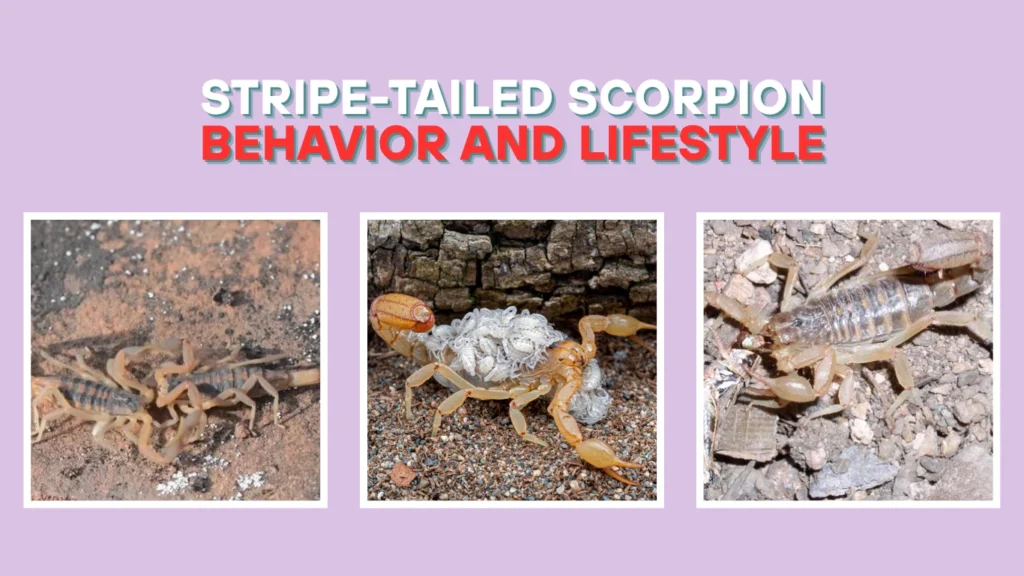
Stripe-Tailed Scorpions are nocturnal and rely on stealth and ambush rather than speed. They use sensitive hairs on their legs and pincers to detect vibrations from nearby prey or threats.
During the day, they remain hidden. At night, they become active hunters. If exposed to light, they will quickly retreat to cover.
Lifespan and Development
These scorpions typically live between 3 to 5 years. Like all arachnids, they grow by molting—shedding their outer exoskeleton. A scorpion will molt several times before reaching full maturity, usually over a year or two.
While they are generally solitary, females may carry their babies on their backs until their first molt. After that, the young scorpions go off on their own.
Diet and Feeding Habits
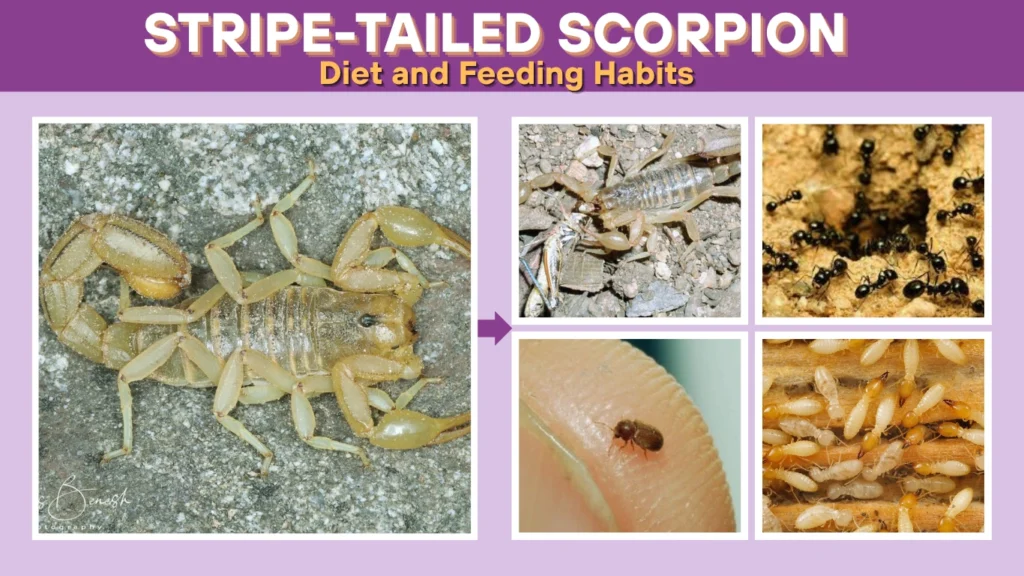
In the wild, Stripe-Tailed Scorpions are insectivorous, feeding primarily on:
- Crickets
- Ants
- Small beetles
- Termites
- Other soft-bodied arthropods
They prefer to ambush prey, grabbing it with their pincers and stinging only when necessary. The venom helps to immobilize the prey while digestive enzymes begin breaking it down for consumption.
In captivity, they should be fed live insects like crickets or mealworms once or twice a week. They don’t need daily feeding and can go several days without food. Always remove uneaten prey to maintain a clean enclosure.
Sting and Venom
Symptoms of a Sting
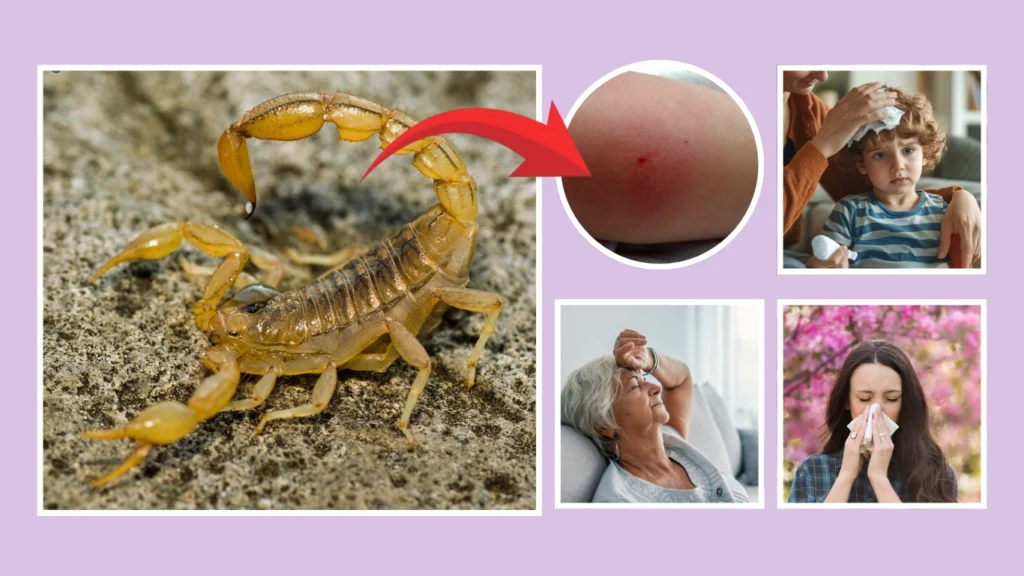
The sting of a Stripe-Tailed Scorpion is considered mild to moderately painful, often compared to a bee sting. Symptoms typically include:
- A sharp, burning sensation
- Localized redness or swelling
- Tingling or numbness around the sting site
Most stings resolve within a few hours without any medical treatment.
Who Should Be Cautious?
While stings are rarely serious, extra care should be taken with:
- Young children
- Elderly individuals
- Those with allergies or compromised immune systems
Pets like dogs and cats may also be sensitive to stings and should be monitored if stung.
Venom Toxicity
The venom of the Stripe-Tailed Scorpion is used primarily for subduing prey, not defense. It is not medically significant to healthy adults, and fatalities are virtually unheard of. Still, stings can be alarming and painful, so avoidance is always best.
Care in Captivity
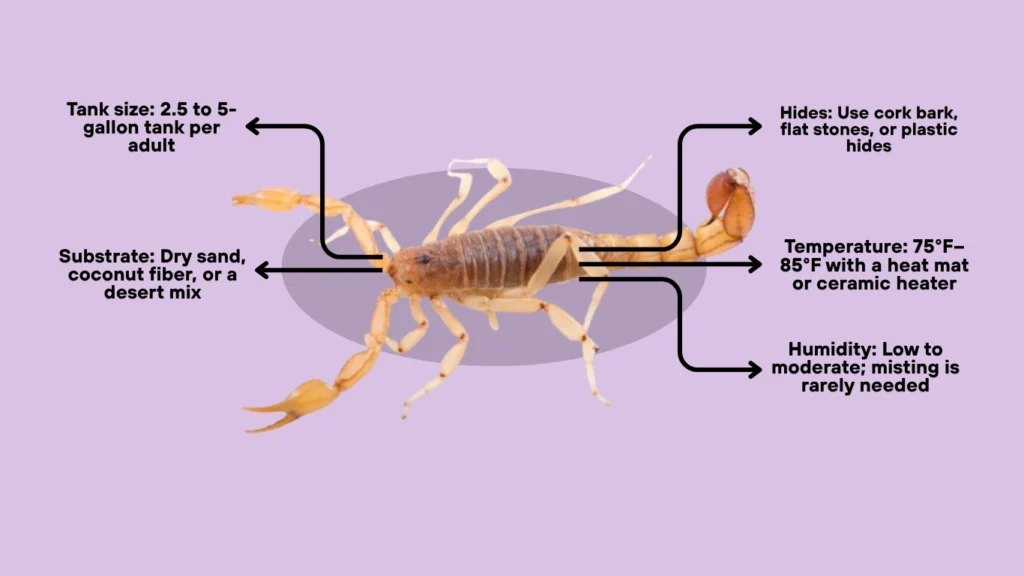
Stripe-Tailed Scorpions are occasionally kept as beginner-level exotic pets due to their manageable size and simple care requirements. However, like all scorpions, they should be treated with respect and caution.
Enclosure Requirements
- Tank size: 2.5 to 5-gallon tank per adult
- Substrate: Dry sand, coconut fiber, or a desert mix
- Hides: Use cork bark, flat stones, or plastic hides
- Temperature: 75°F–85°F with a heat mat or ceramic heater
- Humidity: Low to moderate; misting is rarely needed
Ensure the enclosure has a secure lid, as these scorpions can climb and are skilled escape artists.
Feeding and Maintenance
- Feed once or twice a week with gut-loaded crickets or small roaches
- Clean the tank weekly; remove old food or waste
- Water dish is optional; most hydration comes from prey
Handling is not recommended, as they may sting if stressed. Use tools like soft brushes or deli cups to move them if needed.
Fun Facts About Stripe-Tailed Scorpions
- They glow bright green-blue under UV light due to chemicals in their exoskeleton.
- They rarely use their venom unless absolutely necessary—pincers do most of the work.
- Their stripes help camouflage them against desert rocks and sand.
- They play a role in natural pest control by feeding on insects.
- Females give live birth and carry the young on their backs for protection.
FAQs
Are Stripe-Tailed Scorpions dangerous to humans?
Not seriously. Their sting may cause pain and mild swelling, but it is rarely dangerous to healthy adults.
How can I identify a Stripe-Tailed Scorpion?
Look for a small tan scorpion with dark stripes on the tail, narrow pincers, and a body length of around 2 inches.
Can you keep them as pets?
Yes, they are kept by hobbyists. With proper care and respect, they can be safe to observe but should not be handled.
What should I do if stung?
Clean the area, apply a cold compress, and monitor symptoms. Seek medical care if the sting affects a child, pet, or causes an allergic reaction.
How long do Stripe-Tailed Scorpions live?
They typically live 3 to 5 years, sometimes longer in captivity with ideal conditions.
Conclusion
The Stripe-Tailed Scorpion may be small, but it’s a remarkable survivor of the desert. From its striped tail and UV glow to its ability to thrive in harsh environments, it’s both fascinating and misunderstood. Whether you’re observing one in the wild or caring for one in a terrarium, understanding its behavior and needs is key to safe and respectful interaction with this amazing arachnid.
