

The Deathstalker Scorpion (Leiurus quinquestriatus) is one of the most notorious arachnids on the planet. Known for its highly potent venom and glowing appearance under UV light, this scorpion sparks both fear and fascination. Found in desert regions of North Africa and the Middle East, it plays a complex role in nature and even in modern medicine. Here, we’ll discuss the Deathstalker’s appearance, habitat, diet, venom properties, and more.
Species Overview
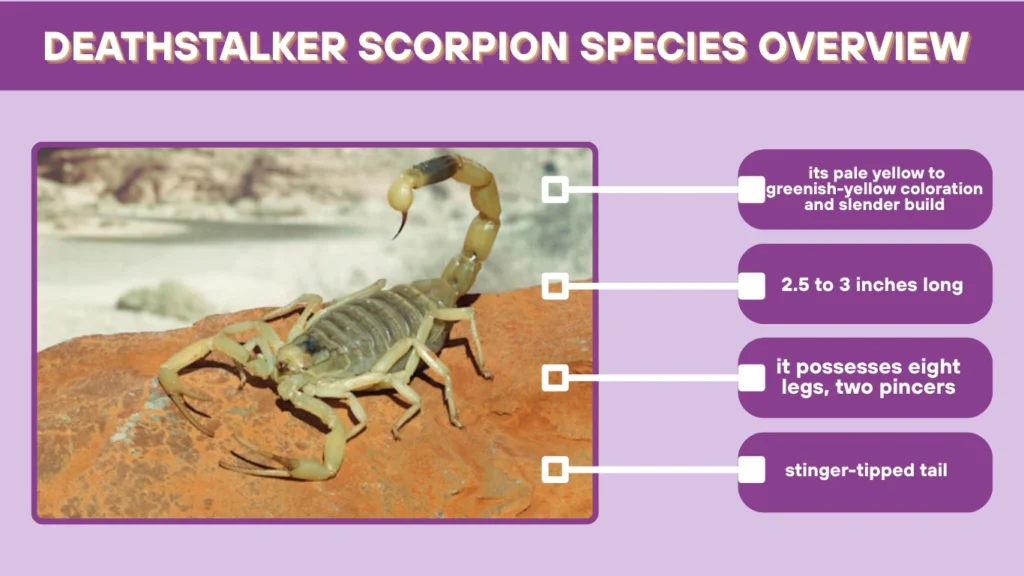
The Deathstalker Scorpion belongs to the family Buthidae, which includes many of the world’s most venomous scorpions. It is also one of the most easily recognized due to its pale yellow to greenish-yellow coloration and slender build. Despite its small size—typically between 2.5 to 3 inches long—it has a fearsome reputation.
The name “Deathstalker” isn’t just for show. It reflects the species’ fast movements, aggressive hunting style, and most importantly, its venom potency. However, in reality, this scorpion rarely attacks unless provoked and prefers to avoid human contact.
Like all scorpions, it possesses eight legs, two pincers, and a curved stinger-tipped tail that arches over its back.
Habitat and Distribution
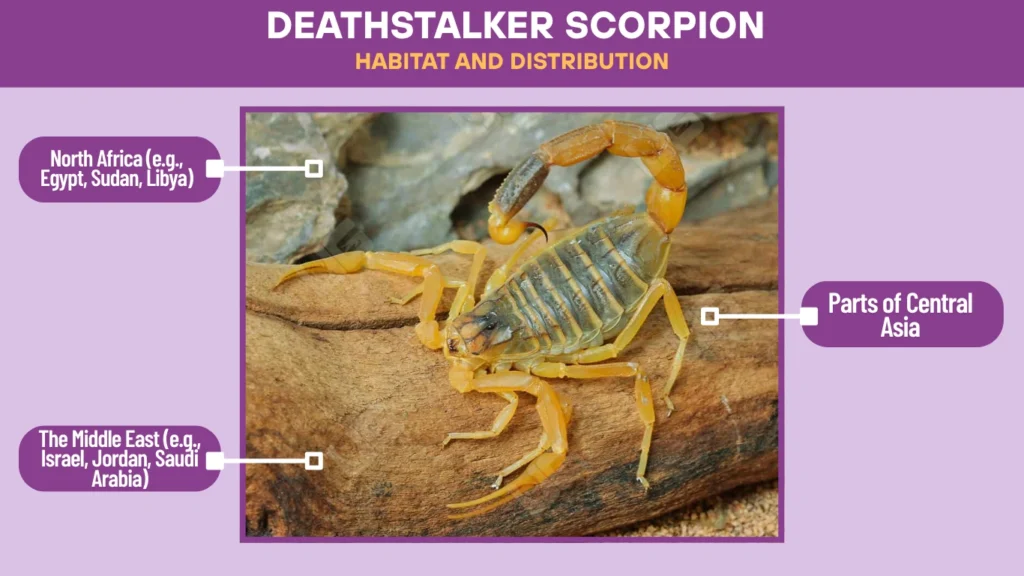
The Deathstalker Scorpion is primarily found in:
- North Africa (e.g., Egypt, Sudan, Libya)
- The Middle East (e.g., Israel, Jordan, Saudi Arabia)
- Parts of Central Asia
It thrives in arid and semi-arid environments, including deserts, rocky hillsides, and dry scrubland. These scorpions are nocturnal, spending the day hidden under rocks, inside crevices, or burrowed into the sand. When night falls, they emerge to hunt and explore.
Despite living in some of the harshest climates on Earth, they have adapted remarkably well. Their pale color helps them blend in with sand and rock, providing camouflage from predators and prey.
Venom and Sting Effects

The Deathstalker’s sting is what has earned it global attention—and notoriety. Its venom contains a complex mix of neurotoxins, including chlorotoxin, which can interfere with electrical signaling in nerves. A single sting can cause:
- Intense, burning pain
- Numbness and tingling
- Sweating and high blood pressure
- Heart palpitations or muscle convulsions in severe cases
While the sting is extremely painful, it is rarely fatal to healthy adults. However, small children, elderly individuals, and those with allergic reactions are at higher risk for complications and should receive immediate medical care.
Can a Deathstalker Scorpion Kill You?
Yes—but rarely. Fatalities are uncommon today due to access to antivenom and emergency medical services. Most reported deaths occur in remote areas without healthcare infrastructure. The risk is real but manageable with timely treatment.
Medical Significance of Venom
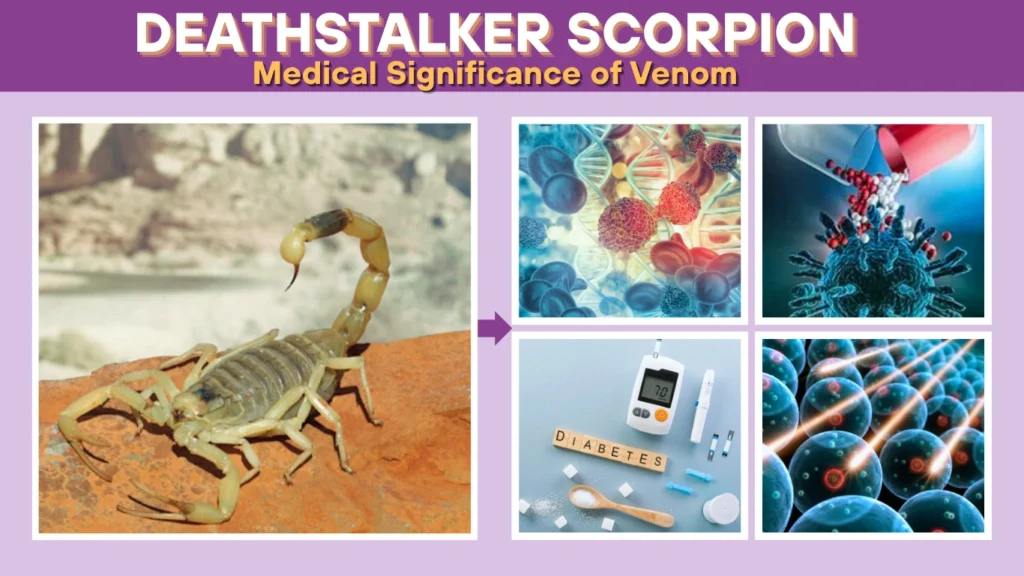
Interestingly, the Deathstalker’s venom isn’t just dangerous—it’s medically valuable.
One of its main toxins, chlorotoxin, has been studied for its potential in treating brain tumors, as it can bind specifically to tumor cells. Researchers are also investigating its use in:
- Cancer diagnostics
- Targeted drug delivery
- Diabetes treatment through insulin regulation research
- Nanotechnology, especially for tracing molecular pathways in cells
Because of this, the Deathstalker’s venom is highly valuable, with purified samples fetching thousands of dollars per gram in pharmaceutical research settings.
Diet and Feeding Habits

As a nocturnal predator, the Deathstalker relies on stealth and sensory adaptation to hunt. It primarily feeds on:
- Crickets
- Grasshoppers
- Small beetles
- Moths
- Other scorpions (especially when food is scarce)
The scorpion uses its sensitive leg hairs to detect ground vibrations. Once it detects prey, it seizes it with its pincers and delivers a quick sting to inject venom. The venom not only immobilizes the prey but also starts breaking it down for digestion.
In captivity, Deathstalkers are fed similar insects and typically eat every few days. They may fast before molting or when stressed, but can survive without food for extended periods.
Lifespan and Reproduction
In the wild, the Deathstalker Scorpion lives for an average of 4 to 6 years, although some captive specimens have survived longer under optimal conditions.
Reproduction and Lifecycle

Deathstalkers reproduce sexually, with a male and female engaging in a “dance” where the male guides the female over a spermatophore (a sperm packet). After fertilization:
- The female gives live birth to 15–30 young
- The babies climb onto the mother’s back immediately
- They remain there until they molt for the first time
- After that, they become independent and start fending for themselves
These scorpions undergo several molts as they grow and become more solitary with age.
Glowing Under UV Light

One of the most remarkable features of the Deathstalker—and all scorpions—is their ability to glow under ultraviolet (UV) light. When exposed to a black light, the Deathstalker emits a bright greenish-blue glow.
This glowing effect is due to fluorescent compounds in the scorpion’s exoskeleton. The exact purpose of this trait is still debated, but theories include:
- UV protection
- Communication between scorpions
- Camouflage or warning signals
Regardless of its purpose, this trait has become a useful tool for researchers and pest control professionals to locate scorpions in the wild.
Ethical Considerations and Legal Status
Due to its venom potency, the Deathstalker is not recommended as a pet, especially for beginners. However, it is occasionally sold in the exotic pet trade.
Deathstalker Scorpion for Sale
In regions where exotic pet laws are relaxed, Deathstalkers may be available through specialty dealers. That said, owning one poses serious risks:
- High chance of accidental sting
- Escape risk if not securely housed
- Potential legal consequences depending on local wildlife regulations
Anyone considering keeping a Deathstalker should research their local laws, have emergency antivenom access, and maintain a secure, escape-proof enclosure.
FAQs
Can a Deathstalker Scorpion kill you?
Yes, but it is extremely rare. While the Deathstalker’s venom is among the most potent of any scorpion, fatalities are uncommon and usually occur in remote areas without access to proper medical care. Healthy adults typically recover with timely antivenom and supportive treatment. However, young children, the elderly, and individuals with allergies are at higher risk and should seek immediate medical attention if stung.
Where does the Deathstalker Scorpion live?
The Deathstalker is native to the deserts and arid regions of North Africa and the Middle East. Countries where it is commonly found include Egypt, Saudi Arabia, Israel, Jordan, Libya, and parts of Sudan. It prefers hot, dry environments and shelters in crevices, under rocks, or within sand burrows during the day, becoming active at night.
What does the Deathstalker Scorpion eat?
It feeds on a variety of small invertebrates such as crickets, beetles, grasshoppers, and occasionally other scorpions. It uses vibration-sensitive hairs to detect prey, then immobilizes it with a quick sting before feeding.
How big is a Deathstalker Scorpion?
Adult Deathstalkers typically grow to about 2.5 to 3 inches (6–8 cm) in length. They have slender bodies, thin pincers, and a curved, segmented tail.
Why does the Deathstalker glow under UV light?
Like all scorpions, the Deathstalker glows a bright green-blue under ultraviolet (UV) light due to chemicals in its exoskeleton. This trait may serve purposes such as communication, UV protection, or environmental awareness.
Final Thoughts
The Deathstalker Scorpion is a creature that demands both respect and understanding. While its venom makes it one of the most dangerous scorpions known to humans, its role in the ecosystem and potential in medical science cannot be overlooked. Whether you’re a researcher, enthusiast, or just curious, learning about the Deathstalker reveals the incredible balance between danger and discovery in the natural world.
