

Ever opened your flour bag and spotted tiny worms or moths fluttering out? That’s likely a pantry moth infestation. These sneaky pests target dry food and multiply fast. In this guide, I’ll walk you through 6 common types of pantry moths, how to identify them, and what damage they cause in your kitchen.
1. Indian Meal Moth
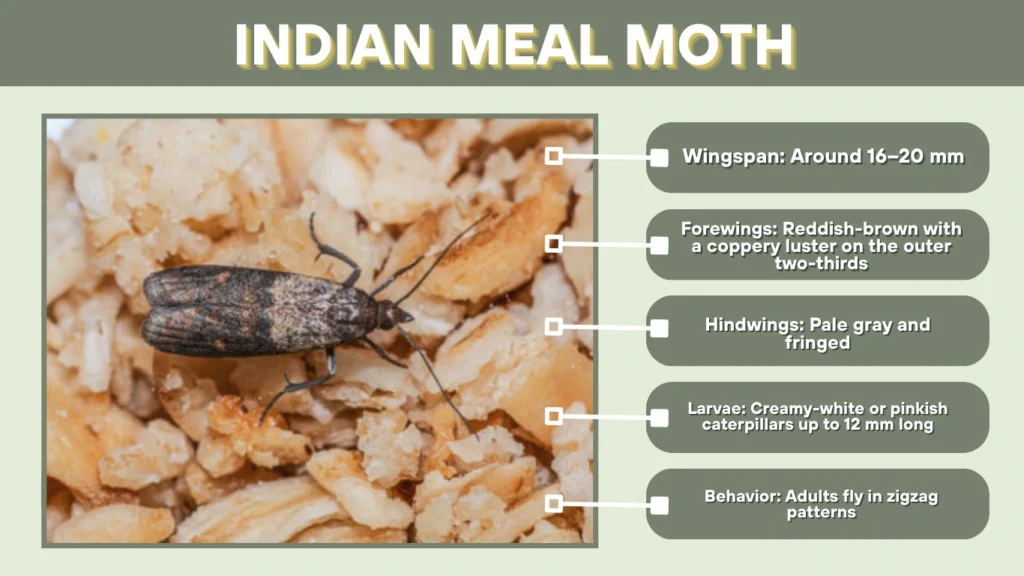
The Indian Meal Moth (Plodia interpunctella) is the most common pantry pest found in households worldwide. Known for infesting grains, cereals, dried fruits, and pet food, this moth can lay hundreds of eggs in stored food products, causing contamination and waste.
Life Cycle and Reproduction
Indian Meal Moths undergo complete metamorphosis, starting as eggs, then larvae (caterpillars), pupae, and finally adults. Females lay up to 400 eggs directly on food sources. The larvae do the most damage as they feed and spin silk webs inside packages.
Habitat and Behavior
They thrive in warm, humid environments and prefer areas where dry food is stored—such as kitchen cabinets, pantries, or food storage bins. Adults don’t eat; their sole purpose is to reproduce. Larvae often wander away from the infested food before pupating in cracks and crevices.
Damage and Food Contamination
Indian Meal Moth larvae leave behind silky webbing, feces, and shed skins, contaminating food and making it unsafe to consume. Infestations can spread quickly if left unchecked, especially in loosely sealed containers.
Identification
- Wingspan: Around 16–20 mm
- Forewings: Reddish-brown with a coppery luster on the outer two-thirds
- Hindwings: Pale gray and fringed
- Larvae: Creamy-white or pinkish caterpillars up to 12 mm long
- Behavior: Adults fly in zigzag patterns; larvae may be seen crawling on walls or ceilings near the infestation site
2. Mediterranean Flour Moth
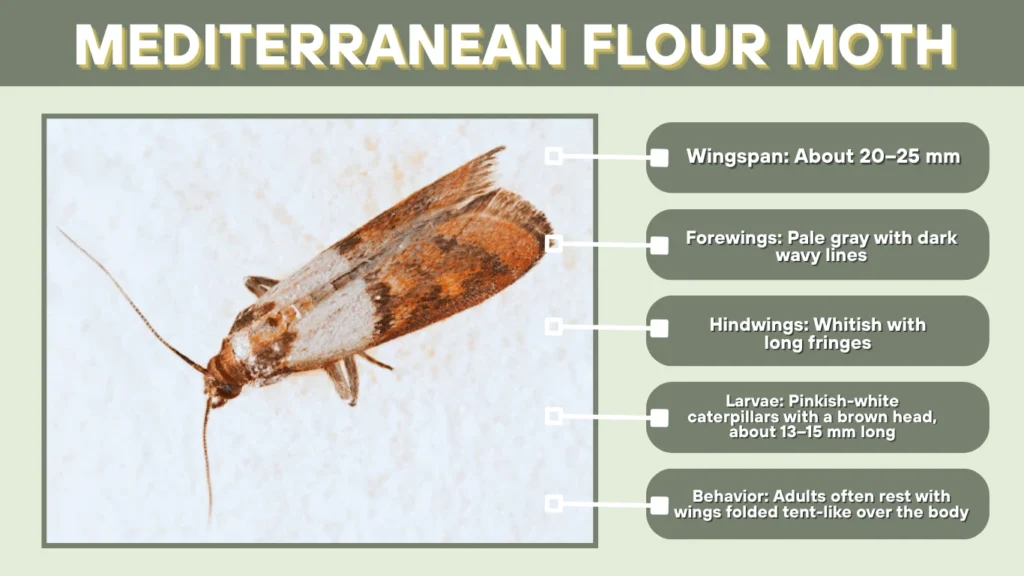
The Mediterranean Flour Moth (Ephestia kuehniella) is another common pantry pest, especially known for infesting flour mills and homes where flour and grain-based products are stored. It is slightly larger than the Indian Meal Moth and produces a significant amount of webbing that clogs machinery and contaminates food.
Life Cycle and Reproduction
This moth lays its eggs directly in flour or grain storage. After hatching, the larvae spin dense silken tunnels as they feed, making the food sticky and unusable. The full cycle from egg to adult takes about 6–8 weeks, depending on temperature and humidity.
Habitat and Behavior
Mediterranean Flour Moths prefer dark, quiet, and warm areas. They often infest flour, cereals, cornmeal, bran, and processed grains. Larvae tend to burrow deep into stored food products, making infestations hard to spot early.
Damage and Food Contamination
The larvae’s silk webbing and frass (droppings) contaminate flour and other dry foods. In industrial settings, these moths can cause major operational disruptions due to clogged equipment and large-scale infestations.
Identification
- Wingspan: About 20–25 mm
- Forewings: Pale gray with dark wavy lines
- Hindwings: Whitish with long fringes
- Larvae: Pinkish-white caterpillars with a brown head, about 13–15 mm long
- Behavior: Adults often rest with wings folded tent-like over the body; larvae spin dense webs in food
3. Almond Moth
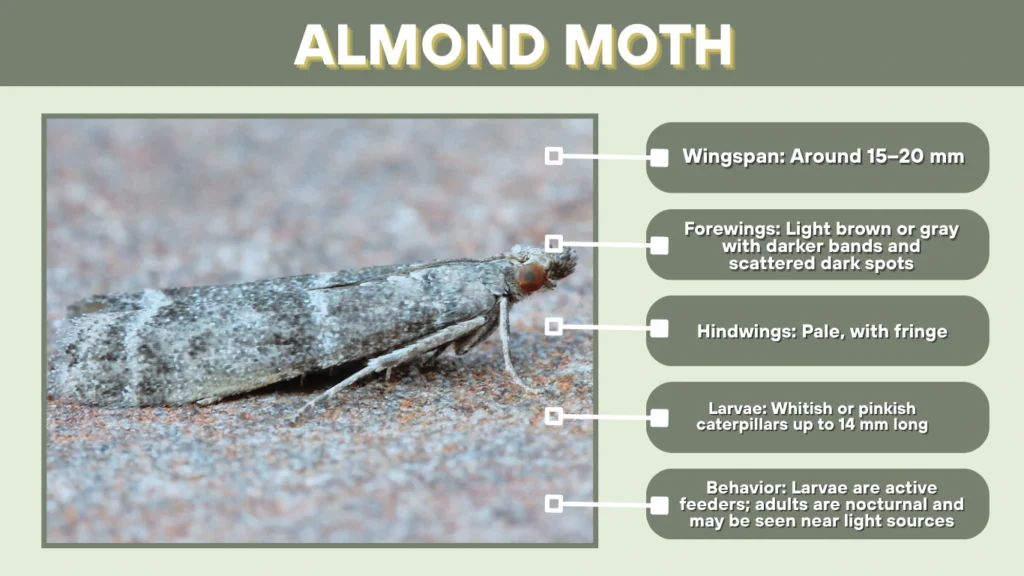
The Almond Moth (Cadra cautella), also known as the tropical warehouse moth, is a widespread pantry pest that infests a wide range of dry food products. It’s particularly troublesome in warmer climates and often found in warehouses, grocery stores, and home pantries.
Life Cycle and Reproduction
Almond Moth females lay up to 300 eggs on or near food sources. The larvae hatch and feed extensively on dried fruits, nuts, grains, and pet food. Their development from egg to adult usually takes 5–7 weeks in warm environments.
Habitat and Behavior
This species prefers warm, undisturbed areas with an abundance of food. Common infestation sites include pantries, food storage bins, and grain silos. The larvae may migrate away from the food source to pupate in crevices or corners of cabinets.
Damage and Food Contamination
Infested food products become clumped with silk webbing and feces. The larvae tunnel through the contents, reducing food quality and causing significant waste, especially in commercial storage facilities.
Identification
- Wingspan: Around 15–20 mm
- Forewings: Light brown or gray with darker bands and scattered dark spots
- Hindwings: Pale, with fringe
- Larvae: Whitish or pinkish caterpillars up to 14 mm long
- Behavior: Larvae are active feeders; adults are nocturnal and may be seen near light sources
4. Raisin Moth

The Raisin Moth (Cadra figulilella) is a less common but still significant pantry pest, especially in regions where dried fruits are stored or processed. As the name suggests, it frequently infests raisins, but it also targets dates, figs, and other sugary dried products.
Life Cycle and Reproduction
The life cycle of the Raisin Moth begins when the female lays eggs on or near dried fruit. Once hatched, the larvae feed inside the fruit, often causing internal decay. Pupation occurs outside the food, typically in cracks, crevices, or packaging folds. The full cycle takes 4–6 weeks depending on temperature.
Habitat and Behavior
This moth prefers warm climates and thrives in environments with sugary dried fruits. It’s often found in food warehouses, dried fruit processing plants, and home storage areas. The larvae tend to bore into the food and remain hidden, making early infestations hard to detect.
Damage and Food Contamination
Raisin Moth larvae feed directly on dried fruit, leaving behind internal damage, silk webbing, and fecal matter. This contamination often renders the food unfit for consumption and results in economic loss, particularly in commercial storage.
Identification
- Wingspan: About 15–20 mm
- Forewings: Brownish-gray with irregular dark markings
- Hindwings: Pale with fine fringe
- Larvae: Cream-colored caterpillars with a brown head, about 12–14 mm long
- Behavior: Adults are nocturnal; larvae often remain hidden inside food until ready to pupate
5. Tobacco Moth
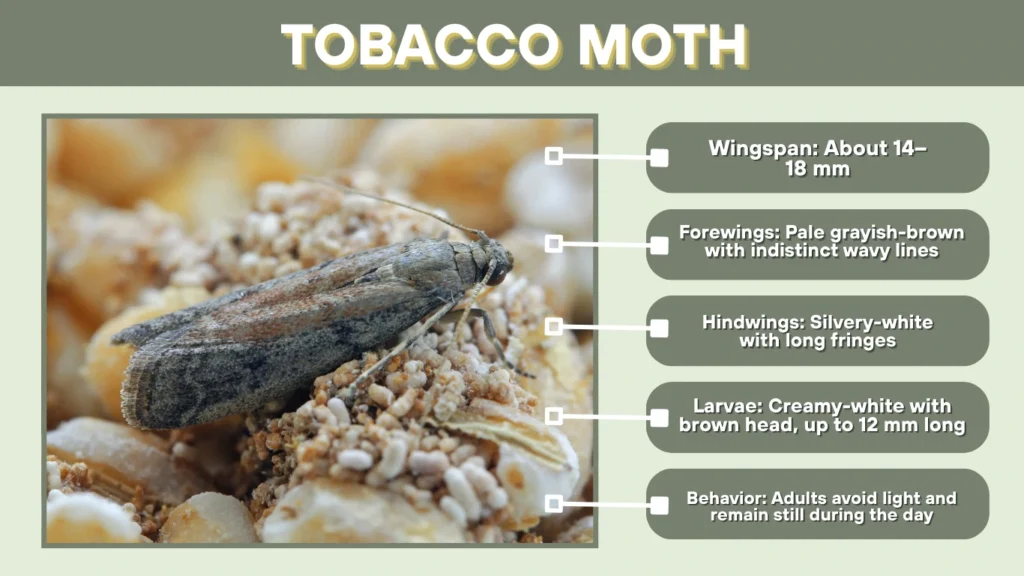
The Tobacco Moth (Ephestia elutella), while primarily associated with tobacco products, can also infest dry food items like grains, nuts, cocoa, and dried fruits. It is commonly found in both commercial warehouses and household pantries.
Life Cycle and Reproduction
The female lays eggs directly on the surface of stored products. Once hatched, larvae begin feeding and create loose silk tunnels. The full development from egg to adult usually takes 30–50 days depending on the temperature and food supply.
Habitat and Behavior
Tobacco Moths thrive in dark, undisturbed, and warm places. Though originally a pest in tobacco storage, it has adapted to a variety of dry goods. It is more commonly found in storage facilities, but home pantries can also be affected if contaminated products are brought inside.
Damage and Food Contamination
Larvae cause contamination by feeding on products and leaving behind webbing, feces, and shed skins. In homes, they may damage dried herbs, nuts, chocolate, and even stored pet food. Contaminated food often clumps together and gives off a musty odor.
Identification
- Wingspan: About 14–18 mm
- Forewings: Pale grayish-brown with indistinct wavy lines
- Hindwings: Silvery-white with long fringes
- Larvae: Creamy-white with brown head, up to 12 mm long
- Behavior: Adults avoid light and remain still during the day; larvae are active feeders within stored products
6. Angoumois Grain Moth
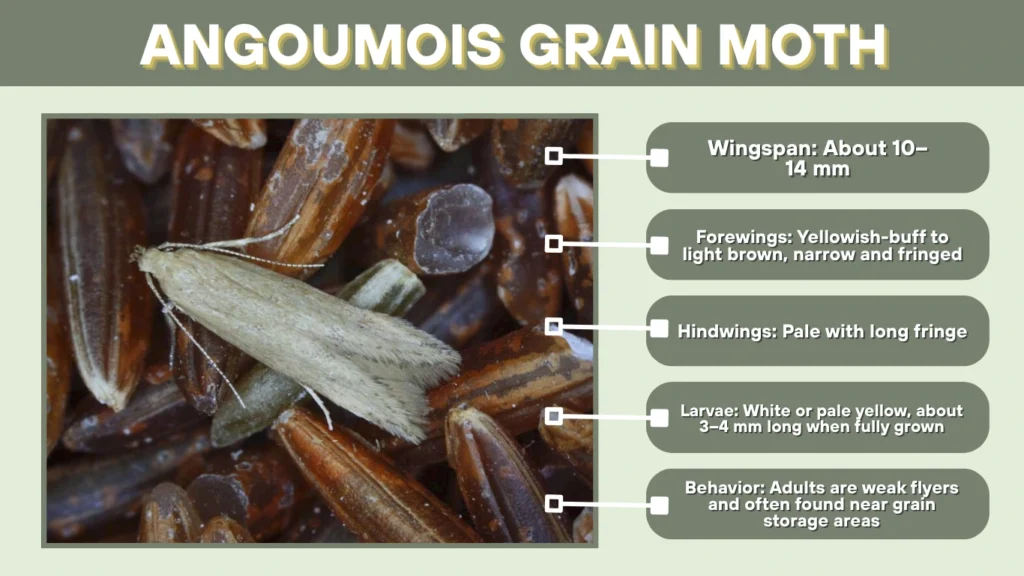
The Angoumois Grain Moth (Sitotroga cerealella) is a serious pest of whole grains, particularly in warm, humid regions. Unlike other pantry moths that prefer processed foods, this species primarily targets unprocessed kernels like wheat, corn, rice, and barley.
Life Cycle and Reproduction
Females lay eggs directly on whole grain kernels. After hatching, the larvae bore into the grain and feed from within, completing their development entirely inside the kernel. The life cycle takes about 30–40 days under optimal conditions.
Habitat and Behavior
These moths are typically found in granaries, silos, and barns but may also infest home pantries that contain whole grain products. Because larvae live and develop inside the grain, infestations are often unnoticed until the damage is significant.
Damage and Food Contamination
The internal feeding by larvae weakens the grain structure, making it unusable for consumption or planting. Each infested kernel may contain a larva, excrement, and feeding tunnels. Infestations reduce both the quantity and quality of stored grains.
Identification
- Wingspan: About 10–14 mm
- Forewings: Yellowish-buff to light brown, narrow and fringed
- Hindwings: Pale with long fringe
- Larvae: White or pale yellow, about 3–4 mm long when fully grown
- Behavior: Adults are weak flyers and often found near grain storage areas; larvae stay hidden inside kernels until pupation
FAQs
1. What attracts pantry moths to my kitchen?
Pantry moths are attracted to dry food items like flour, rice, cereals, dried fruits, nuts, and pet food. Poorly sealed containers and long-stored foods are especially vulnerable.
2. Are pantry moths harmful to humans?
No, pantry moths do not bite or spread diseases. However, their larvae contaminate food with silk, feces, and shed skin, making it unsafe to eat.
3. How do pantry moths get into sealed packages?
Pantry moths often lay eggs at food packaging facilities. Larvae hatch and bore into sealed products from the inside, or tiny gaps in packaging may let adults in.
4. Can pantry moths infest non-food items?
Rarely. Pantry moths specifically target food products. However, you may find larvae wandering away from food sources to pupate in crevices, ceiling corners, or behind appliances.
5. What is the best way to get rid of pantry moths?
Discard infested food, clean pantry shelves thoroughly, and store new food in airtight containers. You can also use pheromone traps to catch adult moths and monitor reinfestation.
