

At first glance, you might think it’s a tiny hummingbird flitting from flower to flower. But take a closer look—it’s the hummingbird hawk-moth, an incredible insect with the flight style and feeding habits of a bird. Known for its daytime activity and fast, hovering movements, this moth often leaves people in awe. From its curious caterpillar stage to its expanding presence in places like the UK and California, there’s much more to discover about this fascinating mimic.
What is a Hummingbird Hawk-Moth?
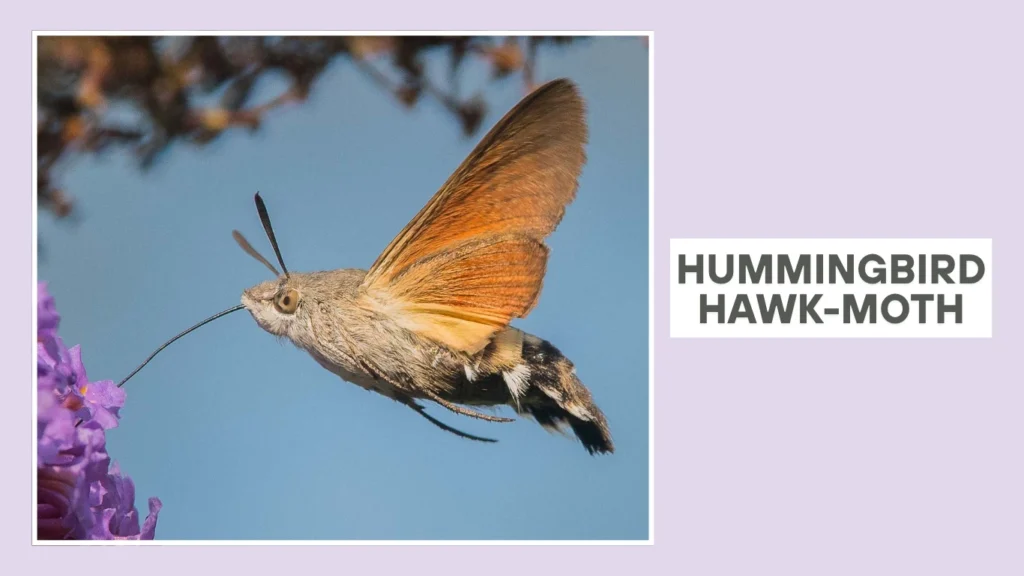
The hummingbird hawk-moth (Macroglossum stellatarum) is a day-flying moth that closely resembles a hummingbird in both appearance and behavior. With its fast-beating wings and hovering flight, it often fools people into thinking they’re watching a tiny bird feeding on flowers. This mimicry isn’t just visual—it even feeds like a hummingbird, using a long proboscis to sip nectar mid-air.
Unlike most moths that are active at night, the hummingbird hawk-moth prefers bright, sunny days and warm evenings. It is commonly seen flitting around gardens, especially where flowers like lavender, honeysuckle, and petunias are in bloom. Its rapid wing movement creates a faint humming sound, adding to the illusion.
This moth is widely distributed across Europe, Asia, and North Africa, and has been increasingly spotted in the UK and parts of North America, including California. Its ability to migrate and adapt to changing climates makes it one of the most remarkable and widespread moth species in its family.
Here’s your next section, following the structure exactly as you requested:
Identification Guide

Appearance of the Adult Moth
- Brown and orange wings
- Long proboscis for feeding
- Size comparison: similar to a hummingbird
Hummingbird Hawk-Moth Size
- Wingspan: 1.6–1.8 inches
- Body length: ~1 inch
Caterpillar and Larvae Stage
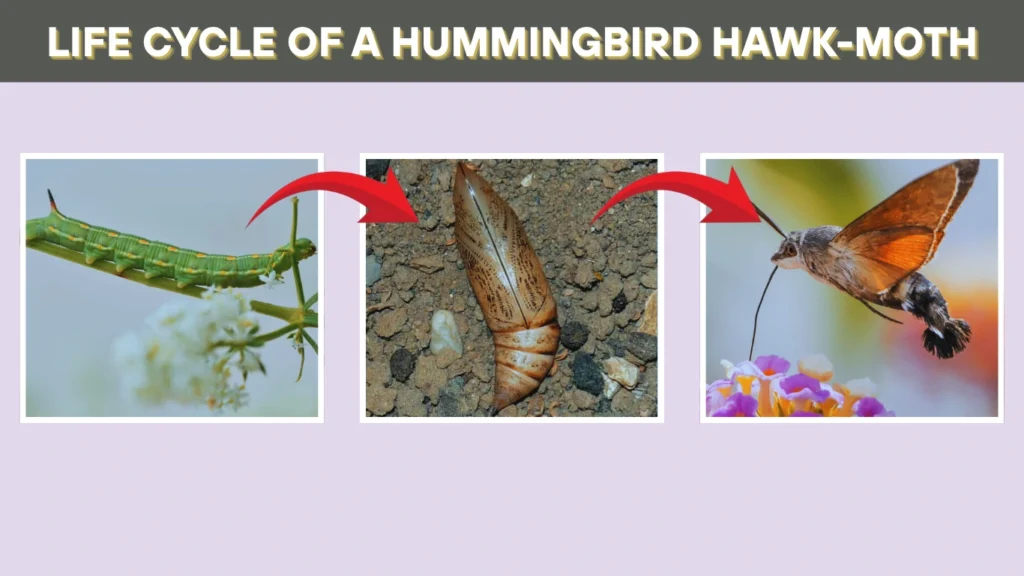
- Green with white and yellow stripes
- Horn on rear end
- Usually feeds on bedstraws and related plants
Life Cycle of a Hummingbird Hawk-Moth
Eggs and Larvae (Caterpillar Stage)
The life cycle of the hummingbird hawk-moth begins when the female lays tiny, round eggs on the leaves of host plants, commonly bedstraw species. After a few days, the eggs hatch into larvae, which are green caterpillars with noticeable white and yellow stripes. These caterpillars feed continuously on the host plant’s foliage, growing rapidly over the next few weeks as they prepare for the next stage of development.
Pupation Process
Once fully grown, the caterpillar burrows into loose soil or hides under leaf litter to begin pupation. Inside this protective casing, it undergoes metamorphosis and transforms into its adult form. Depending on the climate, this pupal stage may last a few weeks, or in colder regions, the moth may remain in this state through the winter months before emerging in the spring.
Adult Moth Emergence and Lifespan
Adult hummingbird hawk-moths emerge during the warmer months, often in late spring or early summer. They become active almost immediately, seeking out nectar-rich flowers and potential mates. Their adult life is brief—typically lasting between seven to fourteen days. During this time, they focus on feeding, mating, and, in the case of females, laying eggs to continue the cycle. In regions with longer warm seasons, several generations can be produced in a single year, making them a more frequent sight in gardens and wildflower areas.
Diet and Feeding Behavior
The hummingbird hawk-moth is not only fascinating in appearance but also in how it feeds. Active during the day, it hovers in front of flowers and uses its long proboscis to drink nectar mid-air—closely resembling the feeding style of a hummingbird. This behavior allows it to feed quickly and efficiently without ever landing.
What Do Hummingbird Hawk-Moths Eat?
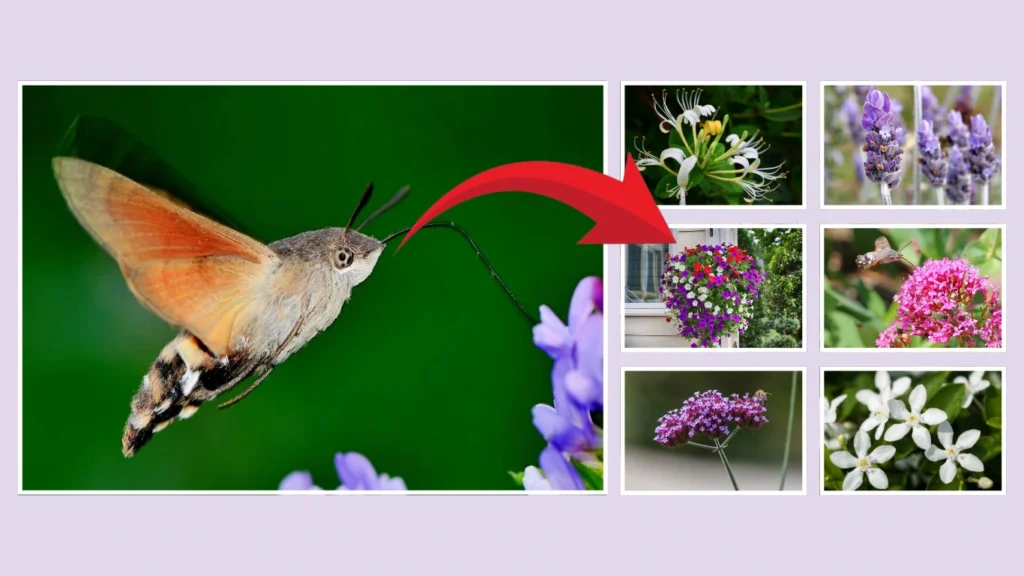
- Honeysuckle
- Lavender
- Petunias
- Red valerian
- Jasmine
- Verbena
- Buddleia (butterfly bush)
These nectar-rich flowers are especially attractive to the moth due to their scent, shape, and high sugar content.
Feeding Habits Compared to Hummingbirds
Though they share similar flight and feeding behavior with hummingbirds, these moths are completely different creatures. Hummingbird hawk-moths beat their wings rapidly, creating a humming sound as they hover in front of flowers, but unlike birds, they don’t perch or make calls. Their hovering allows for fast movement between blooms, and they often return to flowers they’ve previously found rewarding, showing impressive memory and spatial awareness for an insect.
Habitat and Distribution

The hummingbird hawk-moth is widely distributed across different regions and climates, thanks to its strong flying ability and adaptability. While it prefers warm and sunny conditions, it can be spotted in both natural and urban areas where nectar-rich flowers are abundant. Its presence has become more common in certain regions due to climate shifts and migration patterns.
Where Are They Found?
This species is native to parts of Europe, North Africa, and Asia, but it has also been increasingly seen in areas like the United Kingdom and California. It migrates long distances and is often observed during warmer months in places far from its typical breeding grounds.
Preferred Environment
Hummingbird hawk-moths thrive in sunny gardens, open meadows, forest edges, and even city parks. They are drawn to areas with plenty of flowering plants and shelter for resting. Their adaptability allows them to flourish in both wild and human-made environments, as long as nectar sources are available.
Hummingbird Hawk-Moth, Hawk Moth, and Hummingbird

| Feature | Hummingbird Hawk-Moth | Hawk Moth | Hummingbird |
|---|---|---|---|
| Kingdom | Animalia (Insect) | Animalia (Insect) | Animalia (Bird) |
| Active Time | Day (Diurnal) | Night (Nocturnal) | Day (Diurnal) |
| Feeding Tool | Long proboscis | Long proboscis | Beak and tongue |
| Feeding Style | Hovers while feeding | Usually lands to feed | Hovers while feeding |
| Wing Movement | Rapid, creates humming sound | Moderate wingbeat | Very fast, creates humming sound |
| Sound | Silent wing hum | Often silent | Chirps and hums |
| Body Covering | Scales | Scales | Feathers |
| Flight Pattern | Agile and hovering | Direct and fast | Agile and hovering |
| Typical Habitat | Gardens, meadows, urban parks | Forests, gardens | Gardens, woodlands |
| Size Comparison | Small, ~1 inch body | Varies, usually larger | Small bird, generally larger |
10 Facts

1. It’s Often Mistaken for a Hummingbird
Due to its hovering flight, long proboscis, and rapid wingbeats, the hummingbird hawk-moth is frequently mistaken for a real hummingbird, especially by people seeing it for the first time in gardens or near flowers.
2. It Flies During the Day
Unlike most moths that are active at night, the hummingbird hawk-moth is diurnal. It prefers bright daylight and warm temperatures, often flying in sunny gardens and fields where flowers are plentiful.
3. It Has an Excellent Memory
This moth can remember which flowers gave the best nectar and return to them throughout the day. It uses visual cues to navigate and locate those flowers again—an advanced trait for an insect.
4. It Can Hover Like a Bird
With extremely rapid wingbeats—up to 85 times per second—the hummingbird hawk-moth hovers in place while feeding on nectar, just like a hummingbird. This allows it to sip without landing, offering better maneuverability.
5. It Migrates Across Continents
Some populations of hummingbird hawk-moths are migratory. They travel long distances across Europe, Asia, and North Africa, adjusting to seasonal changes and expanding their range in warmer months.
6. It Makes a Soft Humming Sound
The rapid flapping of its wings creates a faint humming or buzzing sound, similar to that of a small bird. This adds to the illusion and surprises many observers who mistake it for an actual bird.
7. Its Larvae Have a Horned Tail
The caterpillar stage of this moth is green with pale stripes and a noticeable horn at the tail end. This feature helps with identification and serves as a mild deterrent to predators.
8. It Has a Short Adult Lifespan
Once it becomes an adult, the hummingbird hawk-moth typically lives only 7 to 14 days. In that brief time, it focuses on feeding, mating, and laying eggs to continue the next generation.
9. It Visits Hundreds of Flowers Daily
This moth is highly active and can visit several hundred flowers in a single day. It prefers nectar-rich blooms and has a vital role in pollination, especially in areas with limited pollinating insects.
10. It’s Expanding into New Regions
Sightings in places like the UK and California have increased in recent years. Climate change and its strong flight ability are likely helping the moth colonize new areas with suitable habitats.
Final Thoughts
The hummingbird hawk-moth is a remarkable insect that captivates anyone who sees it in action. Its ability to mimic a hummingbird’s flight, feed with precision, and adapt to different environments makes it one of nature’s most fascinating pollinators. Whether spotted in a sunny garden in the UK or briefly seen in California, it never fails to surprise.
