

Ticks are often misunderstood creatures, frequently mistaken for insects due to their small size and crawling behavior. However, a closer look at their anatomy, lifecycle, and classification reveals a clear answer: ticks are not insects—they are arachnids. While they may share some superficial similarities with insects, they belong to an entirely different class of animals, with unique characteristics that set them apart.
What Are Arachnids?
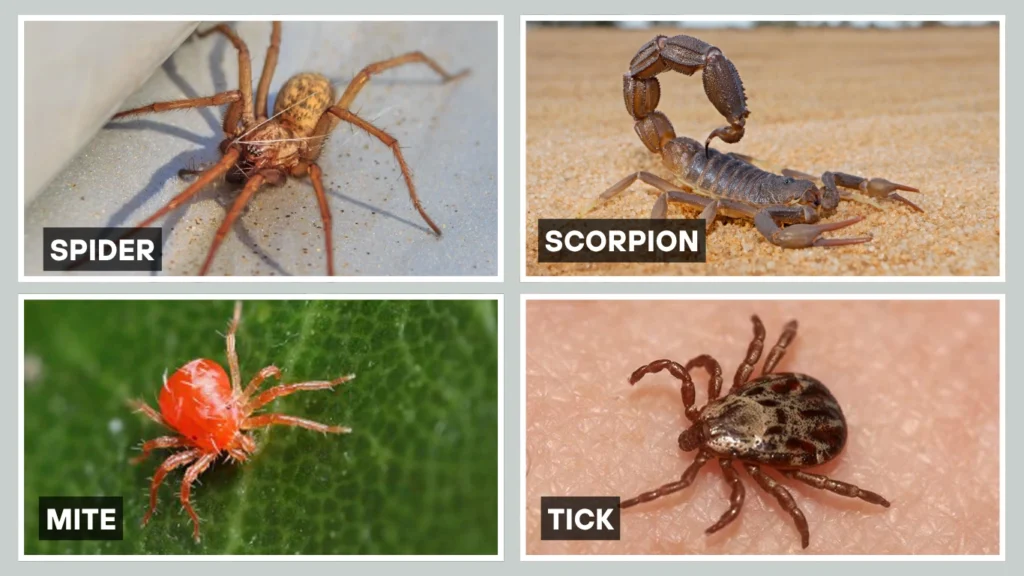
Arachnids are a class of invertebrates within the phylum Arthropoda, which also includes insects, crustaceans, and myriapods. The most well-known members of this group include spiders, scorpions, mites, and ticks.
Key Characteristics of Arachnids:
- 8 legs (in adult stage)
- 2 main body segments: the cephalothorax and abdomen
- No antennae or wings
- Most have simple eyes (not compound like insects)
- Many breathe through book lungs or tracheae
These features clearly separate arachnids from insects, which have six legs, three body segments (head, thorax, abdomen), and compound eyes.
Ticks: An Overview

Ticks are small, blood-feeding ectoparasites that live on mammals, birds, reptiles, and amphibians. They are members of the subclass Acari, which also includes mites. More specifically, they fall under the order Ixodida, which is entirely made up of tick species.
There are over 900 species of ticks, and they are commonly found in wooded, grassy, and moist environments. Ticks feed by piercing their host’s skin and consuming blood over several hours or even days.
Why Ticks Are Classified as Arachnids
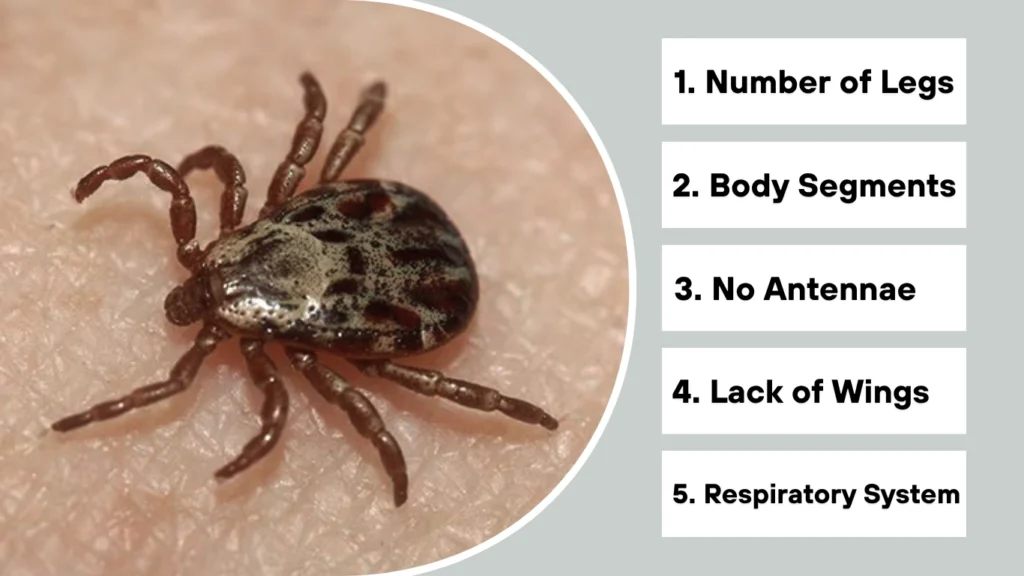
1. Number of Legs
Adult ticks have eight legs, which is a defining trait of arachnids. In contrast, insects always have six legs. Tick larvae (the first life stage after hatching) do start with six legs, which can cause confusion, but they gain the additional pair as they molt into nymphs.
2. Body Segments
Ticks do not have three distinct body segments like insects. Instead, their head, thorax, and abdomen are fused into two main parts—the capitulum (mouthparts) and the idiosoma (body). This structure is consistent with the arachnid body plan.
3. No Antennae
Unlike insects, ticks do not have antennae. Instead, they rely on specialized sensory structures, such as the Haller’s organ, located on their front legs, which helps detect heat, odor, and carbon dioxide.
4. Lack of Wings
Ticks never develop wings at any stage of their lifecycle. This is another major difference from insects, many of which develop wings in adulthood.
5. Respiratory System
Ticks breathe through spiracles and tracheae, and in some species, book lungs—both features commonly found in arachnids. Insects, on the other hand, use a different tracheal system to breathe.
Tick Lifecycle and Development

Ticks go through four life stages:
- Egg
- Larva (6 legs)
- Nymph (8 legs)
- Adult (8 legs)
This developmental pattern is similar to that of mites and follows arachnid molting behavior, where the tick sheds its exoskeleton to grow. At each stage after the egg, a blood meal is typically required for the tick to move on to the next stage.
Common Types of Ticks

Ticks are broadly categorized into two main families:
1. Hard Ticks (Ixodidae)
- Have a tough shield (scutum) on their backs
- Feed for several days
- Examples: Deer tick (Ixodes scapularis), American dog tick (Dermacentor variabilis)
2. Soft Ticks (Argasidae)
- No scutum; body is more leathery
- Feed for shorter periods (minutes to hours)
- Examples: Relapsing fever tick (Ornithodoros species)
Despite their differences, both types of ticks share arachnid features and behavior.
Why the Confusion Between Ticks and Insects?
There are a few reasons why people often mistake ticks for insects:
- Small size: Ticks are tiny, especially in the larval and nymph stages, making it hard to count their legs without magnification.
- Crawling motion: Like insects, ticks move by crawling, and they often resemble small beetles or bugs.
- Lack of awareness: Most people aren’t familiar with arthropod classification and rely on appearance alone, leading to general assumptions.
Ticks vs. Insects: A Quick Comparison
| Feature | Ticks (Arachnids) | Insects |
| Legs | 8 (6 in larvae) | 6 |
| Body Segments | 2 (cephalothorax + abdomen) | 3 (head, thorax, abdomen) |
| Antennae | None | Present |
| Wings | None | Often have wings |
| Eyes | Simple | Usually compound |
| Respiratory System | Spiracles/tracheae | Tracheal tubes |
| Classification | Class Arachnida | Class Insecta |
Importance of Understanding Tick Classification
Understanding that ticks are arachnids and not insects is more than a matter of taxonomy. It has practical importance in:
- Pest control: Treatments that work on insects may not work on arachnids.
- Disease management: Knowing how ticks function biologically helps in preventing and treating tick-borne illnesses.
- Biodiversity studies: Accurate identification is essential for ecological research and conservation efforts.
Final Thoughts
So, are ticks arachnids or insects? The evidence is clear: ticks are arachnids. They share critical features with spiders, mites, and scorpions—particularly their eight legs, fused body segments, lack of antennae, and molting lifecycle. While they might resemble insects at a glance, especially in their early stages, their biology and behavior place them firmly within the arachnid family. Understanding this distinction helps us better manage their risks and appreciate their place in the natural world.
