
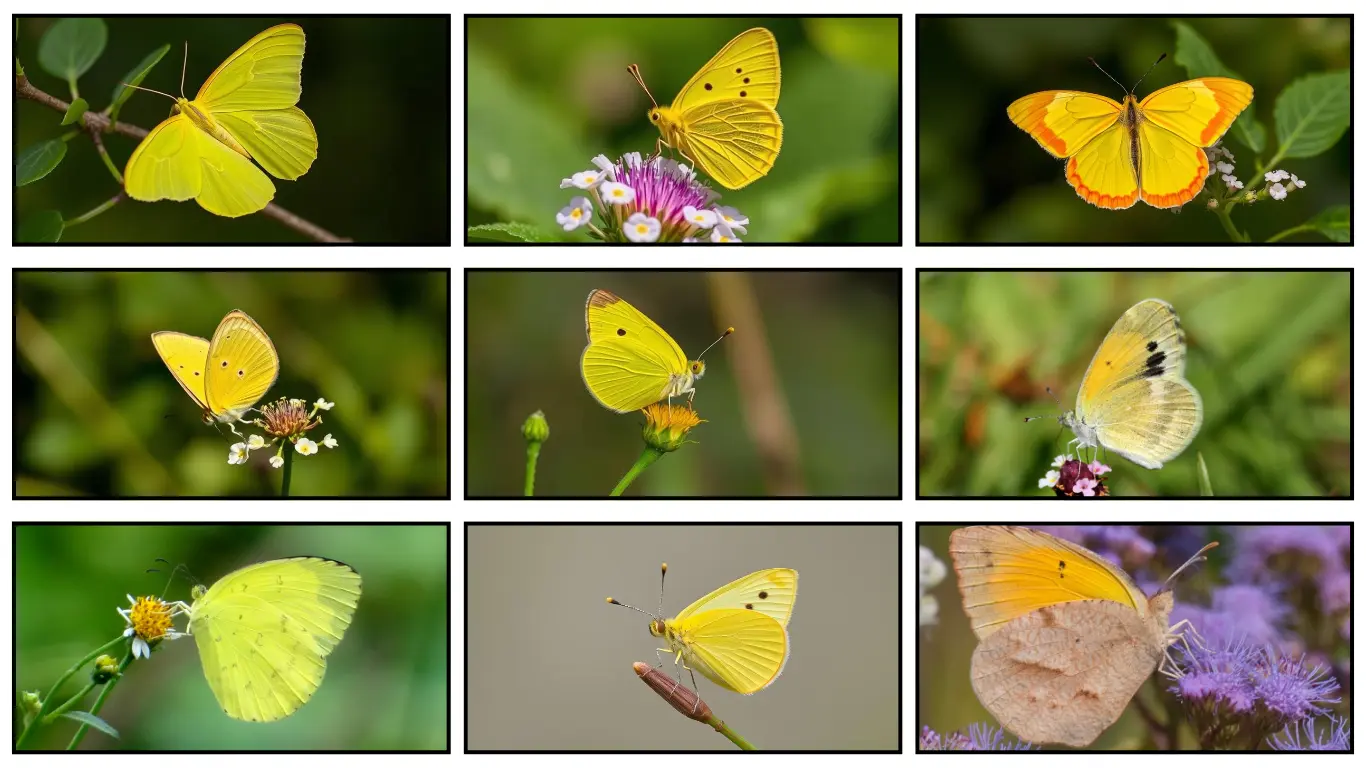
Yellow butterflies bring a splash of sunshine wherever they go. Their cheerful color and fluttering flight make them stand out, but identifying each type can be a rewarding challenge. Although many yellow butterflies may look alike at first glance, subtle differences in color, markings, wing shape, and behavior set them apart.
In this detailed guide, we’ll explore 17 types of yellow butterflies, starting with the first five. You’ll learn how to recognize each one, where it typically lives, and what makes it special.
1. Cloudless Sulphur (Phoebis sennae)

The Cloudless Sulphur is a bright yellow butterfly widely seen across North, Central, and South America. It’s among the most common yellow butterflies in the United States and is known for its long-distance migrations and clear, lemon-yellow wings.
What It Looks Like:
This yellow butterfly has large, rounded wings that appear vibrant and clean in color. Males are a brilliant, uninterrupted yellow, while females may be slightly duller with faint spots. The body is also yellow, matching the wings.
Identification:
- Males are solid lemon-yellow with no visible markings.
- Females are paler with small, faint brown or white spots on the wings.
- The underside of the wings is a muted yellow-green, helping with camouflage.
- Often seen fluttering strongly and high in open, sunny areas.
Habitat:
Cloudless Sulphurs are commonly found in open environments like gardens, meadows, parks, and along roadsides. They are also strong migrators, and during seasonal changes, they can be seen far outside their usual territory, particularly in the southern U.S. states.
Fun Fact:
This yellow butterfly species has a strong migration pattern and can travel hundreds of miles during seasonal movements.
2. Common Brimstone (Gonepteryx rhamni)

One of Europe’s most iconic yellow butterflies, the Common Brimstone is often credited as the inspiration behind the word “butterfly.” It is among the first butterflies to appear in spring, bringing life back to gardens and woodlands after winter.
What It Looks Like:
This yellow butterfly has a unique leaf-like wing shape with a pointed tip. Males are rich yellow, while females appear pale greenish or whitish. Each wing has a small, centered orange spot that’s more noticeable on the upper side.
Identification:
- Males are vibrant yellow, while females appear greenish-white.
- Wings are shaped like leaves, with pointed tips.
- A single orange spot is present on each wing.
- When resting, the closed wings resemble a green leaf, providing excellent camouflage.
Habitat:
Brimstones thrive in warm, sunny environments like woodland edges, hedgerows, and rural gardens. They are strong flyers and hibernate through the winter months, reappearing early in spring. This yellow butterfly prefers areas where buckthorn—their larval host plant—is available.
Fun Fact:
The Common Brimstone can live for nearly a year, making it one of the longest-living butterflies in its region.
3. Orange-barred Sulphur (Phoebis philea)

A dazzling member of the yellow butterfly group, the Orange-barred Sulphur is native to tropical and subtropical areas but is also seen in southern parts of the U.S. during warmer months. Its orange-barred wings make it stand out among other yellow butterflies.
What It Looks Like:
This yellow butterfly has broad yellow wings marked with a bold, reddish-orange bar on each forewing in males. Females tend to be paler, and their patterns may vary. The underside of the wings appears greenish or lightly mottled, especially when the butterfly is at rest.
Identification:
- Males display bright yellow wings with a vivid orange bar.
- Females are lighter yellow to whitish, sometimes with faint markings.
- Underside of the wings is muted yellow or greenish, often with speckles.
- A large wingspan and strong, graceful flight help identify it.
Habitat:
Orange-barred Sulphurs are often found in tropical gardens, forest edges, and areas close to water. In the U.S., they are most common in Florida, Texas, and along the Gulf Coast. They are highly active in the late summer and fall and often migrate in groups.
Fun Fact:
This yellow butterfly is frequently seen visiting red, pink, or purple flowers, as it prefers bold-colored blooms for nectar.
4. Clouded Yellow (Colias croceus)

The Clouded Yellow is a fast-flying yellow butterfly known for its vivid color and dark wing borders. It’s widespread in Europe and parts of Asia and is frequently seen in open fields and along coastal paths during warmer months.
What It Looks Like:
This medium-sized yellow butterfly has golden-yellow wings bordered in thick black. The hindwings, when viewed from below, are soft greenish-yellow with a distinctive white spot. Females may sometimes appear slightly paler or even creamy white.
Identification:
- Wings are bright yellow with thick black borders.
- White-centered spot visible on the underside of the hindwings.
- Fast, erratic flight close to the ground.
- Slight size variation between males and females.
Habitat:
Clouded Yellows love wide, sunny open spaces like meadows, farmland, clover fields, and wildflower-rich hillsides. They migrate during warm seasons, especially from southern to northern areas. Because they don’t survive harsh winters well, their presence in northern areas usually depends on yearly migration patterns.
Fun Fact:
They rarely stop for long, making photography or close observation a fun challenge for butterfly watchers.
5. Little Yellow (Pyrisitia lisa)
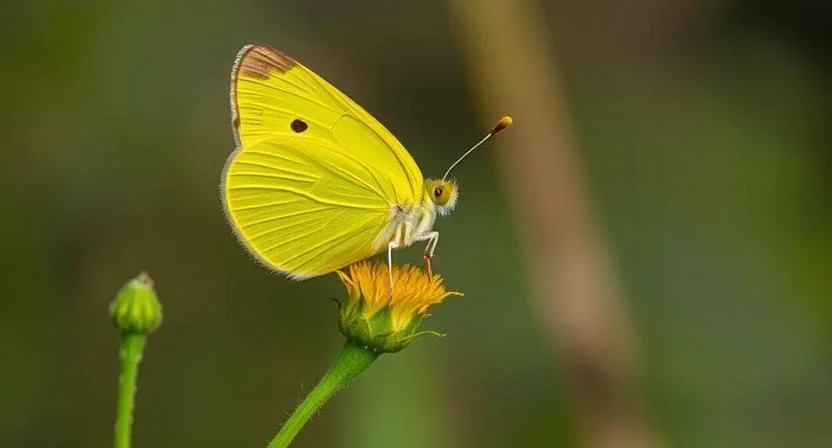
Small but quick, the Little Yellow is a charming yellow butterfly frequently found fluttering low to the ground in sunny fields. Its petite size and bright color make it easy to miss unless you look closely.
What It Looks Like:
The Little Yellow has rounded yellow wings bordered with thin dark lines. It’s one of the smallest yellow butterflies, yet it moves quickly and often hovers near wildflowers or low grass.
Identification:
- Bright yellow upper wings with narrow dark edges.
- Tiny size, with a wingspan under 1.6 inches.
- Pale yellow underside with faint brown spots or blotches.
- Flies low and erratically, often hugging the ground.
Habitat:
Little Yellows are commonly seen in grassy fields, sunny clearings, and open woodland edges. They are active from spring through late fall, especially in warmer regions. These yellow butterflies are attracted to nectar plants and are often seen basking on low vegetation in the morning sun.
Fun Fact:
If you want to attract Little Yellows to your garden, grow partridge pea—it’s a favorite host plant for their caterpillars.
6. Dainty Sulphur (Nathalis iole)
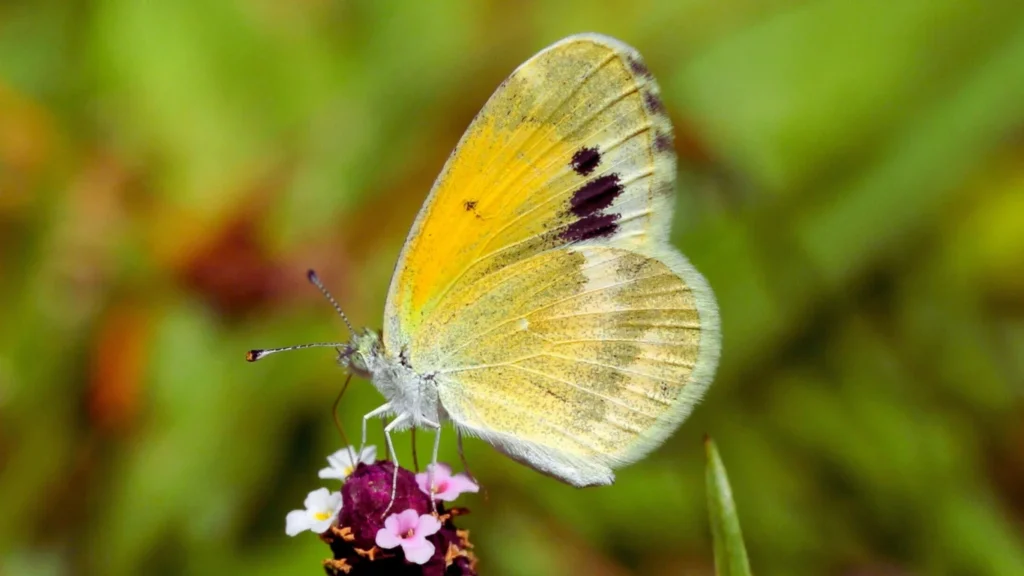
The Dainty Sulphur is the smallest of all North American yellow butterflies. Despite its size, it’s surprisingly active and can be seen flitting low over open ground. This butterfly is a delight to spot due to its bright yellow and black patterning.
What It Looks Like:
This tiny yellow butterfly features bright yellow wings with black markings along the forewings. The hindwings are more softly colored, and the undersides have subtle patterning. Its small, delicate frame and constant movement make it seem like a yellow flash across the grass.
Identification:
- Bright yellow forewings with bold black edges and spots.
- Very small size, usually under 1.3 inches in wingspan.
- Underside is a pale yellow with a faint dark line or dot.
- Tends to fly close to the ground in a jerky, skipping flight.
Habitat:
The Dainty Sulphur prefers open and disturbed habitats like roadsides, empty lots, fields, and sandy patches. It is especially common in the southern United States, Mexico, and Central America. Its small size helps it hide easily in short vegetation, even when active throughout the day.
Fun Fact:
Unlike many yellow butterflies, Dainty Sulphurs can breed year-round in warmer regions, thanks to their fast life cycle and tough adaptability.
7. Large Grass Yellow (Eurema hecabe)
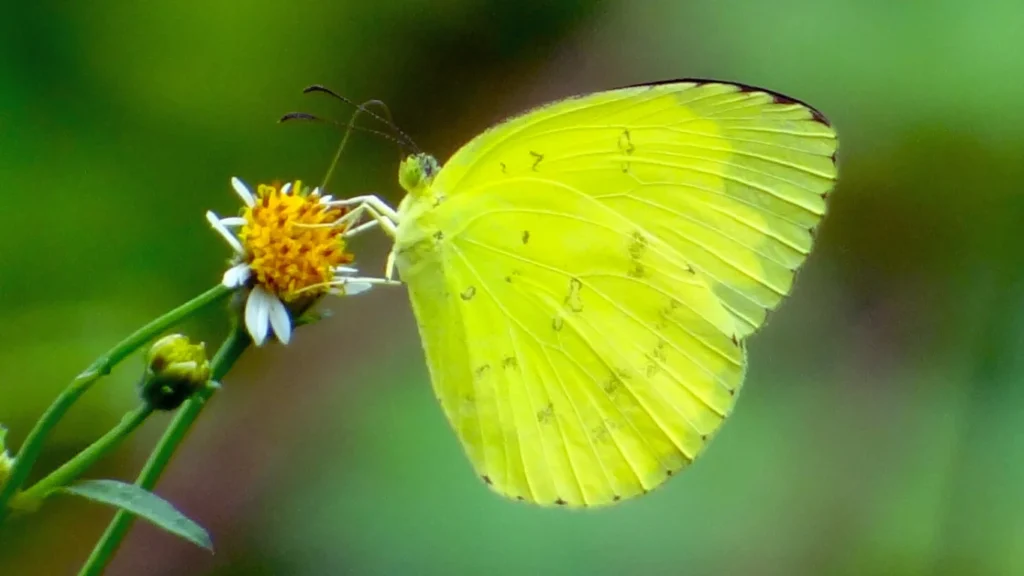
The Large Grass Yellow is a widespread yellow butterfly found across Asia and parts of Africa. Its fluttering flight and bright color make it a common sight near bushes, trails, and open fields, especially during the monsoon season.
What It Looks Like:
This yellow butterfly has bright yellow wings with black borders that become more intense during the wet season. The forewings are rounded, and the hindwings are smooth-edged. The body is slim and matches the yellow tone of the wings.
Identification:
- Vibrant yellow wings with bold black outer edges.
- Wet-season forms show darker and broader borders.
- Underside is yellow with scattered brown specks or spots.
- Often seen fluttering low near the ground, especially after rain.
Habitat:
Large Grass Yellows prefer lightly wooded areas, gardens, forest edges, and open grasslands. In tropical regions, they are active throughout the year but become especially abundant during or after the rainy season. They can often be seen in small groups near flowering bushes or mud puddles.
Fun Fact:
Their appearance changes slightly between dry and wet seasons, with more intense coloration and patterns seen in wetter months.
8. Common Grass Yellow (Eurema lisa)
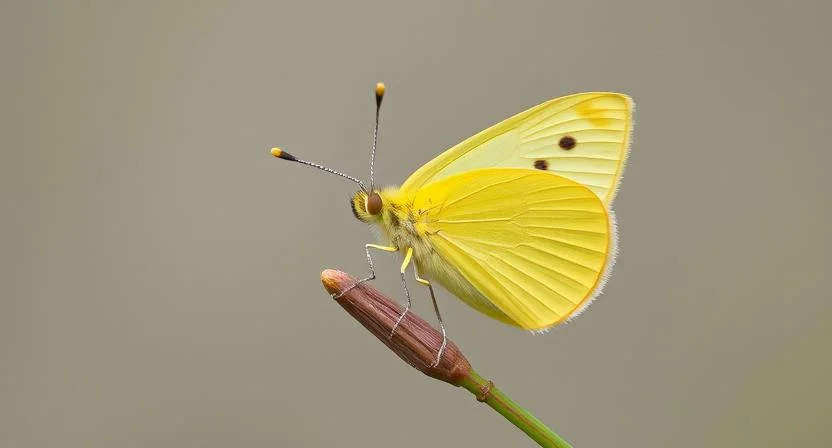
This is one of the most frequently spotted yellow butterflies in gardens and fields across the southern U.S., Central America, and the Caribbean. Its small size and active fluttering make it an unmistakable presence in open sunny areas.
What It Looks Like:
This small yellow butterfly has bright yellow wings with thin black margins, more prominent in males. The wings are slightly scalloped, giving them a delicate look in flight. The underside is duller, helping it blend in while resting.
Identification:
- Bright yellow wings with thin black borders, especially on the forewings.
- Small size, typically 1.4–1.6 inches in wingspan.
- Underside is pale yellow with faint spots or smudges.
- Usually seen flying close to the ground in sunny spots.
Habitat:
Common Grass Yellows thrive in open fields, grassy paths, roadsides, and flower-filled gardens. They are attracted to a wide range of flowering plants and are often seen basking or feeding in full sun. Their presence indicates healthy wildflower diversity.
Fun Fact:
The Common Grass Yellow is closely related to other grass yellow butterflies, but its consistent presence and behavior make it easy to recognize once you’ve seen it a few times.
9. Sleepy Orange (Eurema nicippe)
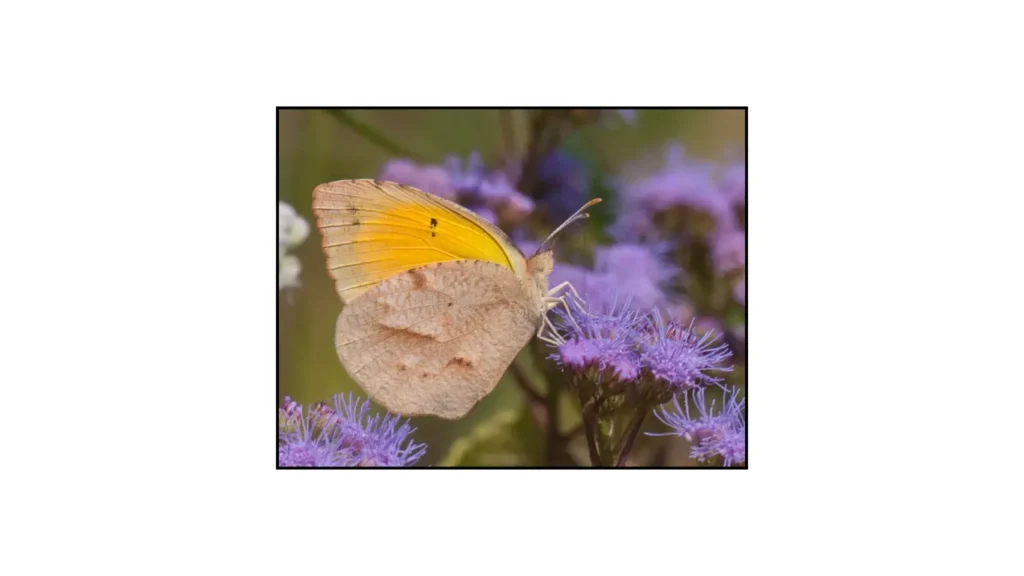
The Sleepy Orange stands out among yellow butterflies for its rich golden-yellow coloring and bold orange tint. It’s native to the Americas and is especially common in the southern U.S. during late summer and fall.
What It Looks Like:
This yellow butterfly has orange-yellow wings with dark brown borders that are more noticeable in males. The hindwings are rounded and often look like burnt yellow or tangerine. When wings are closed, the underside is light tan with a curved white line.
Identification:
- Deep yellow-orange wings with bold brown borders.
- Underside is pale tan or grayish with a curved white line.
- Medium size, around 1.6–2 inches wingspan.
- Slow, drifting flight often close to the ground or shrubs.
Habitat:
Sleepy Oranges prefer weedy fields, sunny roadsides, and scrubby areas with plenty of nectar plants. They are also fond of dried flower stalks or low-growing leaves to rest on. Their name comes from the relaxed way they perch, wings folded, appearing to “nap.”
Fun Fact:
This yellow butterfly’s caterpillars feed mostly on senna and wild sensitive plants, which grow well in disturbed soils.
10. Tailed Orange (Eurema proterpia)

Tailed Orange butterflies are sleek and elegant members of the yellow butterfly family. Named for the small tails on their hindwings, they add a touch of grace to late summer meadows and sunny woodlands in North and Central America.
What It Looks Like:
Tailed Oranges are deep yellow to golden-orange with thin dark borders and noticeable tails on the hindwings. The wings are more pointed than those of other Eurema species, and the overall shape is slightly more angular.
Identification:
- Yellow-orange wings with slim dark margins.
- Distinct small tails on each hindwing.
- Pointed forewings give them a sharper look in flight.
- Underside is duller yellow with faint grayish patterns.
Habitat:
These butterflies inhabit dry fields, open forests, roadsides, and desert edges. They are most active in late summer and early fall, especially in the southern U.S. and Mexico. Males often patrol low plants, while females tend to stay near host plants when laying eggs.
Fun Fact:
The Tailed Orange uses pea-family plants, especially wild senna, as host plants for its caterpillars—similar to the Sleepy Orange.
11. Southern Dogface (Zerene cesonia)

The Southern Dogface is one of the most striking yellow butterflies in North America. Named for the dog-like face pattern on its wings, this species is a fast flier and often seen darting through sunny meadows.
What It Looks Like:
This yellow butterfly has a distinct pattern on its forewings that resembles the silhouette of a dog’s face—hence the name. The upper side of the wings is rich yellow with black borders and patterns, while the underside is duller with faint markings.
Identification:
- Bright yellow wings with black borders and a dog-head shaped pattern on the forewings.
- Underside of the wings is muted yellow with small white spots.
- Medium size, with a wingspan of about 2 inches.
- Flies fast and direct, often hard to follow.
Habitat:
Southern Dogfaces are typically found in open grasslands, roadsides, and prairies. They are most active during warm months and are frequently seen sipping nectar from low-growing wildflowers or basking on gravel paths.
Fun Fact:
The dogface pattern is best seen when the butterfly spreads its wings in the sun—perfect for photographers trying to capture this unique yellow butterfly.
12. Western Sulphur (Colias occidentalis)
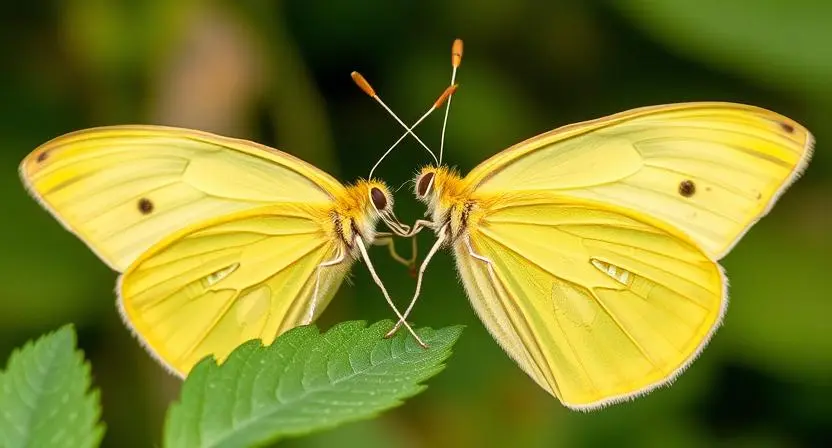
Native to the western United States and parts of Canada, the Western Sulphur is a high-energy yellow butterfly that thrives in mountainous and dry habitats. Its soft yellow wings and quick flight make it a cheerful presence in the wild.
What It Looks Like:
This yellow butterfly is typically pale yellow with dark borders and a small white spot on the hindwings. Males are usually brighter, while females may have more brown or dusky shading.
Identification:
- Light yellow wings with thin dark margins, especially on the forewings.
- A white-centered spot on each hindwing is often visible.
- Underside is yellow-green with small speckles.
- Flies low and quickly, rarely staying in one place for long.
Habitat:
Western Sulphurs favor dry open areas, especially in sagebrush deserts, foothills, and subalpine meadows. They’re common during summer and early fall and often congregate near flowering shrubs or wild clover patches.
Fun Fact:
This yellow butterfly can sometimes be seen puddling—gathering on damp ground to absorb minerals from soil and mud.
13. Mexican Yellow (Eurema mexicana)
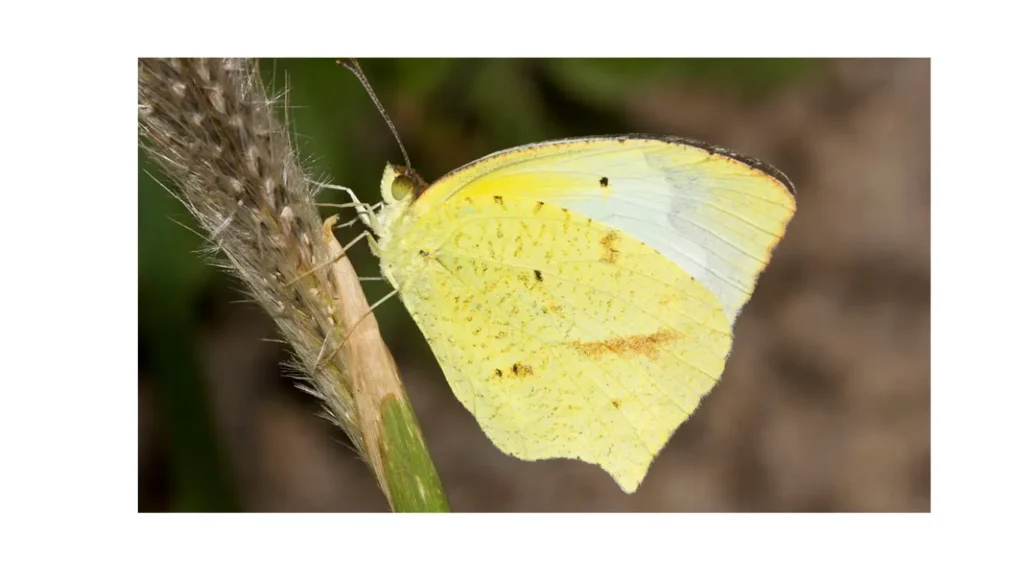
The Mexican Yellow is a migratory butterfly found in the southwestern U.S., Mexico, and Central America. It’s known for its striking wing shape and two-toned yellow coloring, giving it a unique appearance among other yellow butterflies.
What It Looks Like:
This butterfly features deep yellow wings with jagged black edges. The hindwings are long and narrow, giving it a more angular silhouette than most grass yellows. The underside is pale yellow with a hint of green.
Identification:
- Golden yellow wings with thick black borders and angled wing tips.
- Underside has a light yellow color with faint veining or dots.
- Medium size with a narrow body and long wings.
- Flies in quick, zig-zagging patterns, often near shrubs and bushes.
Habitat:
Mexican Yellows prefer dry woodlands, canyons, desert edges, and riparian zones. Their range expands during migrations, and they may appear in new areas during warm seasons. You’ll often spot them on flowering shrubs or near flowing streams.
Fun Fact:
This yellow butterfly often flies with its wings closed while feeding, making its black-edged pattern hard to see unless it’s in motion.
14. Boisduval’s Yellow (Eurema boisduvaliana)
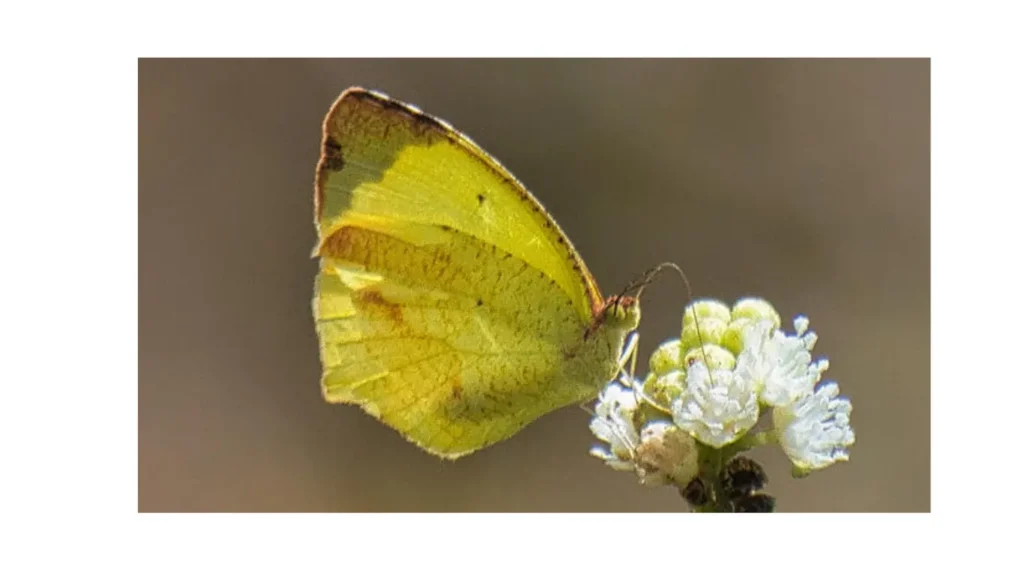
Named after French entomologist Jean Baptiste Boisduval, this butterfly is another charming member of the yellow butterfly family. It’s often confused with other Eurema species but has subtle details that set it apart.
What It Looks Like:
This yellow butterfly is soft yellow overall with relatively narrow dark borders. It’s small and rounded, often blending in with the foliage when resting.
Identification:
- Pale to medium yellow wings with very thin dark borders.
- Underside is lightly speckled or unmarked, usually yellow-green.
- Small size, slightly over 1 inch in wingspan.
- Has a gentle, fluttering flight pattern near ground level.
Habitat:
Boisduval’s Yellows are most often found in dry fields, thorn scrub areas, and brushy terrain across Mexico and parts of the southwestern U.S. They’re especially active in warmer months and can be seen darting between flowering plants.
Fun Fact:
Although not as bold in appearance, this yellow butterfly’s subtle coloring provides excellent camouflage among wildflowers and dry grass.
15. Barred Yellow (Eurema daira)

Barred Yellows are compact, vivid butterflies found mostly in the southern United States, Mexico, and Central America. Their bold yellow wings with black bars make them easy to recognize among other small yellows.
What It Looks Like:
This yellow butterfly has solid yellow wings with a distinct black bar across each forewing. The wings are rounded, and the body is also yellow. The underside is typically yellow with a few small dots or pale lines.
Identification:
- Bright yellow wings with a strong diagonal black bar on each forewing.
- Underside is duller yellow with tiny dots or faint lines.
- Small and rounded wings, typically under 1.5 inches across.
- Seen fluttering rapidly near flower beds or along grassy patches.
Habitat:
Barred Yellows prefer warm, open habitats like savannas, roadsides, fields, and dry scrublands. They are frequent visitors to nectar plants and may be seen hovering near clover, asters, or goldenrod.
Fun Fact:
Barred Yellows are known for forming small groups during feeding, making it easier to spot them when observing flowers.
16. Mottled Emigrant (Catopsilia pyranthe)

The Mottled Emigrant is a pale yellow butterfly widely distributed across Asia and parts of Australia. Its name comes from the faint mottled patterns seen on the underside of its wings, which help it camouflage against foliage.
What It Looks Like:
This yellow butterfly has pale yellow to whitish wings with delicate green or grayish mottling on the underside. The forewings are long and slightly pointed, giving the butterfly a graceful, elongated appearance. The upper side is often plain, with faint or no markings.
Identification:
- Light yellow wings, sometimes appearing almost white in certain light.
- Underside has mottled green or gray patterns, especially on the hindwings.
- Slightly pointed forewings make it easy to distinguish in flight.
- Medium to large size, with a wingspan of about 2.5 to 3 inches.
- Tends to fly high and steadily, sometimes seen gliding.
Habitat:
The Mottled Emigrant is typically found in tropical and subtropical regions, especially near gardens, agricultural fields, and roadside vegetation. It is a migratory species and may appear in large numbers during certain times of the year, particularly after the rainy season. You’ll often spot it fluttering through open spaces or visiting flowers early in the morning.
Fun Fact:
This yellow butterfly is known to migrate seasonally, sometimes covering long distances in response to environmental changes and food availability.
17. Spotless Grass Yellow (Eurema laeta)

As the name suggests, the Spotless Grass Yellow is one of the most minimalistic-looking yellow butterflies. Found in South Asia and Southeast Asia, it lacks the bold spots and bars seen on other grass yellows, making it distinct through its simplicity.
What It Looks Like:
This butterfly has clean, lemon-yellow wings with very minimal markings. The wings are rounded and smooth-edged, and the black borders are either faint or completely absent depending on the season and region. The body is small and slender, matching the soft yellow hue of the wings.
Identification:
- Pure yellow wings with little to no dark markings—a key trait.
- Underside is pale yellow, usually unmarked or with a single faint dot.
- Small and rounded, with a wingspan of about 1.2 to 1.6 inches.
- Flies close to the ground, often unnoticed unless actively feeding.
Habitat:
Spotless Grass Yellows are commonly found in grassy clearings, rural paths, forest edges, and agricultural lands. They prefer sunny, open habitats and are often seen fluttering low near flowering plants or resting quietly on leaves. Their simple appearance helps them blend into dry grass and soil.
Fun Fact:
This yellow butterfly’s subtle beauty lies in its minimalism—it may not be flashy, but it’s easy to appreciate once you know what to look for.
