

Green caterpillars are common in gardens, trees, and wild spaces, often going unnoticed until they start munching on leaves. Identifying them is important for gardeners, nature lovers, and anyone curious about what’s crawling in their yard.
In this guide, you’ll find a helpful identification chart with images and key features of 7 different green caterpillar-type.
1. Tomato Hornworm
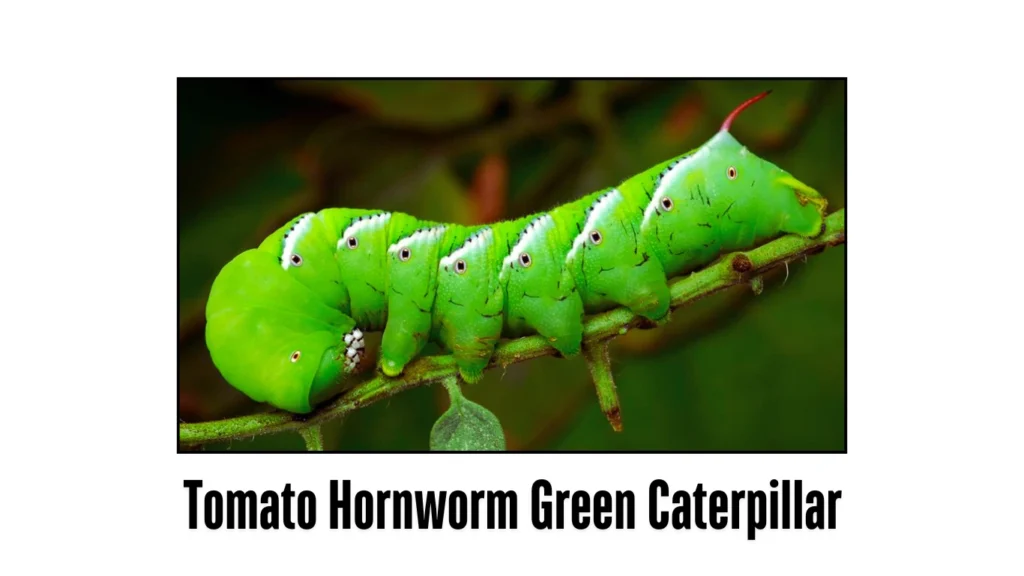
The Tomato Hornworm is one of the most common green caterpillars found in vegetable gardens, especially on tomato plants. It feeds on leaves, stems, and fruits, often causing heavy damage before being noticed. This caterpillar eventually turns into the Five-Spotted Hawk Moth.
Tomato Hornworm Looks Like
It has a smooth, bright green body with white V-shaped stripes along its sides. A dark, curved horn extends from its rear, giving it a fierce look, but it’s completely harmless. Tomato Hornworms can grow up to 4 inches long and easily blend in with foliage.
Tomato Hornworm Identification
You’ll often spot them after seeing chewed leaves or missing chunks from your tomato plants. Look closely at the stems and undersides of leaves during morning or evening hours. Key features include their large size, white diagonal markings, and the signature horn at the tail end.
2. Luna Moth Caterpillar
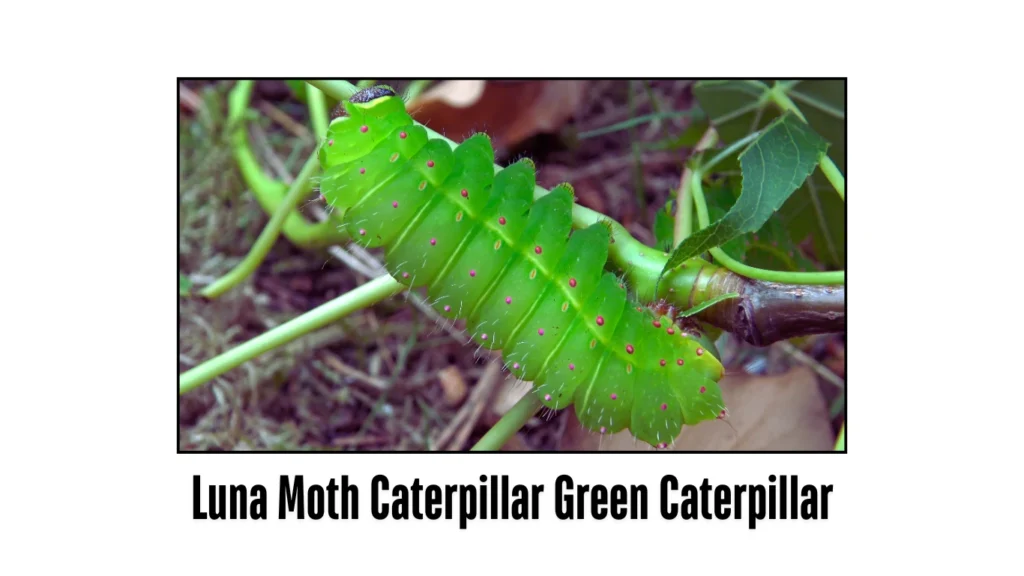
The Luna Moth Caterpillar is the larval stage of the beautiful Luna Moth. It’s not harmful to plants in small numbers and is more fascinating than destructive. These caterpillars are often seen in late summer and early fall on a variety of hardwood trees.
Luna Moth Caterpillar Looks Like
It has a bright green, slightly ridged body with small orange-red spots running down its sides. The body is covered with fine hairs, and it grows up to 3 inches long. As it matures, its green color may deepen, and it may appear bloated or chunky.
Luna Moth Caterpillar Identification
Look for it on trees like hickory, walnut, sweetgum, and persimmon. It usually stays still during the day, clinging to leaves or twigs. Its bright green color, row of tiny red spots, and soft, fuzzy texture make it easy to recognize when spotted up close.
3. Polyphemus Moth Caterpillar
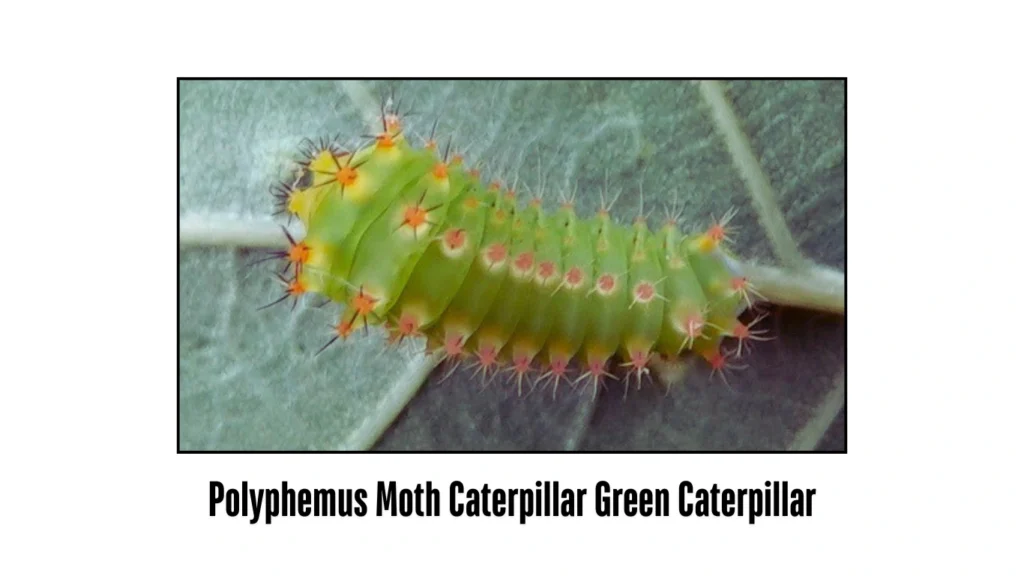
The Polyphemus Moth Caterpillar is a large, green caterpillar that feeds on a wide range of trees. It’s the larval form of the Polyphemus Moth, a giant silk moth with eye spots on its wings. While it looks intimidating, it’s harmless and rarely a garden pest.
Polyphemus Moth Caterpillar Looks Like
It has a thick, bright green body with a slightly translucent skin. You’ll notice diagonal yellow or white lines along its sides and small red or orange spots. Fine hairs cover its body, and it can grow up to 4 inches long.
Polyphemus Moth Caterpillar Identification
This caterpillar is usually found on trees like oak, maple, birch, and willow. It’s slow-moving and prefers staying hidden on the underside of leaves. Key features include its large size, smooth green body, and colored spots arranged in a line along its sides.
4.Cecropia Moth Caterpillar

The Cecropia Moth Caterpillar is one of the largest caterpillars in North America. It grows into the giant Cecropia Moth, known for its impressive wingspan. While it looks dramatic, it’s completely harmless and doesn’t damage plants much.
Cecropia Moth Caterpillar Looks Like
It has a bright green body covered in rows of colorful tubercles—blue, yellow, and orange spiky knobs. Its size is eye-catching, growing up to 5 inches long. The body appears segmented and slightly puffy.
Cecropia Moth Caterpillar Identification
Look for it on trees like cherry, maple, apple, and birch. Its bold color pattern, huge size, and spiked appearance make it easy to recognize. Despite its fearsome look, it’s not a threat to humans or most plants.
5. Cabbage Looper

The Cabbage Looper is a common garden pest, especially in vegetable patches. It’s the caterpillar stage of a moth and is known for damaging cabbage, broccoli, and other leafy greens by chewing large holes in the leaves.
Cabbage Looper Looks Like
It has a light green body with faint white lines running lengthwise. It’s soft, smooth, and smaller than many other green caterpillars, growing to about 1.5 inches. Its movement is distinctive—it “loops” its body as it crawls.
Cabbage Looper Identification
You’ll find them feeding on the undersides of leaves in cabbage family plants. Their looping motion, pale green color, and narrow white stripes make them easy to spot. Watch for ragged holes in leaves, a clear sign of their feeding.
6. Hickory Horned Devil

The Hickory Horned Devil is one of the largest and most fearsome-looking caterpillars in North America. Despite its scary appearance, it’s completely harmless. It transforms into the beautiful Regal Moth, also known as the Royal Walnut Moth.
Hickory Horned Devil Looks Like
It has a bright green body with long, curved black horns on its head and smaller orange-tipped spikes along its body. It can grow up to 6 inches long and has a chunky, armored look.
Hickory Horned Devil Identification
Look for it on hickory, walnut, sweetgum, and persimmon trees. Its massive size, horned head, and vivid color make it unmistakable. It often appears late in the summer, crawling around looking for a place to burrow and pupate.
7. Spicebush Swallowtail Caterpillar
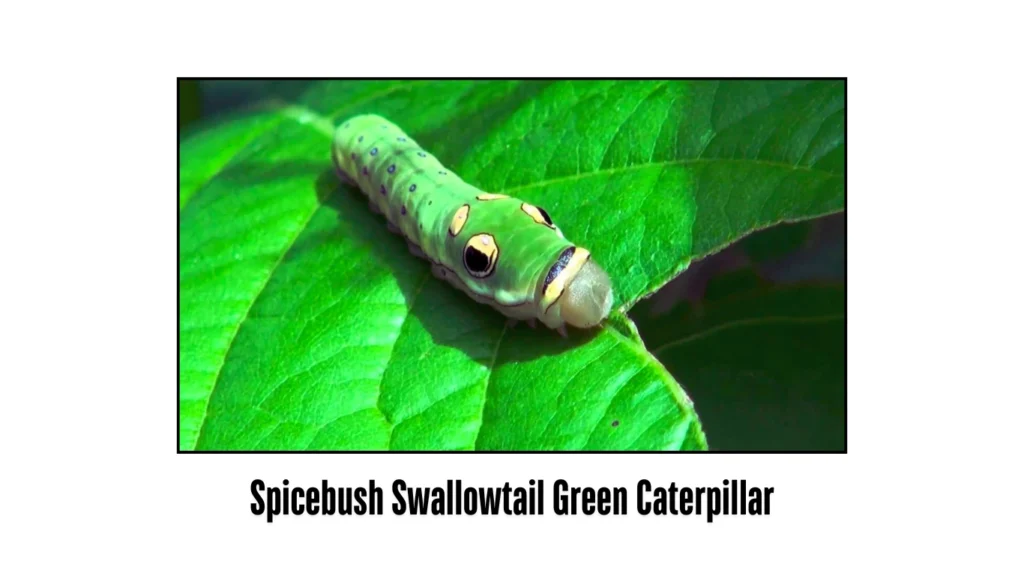
The Spicebush Swallowtail Caterpillar is a clever mimic that uses its appearance to avoid predators. It transforms into the elegant Spicebush Swallowtail butterfly and is often seen in gardens and wooded areas.
Spicebush Swallowtail Caterpillar Looks Like
Its green body features large, fake eye spots on the head that resemble a snake. Younger ones are brown and white to look like bird droppings, while older caterpillars turn bright green with a smooth body.
Spicebush Swallowtail Caterpillar Identification
You’ll find it on spicebush, sassafras, and tulip trees. Look for leaves that are folded over and held together with silk—that’s where it hides during the day. The large eye spots and resting position inside curled leaves are clear signs of this unique caterpillar.
