

Roaches are one of the most adaptable and persistent insects on Earth, thriving in environments from tropical forests to city apartments. While some species prefer the outdoors, others are notorious for invading homes, contaminating food, and spreading disease. Identifying the type of roach you’re dealing with is the first step toward effective control. In this guide, we’ll explore the most common roach species, grouped into categories of four for easier reference, along with their key traits and habitats.
Common Household Roaches

Household roaches are the species most likely to infest kitchens, bathrooms, and storage areas, thriving in warm and humid environments where food and water are easily accessible. These pests are highly adaptable and can be difficult to eliminate without proper identification and treatment.
German Cockroach
The German cockroach is light brown with two dark parallel stripes on its back. Measuring about ½ inch long, it is one of the most common indoor roaches worldwide. They reproduce rapidly, with females carrying egg cases until they’re ready to hatch, making infestations hard to control.
American Cockroach
Also known as the “palmetto bug” in the southern U.S., the American cockroach is reddish-brown and can grow up to 2 inches long. It prefers warm, damp areas like basements, boiler rooms, and sewers, but can also be found in kitchens and pantries.
Oriental Cockroach
The Oriental cockroach is shiny, dark brown to black, and measures about 1 inch long. Often called the “water bug,” it thrives in cool, damp environments such as drains, crawl spaces, and leaky basements. It moves slower than other species but is equally persistent.
Brown-Banded Cockroach
This small roach, about ½ inch long, gets its name from the light brown bands across its wings and abdomen. Unlike other common roaches, it prefers drier, warmer areas and can often be found in living rooms, bedrooms, and inside furniture rather than just kitchens and bathrooms.
If you’d like, I can continue with the next section on Tropical and Warm-Climate Roaches in the same level of detail.
Tropical and Warm-Climate Roaches
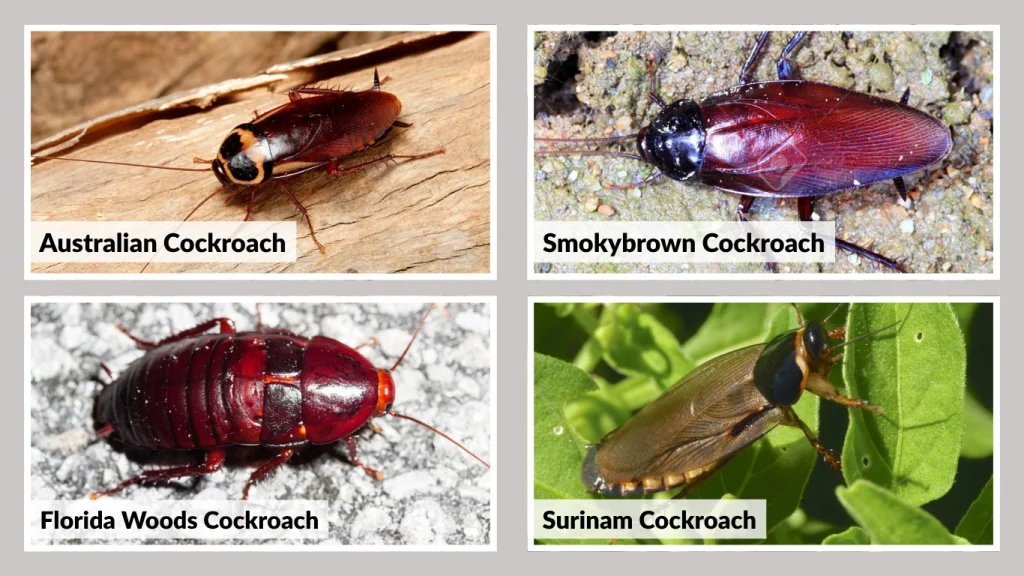
These roaches thrive in warm, humid regions and are often found in southern U.S. states or tropical countries. While some prefer the outdoors, many can still invade homes, especially during heavy rain or extreme heat when they seek shelter and food.
Australian Cockroach
The Australian cockroach closely resembles the American cockroach but is slightly smaller, about 1¼ inches long. It has distinctive yellow markings on the edges of its thorax and wings. Commonly found in greenhouses, gardens, and warm indoor areas, it feeds on both plant and animal matter.
Smokybrown Cockroach
Uniformly dark brown to mahogany in color, the smokybrown cockroach can grow up to 1½ inches long. It is a strong flyer and prefers moist, warm conditions. Often found in tree canopies, attics, and gutters, it is drawn to lights at night, making it a frequent intruder in homes with outdoor lighting.
Florida Woods Cockroach
Also called the “palmetto bug” in Florida, this large roach can reach up to 1½ inches in length and has a dark reddish-brown body. It releases a strong foul odor when threatened, which serves as a defense mechanism. It typically lives outdoors in woodpiles, mulch, and palm trees but may wander indoors.
Surinam Cockroach
The Surinam cockroach is shiny brown with a distinctive black head shield. Females are unique because they carry their egg cases internally, giving birth to live young. They are most often found in greenhouses, gardens, and other moist, plant-rich areas, feeding primarily on decaying vegetation.
Outdoor and Garden Roaches
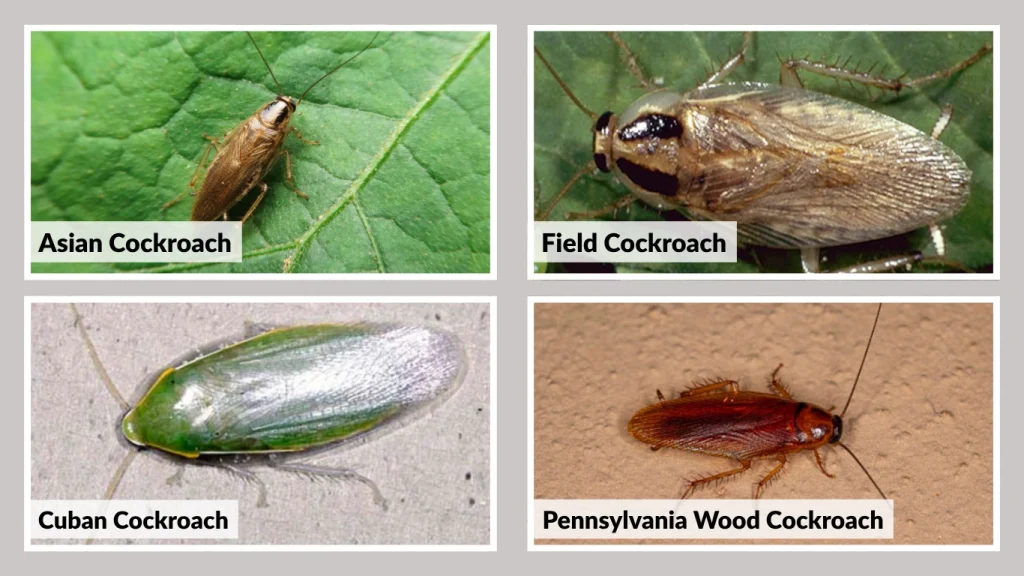
These roach species generally prefer living outside in soil, leaf litter, mulch, and other natural habitats. While they are not as dependent on human environments as household roaches, they can still wander indoors when searching for food, water, or shelter—especially during seasonal changes.
Asian Cockroach
Similar in appearance to the German cockroach, the Asian cockroach is light brown with two dark stripes on its thorax. Unlike its indoor cousin, it prefers outdoor environments and is a strong flyer, often attracted to lights at night. It thrives in lawns, gardens, and leaf litter.
Field Cockroach
The field cockroach is small, about ½ inch long, and light brown to olive in color. It is often mistaken for the German cockroach but lives outdoors, feeding on decaying plant matter. It occasionally enters homes in search of water during dry conditions.
Cuban Cockroach
The Cuban cockroach is a striking light green color as an adult, making it easily distinguishable from other species. Measuring about 1 inch long, it is primarily an outdoor species found in trees, shrubs, and gardens. It is also an active flyer and may enter homes through open windows or doors.
Pennsylvania Wood Cockroach
Dark brown with pale edges on its thorax and wings, the Pennsylvania wood cockroach is most common in wooded areas. Males are strong fliers, while females rarely fly. They prefer logs, tree bark, and woodpiles, but can accidentally infest homes, especially when firewood is brought inside.
Large and Unusual Roach Species

While most roaches are small and quick, some species stand out for their size, unique appearance, or unusual behaviors. Many of these are not common household pests but are still fascinating to identify and learn about.
Madagascar Hissing Cockroach
Native to Madagascar, this large roach can grow up to 3 inches long. It is famous for the hissing sound it produces by forcing air through its spiracles, often used for communication and defense. These roaches are wingless and typically kept as pets or used in educational displays.
Giant Burrowing Cockroach
Also known as the rhinoceros cockroach, this species from Australia can reach lengths of up to 3.3 inches and weigh more than 30 grams, making it one of the heaviest roaches in the world. It burrows underground and feeds mainly on dry leaves, playing an important role in soil health.
Death’s Head Cockroach
This Central and South American roach is recognized by the skull-like pattern on its thorax. It measures about 2 inches long and is more of a tropical outdoor species than a household pest. It is often bred for use in exotic pet collections.
Lobster Cockroach
The lobster cockroach, native to Central and South America, has a reddish-brown body with cream-colored markings that resemble a lobster’s shell. It is a tropical species that prefers humid environments and is occasionally kept in captivity for feeding reptiles or as an exotic pet.
Roaches Found in Specific U.S. Regions
Certain roach species are more common in specific parts of the United States due to climate, habitat availability, and regional conditions. Knowing which species are prevalent in your area can help you target prevention and control efforts more effectively.
Texas Cockroach (American Cockroach in Texas)
In Texas, the American cockroach is a frequent intruder in homes, restaurants, and commercial buildings. Its large size, reddish-brown color, and preference for warm, moist areas make it a persistent pest, especially in southern cities like Houston and San Antonio.
California Cockroach (Oriental & Turkestan Species)
California’s roach problems often involve the Oriental cockroach and the invasive Turkestan cockroach. Oriental roaches thrive in cooler, damp areas, while Turkestan roaches prefer dry, warm spots such as cracks in sidewalks, landscaping, and wall voids.
Alabama Cockroach (Smokybrown Variety)
The smokybrown cockroach is especially common in Alabama due to the state’s humid climate. It often lives in trees, shrubs, and gutters, but can enter homes when seeking food or during heavy rains.
Arizona Cockroach (Pale-Bordered Field Cockroach)
Arizona is home to the pale-bordered field cockroach, a small yellow-brown species with pale wing edges. It prefers outdoor habitats like gardens and fields but may come indoors in search of water during hot, dry spells.
Identifying Roaches in Your Area
Correctly identifying the type of roach you’re dealing with is essential for choosing the most effective control method. Many species look similar at first glance, but subtle differences in color, size, and behavior can help you tell them apart.
Observe Physical Traits
Take note of the roach’s size, body color, wing shape, and any unique markings. For example, the German cockroach has two dark stripes on its thorax, while the American cockroach is larger and reddish-brown.
Check Habitat and Activity Time
Different roach species prefer different environments. Some, like the Oriental cockroach, thrive in cool, damp spaces, while others, like the brown-banded cockroach, prefer warm, dry areas. Observing where and when you see them—day or night—can narrow down the possibilities.
Why Correct Identification Matters
Knowing the species helps determine the best treatment plan. Outdoor species may require habitat modifications, while indoor infestations often need targeted baits and sprays. Correct identification also ensures you’re addressing the root cause, preventing future infestations.
FAQs
Which roach species is the most common in homes?
The German cockroach is the most common household species worldwide. Its rapid reproduction rate and ability to hide in tiny cracks make it particularly difficult to control once it infests a home.
Are all roaches pests?
No. While many species are considered pests, some roaches live exclusively outdoors and help decompose organic matter. Species like the Madagascar hissing cockroach and giant burrowing cockroach are not harmful and are even kept as pets.
Which roach is the largest?
The giant burrowing cockroach from Australia is the heaviest, weighing over 30 grams and reaching lengths of more than 3 inches. The Megaloblatta longipennis from Central and South America holds the record for wingspan, stretching up to 8 inches.
Can different roach species live together?
Yes, multiple species can coexist in the same area if conditions are favorable. However, some may compete for food and shelter, influencing population sizes.
How do I tell roach species apart?
Examine their size, color, markings, and preferred habitat. Using a flashlight to check hiding spots and comparing the roach to identification charts can help confirm the species.
