
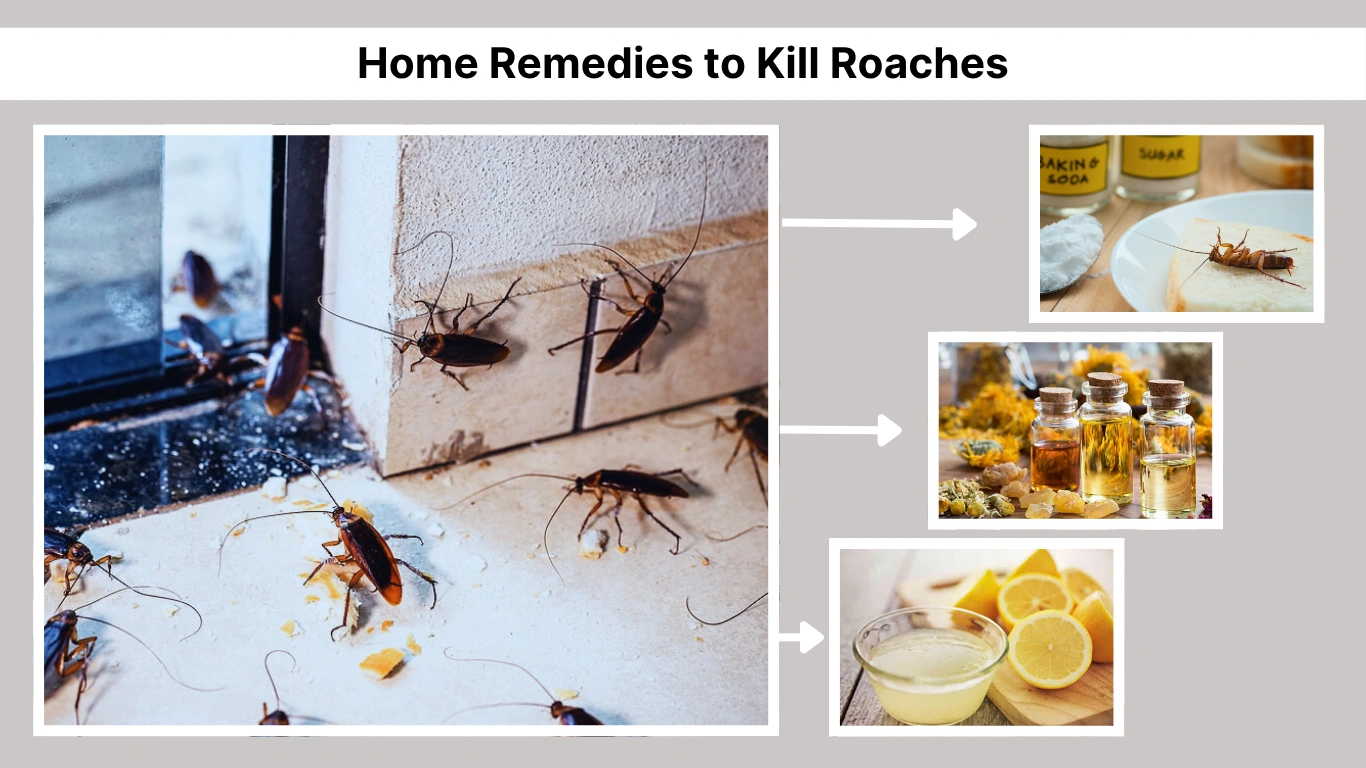
If you’ve ever spotted a cockroach scurrying across your kitchen floor in the middle of the night, you know how unsettling it can be. These resilient pests are not just unpleasant to look at — they also pose health risks by carrying bacteria and contaminating food. While chemical sprays can kill them, they often come with strong odors and potential hazards for children and pets.
That’s where home remedies come in. Using natural, affordable, and easily available ingredients, you can target roaches effectively while keeping your household safe. In this guide, we’ll explore proven home remedies, how to use them correctly, and prevention tips to keep roaches away for good.
Why Choose Home Remedies for Roach Control?
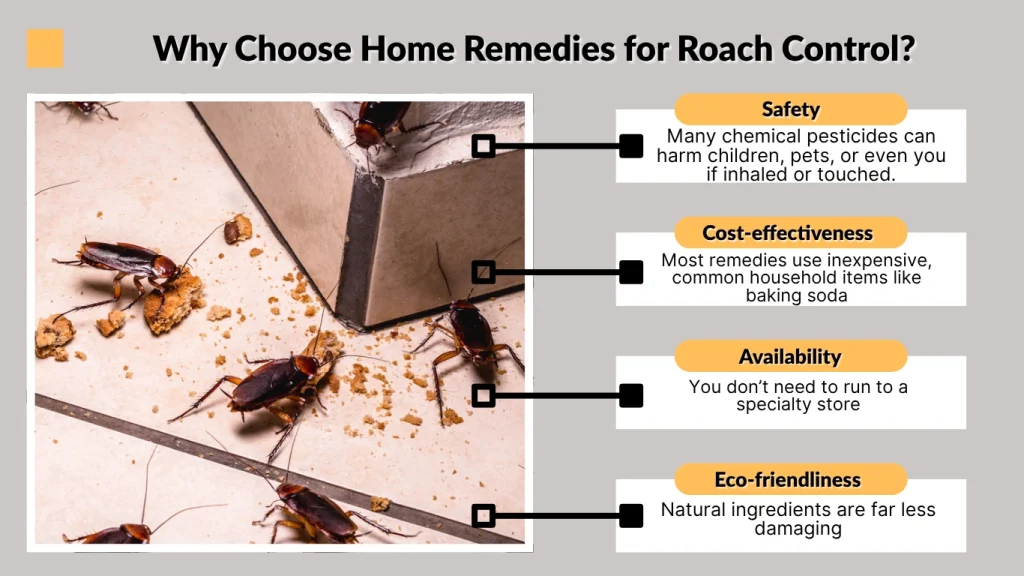
Home remedies aren’t just about avoiding toxic chemicals — they bring several benefits that make them a smart choice.
- Safety – Many chemical pesticides can harm children, pets, or even you if inhaled or touched. Natural remedies are generally safer when handled properly.
- Cost-effectiveness – Most remedies use inexpensive, common household items like baking soda, vinegar, or essential oils.
- Availability – You don’t need to run to a specialty store; the ingredients are often already in your pantry.
- Eco-friendliness – Natural ingredients are far less damaging to the environment compared to commercial pesticides.
Signs You Have a Roach Infestation
Before jumping into solutions, you need to be sure roaches are actually present. They’re nocturnal and hide well, so infestations often go unnoticed until they grow large.
Droppings and Smear Marks
Roach droppings look like tiny black pepper-like specks. Larger roaches may leave cylindrical droppings. In damp areas, you might see brown smear marks along walls or surfaces.
Egg Casings (Oothecae)
Cockroach egg cases are oval-shaped and can be found near cracks, under sinks, or behind appliances. Each casing can hold dozens of baby roaches.
Musty Odor
A strong, oily, and unpleasant smell can indicate a large infestation. Roaches release chemicals that create this odor.
Live or Dead Roaches
Spotting even one roach in daylight often means there are many more hiding nearby, as they usually avoid open areas unless overcrowded.
10 Effective Home Remedies to Kill Roaches
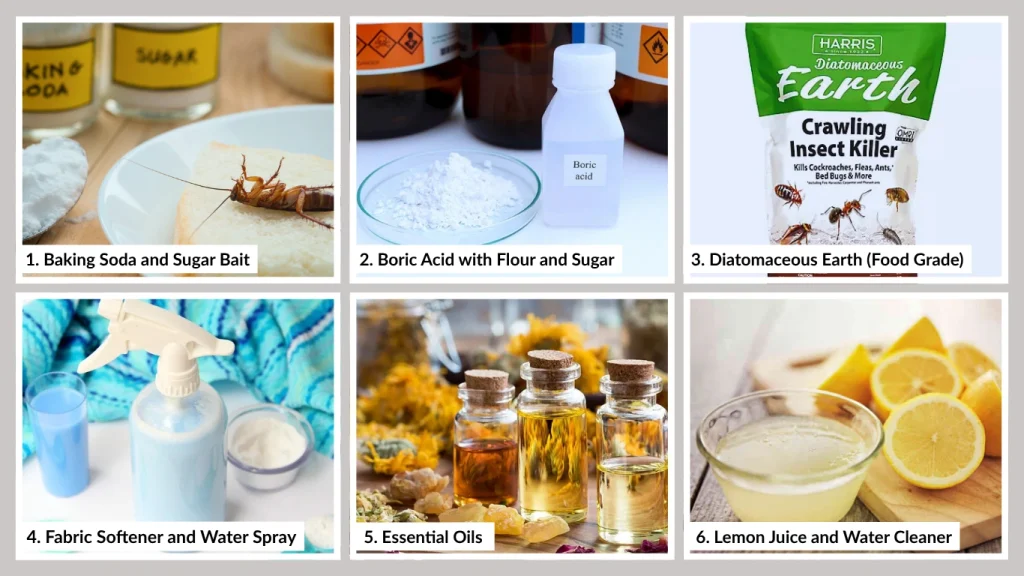
These remedies work because they either poison roaches, damage their bodies, or make the environment hostile for them. Here’s how to prepare and use them effectively.
1. Baking Soda and Sugar Bait
Baking soda reacts with the acids in a roach’s stomach, producing gas that kills them. The sugar attracts the roaches to eat the bait.
- How to use: Mix equal parts baking soda and sugar. Sprinkle the mixture in areas where you’ve seen roaches — near sinks, behind appliances, or along baseboards. Replace every few days for best results.
2. Boric Acid with Flour and Sugar
Boric acid is a well-known roach killer that damages their digestive and nervous systems. The flour and sugar make it more appealing.
- How to use: Mix 1 part boric acid with 1 part flour and 1 part sugar. Place small amounts in bottle caps or shallow dishes in roach-prone areas. Avoid applying directly where pets or children can reach.
3. Diatomaceous Earth (Food Grade)
This fine powder is harmless to humans but deadly to roaches. It works by scratching and dehydrating their exoskeletons.
- How to use: Lightly dust food-grade diatomaceous earth along cracks, crevices, and under cabinets. Keep the area dry, as moisture reduces its effectiveness.
4. Fabric Softener and Water Spray
Roaches breathe through pores in their bodies. A soapy or fabric softener solution clogs these pores, suffocating them.
- How to use: Mix 3 parts water with 1 part liquid fabric softener in a spray bottle. Spray directly on roaches when you see them.
5. Essential Oils (Peppermint, Tea Tree, Eucalyptus)
Certain essential oils have strong scents that repel or kill roaches by affecting their nervous systems.
- How to use: Mix 10 drops of peppermint or tea tree oil with 1 cup of water and a few drops of dish soap. Spray in problem areas daily.
6. Lemon Juice and Water Cleaner
Lemon has antibacterial properties and its acidic nature makes surfaces less appealing to roaches.
- How to use: Add lemon juice to your cleaning water when mopping floors or wiping counters. Focus on kitchen areas and bathroom tiles.
7. Cucumber Slices
Fresh cucumber slices can repel certain roach species due to their smell. This method works better as a deterrent than a killer.
- How to use: Place cucumber slices in cabinets, under the sink, or near garbage bins. Replace regularly to keep the scent fresh.
8. Garlic, Onion, and Pepper Spray
This homemade spray irritates roaches and drives them away.
- How to use: Blend one garlic clove, one onion, and one tablespoon of cayenne pepper in water. Strain and spray in corners and entry points.
9. Vinegar and Water for Cleaning
Vinegar doesn’t directly kill roaches but removes scent trails they follow, making it harder for them to find food.
- How to use: Mix equal parts vinegar and water to wipe kitchen surfaces and mop floors.
10. Soap and Water Trap
Like the fabric softener method, soap breaks the surface tension of water, causing roaches to drown quickly.
- How to use: Fill a jar with soapy water and place food bait inside. Roaches will climb in for the food and drown.
How to Use Home Remedies Safely

While these remedies are less toxic than commercial sprays, you should still handle them carefully:
- Keep baits and powders away from kids and pets.
- Avoid over-application, especially in food prep areas.
- Wear gloves when handling boric acid or diatomaceous earth.
- Store leftover mixtures in sealed containers.
Preventing Future Roach Infestations
Killing roaches is only half the battle. Preventive steps ensure they don’t come back.
Seal Cracks and Entry Points
Use caulk to close gaps around windows, doors, and pipes. Roaches can squeeze through even tiny spaces.
Store Food Properly
Keep dry foods in airtight containers and avoid leaving pet food out overnight.
Maintain Kitchen Cleanliness
Wipe spills immediately, clean crumbs from counters, and sweep floors daily.
Fix Water Leaks
Roaches need water to survive. Repair leaky pipes, faucets, and drains.
Regular Trash Disposal
Take out the trash daily and use bins with tight-fitting lids.
When to Call a Professional
Sometimes, even the best home remedies aren’t enough. Contact a pest control service if:
- Roaches are seen in multiple rooms.
- You find large numbers during the day (indicating overcrowding).
- Infestation signs persist after weeks of treatment.
Professionals can use targeted treatments to eliminate infestations faster and more effectively.
FAQs
Can I mix multiple remedies for faster results?
Yes, but use caution. For example, baking soda and sugar bait can be used alongside essential oil sprays. Avoid mixing boric acid with vinegar or other acidic solutions, as it reduces effectiveness.
How long does it take for baking soda to kill roaches?
Typically 12–24 hours after ingestion. You may start seeing fewer roaches within a few days.
Are essential oils safe for pets?
Some oils like tea tree can be toxic to cats and dogs if ingested. Use sprays only in areas your pets can’t reach.
Will home remedies work for German cockroaches?
Yes, but German roaches breed quickly. Consistent application and sanitation are key for control.
Can vinegar alone kill roaches?
No. Vinegar is useful for cleaning and repelling, but it doesn’t kill roaches directly.
Final Thoughts
Roaches are stubborn pests, but they can be defeated without resorting to harsh chemicals. From baking soda baits to essential oil sprays, the remedies above offer effective and affordable ways to tackle an infestation. The key is consistency — keep applying treatments and maintain strict cleanliness to prevent their return.
However, if your roach problem is severe or persists despite your efforts, don’t hesitate to call a professional exterminator. Combining natural remedies with preventive habits is the best way to ensure your home remains roach-free for the long term.
