

If you’ve spotted small, capsule-shaped cases hidden in your kitchen corners or behind appliances, you might be looking at roach eggs — a clear sign that an infestation is brewing. Each roach egg case, known as an ootheca, can contain dozens of baby cockroaches ready to hatch and spread quickly throughout your home. The earlier you identify and deal with these eggs, the easier it is to stop the problem before it grows out of control. In this guide, we’ll cover how to recognize roach eggs, where to find them, and the most effective ways to prevent them from appearing in the first place.
What Are Roach Eggs?
Roach eggs are protective cases that house multiple cockroach embryos. These cases, called oothecae, are designed to shield the developing roaches from damage, predators, and environmental threats until they’re ready to hatch. Depending on the species, one ootheca can contain anywhere from 10 to 50 baby roaches, making it a powerful source of infestation if left unchecked. Understanding what roach eggs are and why they’re such a problem is the first step to controlling their spread.
How to Identify Roach Eggs
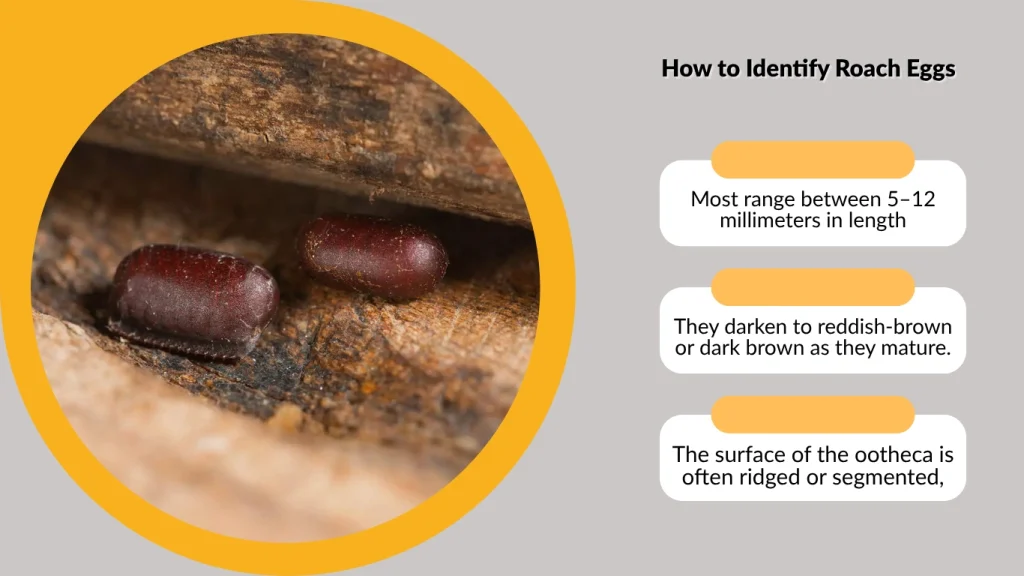
Appearance and Size
Roach eggs are typically elongated, capsule-shaped, and slightly curved. Most range between 5–12 millimeters in length, depending on the species.
Color Variations
Freshly laid roach eggs are usually light brown or tan, but they darken to reddish-brown or dark brown as they mature.
Texture and Structure
The surface of the ootheca is often ridged or segmented, with a tough, protective shell that makes it difficult to crush.
Common Places to Find Roach Eggs in Your Home
Kitchens and Food Storage Areas
Roaches often hide their eggs near reliable food sources. Check under sinks, behind refrigerators, in pantry corners, and under cabinets.
Bathrooms
Egg cases can be found behind toilets, under bathroom sinks, and near drains where moisture is present.
Hidden Cracks and Crevices
Roaches love tight, dark spaces. Look for oothecae inside wall gaps, behind baseboards, inside electrical outlets, and around plumbing holes.
Roach Egg Cases by Species

German Cockroach Ootheca
German cockroach eggs are light to medium brown, about 6–9 mm long, and each case can hold 30–40 eggs. Females often carry the ootheca until just before hatching, making early detection more difficult.
American Cockroach Ootheca
These are larger, about 8–10 mm long, and reddish-brown. Each case contains around 14–16 eggs. They’re usually glued to hidden surfaces in dark, humid spots.
Oriental Cockroach Ootheca
Smaller than American roach eggs, these dark brown cases measure 8–10 mm and hold about 16 eggs. They’re often found in damp, cooler areas like basements and crawl spaces.
How Long Do Roach Eggs Take to Hatch?
The incubation period varies depending on species and environmental conditions. German cockroach eggs may hatch within 28 days, while American cockroach eggs can take 44–55 days. Warm, humid environments speed up development, while cooler or drier conditions can slow it down.
How to Get Rid of Roach Eggs
Vacuuming and Disposal
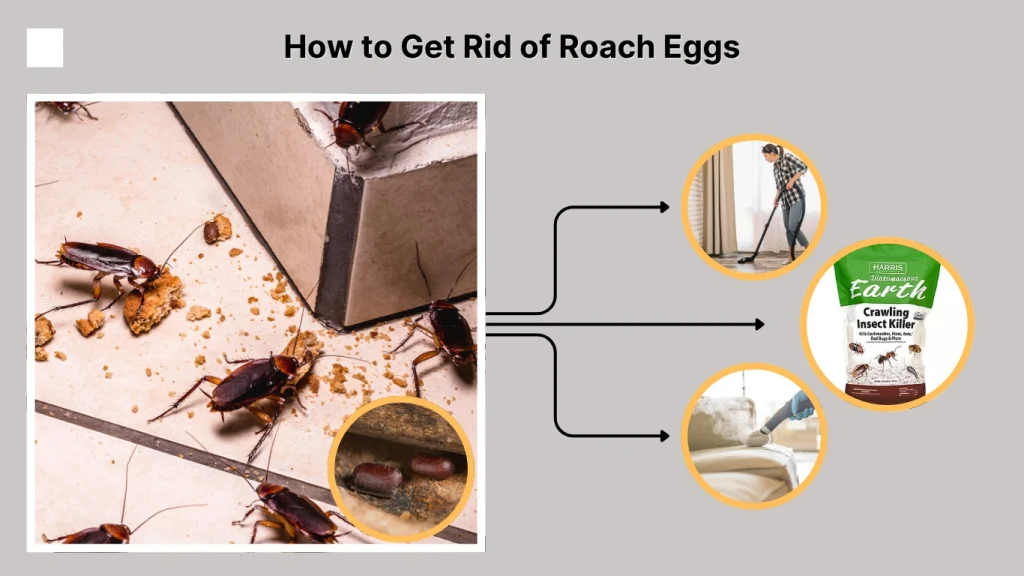
Use a vacuum with a HEPA filter to remove visible egg cases. Immediately seal the vacuum bag in a plastic bag and dispose of it outdoors.
Using Diatomaceous Earth or Boric Acid
Sprinkle food-grade diatomaceous earth or boric acid in cracks, under appliances, and near suspected egg sites to kill roaches before and after hatching.
Steam Cleaning
High heat is lethal to roach eggs. Use a steam cleaner on carpets, upholstery, and hard-to-reach areas where eggs might be hidden.
How to Prevent Roach Eggs in the First Place
Seal Entry Points
Cockroaches can squeeze through gaps as small as 1/16 of an inch. Use caulk to seal cracks around baseboards, windows, and doors, and install mesh screens over vents and drains.
Keep the Kitchen Clean
Food crumbs and spills attract roaches. Wipe down countertops, sweep floors daily, and store dry goods in airtight containers. Don’t leave dirty dishes in the sink overnight.
Reduce Moisture
Fix leaking pipes and faucets, dry out sinks after use, and ensure your bathroom and kitchen are well-ventilated. Roaches need water to survive, so cutting off moisture sources is essential.
Myths About Roach Eggs
- Myth: Roach eggs can hatch after being vacuumed.
Fact: If eggs are vacuumed and properly disposed of in a sealed bag, they won’t survive. - Myth: All roaches carry their eggs until they hatch.
Fact: Only some species, like the German cockroach, carry the ootheca; others hide it in safe spots. - Myth: Roach eggs can survive freezing.
Fact: Extreme cold for a prolonged period can kill eggs, but typical winter temperatures indoors won’t.
When to Call a Professional Exterminator
If you’re consistently finding egg cases despite cleaning and applying home treatments, it’s time to bring in experts. Professional exterminators can identify hidden egg sites, use targeted treatments to eliminate both adults and eggs, and set up long-term prevention strategies. This is especially important if eggs are found in multiple rooms or if you suspect a large-scale infestation.
FAQs
How many babies can come from one roach egg case?
The number varies depending on the cockroach species. German cockroach oothecae typically contain between 30 and 40 eggs, making them one of the most difficult species to control. American cockroaches have fewer eggs per case, usually around 14–16, but their larger size means each roach can be harder to kill. Oriental cockroach eggs typically hold about 16 embryos. Even one unnoticed egg case can start a significant infestation within weeks, so prompt removal is critical.
Can roach eggs survive outside the home?
Yes — if the conditions are favorable. Roach eggs need warmth, moisture, and shelter to develop. Outdoors, they can be found under mulch, leaves, firewood, or in cracks around building foundations. While extreme heat or cold can kill eggs, many survive mild weather changes, especially if they’re protected in insulated spots. This is why sealing exterior entry points is just as important as cleaning indoors.
Do all roach species lay eggs in cases?
Most cockroach species produce oothecae, but their egg-laying habits differ. For example, German cockroach females carry their ootheca attached to their bodies until just before hatching, which offers better protection for the embryos. American and Oriental cockroaches tend to deposit their egg cases in hidden, protected spots, sometimes cementing them to surfaces. Understanding these differences helps in targeting the right areas for inspection and cleaning.
What’s the difference between roach eggs and other insect eggs?
Unlike most insects that lay individual eggs or clusters without protective casings, roach eggs are enclosed in a tough, capsule-like structure. This ootheca shields the developing roaches from environmental hazards and predators. The hardened shell also makes it difficult to crush, which is why physical removal or heat treatments are often recommended instead of simply trying to step on them.
Final Thoughts
Roach eggs are more than just a nuisance — they’re a warning sign that an infestation could soon explode in numbers. Learning to identify these cases, knowing where to look for them, and taking action immediately can save you from a much bigger pest problem later. Combine prevention measures, thorough cleaning, and targeted treatments to keep your home roach-free. And if the problem gets out of hand, don’t hesitate to call in professional help.
