

The brown-banded cockroach (Supella longipalpa) is a small but troublesome pest that can invade homes, offices, and even electronics. Unlike some roach species that prefer damp, ground-level spaces, brown-banded cockroaches are drawn to warm, dry areas — often hiding high up in cabinets, behind picture frames, or inside furniture. Their small size and fast reproduction make them difficult to spot until an infestation is well underway.
These roaches are more than just a nuisance; they can spread bacteria, contaminate food, and trigger allergies in sensitive individuals. Knowing how to identify them, understand their life cycle, and apply the right control methods is key to eliminating them for good. In this guide, we’ll cover everything from identification charts and egg descriptions to life cycle details, key differences from other roach types, and the most effective ways to get rid of brown-banded cockroaches in your home or workplace.
Brown-Banded Cockroach Identification
The brown-banded cockroach is one of the smaller household roach species, easily recognized by the two light-colored bands running across its wings and abdomen. These bands are visible in both males and females, although they may appear more pronounced on lighter individuals. Adults have slender, oval-shaped bodies and long antennae that often extend past their body length.
Unlike German cockroaches, which are more commonly found in kitchens and bathrooms, brown-banded cockroaches prefer drier, warmer areas and are often found in living rooms, bedrooms, and high storage cabinets. They are nocturnal but may occasionally be seen during the day if disturbed.
Brown-Banded Cockroach Identification Chart
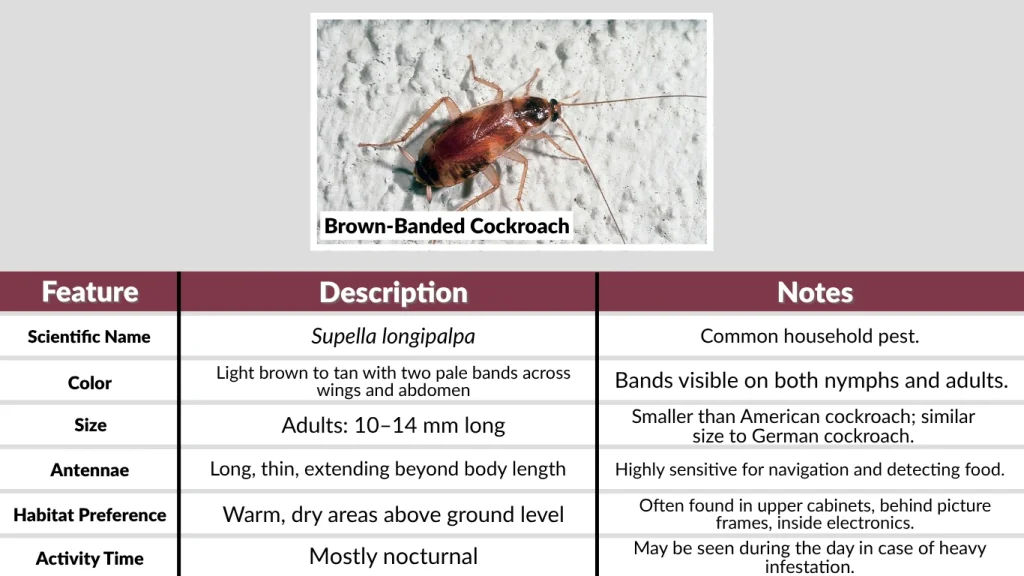
| Feature | Description | Notes |
| Scientific Name | Supella longipalpa | Common household pest. |
| Color | Light brown to tan with two pale bands across wings and abdomen | Bands visible on both nymphs and adults. |
| Size | Adults: 10–14 mm long | Smaller than American cockroach; similar size to German cockroach. |
| Antennae | Long, thin, extending beyond body length | Highly sensitive for navigation and detecting food. |
| Habitat Preference | Warm, dry areas above ground level | Often found in upper cabinets, behind picture frames, inside electronics. |
| Activity Time | Mostly nocturnal | May be seen during the day in case of heavy infestation. |
Brown-Banded Cockroach Size

The brown-banded cockroach is considered a small roach species, making it easier for them to hide in tight spaces. Their size plays a big role in how they infest homes and where they choose to live.
Adult Size
Adult brown-banded cockroaches typically measure between 10–14 millimeters (0.4–0.55 inches) in length. Males are slightly longer and more slender, while females are shorter with a broader abdomen.
Male vs Female Size Differences
- Males: Longer wings that extend past the tip of the abdomen; lighter build.
- Females: Shorter wings that do not completely cover the abdomen; more rounded body shape.
Why Size Matters in Identification
Because brown-banded cockroaches are smaller than American cockroaches and roughly the same size as German cockroaches, knowing their exact size helps distinguish them. Their smaller size also means they can fit into electronics, tiny cracks in furniture, and behind wall hangings — areas often overlooked during pest control efforts.
Brown-Banded Cockroach Nymph and Baby
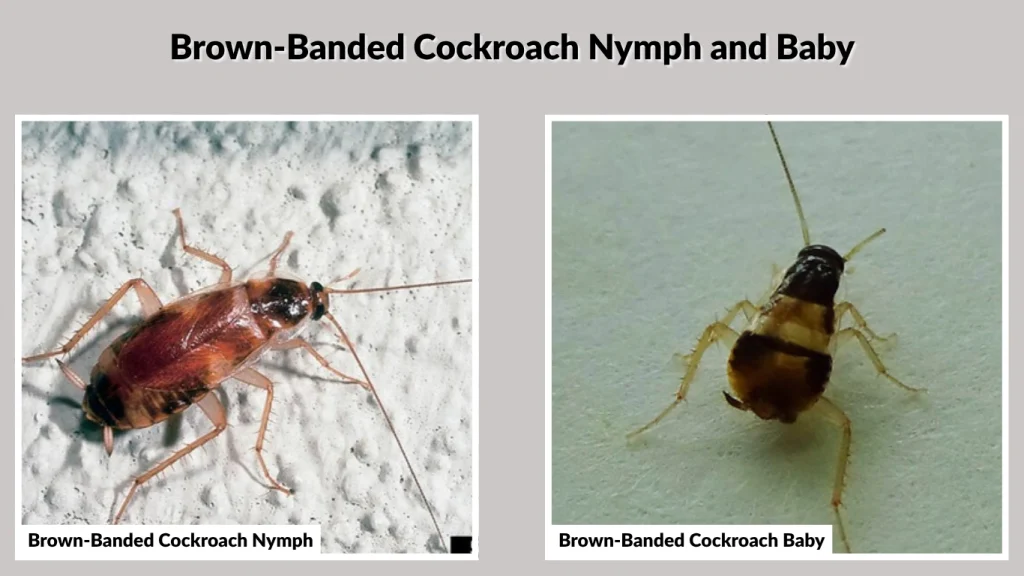
Brown-banded cockroach nymphs — the juvenile stage of the insect — look quite different from the adults, which can make them harder to identify if you don’t know what to look for.
Nymph Appearance
Nymphs are wingless and darker in color than adults, with the distinctive light bands already visible across their abdomen. Their bodies are oval-shaped and more compact, and they tend to move quickly to avoid light.
Baby Brown-Banded Cockroach (Hatchlings)
Freshly hatched roaches from the egg case are extremely small and pale. Within hours, they darken in color, and the light bands begin to form. At this stage, they hide deep in crevices and are rarely seen unless disturbed.
Growth and Molting
Nymphs pass through multiple molts — shedding their exoskeleton each time — before becoming adults. The time it takes to reach adulthood can range from 3 to 6 months, depending on temperature and food availability.
Feeding and Hiding Spots for Young Roaches
Juveniles feed on crumbs, glue, paper, and even fabric. They are often found in warm, dry areas such as inside furniture, in dresser drawers, or behind picture frames, making them harder to locate and eliminate without thorough inspection.
Brown-Banded Cockroach Eggs
The eggs of the brown-banded cockroach are contained in a protective capsule known as an ootheca. Each ootheca is light brown in color, slightly curved, and measures about 4–5 millimeters in length. The surface is smooth, and the casing is tough enough to protect the developing embryos from moderate environmental stress.
Number of Eggs per Case
A single ootheca typically holds 14–18 eggs, which hatch into nymphs after an incubation period.
Where Females Deposit Egg Cases
Unlike some roach species that carry their egg cases until just before hatching, female brown-banded cockroaches usually attach their oothecae to hidden surfaces using a glue-like secretion. Common spots include:
- The underside of furniture
- Inside upper kitchen cabinets
- Behind picture frames
- Inside closets or storage boxes
Hatching Time
Egg cases generally hatch within 50–75 days, depending on temperature and humidity. Warmer, drier environments tend to speed up development, which is why these roaches thrive in heated homes and offices.
Identifying and removing egg cases is crucial because each one represents the potential for a new generation of roaches to emerge.
Brown-Banded Cockroach Life Cycle

The brown-banded cockroach undergoes three main stages in its life cycle: egg, nymph, and adult. Understanding this cycle is key to controlling infestations, as different treatments target different stages.
Egg Stage
The cycle begins with the female producing an ootheca (egg case) containing 14–18 eggs. She attaches it to hidden surfaces in warm, dry locations. The eggs incubate for 50–75 days before hatching.
Nymph Stage
Once hatched, nymphs are wingless and darker than adults, with the signature light bands already visible. They molt several times over 3–6 months, gradually growing larger and developing wings (in males). During this stage, they are highly mobile and feed on a wide range of organic matter.
Adult Stage
Adult brown-banded cockroaches live for 5–10 months. Males are slimmer with longer wings, while females have shorter wings and broader bodies. Both genders are capable of infesting homes, but females are responsible for producing multiple oothecae during their lifespan, leading to rapid population growth.
This fast reproductive cycle means infestations can grow quickly, making early detection and consistent control measures essential.
Brown-Banded Cockroach Infestation

A brown-banded cockroach infestation often goes unnoticed at first because these pests prefer to hide in high, warm, and dry locations that aren’t checked frequently. By the time you see one crawling during the day, there’s a good chance a larger hidden population already exists.
Common Infestation Sites
- Upper kitchen cabinets and pantry shelves
- Inside furniture and dressers
- Behind picture frames or wall art
- Inside electronics such as TVs, radios, and computers
- In closets, especially where stored clothing is kept
Signs of Infestation
- Droppings: Small, dark specks resembling ground pepper or coffee grounds.
- Egg Cases: Light brown oothecae glued to hidden surfaces.
- Sightings: Roaches seen moving quickly at night or during the day in severe infestations.
- Odor: A faint, musty smell caused by the secretion of pheromones.
Health Risks
Brown-banded cockroaches can carry bacteria that contaminate food and surfaces, potentially spreading illnesses like Salmonella. Their shed skins and droppings also contain proteins known to trigger allergies and asthma, especially in children and sensitive individuals.
An infestation should be addressed immediately to prevent rapid growth and further health hazards.
Black Roaches vs Brown Roaches

While both black and brown roaches are pests, they differ in appearance, habitat, and species type.
- Black Roaches: Often refers to species like the Oriental cockroach, which is dark brown to almost black, larger in size (up to 1.25 inches), and prefers cooler, damp environments such as basements, drains, and crawl spaces.
- Brown Roaches: This includes the brown-banded cockroach and other lighter-colored species. Brown roaches often prefer warmer, drier spaces and are typically smaller in size.
Recognizing these differences is important because control strategies may vary depending on the roach’s preferred environment.
Brown-Banded Cockroach Facts
- Scientific name: Supella longipalpa.
- Lifespan: Around 5–10 months for adults.
- Preferred environment: Warm, dry, elevated areas.
- Reproduction: Females produce up to 14 egg cases in their lifetime.
- Activity: Mostly nocturnal but may be seen during the day if disturbed.
- Unique trait: Known for hiding in electronics, furniture, and other dry indoor spaces.
How to Get Rid of Brown-Banded Cockroaches
Step 1: Identify Hiding Spots
Check upper cabinets, inside electronics, behind picture frames, and in furniture.
Step 2: Clean and Remove Food/Water Sources
Wipe surfaces, vacuum crumbs, and fix leaks to remove resources that sustain roaches.
Step 3: Use Gel Baits and Insect Growth Regulators (IGRs)
Gel baits attract roaches to consume poison and share it with others in the colony. IGRs stop them from maturing and reproducing.
Step 4: Apply Dusts in Cracks and Hidden Areas
Use boric acid or food-grade diatomaceous earth in places like behind furniture and inside cabinet corners.
Step 5: Seal Entry Points and Reduce Clutter
Close gaps around pipes, baseboards, and vents. Remove cardboard boxes and unnecessary storage.
Step 6: Monitor and Repeat
Reapply baits, replace traps, and check for egg cases regularly until no signs remain.
Step 7: Call Professional Pest Control (If Needed)
For large or persistent infestations, professionals can apply targeted treatments and ensure all roaches are eliminated.
FAQs
Are brown-banded cockroaches dangerous?
Yes. Brown-banded cockroaches can spread harmful bacteria such as Salmonella and E. coli, which can contaminate food and surfaces. Their droppings, shed skins, and secretions contain allergens that may trigger asthma and allergic reactions, especially in children, the elderly, and individuals with respiratory conditions.
Can they fly?
Adult male brown-banded cockroaches have fully developed wings and can glide short distances, usually when disturbed or moving toward a light source. Females, however, have shorter wings that do not fully cover the abdomen and are incapable of flight. Neither gender is a strong or sustained flyer.
How long do they live?
Adult brown-banded cockroaches typically live between 5 and 10 months. This lifespan can vary depending on temperature, humidity, and food availability. In ideal conditions with abundant resources, females can produce multiple egg cases during their life, leading to rapid increases in the population.
Are they harder to get rid of than German roaches?
In some ways, yes. Brown-banded cockroaches prefer dry, high, and hidden locations, making them harder to locate and treat compared to German cockroaches that stay near kitchens and bathrooms. Effective elimination requires targeting their unique hiding spots with baits, dusts, and thorough inspections.
