

The terms “water bug” and “cockroach” are often used interchangeably, but they don’t actually refer to the same insect. While they may look similar at a glance — with their flat, oval bodies and quick movements — true water bugs and cockroaches have different habitats, behaviors, and even diets. In fact, many people in certain regions call large cockroaches “water bugs,” which only adds to the confusion.
Knowing the difference isn’t just a matter of trivia — it’s essential for effective pest control. Treating a cockroach infestation requires a very different approach than dealing with the occasional water bug that wandered indoors. In this guide, we’ll break down the physical traits, lifestyles, and risks of both insects so you can identify them correctly and choose the right control methods.
Key Differences

| Feature | Water Bug | Cockroach |
| Scientific Group | True water bugs (family Belostomatidae) | Various species (e.g., German, American, Oriental) in order Blattodea |
| Appearance | Oval, flat body; dark brown to black; large forelegs for grabbing prey | Flattened, elongated body; light brown to dark brown; long, thin antennae |
| Size | 1–4 inches, depending on species | 0.5–2 inches, depending on species |
| Habitat | Freshwater ponds, lakes, streams | Warm, humid indoor spaces like kitchens, bathrooms, and basements |
| Diet | Predatory — eats insects, fish, tadpoles | Omnivorous scavenger — eats food scraps, grease, paper, and organic matter |
| Behavior | Solitary hunter, aggressive toward prey | Social, lives in colonies, uses pheromones to communicate |
| Bite/Health Risk | Can bite if handled, causing pain but not disease | Doesn’t bite humans often but spreads bacteria and allergens |
| Life Cycle | Egg → Nymph → Adult (aquatic) | Egg case (ootheca) → Nymph → Adult (terrestrial) |
| Indoor Presence | Rare, usually accidental | Common household pest; thrives indoors |
| Pest Control | Reduce outdoor lights, seal entry points, remove standing water | Sanitation, sealing cracks, using baits, and professional pest control |
Physical Differences
Although water bugs and cockroaches share a generally similar body shape, several key physical traits set them apart.
Water Bug Appearance
Water bugs have an oval, flattened body that’s typically dark brown to black. One of their most distinguishing features is their large, strong forelegs, which are adapted for grabbing and holding prey. Their antennae are shorter than those of cockroaches, and their bodies tend to appear more streamlined for swimming. They also have a noticeable “beak” used for piercing and sucking fluids from their prey.
Cockroach Appearance
Cockroaches have a more elongated, flattened body that varies in color depending on the species — from light brown (German cockroach) to reddish-brown (American cockroach) and dark brown to black (Oriental cockroach). Their antennae are long, thin, and often longer than their body. Unlike water bugs, cockroaches have spiny legs adapted for running quickly over surfaces rather than swimming.
Habitat and Lifestyle
Water Bugs
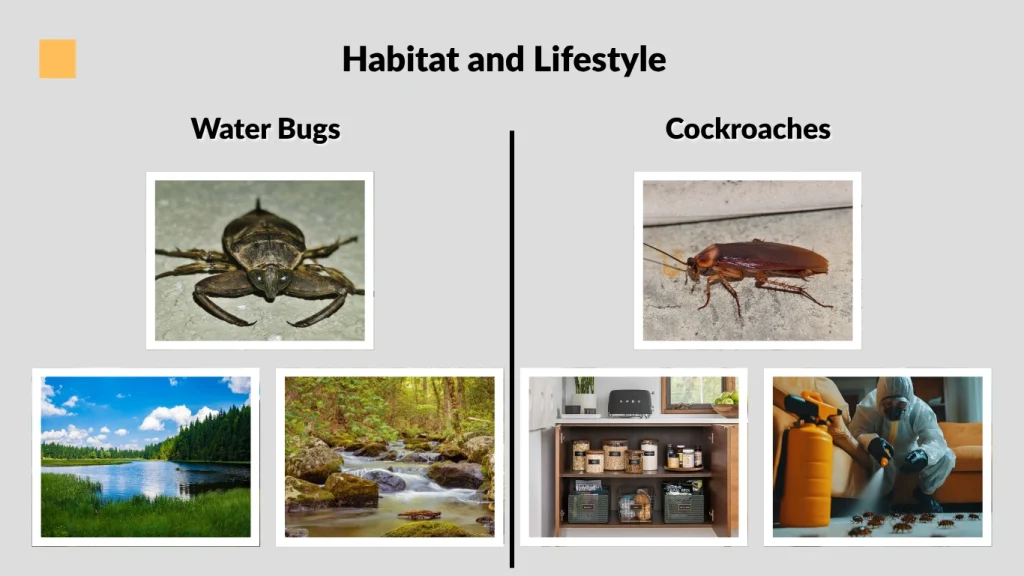
True water bugs live in freshwater environments such as ponds, lakes, and slow-moving streams. They are strong swimmers and spend most of their lives in or near water. They’re nocturnal hunters, feeding on insects, small fish, tadpoles, and other aquatic organisms. While they may occasionally enter homes, it’s usually accidental — often drawn by bright lights at night.
Cockroaches
Cockroaches thrive in warm, humid, and dark environments, often indoors. Common hiding spots include kitchens, bathrooms, basements, and storage rooms. They are scavengers, feeding on almost any organic material, from food scraps to paper and glue. Cockroaches are highly adaptable and can survive in a variety of conditions, making them persistent indoor pests.
Behavior Differences
- Water Bugs: Solitary and aggressive predators. They actively hunt and kill their prey, using their powerful forelegs to grasp and their piercing mouthparts to inject digestive enzymes. If handled, they can deliver a painful bite, earning them the nickname “toe-biters.”
- Cockroaches: Social insects that live in colonies and communicate using pheromones. They avoid confrontation and rarely bite humans, but they leave behind droppings, shed skins, and saliva that can spread bacteria and trigger allergies.
Bite vs Health Risk
Water Bug Bite
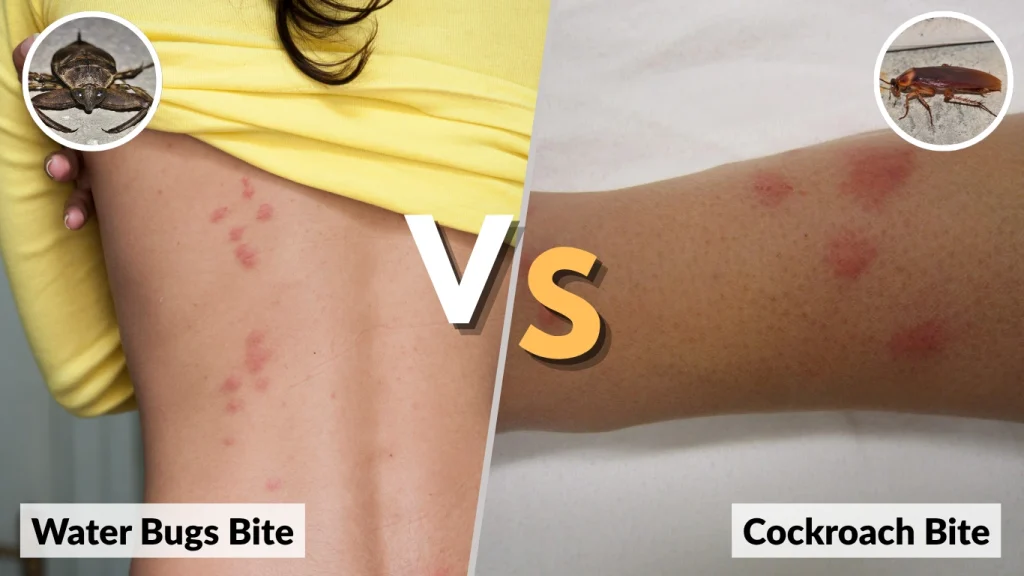
Water bugs can bite if they feel threatened, delivering a sharp, painful sting. While the bite is not venomous and rarely causes long-term harm, it may result in redness, swelling, and discomfort for a few days.
Cockroach Health Risk
Cockroaches are not known for biting humans, but they are major carriers of bacteria, including Salmonella and E. coli. Their droppings and shed skins can trigger asthma and allergies, especially in children and sensitive individuals. The real danger from cockroaches lies in contamination rather than direct physical harm.
Life Cycle Differences
Water Bugs
Water bugs undergo simple metamorphosis with three stages: egg, nymph, and adult. Females lay eggs on aquatic plants or other surfaces near water. Nymphs resemble smaller versions of adults but lack fully developed wings and reproductive organs. They remain in the water throughout their development, molting several times before reaching adulthood.
Cockroaches
Cockroaches also experience three stages: egg, nymph, and adult, but they are fully terrestrial. Females produce egg cases (oothecae) containing multiple eggs, which hatch into wingless nymphs. Nymphs go through several molts before becoming adults, with the total life cycle varying from a few months to over a year, depending on species and environmental conditions.
Pest Control and Management
Water Bug Control
- Reduce outdoor lighting or switch to yellow bug lights to avoid attracting them.
- Seal gaps around windows, doors, and vents to prevent entry.
- Eliminate standing water near your home to reduce breeding sites.
Cockroach Control
- Maintain strict sanitation: clean up crumbs, spills, and grease promptly.
- Seal cracks, gaps, and entry points inside and outside your home.
- Use gel baits, insect growth regulators (IGRs), or boric acid for targeted elimination.
- Call professional pest control for severe infestations.
FAQs About Water Bugs and Cockroaches
Are water bugs just big cockroaches?
No. True water bugs are aquatic predators, while cockroaches are terrestrial scavengers. However, large cockroach species like the American cockroach are sometimes mistakenly called “water bugs” in certain regions.
Can water bugs infest homes?
Not in the same way cockroaches do. Water bugs may wander indoors, but they don’t breed or live inside buildings unless there’s a significant source of standing water.
Do cockroaches live in water?
No. Cockroaches need moisture to survive, but they are land-dwelling insects. They may hide near water sources like sinks and drains but do not live in aquatic environments.
Which is more dangerous to humans?
Cockroaches pose a greater health risk because they spread bacteria and allergens. Water bugs can deliver a painful bite, but they aren’t known to transmit diseases.
