

The Apidae family is the largest and most diverse group of bees in the world, home to some of the most familiar and fascinating pollinators — including honeybees, bumblebees, stingless bees, carpenter bees, and many more. Found on every continent except Antarctica, members of this family play a crucial role in keeping ecosystems healthy and agriculture productive. From producing golden honey to pollinating crops and wildflowers, Apidae bees are essential partners in nature’s delicate balance, showcasing remarkable behaviors, adaptability, and importance to human life.
Taxonomy and Classification
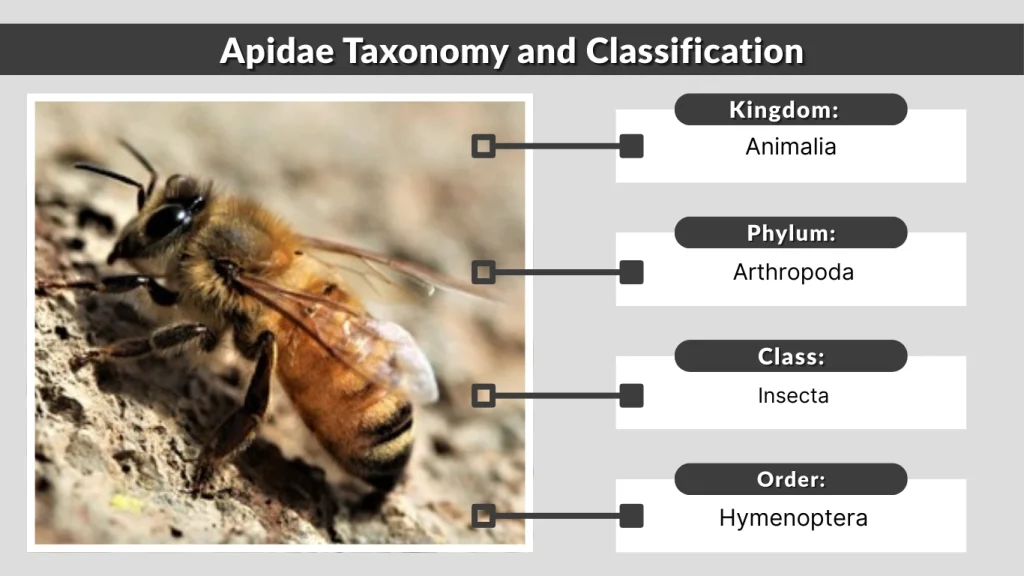
The Apidae family belongs to the order Hymenoptera, which also includes ants and wasps. It is part of the superfamily Apoidea, a group that contains all true bees. With thousands of species spread across the globe, Apidae showcases extraordinary diversity in size, behavior, and ecological roles.
Taxonomic Details:
- Kingdom: Animalia
- Phylum: Arthropoda
- Class: Insecta
- Order: Hymenoptera
- Superfamily: Apoidea
- Family: Apidae
This broad classification unites both social and solitary bees under one family, highlighting their shared evolutionary traits while allowing for vast differences in lifestyle and adaptations.
Characteristics of the Apidae Family

Members of the Apidae family display a wide range of physical traits and adaptations, but they share certain key features that distinguish them from other bee families. Their bodies are built for efficient pollination, with specialized structures for collecting and transporting pollen.
General Appearance
Apidae bees typically have robust bodies covered with branched hairs that trap pollen. Colors range from golden yellow and black to metallic green or blue, depending on the species. Body sizes vary greatly — from tiny stingless bees just a few millimeters long to large carpenter bees exceeding 25 mm.
Wing Structure
They possess two pairs of transparent wings, with the forewings larger than the hindwings. The wings hook together during flight for stability and can beat rapidly to allow agile maneuvering among flowers.
Specialized Features
- Pollen Baskets (Corbicula): Found in many social species like honeybees and bumblebees for carrying pollen.
- Proboscis Length Variations: Adapted to reach nectar from both shallow and deep flowers.
- Stinger Types: Some, like honeybees, have barbed stingers, while others have smooth stingers that can be used multiple times.
Global Distribution and Habitat
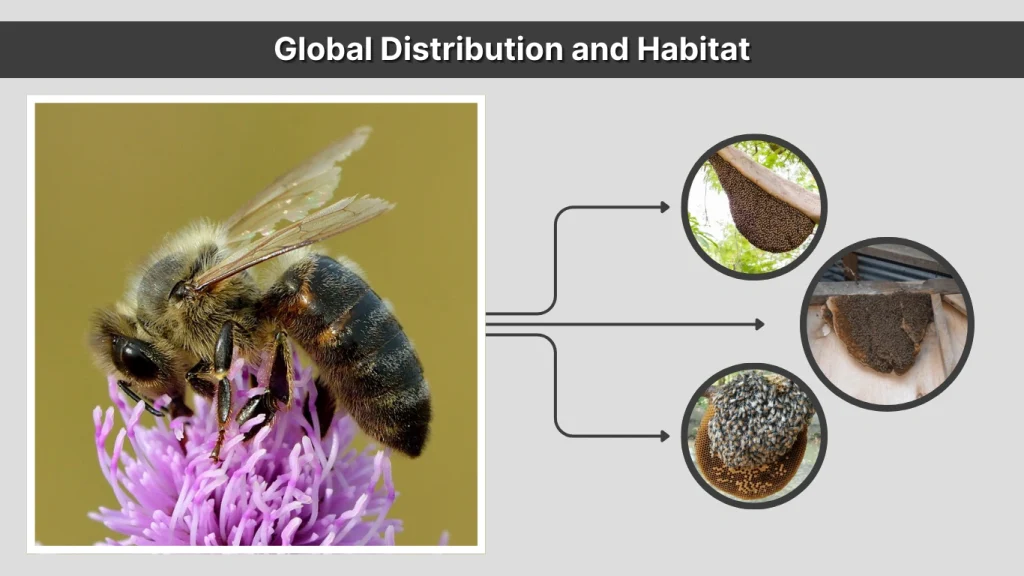
The Apidae family has one of the widest distributions of any bee group, found on every continent except Antarctica. Their adaptability allows them to thrive in environments ranging from tropical rainforests to arid deserts.
Regions Found
Apidae bees are present across North and South America, Europe, Asia, Africa, and Australia. Each region hosts a mix of native and introduced species, often adapted to local plants and climates.
Preferred Habitats
These bees inhabit forests, grasslands, farmlands, gardens, and even urban areas. They select environments rich in flowering plants to ensure a steady supply of nectar and pollen. Some species nest underground, while others prefer hollow trees, plant stems, or man-made structures.
Adaptations to Different Climates
Apidae bees exhibit remarkable flexibility — bumblebees can forage in colder temperatures by generating body heat, while stingless bees thrive in humid tropical zones. Many species adjust their foraging schedules to match seasonal bloom patterns in their environment.
Major Types of Apidae Bees

The Apidae family includes a wide variety of bees, ranging from highly social honey producers to solitary species with unique ecological roles.
Honeybees (Apis species)
Famous for producing honey and beeswax, honeybees are highly social insects living in large colonies. They are vital pollinators for crops and wild plants, with complex communication systems like the waggle dance.
Bumblebees (Bombus species)
Robust, fuzzy bees that excel at cold-weather pollination. They are capable of buzz pollination, which is essential for plants like tomatoes and blueberries. Bumblebees live in smaller colonies compared to honeybees.
Stingless Bees (Meliponini)
Found mainly in tropical regions, these bees cannot sting but will bite to defend their nests. They produce a unique, tangy honey with medicinal properties and nest in tree hollows or underground cavities.
Carpenter Bees (Xylocopa species)
Large bees that bore into wood to create nesting tunnels. They are solitary or loosely social and are important pollinators for many plants.
Orchid Bees (Euglossini)
Mostly tropical and known for their metallic colors, orchid bees collect floral fragrances to attract mates. They play a crucial role in pollinating certain orchids.
Cuckoo Bees (Subfamily Nomadinae)
Parasitic bees that lay their eggs in the nests of other bees. Their larvae feed on the host bee’s pollen stores, and sometimes even the host larvae.
Behavior and Social Structure
The Apidae family includes both highly social and solitary species, each with unique lifestyles and survival strategies.
Social vs. Solitary Species
- Social Species – Honeybees, bumblebees, and stingless bees live in organized colonies with a queen, workers, and, in some cases, drones. These colonies can range from a few dozen to tens of thousands of individuals.
- Solitary Species – Carpenter bees, orchid bees, and many cuckoo bees live alone, building and provisioning their own nests without cooperative help.
Communication Methods
Social Apidae species use sophisticated communication methods. Honeybees perform the waggle dance to share the location of food sources, while others use pheromones to signal alarm, coordinate activities, or mark flowers.
Defense Mechanisms
Many Apidae bees use stingers for defense. Honeybees have barbed stingers that remain lodged in skin, while bumblebees and some solitary bees have smooth stingers that can be used multiple times. Stingless bees rely on biting, resin application, or swarming intruders as a defense.
Diet and Feeding Habits
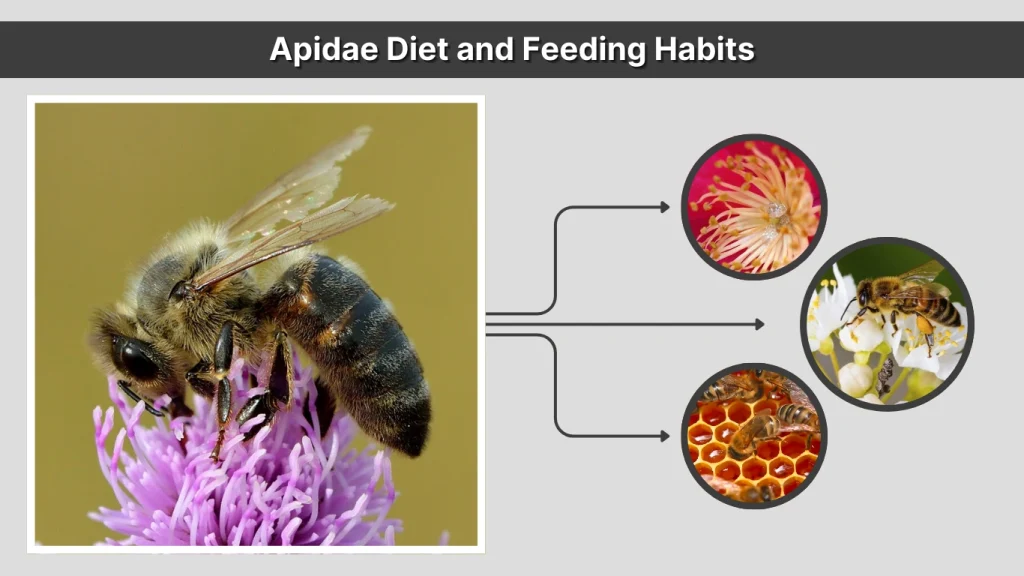
Members of the Apidae family are almost entirely dependent on flowering plants for their nutrition, making them some of the most important pollinators in the world.
Primary Food Sources
- Nectar – A sugary liquid from flowers that provides quick energy for flight and daily activity.
- Pollen – A protein-rich food that supports larval growth and overall colony health.
- Special Cases – Some orchid bees collect floral oils for nesting or mating purposes, and stingless bees may gather plant resins for hive construction and defense.
Pollination Techniques
- Buzz Pollination – Bumblebees vibrate their flight muscles to release pollen from flowers like tomatoes.
- Traplining – Some solitary bees follow a repeated route visiting the same flowers daily for efficiency.
- Floral Constancy – Many Apidae bees focus on one flower species during a foraging trip, increasing pollination success.
Seasonal Diet Changes
In spring and summer, food is abundant, allowing rapid brood production and colony growth. In colder months or dry seasons, social species rely on stored honey or pollen reserves, while solitary species time their life cycle to coincide with peak flowering periods.
Life Cycle and Reproduction

Like all bees, members of the Apidae family undergo complete metamorphosis, progressing through four distinct stages: egg, larva, pupa, and adult. However, their reproductive strategies vary widely between social and solitary species.
Egg to Adult Stages
The queen or female bee lays eggs in prepared cells or nesting sites. Fertilized eggs typically produce females, while unfertilized eggs develop into males. After hatching, larvae are fed pollen, nectar, or specialized secretions, depending on the species. They then pupate in sealed cells before emerging as adults.
Mating and Egg-Laying
In social species like honeybees, the queen mates during one or several nuptial flights, storing sperm for use throughout her life. Solitary species often mate near nesting sites, after which females independently build nests and lay eggs.
Colony Reproduction
Social Apidae colonies reproduce by swarming or splitting. In swarming, a portion of the colony leaves with the old queen to form a new nest, while the remaining bees rear a new queen. Solitary bees start new nests each season without assistance from other individuals.
Ecological Importance
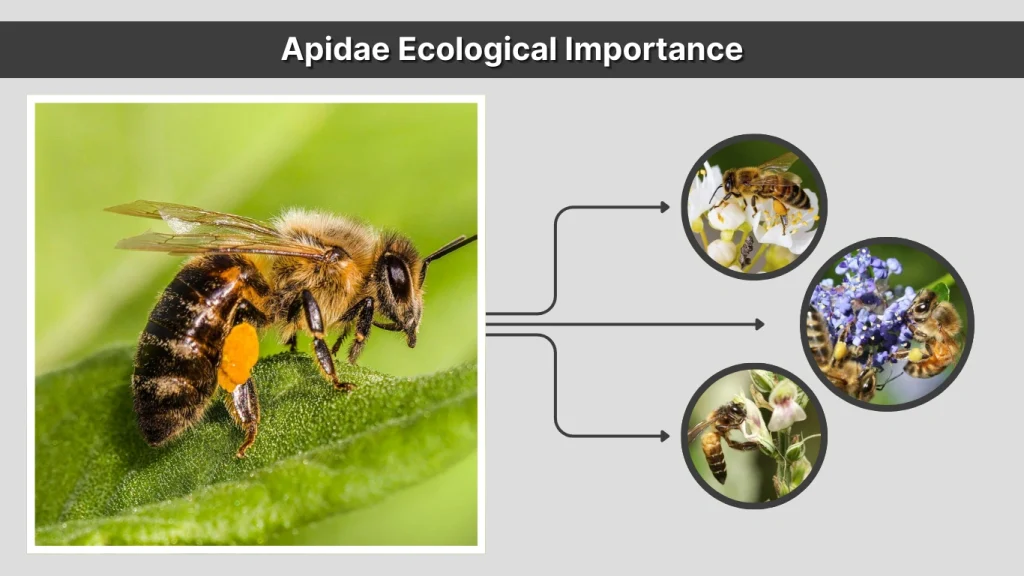
The Apidae family is indispensable to natural ecosystems and human agriculture. Their pollination activities directly affect plant reproduction, biodiversity, and food production worldwide.
Role in Pollination
Apidae bees pollinate a vast range of plants, from wildflowers to staple crops like apples, almonds, tomatoes, and coffee. Many plants rely entirely on them for fertilization, making their work critical to ecosystem health and food security.
Supporting Biodiversity
By pollinating diverse plant species, Apidae bees sustain habitats that support birds, mammals, and other insects. This creates a balanced food web and strengthens ecosystem resilience.
Economic Value
Globally, pollination by Apidae bees contributes billions of dollars to agricultural industries each year. Crops dependent on their pollination not only yield more but also produce higher-quality fruits and seeds.
FAQs
How many species are in the Apidae family?
The Apidae family includes more than 5,700 identified species worldwide, and scientists continue to discover new ones in different regions.
Are all Apidae social bees?
No. While honeybees, bumblebees, and stingless bees live in organized colonies, many members such as carpenter bees and orchid bees are solitary.
Which Apidae species make honey?
Primarily honeybees and certain stingless bees produce honey in significant amounts, while bumblebees make small quantities for their own use.
Why are Apidae important for farming?
They play a vital role in pollinating crops, which increases yield, improves quality, and supports food security.
Are Apidae bees dangerous to humans?
Most species are non-aggressive and will only sting or bite in defense, making them safe if left undisturbed.
