

Click beetles (Family: Elateridae) are fascinating insects best known for their unique ability to “click” and flip into the air when threatened or overturned. With their elongated bodies, diverse colors, and remarkable defense mechanism, they play vital ecological roles as decomposers, predators, and prey. Some species are harmless, while others have larvae (wireworms) that can damage crops. In this guide, we’ll explore 12 distinct types of click beetles and their unique traits.
1. Eastern Eyed Click Beetle (Alaus oculatus)
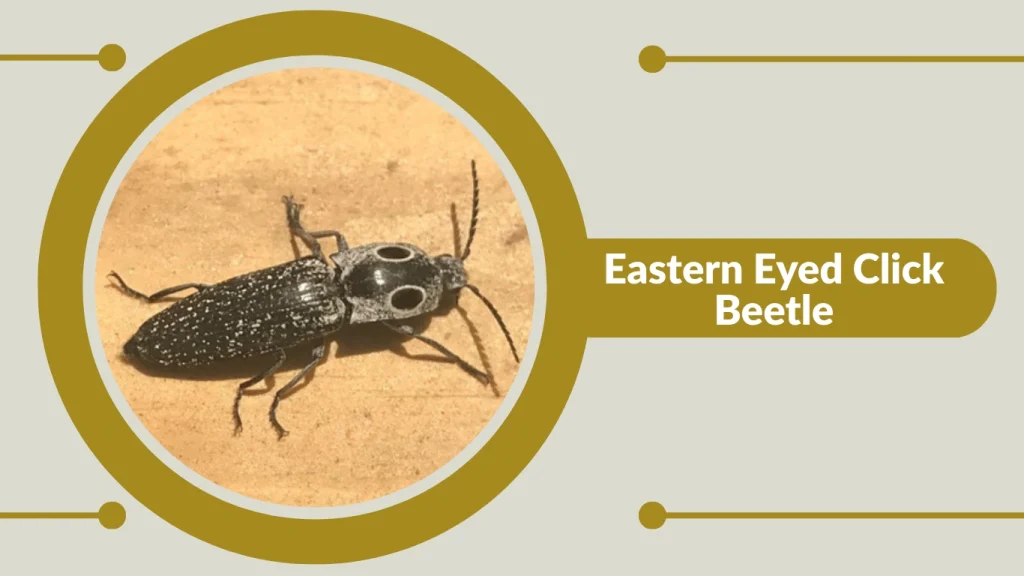
The Eastern Eyed Click Beetle is one of the most recognizable species in the click beetle family due to its dramatic false eyespots on the thorax. These bold markings help deter predators by making the beetle appear larger and more threatening. Found mainly in woodlands and forests, it plays an important role in ecosystems as both a decomposer and prey for other animals.
Identification
- Scientific Name: Alaus oculatus
- Size: Adults 25–45 mm, one of the largest click beetles
- Color: Black body covered with white speckling
- Markings: Two large black oval eyespots ringed in white on the thorax
- Shape: Elongated, narrow body typical of click beetles
Habitat and Distribution
This species is commonly found in eastern North America, especially in deciduous forests, woodlands, and areas with rotting logs. They thrive in habitats where larvae can develop inside decaying wood.
Behavior and Diet
Eastern Eyed Click Beetles are famous for their ability to “click” and flip into the air when threatened or overturned, using a spine-and-groove mechanism on their thorax. Larvae are wood-boring and feed on decaying wood, while adults are typically nocturnal and may feed on nectar or not feed at all. Their distinctive eyespots make them one of the most easily identified click beetles.
2. Brown Click Beetle (Lacon murinus)
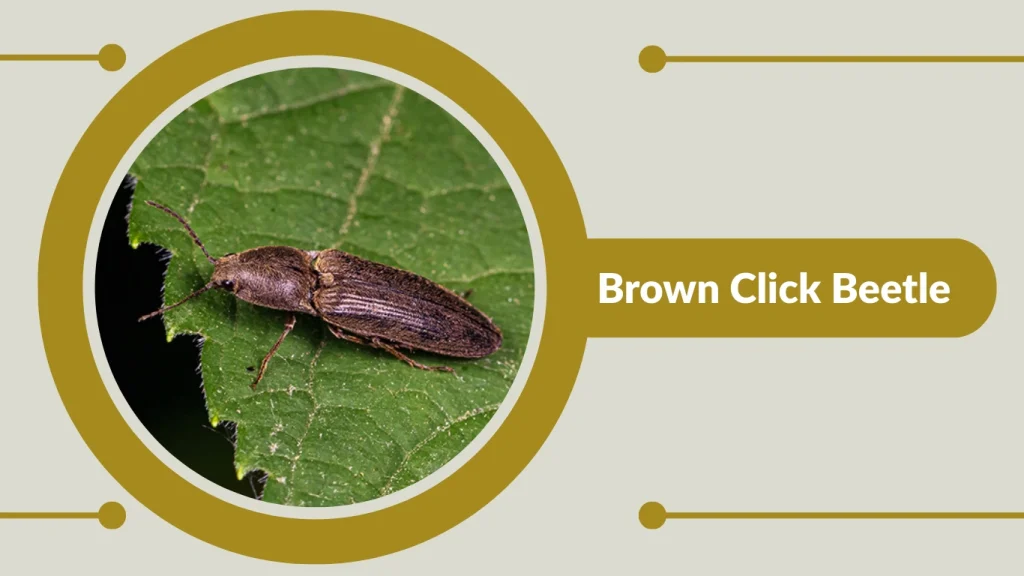
The Brown Click Beetle is a medium-sized species that blends well into its surroundings with its earthy coloration. While not as striking in appearance as some of its relatives, it is widespread and plays an important role in soil and forest ecosystems. Like all click beetles, it has the characteristic “click” mechanism that helps it escape predators or right itself when flipped over.
Identification
- Scientific Name: Lacon murinus
- Size: Adults 8–15 mm
- Color: Grayish-brown to dark brown body with fine scales
- Markings: Generally uniform, with subtle mottling for camouflage
- Shape: Elongated, flattened body typical of click beetles
Habitat and Distribution
Brown Click Beetles are found across Europe, Asia, and parts of North America. They inhabit grasslands, fields, gardens, and woodland edges, often hiding in leaf litter or soil during the day.
Behavior and Diet
Larvae, commonly called wireworms, live in soil and feed on decaying plant matter, roots, and occasionally seeds, making them both decomposers and minor agricultural pests. Adults are nocturnal and may feed sparingly on plant material or nectar. Their cryptic coloration helps them avoid detection, while their clicking mechanism provides an effective defense against predators.
3. Cardinal Click Beetle (Ampedus cardinalis)

The Cardinal Click Beetle is a brightly colored member of the click beetle family, standing out with its vibrant red body. Unlike many of its cryptic relatives, this beetle relies on warning coloration to deter predators. It is most often found in woodlands and meadows, where both larvae and adults contribute to the ecosystem in different ways.
Identification
- Scientific Name: Ampedus cardinalis
- Size: Adults 10–14 mm
- Color: Bright red elytra (wing covers) with a dark head and thorax
- Markings: Striking contrast between the red body and black thorax
- Shape: Slender, elongated body typical of click beetles
Habitat and Distribution
This species is distributed across Europe and parts of Asia, living mainly in forest edges, grasslands, and areas with rotting wood where larvae can develop.
Behavior and Diet
Larvae, often referred to as wireworms, live in decaying wood and feed on organic matter or small invertebrates. Adults are more surface-active, sometimes found on flowers where they may feed on pollen or nectar. Their bright coloration acts as a natural deterrent to predators.
4. Metallic Click Beetle (Alaus lusciosus)
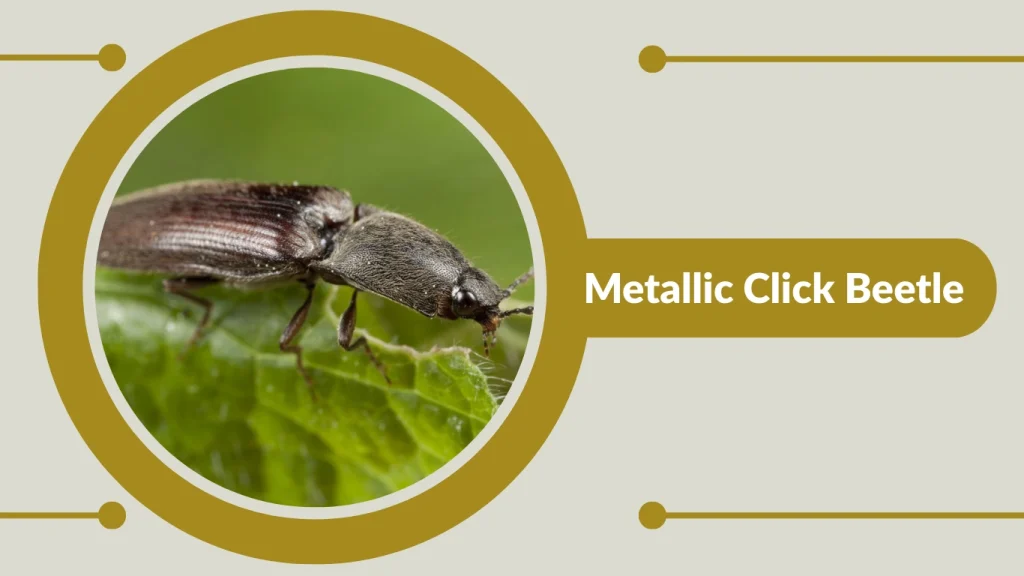
The Metallic Click Beetle is a striking species known for its iridescent sheen, which reflects hues of green, bronze, or blue under sunlight. Its metallic appearance provides camouflage in forest habitats, blending with moss, bark, and foliage. As with other click beetles, it uses its clicking mechanism to escape threats.
Identification
- Scientific Name: Alaus lusciosus
- Size: Adults 20–35 mm, relatively large
- Color: Shiny metallic green, bronze, or blue body
- Markings: Uniform metallic sheen without spots or false eyes
- Shape: Elongated and narrow with a strong, hard exoskeleton
Habitat and Distribution
Metallic Click Beetles inhabit forests and woodland regions, particularly in Central and South America. They are commonly found on tree trunks, logs, and foliage.
Behavior and Diet
Larvae are wood-borers, tunneling through decayed logs where they consume rotting material and sometimes prey on other insects. Adults are primarily nocturnal and may rest on tree bark during the day. Their metallic colors help them blend in with their surroundings, while their clicking ability provides a quick escape from predators.
5. Black Click Beetle (Melanotus spp.)
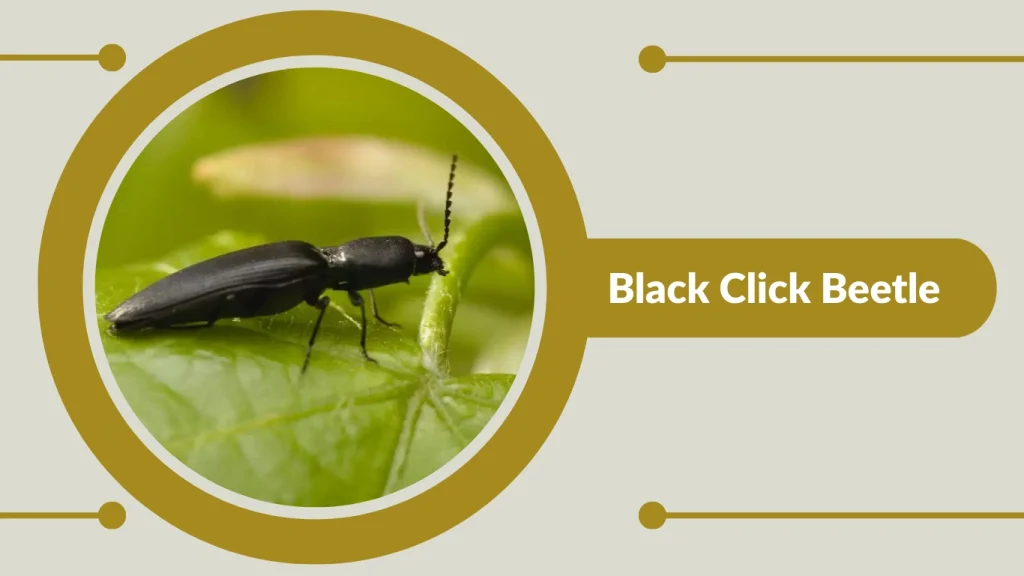
The Black Click Beetle is one of the most widespread and common members of the click beetle family. Its dark coloration makes it less conspicuous compared to brightly colored species, but it plays an important ecological role in soils and forests. Many of its larvae are known as agricultural pests, often referred to as wireworms.
Identification
- Scientific Name: Melanotus spp.
- Size: Adults 10–20 mm
- Color: Shiny black or dark brown body
- Markings: Generally plain, with minimal visible patterns
- Shape: Elongated, narrow body typical of click beetles
Habitat and Distribution
This genus is distributed worldwide, especially in Europe, North America, and Asia. They are often found in fields, grasslands, and woodland soils where larvae develop underground.
Behavior and Diet
Larvae (wireworms) feed on roots, seeds, and decaying organic matter, sometimes causing damage to crops such as corn, potatoes, and wheat. Adults are nocturnal, often hiding under logs, soil, or leaf litter during the day. Their clicking mechanism helps them escape predators and right themselves if overturned.
6. Striate Click Beetle (Athous haemorrhoidalis)
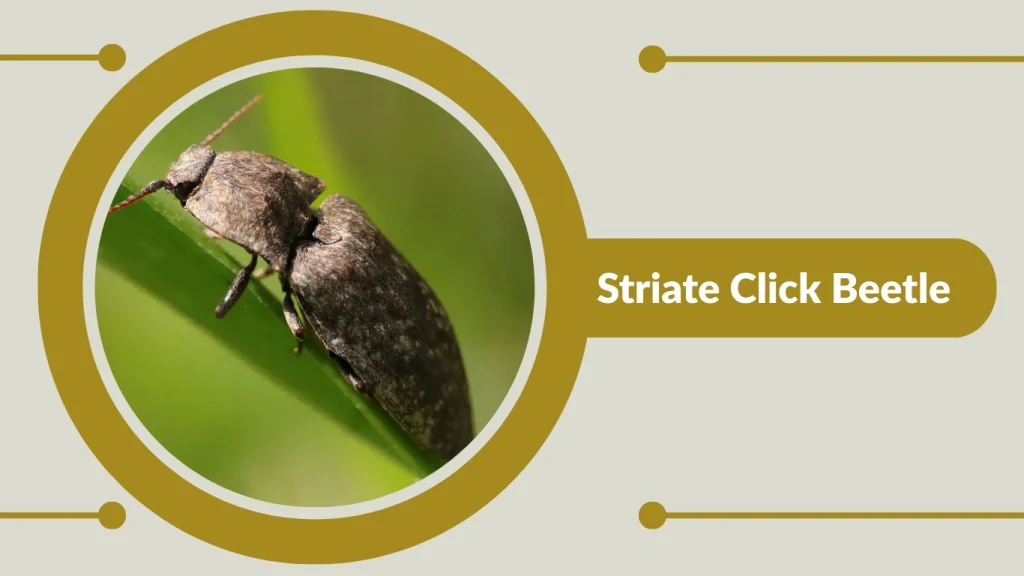
The Striate Click Beetle is easily recognized by the fine longitudinal grooves (striae) along its wing covers. It is a common species in meadows, woodland edges, and gardens, where its larvae live in soil as wireworms. Though small, it is an important insect for both ecological balance and agriculture.
Identification
- Scientific Name: Athous haemorrhoidalis
- Size: Adults 8–11 mm
- Color: Dark brown to reddish-brown body
- Markings: Longitudinal striations (grooves) on the elytra
- Shape: Elongated, slim body with a slightly flattened profile
Habitat and Distribution
This beetle is widely distributed across Europe and temperate parts of Asia. It is common in grasslands, agricultural fields, and mixed forests, often hiding in vegetation or soil during the day.
Behavior and Diet
Larvae are soil-dwelling wireworms that feed on plant roots, seeds, and decaying matter, occasionally becoming crop pests. Adults are active from late spring to summer and are often found crawling on low vegetation. While their cryptic appearance helps them blend in, they still rely on the typical “click” mechanism to defend against predators.
7. Red Click Beetle (Ampedus sanguineus)
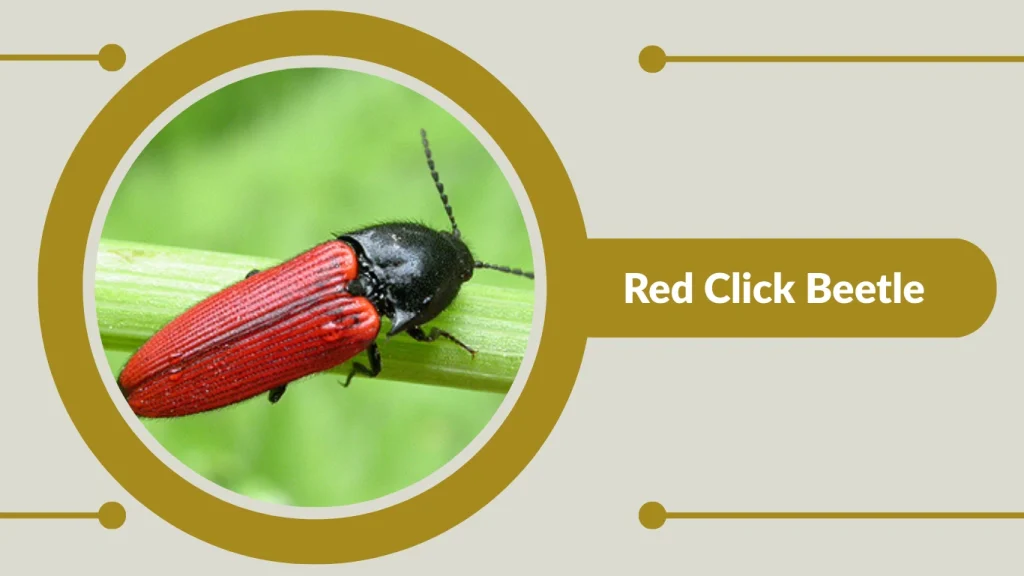
The Red Click Beetle is a vibrant species, easily spotted by its bright red wing covers. Its striking coloration serves as a warning to predators and makes it one of the more eye-catching members of the click beetle family. Though small, it plays an important role in woodland ecosystems, where larvae develop inside decaying wood.
Identification
- Scientific Name: Ampedus sanguineus
- Size: Adults 8–12 mm
- Color: Scarlet red elytra with a contrasting dark head and thorax
- Markings: Uniformly red wing covers without spots
- Shape: Slender, elongated body typical of click beetles
Habitat and Distribution
This beetle is common across Europe and parts of Asia, favoring old woodlands, hedgerows, and areas with plenty of fallen logs and decaying wood.
Behavior and Diet
Larvae are wood-dwellers, developing inside decaying trunks and branches where they feed on organic matter or small invertebrates. Adults are active in late spring and summer, often seen crawling on tree bark or resting in shaded vegetation.
8. Fire-Colored Click Beetle (Ampedus nigricollis)
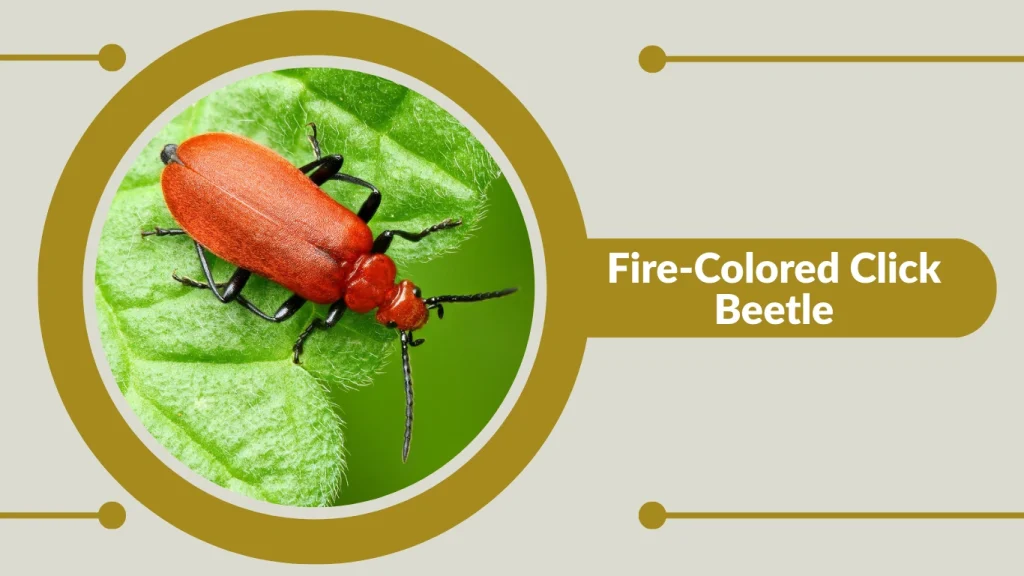
The Fire-Colored Click Beetle is another brightly marked species, known for its fiery red-orange body and contrasting black thorax. Like other Ampedus beetles, it depends heavily on decaying wood habitats and is often considered a sign of healthy forest ecosystems.
Identification
- Scientific Name: Ampedus nigricollis
- Size: Adults 9–13 mm
- Color: Bright orange to reddish wing covers, black thorax and head
- Markings: Strong contrast between thorax and wing color
- Shape: Narrow, elongated body with smooth texture
Habitat and Distribution
Widely found across Europe and Asia, the Fire-Colored Click Beetle is associated with mature woodlands, especially where rotting logs are abundant for larval development.
Behavior and Diet
Larvae are decomposers, living within rotting wood and feeding on organic matter. Adults are most active during warm summer days, occasionally visiting flowers for nectar or pollen. Their vibrant coloration and clicking mechanism provide both defense and recognition among predators and naturalists alike.
9. Large Click Beetle (Alaus myops)

The Large Click Beetle is a close relative of the Eastern Eyed Click Beetle and is also among the biggest members of the click beetle family. It is often mistaken for its cousin but can be distinguished by differences in markings and size. Like others in its genus, it is famous for its strong clicking mechanism and its false eye-like spots that scare away predators.
Identification
- Scientific Name: Alaus myops
- Size: Adults 25–40 mm
- Color: Dark brown to black with speckled white scales
- Markings: Oval false eyespots on thorax, smaller than Alaus oculatus
- Shape: Large, elongated body with tough wing covers
Habitat and Distribution
This species is found in forests and wooded regions across North America, especially in the eastern and southern United States. They are strongly associated with rotting logs and decayed stumps.
Behavior and Diet
Larvae live in decaying wood, where they act as predators, feeding on other insects and wood-boring larvae. Adults are mostly nocturnal, hiding in bark crevices during the day. Their size and false eyes make them intimidating to predators, while their clicking motion serves as an effective defense and self-righting mechanism.
10. Dark Click Beetle (Limonius spp.)
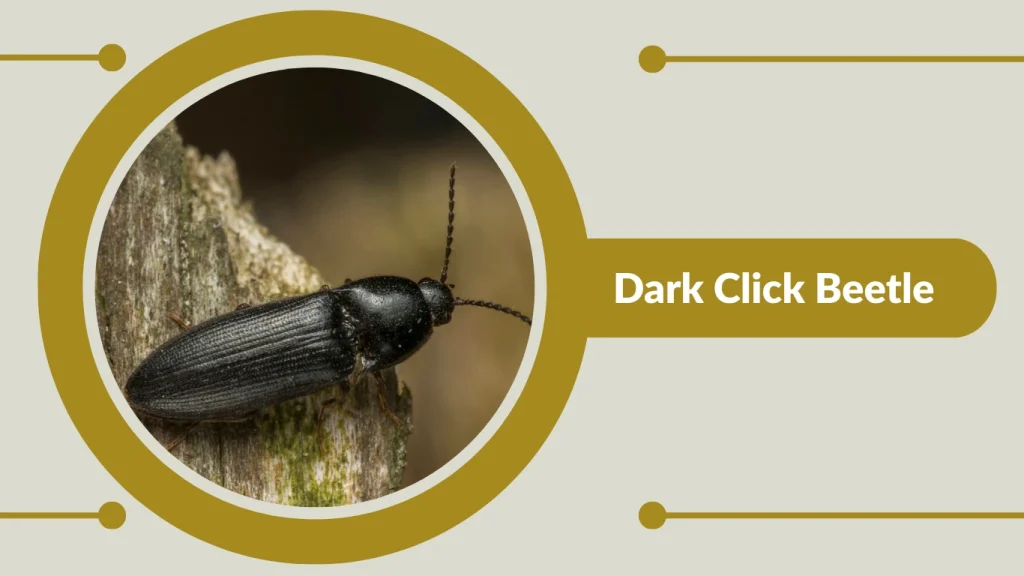
The Dark Click Beetle is one of the most agriculturally significant groups of click beetles. Its larvae, commonly called wireworms, are notorious crop pests that damage seeds and roots of cereals, potatoes, and other crops. Adults are less conspicuous, blending into soil and vegetation with their dark, understated coloration.
Identification
- Scientific Name: Limonius spp.
- Size: Adults 7–12 mm
- Color: Dark brown to black, sometimes with reddish hues
- Markings: Generally plain, with subtle striations on wing covers
- Shape: Small to medium-sized, slim, and narrow-bodied
Habitat and Distribution
Dark Click Beetles are widely distributed across North America and Europe, especially in agricultural regions, grasslands, and meadows. They are frequently encountered in crop fields where larvae develop underground.
Behavior and Diet
Larvae (wireworms) are soil dwellers that feed on roots, seeds, and underground stems, causing significant crop losses in some areas. Adults are nocturnal and usually feed little, though they may consume nectar or pollen occasionally. Despite their small size and plain appearance, they are ecologically and economically important due to the impact of their larvae.
11. Golden Click Beetle (Adelocera brevicornis)
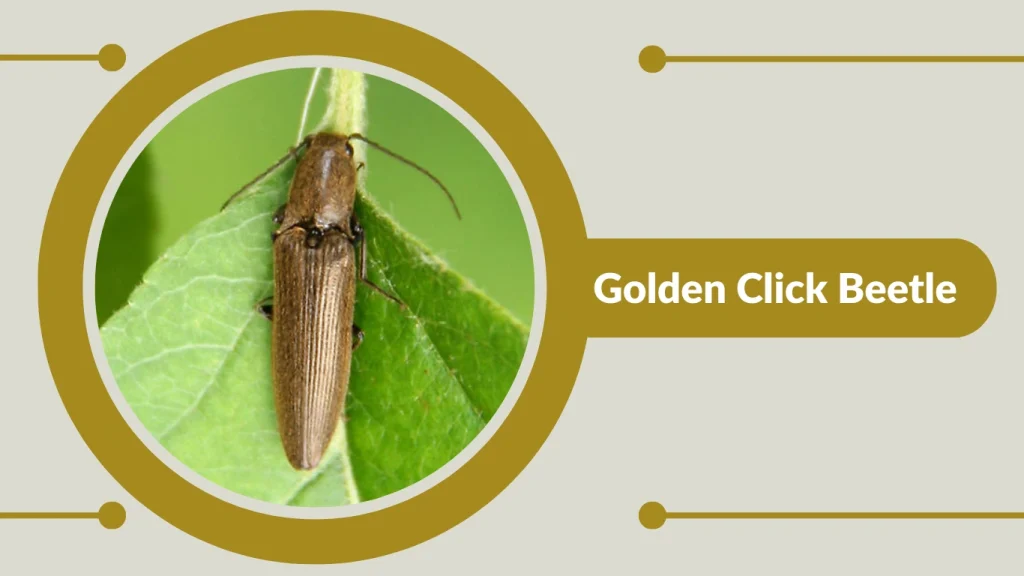
The Golden Click Beetle is named for its warm golden-brown coloration, which gives it a more attractive appearance compared to darker, cryptic species. It is a less commonly encountered click beetle but still notable in grassland and woodland habitats. Like others in the family, it possesses the trademark “click” mechanism for self-defense and movement.
Identification
- Scientific Name: Adelocera brevicornis
- Size: Adults 10–14 mm
- Color: Golden-brown to coppery body with a slight sheen
- Markings: Generally uniform, with faint striations on elytra
- Shape: Medium-sized, elongated beetle with relatively short antennae
Habitat and Distribution
This species is found in parts of Europe and Asia, inhabiting meadows, grasslands, and forest clearings. It is less abundant than some related click beetles but can be locally common where conditions are favorable.
Behavior and Diet
Larvae live in the soil, feeding on roots and organic debris, occasionally acting as minor pests in agricultural areas. Adults are primarily nocturnal and are most active from late spring to early summer. Their warm golden coloration helps them blend into dry vegetation, while their clicking action remains a key defense mechanism.
12. Bicolored Click Beetle (Ampedus balteatus)
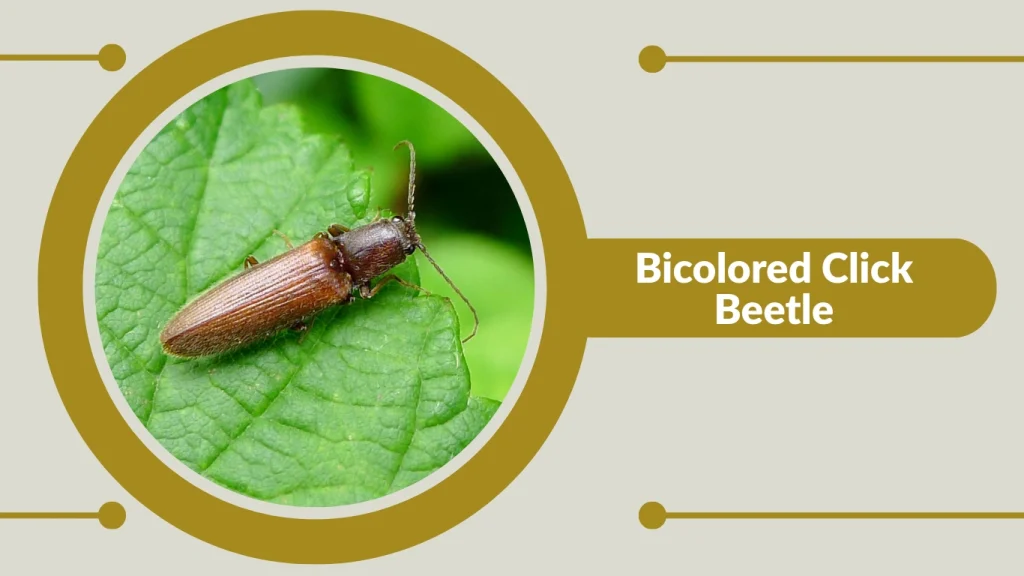
The Bicolored Click Beetle is a striking species, easily recognized by its sharply contrasting colors. Its bold red wing covers and dark thorax make it one of the most eye-catching click beetles in Europe. These beetles are strongly associated with wooded habitats where decaying logs provide breeding grounds for their larvae.
Identification
- Scientific Name: Ampedus balteatus
- Size: Adults 8–12 mm
- Color: Bright red elytra with black thorax and head
- Markings: Sharp color division between thorax and wing covers
- Shape: Slim, elongated body typical of the genus Ampedus
Habitat and Distribution
The Bicolored Click Beetle is widely found across Europe and parts of Asia, preferring deciduous forests, old woodlands, and areas rich in rotting timber.
Behavior and Diet
Larvae develop in rotting wood, feeding on decaying organic matter and sometimes preying on other small insects. Adults are diurnal and may be spotted crawling on tree trunks, logs, or even visiting flowers for nectar. Their vivid coloration and strong clicking defense make them one of the most memorable click beetles encountered by naturalists.
