

Jewel beetles (Buprestidae family) are among the most dazzling insects in the world, famous for their metallic, iridescent exoskeletons that shimmer like gemstones. Found in forests, woodlands, and tropical regions across the globe, these beetles are not only admired for their beauty but also play an important ecological role as wood-borers and pollinators. In this guide, we’ll explore 14 striking types of jewel beetles, highlighting their appearance, habitats, and behaviors.
1. Emerald Ash Borer (Agrilus planipennis)
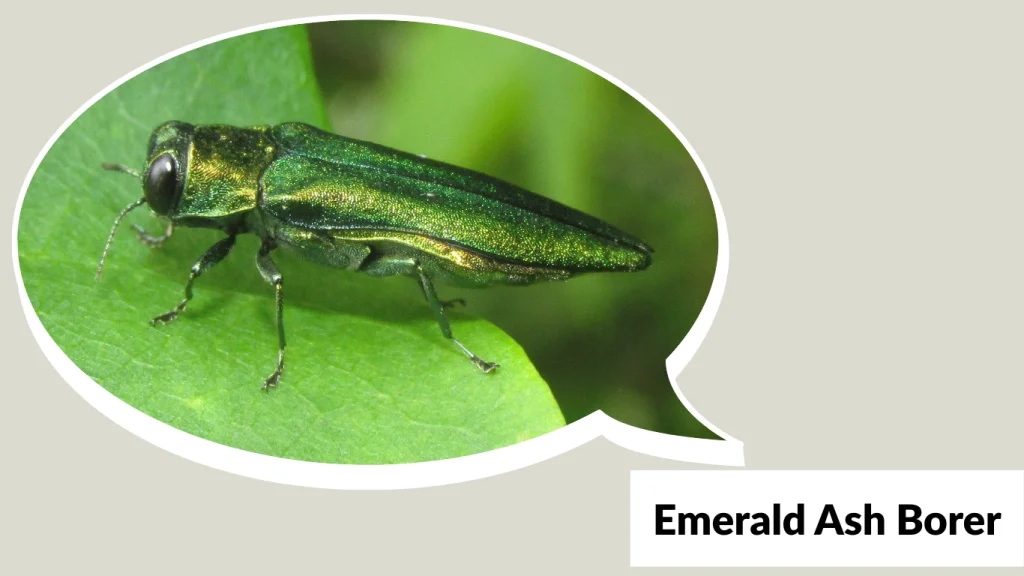
The Emerald Ash Borer is one of the most notorious jewel beetles, recognized for its stunning metallic green color and devastating impact on ash trees. Native to Asia, it has become an invasive species in North America and parts of Europe, where it has killed millions of ash trees since its accidental introduction. While admired for its beauty, it is considered one of the most destructive forest pests worldwide.
Identification
- Scientific Name: Agrilus planipennis
- Size: Adults 8–13 mm long, slender body
- Color: Iridescent emerald green with a coppery red to purple abdomen beneath the wings
- Wings: Hard elytra with metallic sheen
- Larvae: Cream-colored, serpentine, boring under bark of ash trees
Habitat and Distribution
The Emerald Ash Borer is native to China, Japan, and Korea, but has spread to North America and Europe. It specifically infests ash trees, thriving in both urban landscapes and natural forests.
Behavior and Impact
Adult beetles feed on ash leaves but cause minimal damage. The real destruction comes from larvae, which tunnel under the bark, disrupting nutrient and water flow, eventually killing the tree. They are highly invasive and difficult to control, making them a significant threat to forestry and ecosystems where ash is a dominant species.
2. Metallic Wood-Boring Beetle (Chrysochroa fulgidissima)
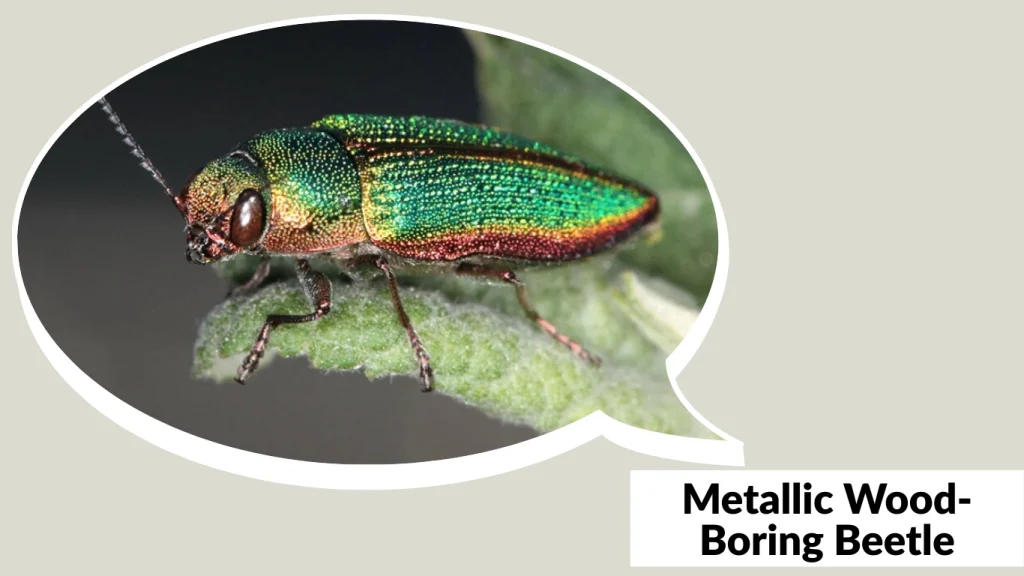
Often called the “Tamamushi” beetle in Japan, the Metallic Wood-Boring Beetle is one of the most dazzling jewel beetles in the world. Its iridescent exoskeleton displays shifting colors of green, blue, and purple depending on the angle of light. This species has long been admired in Japanese culture, even used in traditional crafts and decorations due to its extraordinary natural beauty.
Identification
- Scientific Name: Chrysochroa fulgidissima
- Size: Adults 25–40 mm, larger than many jewel beetles
- Color: Bright iridescent green with shades of blue, purple, or bronze that change with light
- Wings: Hard metallic elytra with mirror-like reflection
- Larvae: White, elongate, wood-boring grubs living under bark
Habitat and Distribution
This beetle is native to Japan, China, and parts of Southeast Asia. It inhabits forested areas, especially where oak and other hardwood trees provide food for larvae.
Behavior and Diet
Adults are diurnal and often seen basking in the sun on tree trunks or branches. They feed on leaves and bark, while larvae bore into dead or dying wood, playing a role in natural decomposition. Though not considered a serious pest, their cultural and aesthetic significance makes them one of the most famous jewel beetles globally.
3. Australian Sapphire Jewel Beetle (Temognatha alternata)

The Australian Sapphire Jewel Beetle is a large, brilliantly colored beetle native to Australia. Its body shimmers with metallic blue and green hues, often compared to gemstones, giving it the name “sapphire.” These beetles are admired for their beauty and are frequently collected by insect enthusiasts. While stunning in appearance, their larvae bore into wood, making them part of the ecological cycle of forest decomposition.
Identification
- Scientific Name: Temognatha alternata
- Size: Adults 25–45 mm, considered quite large
- Color: Iridescent metallic blue and green, sometimes with golden highlights
- Wings: Strong elytra with vibrant sapphire-like sheen
- Larvae: Wood-borers, developing inside tree trunks and branches
Habitat and Distribution
Found mainly in eastern Australia, especially Queensland and New South Wales, these beetles prefer forested regions with eucalyptus and other hardwood trees.
Behavior and Diet
Adults feed on flowers and nectar, often visiting eucalyptus blossoms. Larvae bore into living or dead wood, contributing to nutrient cycling. Their bright colors make them one of the most recognizable jewel beetles in Australia.
4. Red Jewel Beetle (Chrysochroa rajah)
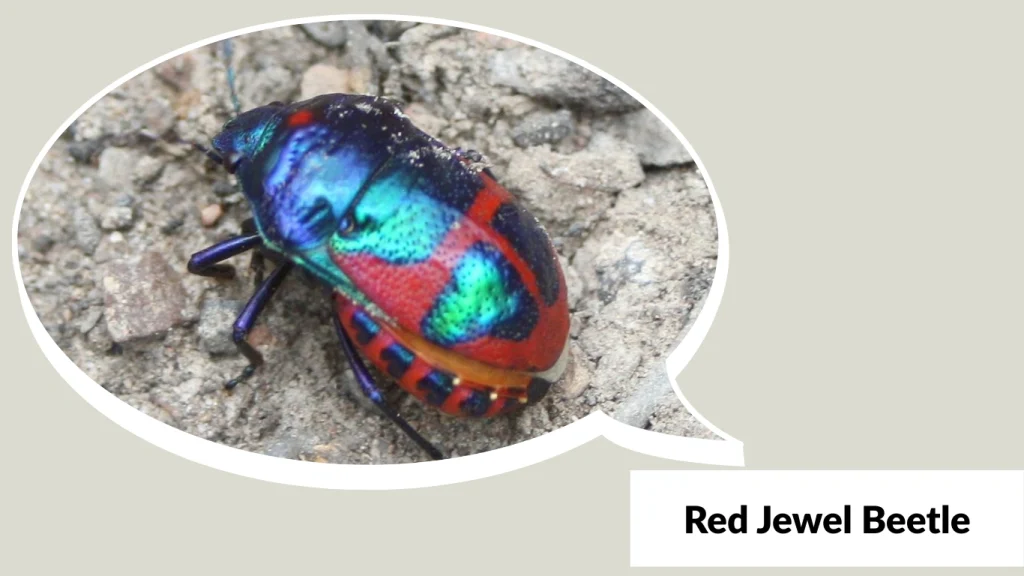
The Red Jewel Beetle is a spectacular species known for its gleaming red and copper tones. Its body shimmers under sunlight, making it a prized specimen in insect collections. Like many jewel beetles, it is not only admired for beauty but also plays an ecological role in breaking down woody material.
Identification
- Scientific Name: Chrysochroa rajah
- Size: Adults 30–40 mm
- Color: Brilliant metallic red with copper or gold highlights
- Wings: Elytra with deep reflective tones, smooth texture
- Larvae: Cream-colored borers that develop in tree trunks and branches
Habitat and Distribution
Native to Southeast Asia, particularly in tropical forests of Thailand, Malaysia, and Indonesia. These beetles thrive in warm, humid climates where hardwood trees are abundant.
Behavior and Diet
Adults feed on leaves and occasionally nectar, while larvae bore into dead or weakened wood. They are diurnal and often seen basking on tree trunks in full sunlight. Their vivid red coloration makes them a favorite among collectors and a symbol of jewel beetle beauty.
5. Golden Jewel Beetle (Chrysochroa buqueti)

The Golden Jewel Beetle is one of the most radiant species, admired for its shimmering golden-yellow and metallic tones. Its striking appearance makes it highly sought after by collectors and artisans. In Southeast Asia, the beetle’s vibrant elytra have even been used in traditional jewelry and crafts, showcasing the insect’s dazzling natural beauty.
Identification
- Scientific Name: Chrysochroa buqueti
- Size: Adults 25–40 mm
- Color: Bright golden-yellow with metallic green or orange highlights
- Wings: Elytra glossy and smooth with a golden sheen
- Larvae: White wood-boring grubs living beneath tree bark
Habitat and Distribution
This species is found in Southeast Asia, particularly in Malaysia, Thailand, and Indonesia. It inhabits tropical forests where hardwood trees are abundant.
Behavior and Diet
Adults feed on leaves and flowers in sunny spots, while larvae bore into wood, helping decompose dead or weakened trees. Their vivid coloring makes them one of the most iconic jewel beetles in Asia.
6. Japanese Jewel Beetle (Chrysochroa fulgidissima)
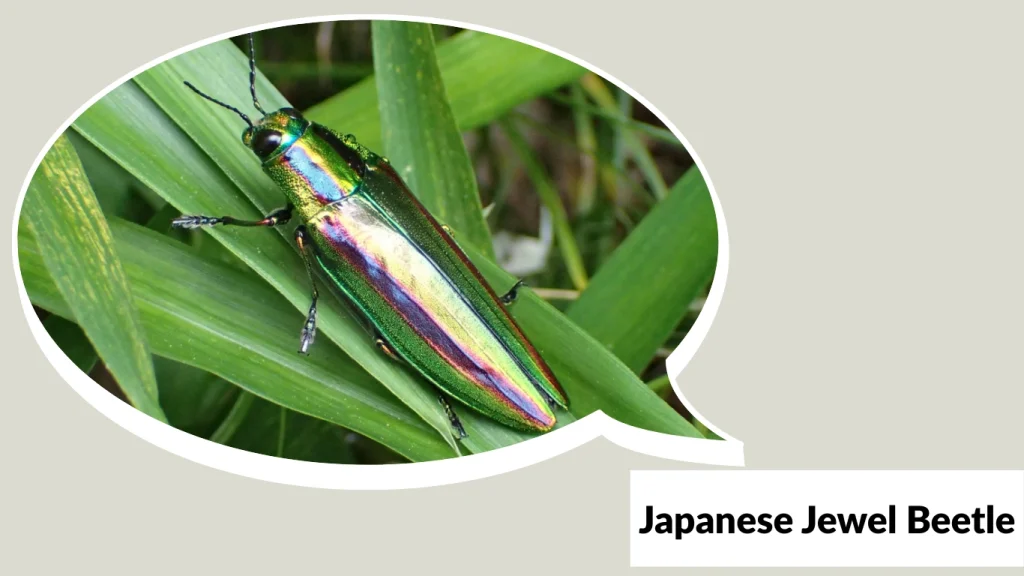
The Japanese Jewel Beetle, locally known as Tamamushi, is revered in Japanese culture for its iridescent wings, which shift in color between green, blue, and purple. Its elytra have been used for centuries in traditional crafts and shrine decorations. This beetle symbolizes beauty and transformation in Japan, making it both a cultural and entomological treasure.
Identification
- Scientific Name: Chrysochroa fulgidissima
- Size: Adults 25–40 mm
- Color: Metallic green, blue, and purple that changes with light
- Wings: Smooth, mirror-like elytra used in traditional ornamentation
- Larvae: Pale wood-borers, developing inside tree trunks
Habitat and Distribution
Native to Japan, Korea, and parts of China, it thrives in temperate forests where oak and other hardwoods grow.
Behavior and Diet
Adults are diurnal, often basking on sunlit tree trunks. They feed on leaves, while larvae develop inside dead or dying wood. Their shimmering elytra and cultural importance make them one of the most admired jewel beetles in the world.
7. Copper Jewel Beetle (Sternocera aequisignata)
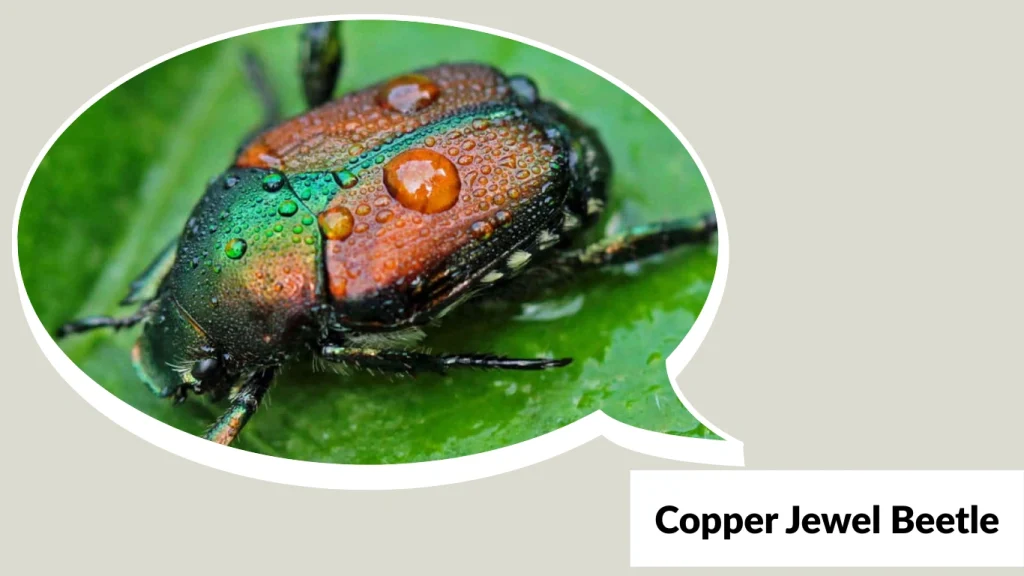
The Copper Jewel Beetle is among the most striking of the Sternocera species, celebrated for its shimmering metallic green to copper-red hues. In parts of Southeast Asia, especially Thailand, this beetle is used in traditional jewelry and embroidery, where its dazzling elytra are incorporated into clothing and ornaments. Its brilliant exoskeleton makes it one of the most commercially recognized jewel beetles.
Identification
- Scientific Name: Sternocera aequisignata
- Size: Adults 25–40 mm
- Color: Metallic green with copper or reddish tones, highly iridescent
- Wings: Glossy elytra with jewel-like brilliance
- Larvae: Wood-boring grubs, feeding inside tree trunks and stems
Habitat and Distribution
This beetle is found across Southeast Asia, including Thailand, Laos, and Vietnam. It prefers warm tropical forests and wooded areas.
Behavior and Diet
Adults feed on leaves, particularly from leguminous plants, while larvae bore into stems and trunks. Their dazzling appearance has led to their use in traditional art and decoration, symbolizing beauty and prosperity.
8. Blue Jewel Beetle (Chrysochroa chinensis)

The Blue Jewel Beetle is admired for its deep metallic blue coloration, often accented with lighter or purplish reflections. It is considered one of the classic jewel beetles from Asia and is a frequent highlight in entomology collections. Its body shimmers under sunlight, making it appear almost gem-like, hence its common name.
Identification
- Scientific Name: Chrysochroa chinensis
- Size: Adults 20–35 mm
- Color: Intense metallic blue, sometimes with purple or green iridescence
- Wings: Smooth, narrow, jewel-like elytra
- Larvae: Pale grubs, boring into wood of host trees
Habitat and Distribution
Native to East and Southeast Asia, including China, Vietnam, and parts of Thailand, where hardwood forests provide an ideal environment.
Behavior and Diet
Adults are diurnal, feeding on foliage and basking on tree trunks. Larvae are wood-borers, aiding in decomposition. Their brilliant coloration ensures they remain one of the most iconic and photographed jewel beetles in Asia.
9. Striped Jewel Beetle (Temognatha variabilis)
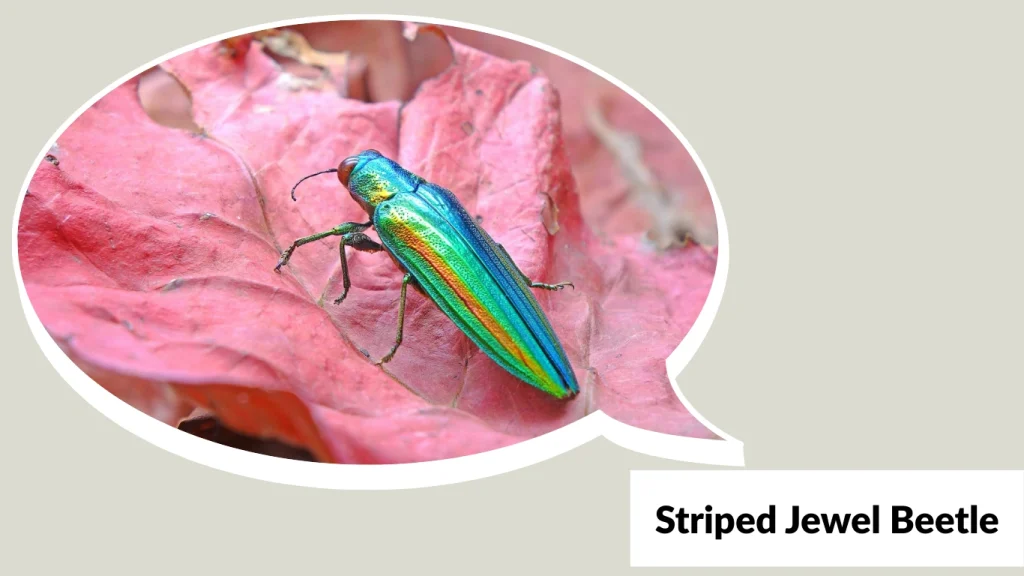
The Striped Jewel Beetle is one of the most colorful beetles in Australia, easily recognized by its bold metallic stripes. Its brilliant bands of green, gold, and red make it appear almost like a living piece of jewelry. Collectors prize this beetle for its striking coloration, while in nature it plays an important role in pollination and decomposition cycles.
Identification
- Scientific Name: Temognatha variabilis
- Size: Adults 25–45 mm
- Color: Metallic green with striking golden or reddish stripes
- Wings: Broad, glossy elytra with alternating color bands
- Larvae: Large wood-boring grubs developing inside eucalyptus and other hardwoods
Habitat and Distribution
This beetle is native to Australia, commonly found in woodlands and forests where eucalyptus trees dominate.
Behavior and Diet
Adults feed primarily on nectar and blossoms, especially eucalyptus flowers. Larvae bore into tree trunks and branches, often taking years to complete development. Their vivid striped patterns make them one of the most beautiful jewel beetles in the world.
10. Giant Jewel Beetle (Megaloxantha bicolor)
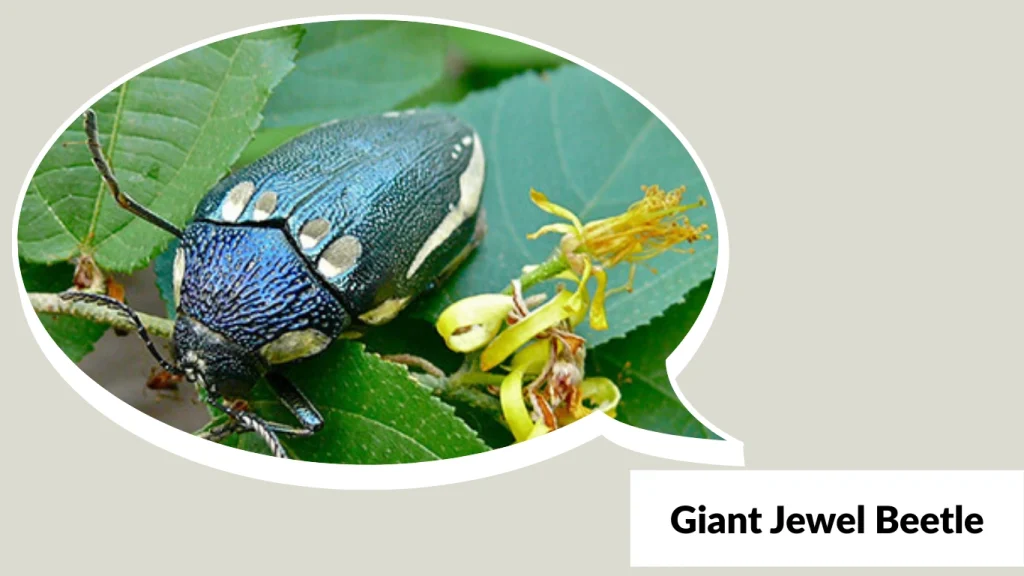
The Giant Jewel Beetle is among the largest and most spectacular species of jewel beetles, famous for its size and brilliant bicolored metallic body. Its iridescent shades range from green and gold to purple and red, shifting in the light. Because of its impressive size and beauty, it is one of the most collected jewel beetles globally.
Identification
- Scientific Name: Megaloxantha bicolor
- Size: Adults 60–100 mm, making it one of the largest jewel beetles
- Color: Metallic green, gold, and purple, often with bicolored or multicolored elytra
- Wings: Large, glossy, and strongly reflective
- Larvae: Robust wood-borers that develop in large hardwood trees
Habitat and Distribution
This beetle is widely distributed in tropical Asia, including India, Malaysia, Thailand, and Indonesia. It prefers dense forests with abundant hardwood trees.
Behavior and Diet
Adults feed on nectar, sap, and sometimes leaves, while larvae bore into large tree trunks. They can take several years to mature, emerging as massive, glittering beetles. Their sheer size and iridescence make them a centerpiece in entomology collections worldwide.
11. Green Jewel Beetle (Chrysochroa viridicyanea)
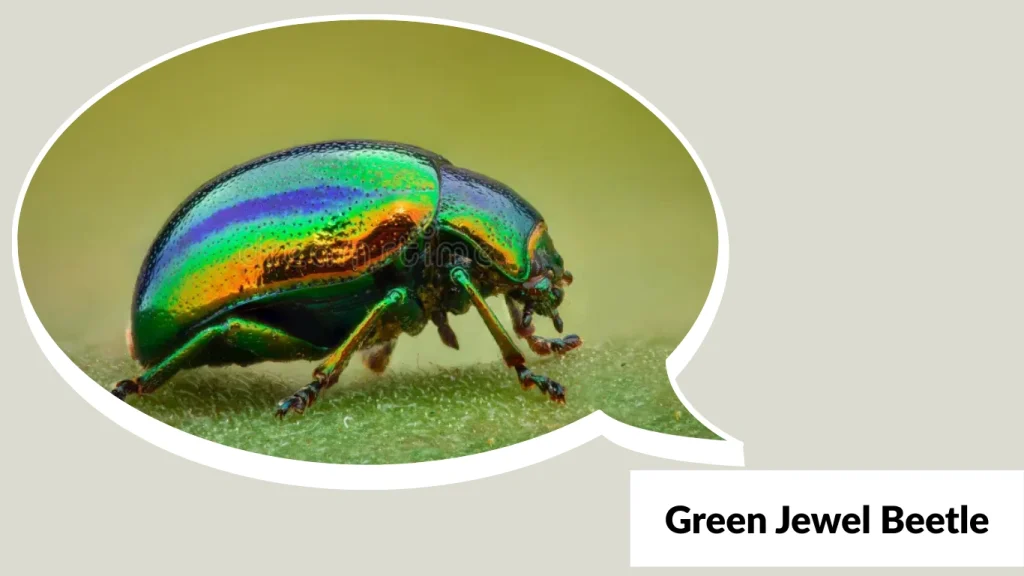
The Green Jewel Beetle is a dazzling species recognized for its brilliant emerald-green coloration, often mixed with hints of turquoise or blue. It is one of the most visually striking beetles in the Chrysochroa genus and is highly prized among collectors for its gemstone-like sheen. Its shimmering exoskeleton reflects light beautifully, making it appear almost metallic.
Identification
- Scientific Name: Chrysochroa viridicyanea
- Size: Adults 25–35 mm
- Color: Brilliant emerald-green with iridescent turquoise highlights
- Wings: Smooth, narrow elytra with metallic reflection
- Larvae: Pale wood-borers that develop under bark of hardwood trees
Habitat and Distribution
This species is found in Southeast Asia, particularly in tropical forests of Thailand, Laos, and Cambodia. It thrives in warm, humid environments with abundant hardwood trees.
Behavior and Diet
Adults feed on leaves and flowers, often basking in direct sunlight on tree trunks. Larvae bore into wood, playing a role in the natural recycling of decayed trees. Their shimmering green beauty ensures their place among the most admired jewel beetles worldwide.
12. Fire-Colored Jewel Beetle (Psiloptera fastuosa)
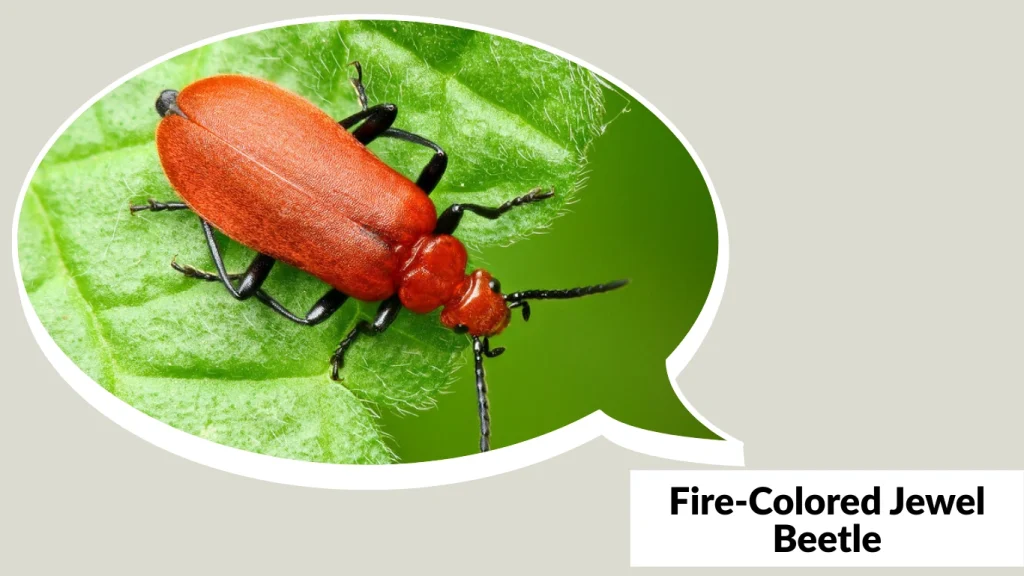
The Fire-Colored Jewel Beetle is aptly named for its glowing red and orange metallic tones, resembling burning embers. This species is a stunning example of jewel beetle iridescence, with colors that appear to shift depending on the light. Its fiery beauty makes it one of the most distinctive beetles in tropical forests.
Identification
- Scientific Name: Psiloptera fastuosa
- Size: Adults 20–30 mm
- Color: Bright metallic red, orange, and coppery tones with iridescent sheen
- Wings: Hard elytra glowing with fiery reflections
- Larvae: Wood-boring grubs living inside trunks and branches
Habitat and Distribution
Native to tropical regions of Southeast Asia, this beetle thrives in dense rainforests with a high diversity of host trees.
Behavior and Diet
Adults are active during warm, sunny days, feeding on leaves and sometimes flower nectar. Larvae bore deeply into dead or decaying wood, contributing to forest nutrient cycling. Their radiant appearance makes them a favorite among collectors and an iconic jewel beetle species.
13. Rainbow Jewel Beetle (Chrysochroa corbetti)
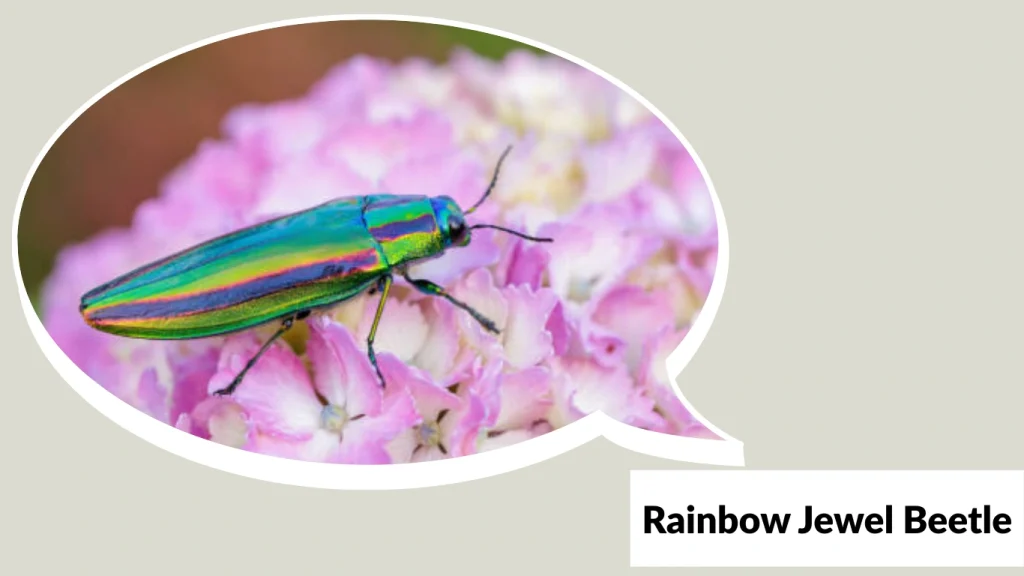
The Rainbow Jewel Beetle is one of the most stunning species in the Chrysochroa genus, famous for its dazzling multicolored exoskeleton. Its iridescent body shifts through shades of green, blue, purple, and gold depending on the light angle, making it appear like a living rainbow. Because of its striking beauty, it is highly prized among collectors worldwide.
Identification
- Scientific Name: Chrysochroa corbetti
- Size: Adults 25–40 mm
- Color: Iridescent green, blue, purple, and golden hues across the body
- Wings: Smooth elytra with rainbow-like reflections
- Larvae: Cream-colored, boring inside tree trunks and branches
Habitat and Distribution
Native to Southeast Asia, particularly in Thailand, Malaysia, and Indonesia, this beetle thrives in tropical forests with abundant hardwood trees.
Behavior and Diet
Adults feed on foliage and occasionally flower nectar, while larvae bore into dead or weakened wood. Their vibrant coloration and rarity make them highly desirable in collections and a true showcase of jewel beetle iridescence.
14. Black and Gold Jewel Beetle (Sternocera sternicornis)
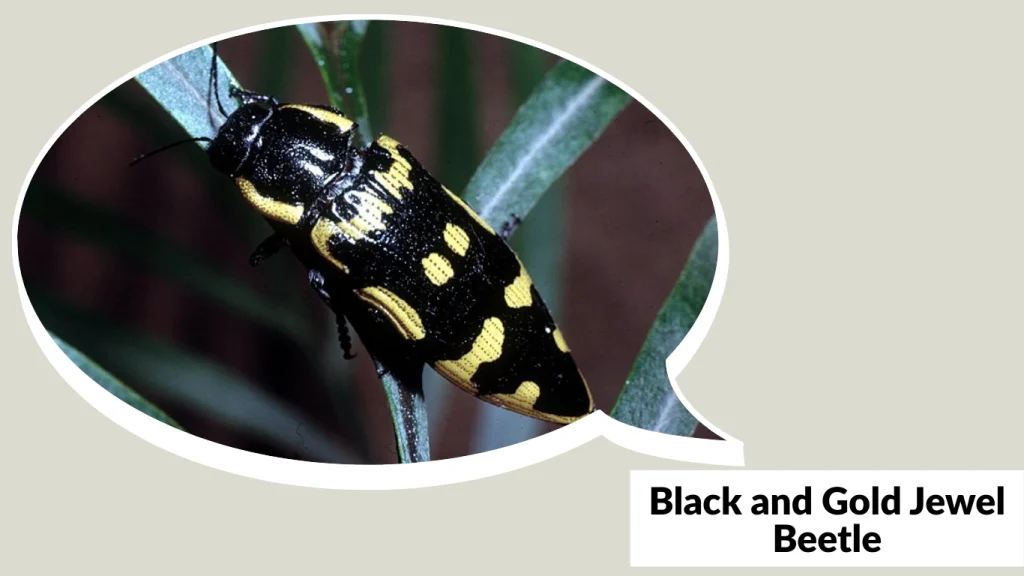
The Black and Gold Jewel Beetle is admired for its striking contrast of deep black and shimmering golden markings. Its bold coloration gives it a regal appearance, and it is one of the most recognizable Sternocera species. Like its close relatives, this beetle has been historically used in traditional crafts due to its durable and glittering elytra.
Identification
- Scientific Name: Sternocera sternicornis
- Size: Adults 25–35 mm
- Color: Metallic black with golden or bronze highlights
- Wings: Hard elytra with glossy black base and golden patterns
- Larvae: Wood-boring grubs developing under bark
Habitat and Distribution
Found mainly in South and Southeast Asia, including India and surrounding regions, where it inhabits tropical and subtropical forests.
Behavior and Diet
Adults feed on leaves of host plants, while larvae tunnel into tree trunks and branches. Their bold black-and-gold pattern makes them a highly sought-after specimen, valued both in natural history collections and for their cultural use in decorative art.
