
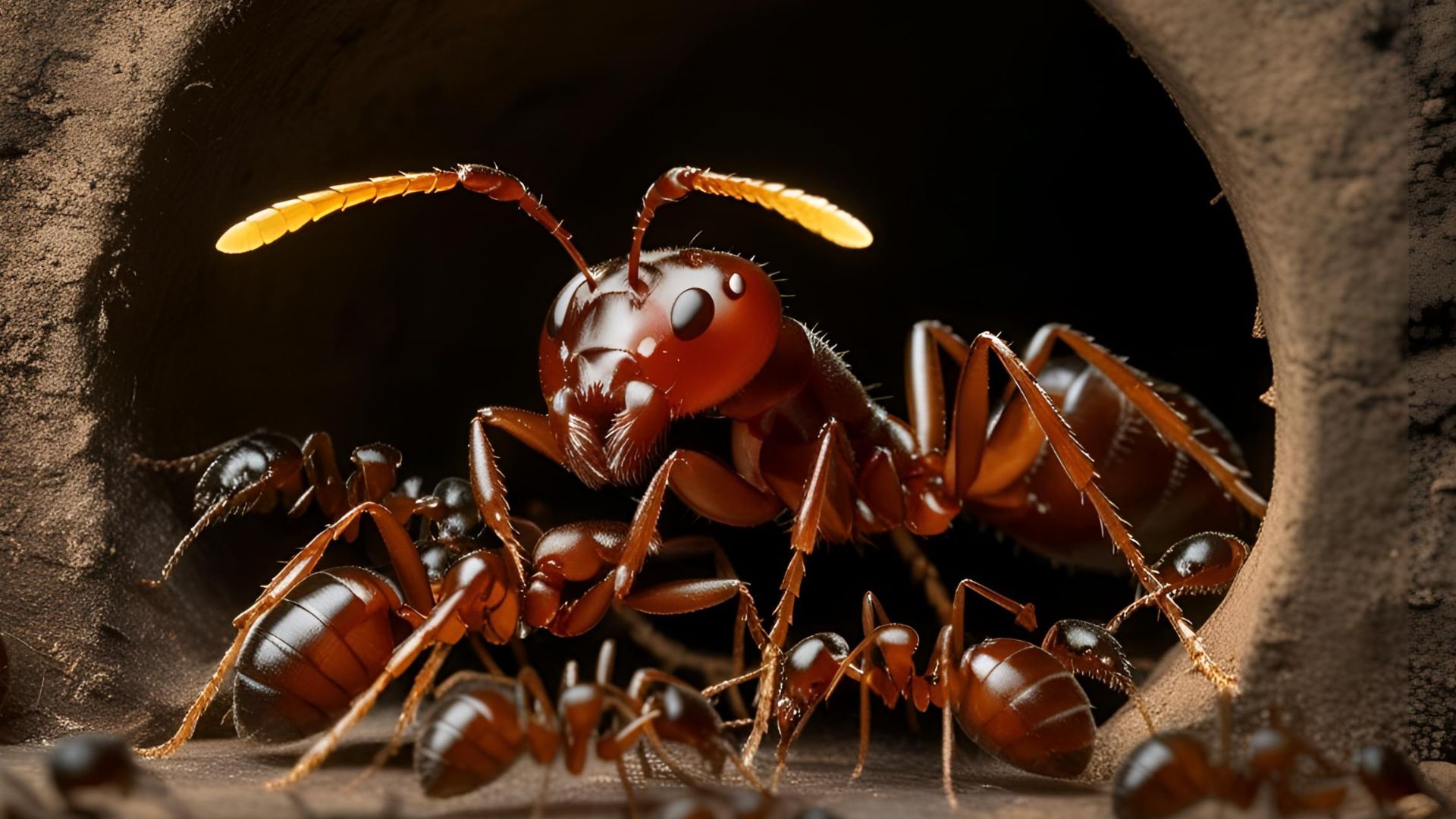
Carpenter ants are one of the most fascinating ant species, known for their large size and ability to create extensive nests in wood. At the heart of every thriving colony is the carpenter ant queen, the largest and most important member. She is responsible for the survival and expansion of the colony, laying thousands of eggs throughout her lifetime.
This article explores the size, habitat, and interesting facts about the carpenter ant queen, along with tips on identifying her.
1. Carpenter Ant Queen Size
The carpenter ant queen is significantly larger than the worker and soldier ants within the colony. Her size is a key distinguishing factor that sets her apart from the rest of the colony.
Size Comparison:
- Queen: Typically measures between 12 to 20 mm (0.5 to 0.8 inches) in length.
- Workers: Range from 3.5 to 13 mm (0.1 to 0.5 inches).
- Soldiers: Slightly larger than workers, but still smaller than the queen.
Physical Characteristics:
- The queen has a bulkier and elongated thorax, which distinguishes her from workers.
- She is initially winged, but after the nuptial flight, she sheds her wings and begins her colony.
- The color varies depending on the species, usually ranging from black to reddish-brown.
- A strong pair of mandibles helps her manipulate wood and care for her early brood before workers take over.
2. Habitat of the Carpenter Ant Queen
Carpenter ants prefer moist and decaying wood as their nesting sites. Unlike termites, they do not consume wood but excavate it to create tunnels for their colony.
Natural Habitats:
- Forests: Fallen logs, tree stumps, and rotting wood provide ideal nesting locations.
- Urban Areas: Wooden structures, especially those with water damage, attract carpenter ants.
- Gardens: Mulch piles, tree bark, and wooden garden furniture may become nesting sites.
Nesting Behavior:
- The queen initially establishes a small chamber, where she lays her first batch of eggs.
- Over time, as workers mature, they help expand the nest by excavating galleries within the wood.
- Colonies can grow to include thousands of ants over several years.
3. Life Cycle and Behavior

The carpenter ant queen has a fascinating life cycle, ensuring the colony’s long-term survival.
Mating and Colony Formation:
- The queen takes part in a nuptial flight, mating with a male ant in the air.
- After mating, she sheds her wings and seeks a protected location to start her colony.
- She lays eggs, and once the first batch hatches, the worker ants take over colony maintenance.
Egg-Laying Capacity and Lifespan:
- A single carpenter ant queen can live for 10 to 20 years.
- She can lay hundreds to thousands of eggs during her lifetime.
- Workers raised by the queen help in foraging and expanding the colony.
Seasonal Activity:
- Queens are most active during the spring and summer months, when they start new colonies.
- In colder climates, carpenter ants slow down or become dormant during winter.
4. Interesting Facts About Carpenter Ant Queens
Carpenter ant queens have some remarkable traits that make them unique among ant species.
1. Queens Can Survive Without Workers Initially
- Unlike termites, which require a colony for survival, a newly mated carpenter ant queen can sustain herself by absorbing nutrients from her wings until the first workers emerge.
2. They Start Colonies Alone
- Most carpenter ant queens start colonies alone, unlike some other ants that require multiple queens.
3. Some Colonies Have Multiple Queens
- While most colonies have a single queen, some species allow polygyny, meaning multiple queens may coexist in the same colony.
4. Queens Rarely Leave the Nest
- Once the colony is established, the queen remains deep within the nest and is rarely seen outside.
5. Queens Can Lay Over 50,000 Eggs in Their Lifetime
- A healthy, mature queen is capable of laying thousands of eggs, leading to enormous colonies.
5. Identification Guide with Image
Identifying a carpenter ant queen can be challenging, especially since she remains hidden inside the colony. Here are some key traits:
How to Identify a Carpenter Ant Queen:
- Large Size: Almost twice the size of worker ants.
- Bulky Thorax: More prominent than worker ants.
- Wing Shedding: Young queens have wings, but older ones are wingless.
- Longevity: If you notice a significantly larger ant deep within a wooden nest, it could be the queen.
Conclusion
The carpenter ant queen is a fascinating insect that plays a crucial role in her colony’s survival. Her large size, impressive lifespan, and ability to establish new colonies make her a key figure in the world of ants. Understanding the carpenter ant queen’s habitat, behavior, and lifecycle can help us appreciate their ecological role and manage potential infestations in homes and wooden structures. Whether you are an entomology enthusiast or simply curious about these insects, the carpenter ant queen is undoubtedly one of nature’s most interesting creatures.
