
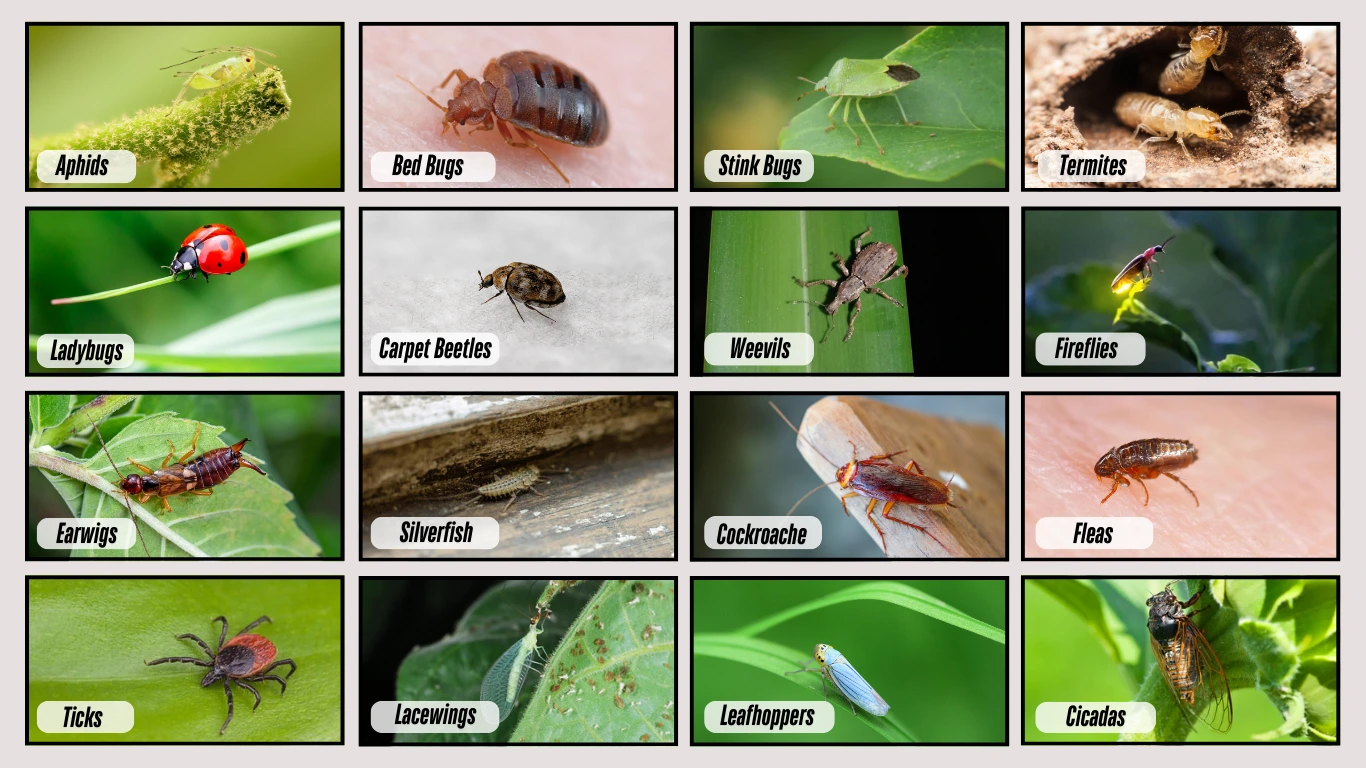
Bugs are a diverse group of insects that play various roles in ecosystems. While some are beneficial, helping in pollination or pest control, others can be destructive to plants, homes, and even human health. Understanding their identification, behavior, and impact can help in effective management.
This guide explores 17 common types of bugs, providing key facts, identification tips, and images to help recognize them easily. Whether you’re dealing with garden pests like aphids or household invaders like bed bugs, knowing their traits can be valuable.
1. Aphids

Aphids are small, sap-sucking insects that are common garden pests. They feed on plant juices, causing leaves to curl, yellow, and distort. Some species can transmit plant viruses, making them even more damaging. However, they have natural predators like ladybugs that help control their population.
Identification
- Size: 1-7 mm
- Color: Green, black, yellow, red, or brown
- Shape: Pear-shaped with long antennae
- Wings: Some have wings, while others are wingless
- Legs: Long, thin legs but move slowly
Facts
- Aphids reproduce rapidly; some species give birth to live young instead of laying eggs.
- They excrete a sticky substance called honeydew, which attracts ants and can lead to sooty mold growth.
- Many aphids form large colonies, especially on the underside of leaves.
2. Bed Bugs
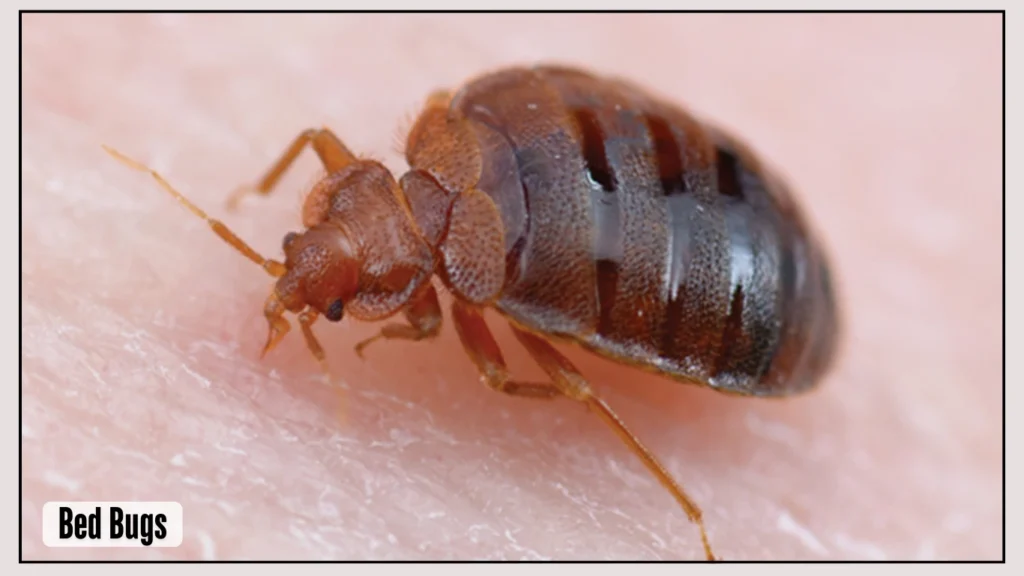
Bed bugs are small, blood-feeding insects that infest homes, especially bedding, furniture, and cracks in walls. They are nocturnal and bite humans, causing itchy red welts. Unlike some pests, they don’t spread diseases but can cause significant discomfort and stress.
Identification
- Size: 4-7 mm
- Color: Reddish-brown
- Shape: Oval, flat body
- Wings: None
- Legs: Six legs, good crawlers
Facts
- Bed bugs can survive months without feeding.
- They are attracted to body heat and carbon dioxide.
- Infestations spread quickly through luggage, furniture, and clothing.
3. Stink Bugs

Stink bugs are shield-shaped insects known for emitting a foul odor when disturbed. They primarily feed on plants, causing damage to fruits and vegetables. While not harmful to humans, they can be a nuisance when they invade homes.
Identification
- Size: 12-17 mm
- Color: Brown, green, or gray
- Shape: Shield-like body
- Wings: Yes, folded over their back
- Legs: Six legs
Facts
- The odor they release is a defense mechanism against predators.
- They enter homes during colder months seeking warmth.
- Some species are agricultural pests, damaging crops like apples and soybeans.
4. Termites

Termites are social insects that live in large colonies and primarily feed on wood. They can cause severe structural damage to homes and buildings. Often mistaken for ants, termites play an essential role in breaking down dead plant material in nature.
Identification
- Size: 4-15 mm
- Color: White, beige, or brown
- Shape: Soft-bodied, straight waist
- Wings: Some species have wings, while workers are wingless
- Legs: Six legs
Facts
- Termites cause billions of dollars in property damage annually.
- They communicate through pheromones and vibrations.
- Some termite species have a queen that can live for decades.
5. Ladybugs
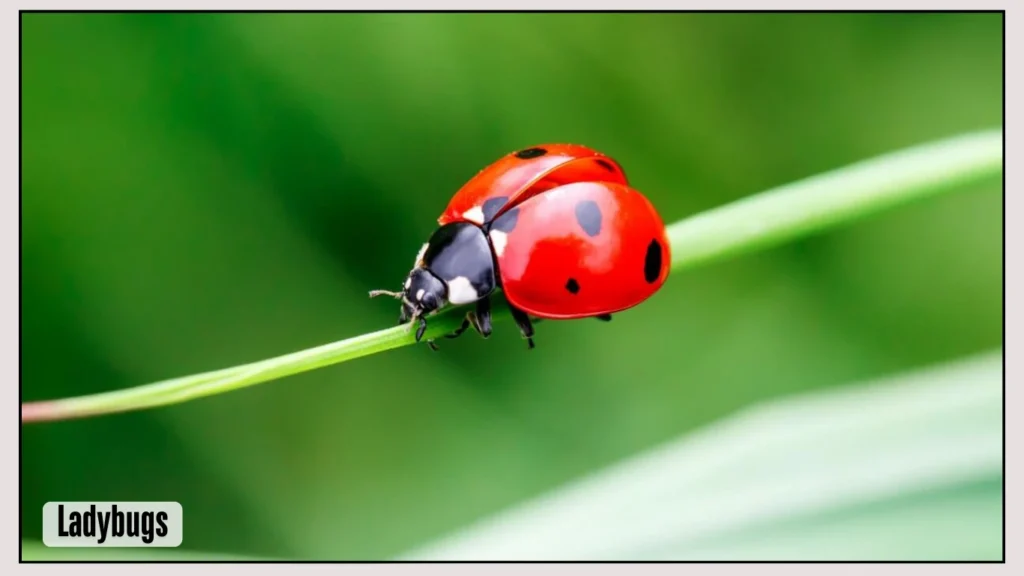
Ladybugs, also known as lady beetles, are beneficial insects that help control garden pests like aphids. They are easily recognizable by their rounded shape and bright-colored bodies with black spots.
Identification
- Size: 1-10 mm
- Color: Red, orange, or yellow with black spots
- Shape: Round, dome-shaped
- Wings: Yes, hidden under spotted wing covers
- Legs: Six legs
Facts
- Ladybugs can eat thousands of aphids in their lifetime.
- Some species release a yellow, foul-smelling liquid when threatened.
- They hibernate in large groups during winter.
6. Carpet Beetles

Carpet beetles are small insects that feed on natural fibers, causing damage to carpets, clothing, and upholstery. The larvae are the primary culprits, as they consume wool, silk, and even pet hair.
Identification
- Size: 2-5 mm
- Color: Black, brown, or spotted
- Shape: Oval, compact body
- Wings: Yes, hard wing covers
- Legs: Six legs
Facts
- Carpet beetle larvae are more destructive than adults.
- They can survive without food for weeks.
- Infestations often start in stored clothing or furniture.
7. Weevils

Weevils are small beetles known for their distinctive elongated snouts. They primarily infest stored grains and dry food products, making them common household pests. Some species also damage plants by feeding on leaves and stems.
Identification
- Size: 2-10 mm
- Color: Brown, black, or reddish
- Shape: Oval body with a long snout
- Wings: Some species have wings, but not all can fly
- Legs: Six legs
Facts
- Weevils lay eggs inside grains, and larvae develop by feeding on them.
- They can infest rice, flour, pasta, and other dry food.
- Some weevil species, like the boll weevil, cause significant agricultural damage.
8. Fireflies

Fireflies, also known as lightning bugs, are bioluminescent insects that produce a natural glow to attract mates. They are commonly seen in warm, humid regions during summer evenings.
Identification
- Size: 5-25 mm
- Color: Black or brown with a yellow-green glow
- Shape: Elongated body with soft wings
- Wings: Yes, hidden under a hard shell when resting
- Legs: Six legs
Facts
- Fireflies use light signals to communicate and find mates.
- Their larvae, called glowworms, also emit light.
- Some firefly species do not glow at all.
9. Earwigs

Earwigs are nocturnal insects with distinctive pincers at the end of their abdomen. Despite myths, they do not crawl into human ears. They primarily feed on decaying plant material, insects, and soft fruits.
Identification
- Size: 5-25 mm
- Color: Brown or black
- Shape: Elongated body with forceps-like pincers
- Wings: Some species have wings, but they rarely fly
- Legs: Six legs
Facts
- Earwig pincers are used for defense and mating displays.
- They are beneficial in gardens as they eat aphids and other pests.
- Some species show maternal care by protecting their eggs.
10. Silverfish

Overview
Silverfish are fast-moving, wingless insects that thrive in humid environments. They are common household pests, feeding on paper, glue, fabric, and starchy materials.
Identification
- Size: 10-15 mm
- Color: Silver or gray
- Shape: Long, tapered body with three tail-like appendages
- Wings: None
- Legs: Six legs
Facts
- Silverfish can survive for weeks without food.
- They are nocturnal and move quickly to avoid predators.
- Their diet includes books, wallpaper, and even clothing.
11. Cockroache

Cockroaches are resilient insects that thrive in various environments, including homes, restaurants, and sewers. They are scavengers and can carry bacteria, making them a health hazard.
Identification
- Size: 10-50 mm
- Color: Brown, black, or reddish
- Shape: Flat, oval body with long antennae
- Wings: Some species have wings but prefer to run
- Legs: Six legs with spines for climbing
Facts
- Cockroaches can survive without food for a month but need water.
- They are one of the oldest insect species, dating back millions of years.
- Some cockroach species can trigger allergies and asthma in humans.
12. Fleas

Overview
Fleas are tiny, blood-sucking parasites that infest pets, wildlife, and sometimes humans. They are known for their ability to jump great distances and their rapid reproduction, making infestations difficult to control.
Identification
- Size: 1-3 mm
- Color: Dark brown or reddish-brown
- Shape: Flat, oval body
- Wings: None
- Legs: Six legs, strong hind legs for jumping
Facts
- Fleas can jump up to 150 times their body length.
- They can survive for months without feeding.
- Flea bites cause intense itching and allergic reactions in some animals and humans.
13. Ticks

Ticks are arachnids that feed on the blood of mammals, birds, and reptiles. They are known for transmitting diseases such as Lyme disease and Rocky Mountain spotted fever.
Identification
- Size: 3-5 mm (larger when engorged)
- Color: Brown, black, or reddish
- Shape: Round, flattened body that swells when feeding
- Wings: None
- Legs: Eight legs
Facts
- Ticks can remain attached to a host for several days while feeding.
- They detect hosts through body heat and carbon dioxide.
- Some species can live for years without a meal.
14. Lacewings

Lacewings are beneficial insects known for their delicate, lacy wings. Their larvae are voracious predators of aphids, mites, and other soft-bodied pests, making them valuable for natural pest control.
Identification
- Size: 10-20 mm
- Color: Green or brown
- Shape: Slender body with large, transparent wings
- Wings: Yes, held tent-like over the body
- Legs: Six legs
Facts
- Lacewing larvae are called “aphid lions” due to their predatory nature.
- Adult lacewings primarily feed on nectar and pollen.
- They use a foul-smelling chemical to deter predators.
15. Leafhoppers

Leafhoppers are small, fast-moving insects that feed on plant sap. They can cause damage by transmitting plant diseases and weakening crops. They are known for their ability to jump quickly when disturbed.
Identification
- Size: 2-15 mm
- Color: Green, yellow, or brown
- Shape: Slender, wedge-shaped body
- Wings: Yes, folded over the back
- Legs: Six legs, strong hind legs for jumping
Facts
- Leafhoppers excrete a sticky substance called “honeydew,” which can lead to mold growth on plants.
- Some species can transmit plant viruses, harming crops.
- They are one of the fastest jumping insects relative to their size.
16. Cicadas

Cicadas are known for their loud, buzzing calls, which they use to attract mates. They have a unique life cycle, with some species emerging only once every 13 or 17 years.
Identification
- Size: 25-50 mm
- Color: Green, brown, or black
- Shape: Large, stout body with a broad head
- Wings: Yes, transparent wings held roof-like over the body
- Legs: Six legs
Facts
- Cicadas produce sounds using specialized organs called tymbals.
- Some cicada species spend most of their lives underground as nymphs.
- They do not bite or sting but can be a nuisance due to their loud calls.
17. Mealybugs

Mealybugs are small, soft-bodied insects covered in a white, waxy coating. They are common plant pests, feeding on sap and weakening plants by causing yellowing, stunted growth, and sooty mold.
Identification
- Size: 1-6 mm
- Color: White or pale yellow
- Shape: Oval, soft-bodied with a cotton-like appearance
- Wings: None
- Legs: Six legs, slow-moving
Facts
- Mealybugs excrete honeydew, which attracts ants and promotes mold growth.
- They thrive in warm, humid environments, often infesting houseplants.
- Some species are difficult to control due to their protective waxy coating.
