
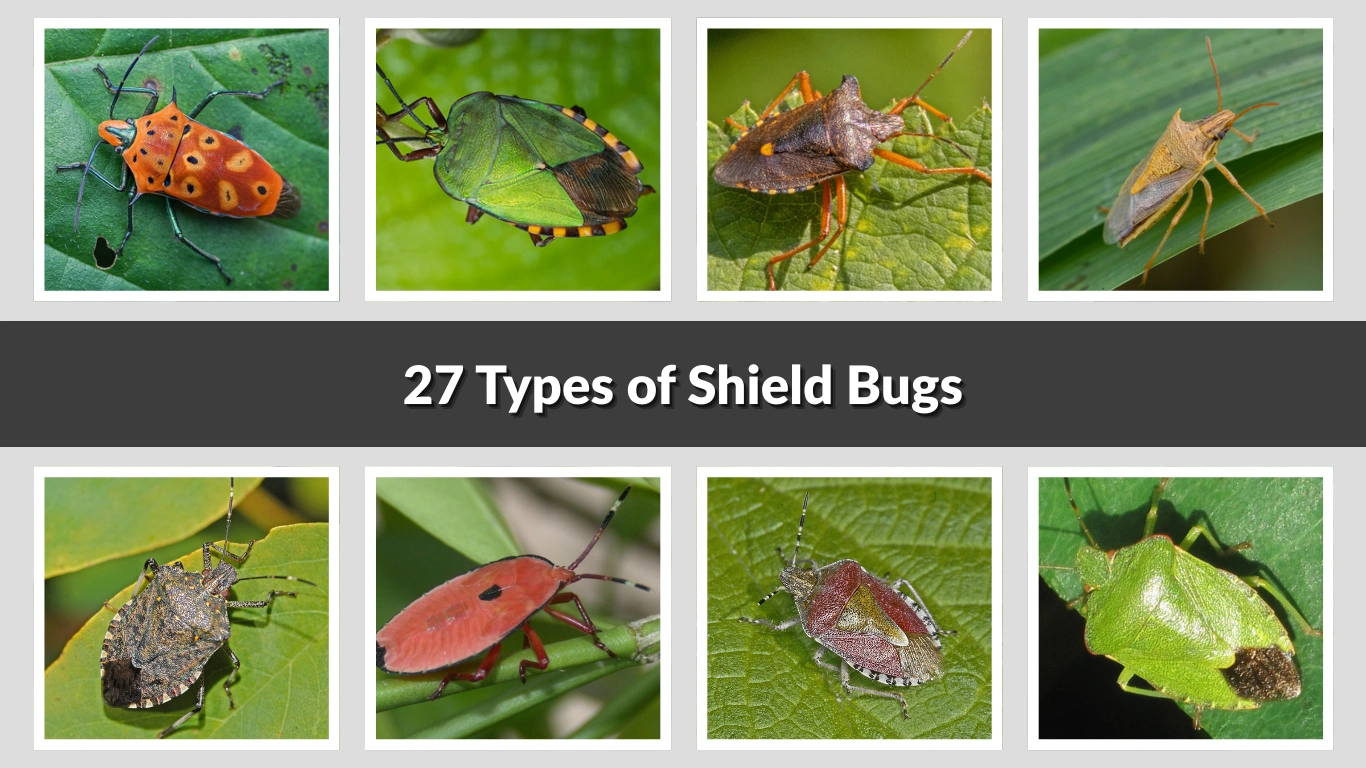
Shield bugs, also known as stink bugs, belong to the family Pentatomidae and are recognized for their distinctive shield-shaped bodies and ability to release a pungent odor as a defense. Found across diverse habitats worldwide, these insects display a wide variety of colors, patterns, and behaviors. Some are beneficial predators, while others are agricultural pests. Below, we explore 27 different types of shield bugs with identification and key details.
1. Green Shield Bug (Palomena prasina)

The green shield bug is one of the most common shield bugs in Europe, recognized for its bright green coloration and shield-shaped body. It thrives in gardens, hedgerows, and woodlands, feeding on a variety of plants. This species plays a role in the ecosystem but is also sometimes seen as a minor agricultural pest.
Identification
- Size: 12–15 mm long
- Shape: Shield-shaped, broad, and flat
- Color: Bright green in summer, turning brownish in winter
- Wings: Fully developed with visible membranous tips
- Antennae: Five-segmented, darker towards the tips
Habitat
The green shield bug prefers warm environments and is often found on shrubs, trees, and crops. It thrives in gardens, hedges, and woodlands, where it feeds on plant sap using its piercing-sucking mouthparts.
Behavior
This species is active from spring through autumn. In colder months, it changes color to brown for camouflage and enters hibernation. Green shield bugs are not aggressive but can emit a pungent odor when disturbed.
Diet
Green shield bugs primarily feed on plant juices, targeting fruits, seeds, and leaves. They are polyphagous, meaning they use a wide range of host plants, including berries, vegetables, and ornamentals.
2. Southern Green Shield Bug (Nezara viridula)
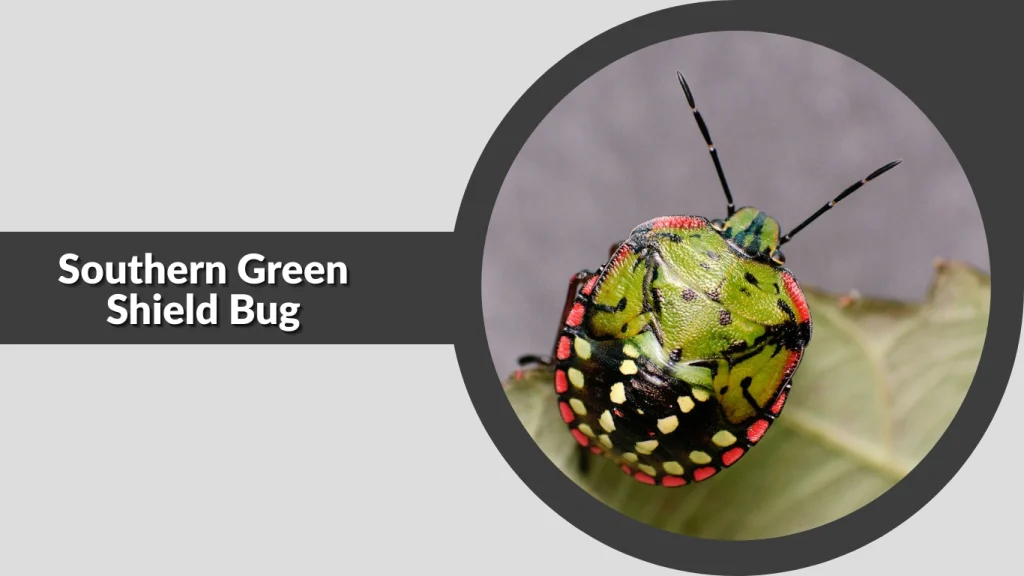
The southern green shield bug is a widespread species found in warmer regions worldwide. It closely resembles the common green shield bug but is considered a more serious agricultural pest due to its preference for crops and fruit-bearing plants.
Identification
- Size: 12–14 mm long
- Shape: Broad shield-shaped body
- Color: Bright green, sometimes with small yellowish or reddish markings
- Distinguishing feature: Three tiny white dots on the scutellum (the central triangular part of the back)
- Antennae: Pale green with darkened tips
Habitat
This species thrives in warm climates and is often found in fields, orchards, gardens, and greenhouses. It prefers cultivated areas where crops and fruit trees are abundant.
Behavior
The southern green shield bug is highly active during summer and can produce multiple generations per year in warm conditions. It is considered invasive in some regions and is known to cause significant crop damage.
Diet
It feeds on a wide range of plants, including beans, tomatoes, peppers, and fruits such as peaches and citrus. Its piercing-sucking mouthparts damage plant tissues, causing discoloration, deformation, and reduced crop yield.
3. Forest Bug (Pentatoma rufipes)

The forest bug, also known as the red-legged shield bug, is a large and distinctive species commonly found in woodlands across Europe. Unlike many green shield bugs, it is mostly brown in color and can often be spotted on oak trees and other hardwoods.
Identification
- Size: 14–16 mm long
- Shape: Large, shield-shaped body with pointed “shoulders”
- Color: Dark brown to reddish-brown
- Legs: Distinctive reddish-orange legs
- Markings: Small yellowish or cream-colored spots on the shield
Habitat
This species is mainly found in forests, woodlands, and parks where oak and deciduous trees are common. It often rests on tree trunks, branches, or foliage during warm weather.
Behavior
Forest bugs are strong fliers and are most active in summer and autumn. They are predatory in nature, feeding on caterpillars and other small insects, but they also consume plant sap when needed.
Diet
Primarily carnivorous, forest bugs prey on caterpillars and other soft-bodied insects, making them beneficial in controlling pests. However, they also feed on tree sap, especially from oak, hazel, and other broad-leaved trees.
4. Bronze Shield Bug (Troilus luridus)
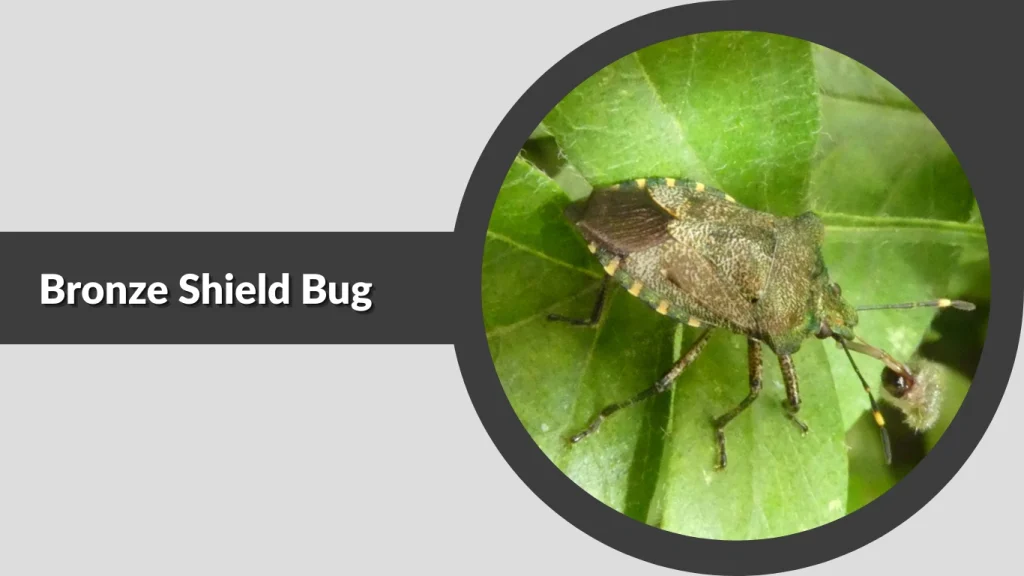
The bronze shield bug is a striking species known for its metallic bronze sheen. Unlike many plant-feeding shield bugs, this one is mainly predatory, feeding on other insects and playing a useful role in controlling pests in forests and gardens.
Identification
- Size: 10–12 mm long
- Shape: Rounded shield-shaped body
- Color: Dark metallic bronze with a glossy surface
- Legs: Dark brown to black, often with a slight sheen
- Distinctive feature: Compact body with subtle bronze or copper reflections
Habitat
This species is commonly found in woodlands, hedgerows, and gardens. It tends to stay on shrubs and trees where other small insects, its main prey, are abundant.
Behavior
The bronze shield bug is a predatory species, often hiding among foliage and waiting for prey. It is less common than the green or forest shield bugs but can be spotted in shaded forested areas.
Diet
Unlike most shield bugs that rely on plant sap, the bronze shield bug is mainly carnivorous. It feeds on caterpillars, aphids, and other small insects, making it beneficial for natural pest control.
5. Red-Legged Shield Bug (Pentatoma bidentata)
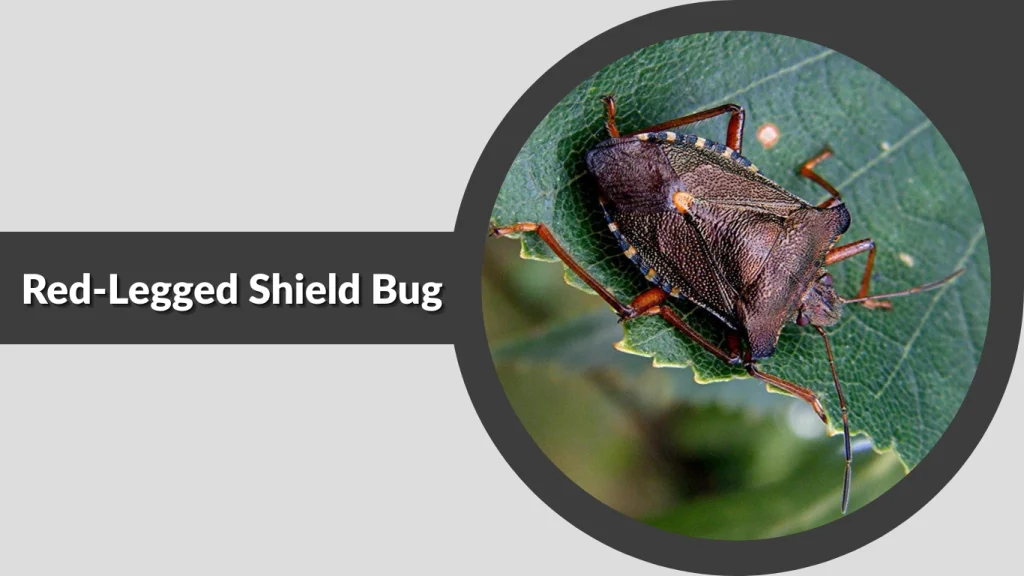
The red-legged shield bug is a close relative of the forest bug, sharing many similarities but distinguishable by subtle features. It is most often found in wooded areas and is a strong predator of caterpillars and other insects.
Identification
- Size: 13–15 mm long
- Shape: Broad shield-shaped body with pointed shoulder extensions
- Color: Dark brown to blackish body
- Legs: Bright reddish-orange legs, giving the species its common name
- Distinctive feature: Two small projections at the tip of the abdomen (“bidentata” means two-toothed)
Habitat
This species inhabits deciduous woodlands, hedgerows, and parks. It is strongly associated with oak and other broad-leaved trees, often found on branches and bark.
Behavior
The red-legged shield bug is mostly active from late spring to autumn. Like other predatory shield bugs, it hunts caterpillars and small soft-bodied insects, while occasionally feeding on plant sap.
Diet
Primarily carnivorous, its diet consists of caterpillars, beetle larvae, and other small invertebrates. When insect prey is scarce, it supplements its diet by sucking sap from tree leaves and fruits.
6. Hawthorn Shield Bug (Acanthosoma haemorrhoidale)
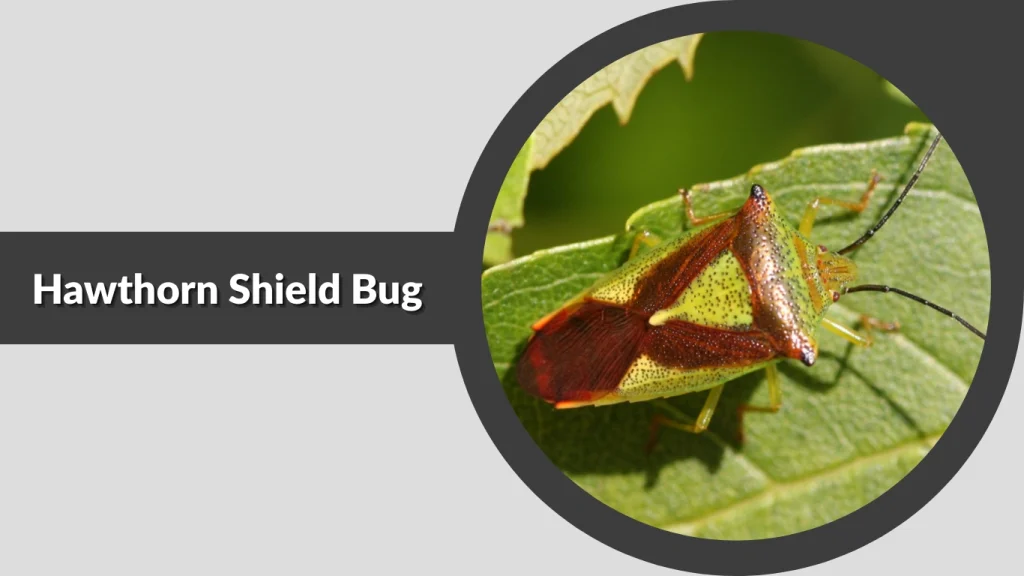
The hawthorn shield bug is one of the most colorful shield bugs in Europe, often mistaken for a leaf because of its vivid green and reddish patterns. It is harmless to humans and mainly associated with hawthorn plants, though it also uses other shrubs and trees.
Identification
- Size: 12–15 mm long
- Shape: Broad shield-shaped body with slightly pointed shoulders
- Color: Bright green with reddish or purplish markings on the sides and wing covers
- Distinctive feature: Red patch near the tip of the abdomen, giving the species its name (haemorrhoidale)
Habitat
This species is most often found on hawthorn bushes, especially during spring and summer. It also inhabits hedgerows, gardens, and woodlands, feeding on a range of shrubs and fruit trees.
Behavior
The hawthorn shield bug is active from late spring until autumn. It is well-camouflaged among leaves and often overlooked. When threatened, it releases a strong odor as a defense mechanism, typical of shield bugs.
Diet
Its main food source is hawthorn berries, but it also feeds on a wide range of fruits and seeds, including rowan, birch, and apple. Unlike predatory shield bugs, it is strictly herbivorous.
7. Parent Bug (Elasmucha grisea)
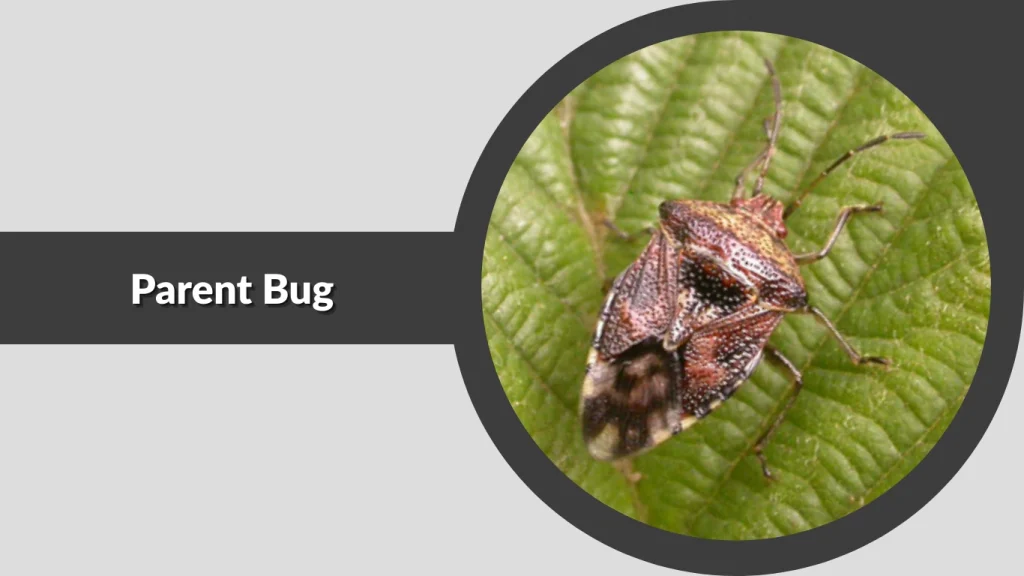
The parent bug is unique among shield bugs because of its maternal care—females actively guard their eggs and young nymphs, protecting them from predators. This behavior makes it one of the most fascinating species in the Pentatomidae family.
Identification
- Size: 10–12 mm long
- Shape: Oval shield-shaped body
- Color: Mottled brown and gray, providing excellent camouflage on bark
- Distinctive feature: Females are often found sitting over egg clusters, guarding them closely
Habitat
Parent bugs are mainly found on birch trees but can also live on alder and other deciduous trees. They prefer woodland edges, parks, and gardens where birch is abundant.
Behavior
This species is well-known for maternal defense. The female bug lays clusters of eggs on leaves or bark and remains with them, shielding them from predators until they hatch. She also guards the nymphs during their early stages, which is unusual for shield bugs.
Diet
The parent bug feeds mainly on the sap of birch leaves, buds, and seeds. Although herbivorous, it plays a minor ecological role in balancing plant growth.
8. Birch Shield Bug (Elasmucha ferrugata)

The birch shield bug is a close relative of the parent bug but can be distinguished by its larger size and more colorful appearance. It is strongly associated with birch trees, where it feeds and reproduces. Like the parent bug, it sometimes shows maternal care, though less extensively.
Identification
- Size: 11–14 mm long
- Shape: Shield-shaped body, slightly elongated compared to other Elasmucha species
- Color: Reddish-brown with green tinges, sometimes with dark patches on the wings
- Legs: Yellowish-brown to reddish
- Distinctive feature: More colorful and slightly larger than the parent bug, with ferruginous (rust-like) shades
Habitat
The birch shield bug is strongly tied to birch trees, both in forests and urban areas. It can be found on birch leaves, branches, and bark in woodlands, gardens, and hedgerows. Occasionally, it may also use alder or hazel as secondary hosts.
Behavior
Adult birch shield bugs are most active in late spring and summer. They bask on birch leaves in sunny weather and hide in bark crevices during cooler periods. Unlike the parent bug, females do not always guard their eggs but sometimes remain nearby. When disturbed, they emit the characteristic shield bug odor as a defense.
Diet
This species is strictly herbivorous, feeding on birch seeds, catkins, and young shoots. Nymphs rely heavily on birch catkins for development, while adults may also feed on sap from leaves.
9. Juniper Shield Bug (Cyphostethus tristriatus)
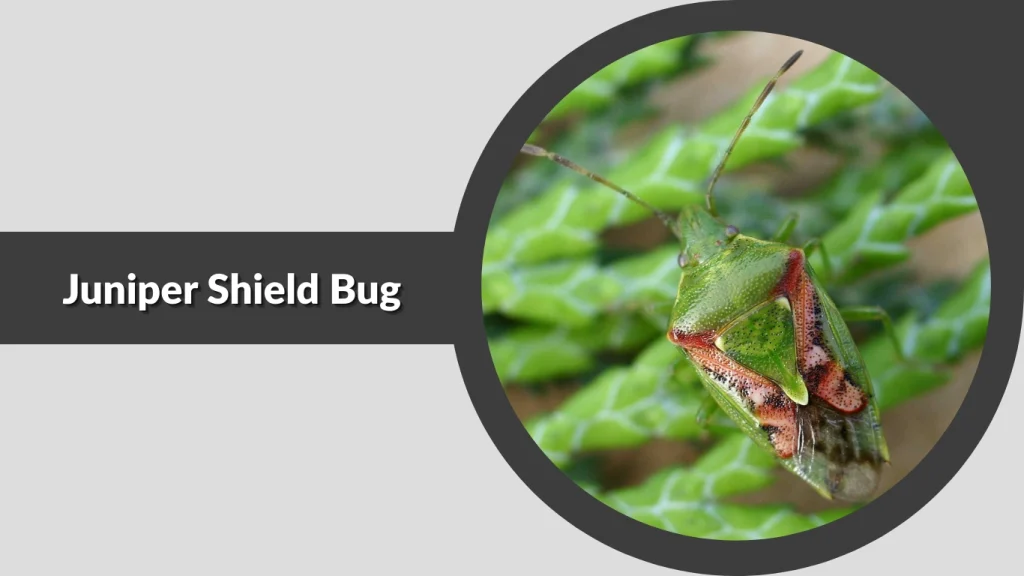
The juniper shield bug is a small but brightly patterned species that has become increasingly common in recent years. It is strongly associated with juniper and cypress plants, where it feeds and shelters.
Identification
- Size: 10–12 mm long
- Shape: Small, oval shield-shaped body
- Color: Bright green with reddish markings along the edges
- Distinctive feature: Three dark longitudinal stripes on the scutellum (the triangular plate on its back)
- Legs: Greenish with slight reddish tones
Habitat
This species is most often found on juniper, cypress, and related coniferous plants. It thrives in gardens, parks, and ornamental plantings, especially where decorative junipers and cypress hedges are grown.
Behavior
The juniper shield bug is active throughout spring and summer, often basking on conifer foliage in sunny conditions. It is a non-aggressive insect and, like many shield bugs, emits a defensive odor when handled. In recent decades, it has expanded its range across Europe, partly due to the popularity of ornamental conifers.
Diet
It feeds mainly on the seeds of juniper and cypress, piercing the seed coats with its mouthparts. Unlike predatory shield bugs, it is entirely herbivorous and poses little threat to crops or gardens, making it mostly harmless to humans.
10. Sloe Shield Bug (Dolycoris baccarum)
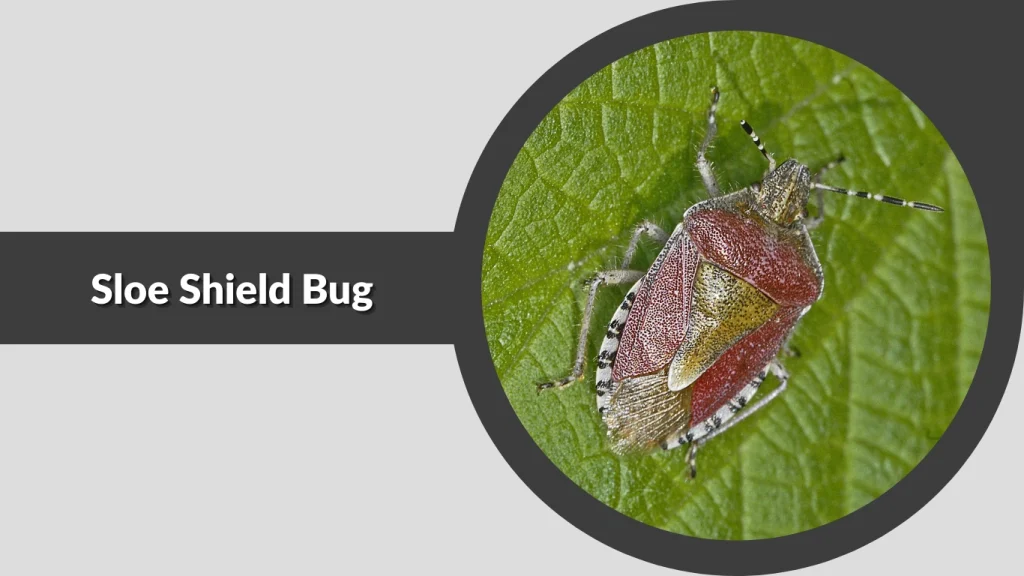
The sloe shield bug, also called the hairy shield bug, is a widespread species across Europe and Asia. It is easily recognized by its reddish-brown coloration and fine hairs covering the body. Often found on shrubs and hedgerows, it is strongly linked with sloe (blackthorn) and other berry-bearing plants.
Identification
- Size: 10–12 mm long
- Shape: Broad, shield-shaped body
- Color: Mottled reddish-brown with darker patches
- Distinctive feature: Fine hairs covering the entire body, giving it a slightly fuzzy appearance
- Antennae: Alternating dark and pale bands
Habitat
The sloe shield bug is commonly found on hedgerows, field edges, and woodlands. It prefers areas with blackthorn (sloe), raspberries, or other berry plants but also feeds on a variety of shrubs and herbaceous plants.
Behavior
This species is active from late spring through autumn and is often seen basking on leaves or feeding on fruits. It hibernates as an adult, often turning darker in winter for camouflage. When threatened, it releases the typical shield bug defensive odor.
Diet
The sloe shield bug is herbivorous, feeding on seeds, berries, and the sap of herbaceous plants and shrubs. It is particularly fond of sloe berries, but will also feed on raspberries, strawberries, and other wild fruits.
11. Gorse Shield Bug (Piezodorus lituratus)
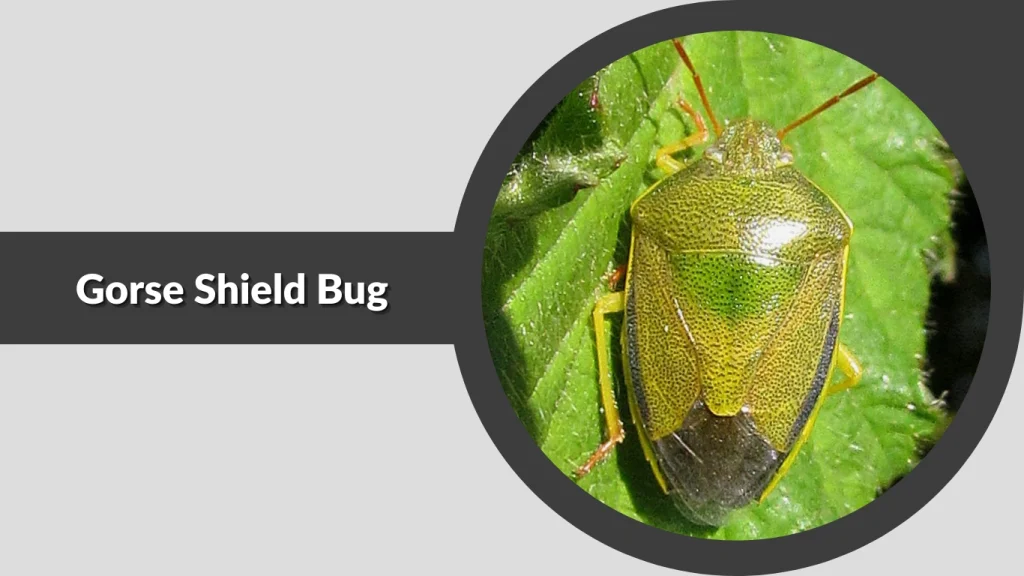
The gorse shield bug is a colorful species that is strongly associated with gorse and broom plants. It is often found in sunny, dry habitats and is well adapted to living among spiny shrubs. Its bright coloration makes it one of the more striking shield bugs in Europe.
Identification
- Size: 10–12 mm long
- Shape: Shield-shaped, slightly elongated body
- Color: Bright green with distinctive purple or reddish markings along the edges and wings
- Distinctive feature: Strong seasonal color variation — green in spring and summer, turning purplish in autumn before hibernation
- Antennae: Green with darker tips
Habitat
This species is most commonly found on gorse, broom, and other leguminous shrubs. It prefers dry, sunny environments such as heathlands, meadows, and hedgerows where these plants grow in abundance.
Behavior
The gorse shield bug is highly seasonal in appearance. In spring and summer, it blends with green foliage, but in autumn, its purplish hues provide camouflage among aging plants. Like other shield bugs, it releases a defensive odor if disturbed.
Diet
It feeds mainly on the seeds and pods of gorse, broom, and related legumes. By piercing the seed pods, it extracts nutrients and plays a minor role in limiting seed spread.
12. Hairy Shield Bug (Dolycoris penicillatus)

The hairy shield bug is closely related to the sloe shield bug but is less common and has a denser covering of hairs, giving it a distinctly fuzzy look. It inhabits grasslands, meadows, and hedgerows where it feeds on a variety of plants.
Identification
- Size: 10–13 mm long
- Shape: Broad shield-shaped body
- Color: Brownish with reddish and yellowish mottling
- Distinctive feature: Dense covering of short hairs across the entire body, more noticeable than in Dolycoris baccarum
- Antennae: Banding pattern with alternating pale and dark sections
Habitat
This species is typically found in grassy areas, meadows, and hedgerows. It is also seen in gardens where wild plants and flowers are plentiful. Compared to the sloe shield bug, it is less dependent on shrubs and more on herbaceous plants.
Behavior
The hairy shield bug is active during spring and summer, basking on plants in sunny conditions. It is less widespread than other shield bugs but can appear locally abundant. Like its relatives, it emits a strong odor if handled or disturbed.
Diet
This species is herbivorous, feeding on the seeds and stems of various grasses and wildflowers. It occasionally feeds on berries or shrubs if available but mainly relies on wild herbs.
13. Corn Shield Bug (Eysarcoris venustissimus)

The corn shield bug is a small but attractive species with a compact body and distinctive patterned markings. Despite its name, it is not a major pest of cereal crops but is more often found in grasslands and meadows feeding on wild plants.
Identification
- Size: 5–7 mm long (much smaller than many other shield bugs)
- Shape: Rounded shield-shaped body, almost circular
- Color: Dark brown to black with golden or bronze markings on the scutellum
- Distinctive feature: Compact, glossy body with intricate mottled patterns
- Antennae: Short, dark with pale tips
Habitat
Corn shield bugs are usually found in grassy habitats, meadows, and field edges. They are often seen resting on grasses, clover, and low-growing plants. Unlike larger shield bugs, they rarely inhabit trees or shrubs.
Behavior
This small shield bug is active throughout summer, often overlooked because of its size and camouflage. It is generally harmless to crops and considered a minor species of interest in agriculture.
Diet
The corn shield bug feeds on the sap of grasses, clovers, and herbaceous plants. It may also use seeds and small fruits as food sources, but it is not a significant pest for corn or cereals despite its common name.
14. Woundwort Shield Bug (Eysarcoris aeneus)

The woundwort shield bug is a small, rounded species often found on plants from the mint family, especially woundworts. It is less known than larger shield bugs but has an attractive metallic sheen that makes it stand out under close observation.
Identification
- Size: 5–7 mm long
- Shape: Rounded, compact shield-shaped body
- Color: Dark bronze to metallic green with subtle golden reflections
- Distinctive feature: Smooth, glossy appearance with a metallic shine that differentiates it from the corn shield bug
- Antennae: Short, dark with slightly pale bands
Habitat
This species is strongly associated with woundworts and other members of the mint family. It is typically found in meadows, woodland edges, and damp grassy areas where these plants grow.
Behavior
The woundwort shield bug is active during the warmer months, often basking on the upper leaves of woundwort plants. Its metallic sheen provides camouflage in sunlight, and like others in its family, it releases a strong odor when disturbed.
Diet
It feeds primarily on the sap of woundwort and related plants in the mint family. Although it pierces stems and seeds to extract nutrients, it is not considered a crop pest and has little agricultural importance.
15. Two-Spotted Shield Bug (Peribalus strictus)

The two-spotted shield bug is a widespread species that is often found in dry, open habitats. It is named for the two distinctive pale spots that can usually be seen on its scutellum, though these may vary in size and brightness.
Identification
- Size: 9–11 mm long
- Shape: Elongated shield-shaped body with slightly pointed shoulders
- Color: Mottled brown, green, and yellow with darker patches
- Distinctive feature: Usually two pale or yellowish spots on the scutellum (though sometimes faint)
- Antennae: Dark with alternating pale bands
Habitat
This species thrives in dry grasslands, field edges, scrublands, and sandy soils. It can also be found on agricultural land where wild plants and weeds are abundant.
Behavior
The two-spotted shield bug is well camouflaged against dry vegetation and soil, making it difficult to spot. It is active through spring and summer, often seen sunning itself on low plants. When threatened, it produces a sharp odor as defense.
Diet
It feeds mainly on seeds of herbaceous plants, including clovers, composites, and grasses. Its preference for wild plants means it is not generally harmful to crops, though it may occasionally pierce agricultural weeds.
16. Spined Shield Bug (Picromerus bidens)

The spined shield bug is a robust predatory species, easily recognized by the sharp spines on its “shoulders.” Unlike many shield bugs that are herbivorous, this one actively hunts other insects, making it a natural ally for pest control.
Identification
- Size: 11–14 mm long
- Shape: Broad shield-shaped body with two sharp spines on the pronotum (shoulder area)
- Color: Dark brown to reddish-brown with lighter edges
- Distinctive feature: Prominent pointed spines projecting from each shoulder
- Antennae: Dark with faint pale bands
Habitat
This species is found in woodlands, hedgerows, meadows, and gardens. It often lives on shrubs and low vegetation where prey insects, such as caterpillars, are abundant.
Behavior
The spined shield bug is a strong predator, using its sharp mouthparts to pierce and feed on other insects. It is active from spring through autumn and is often seen hunting on leaves and stems. When disturbed, it emits the typical shield bug odor.
Diet
Unlike most shield bugs, it is largely carnivorous. It preys on caterpillars, beetle larvae, and other soft-bodied insects, although it may also occasionally sip sap from plants. Its predatory nature makes it beneficial for natural pest control in gardens and farmlands.
17. Blue Shield Bug (Zicrona caerulea)
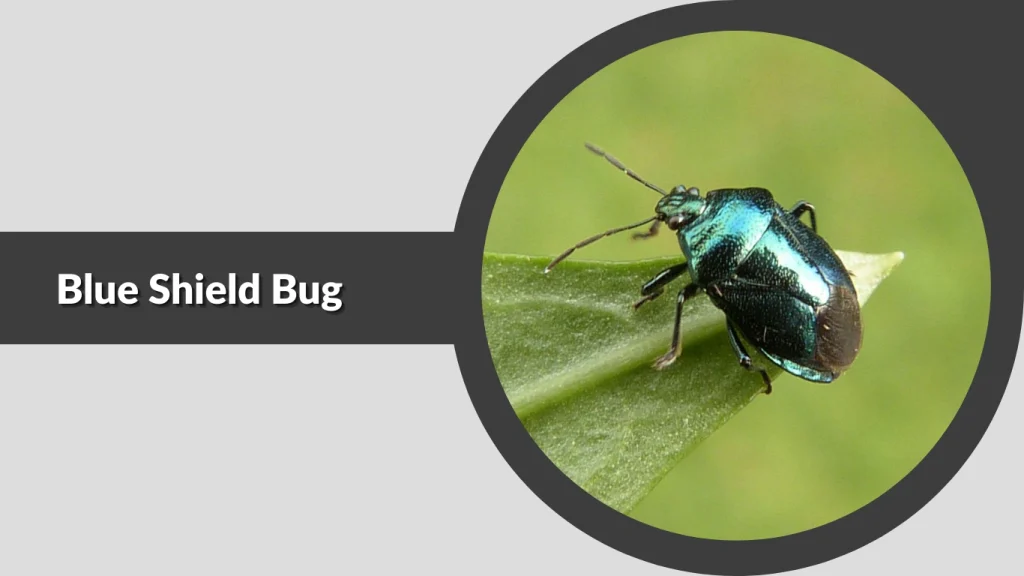
The blue shield bug is one of the most striking shield bugs, recognized for its metallic blue or bluish-green coloration. It is a widespread predatory species that plays a valuable role in controlling agricultural pests.
Identification
- Size: 5–7 mm long (small compared to many other shield bugs)
- Shape: Rounded, compact shield-shaped body
- Color: Shiny metallic blue or bluish-green, with a smooth surface
- Distinctive feature: Uniform metallic sheen without complex markings
- Antennae: Dark, slender, and proportionally long for its size
Habitat
This species inhabits grasslands, meadows, field edges, and gardens. It is often associated with areas where its prey, leaf beetle larvae and other small insects, are abundant.
Behavior
The blue shield bug is a strong predator, actively hunting in sunny conditions. It is most common from spring to late summer and is often overlooked because of its small size, despite its bright metallic sheen. Like others in its family, it releases a strong odor if threatened.
Diet
Primarily carnivorous, this bug feeds on the larvae of leaf beetles (especially Altica species), caterpillars, and other soft-bodied insects. Its role in reducing pest populations makes it an important beneficial insect in both natural and agricultural environments.
18. Yellow Shield Bug (Carpocoris fuscispinus)
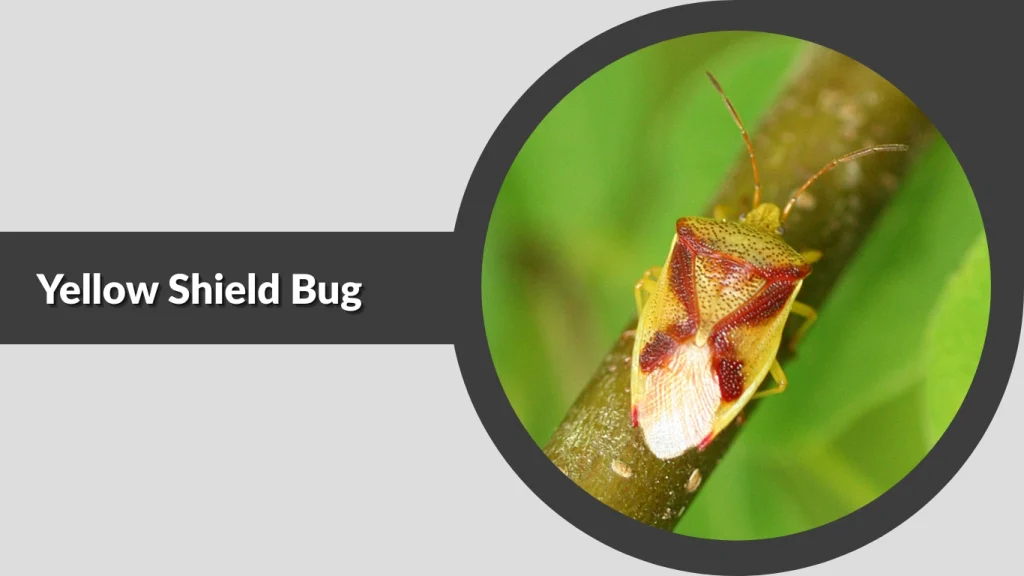
The yellow shield bug is a bright and colorful species that is often seen in meadows and gardens during summer. Its vivid yellow to orange tones and distinctive markings make it easy to spot among wildflowers and grasses.
Identification
- Size: 10–12 mm long
- Shape: Broad shield-shaped body with rounded edges
- Color: Yellow to orange, often with darker brown or black markings
- Distinctive feature: Slightly darker spines on the pronotum (shoulder area), giving the species name fuscispinus (“dark-spined”)
- Antennae: Alternating pale and dark bands
Habitat
This species is found in grasslands, meadows, hedgerows, and gardens. It prefers sunny open areas with abundant wildflowers and low vegetation where it can feed and reproduce.
Behavior
The yellow shield bug is active in the warmest months of the year, often seen basking on flower heads and seed pods. It relies heavily on camouflage among yellowing vegetation and, like its relatives, emits a defensive odor when disturbed.
Diet
It feeds on the seeds and stems of various herbaceous plants, particularly composites and legumes. Although it pierces seed pods to extract nutrients, it is not considered a serious pest.
19. Bordered Shield Bug (Stagonomus venustissimus)
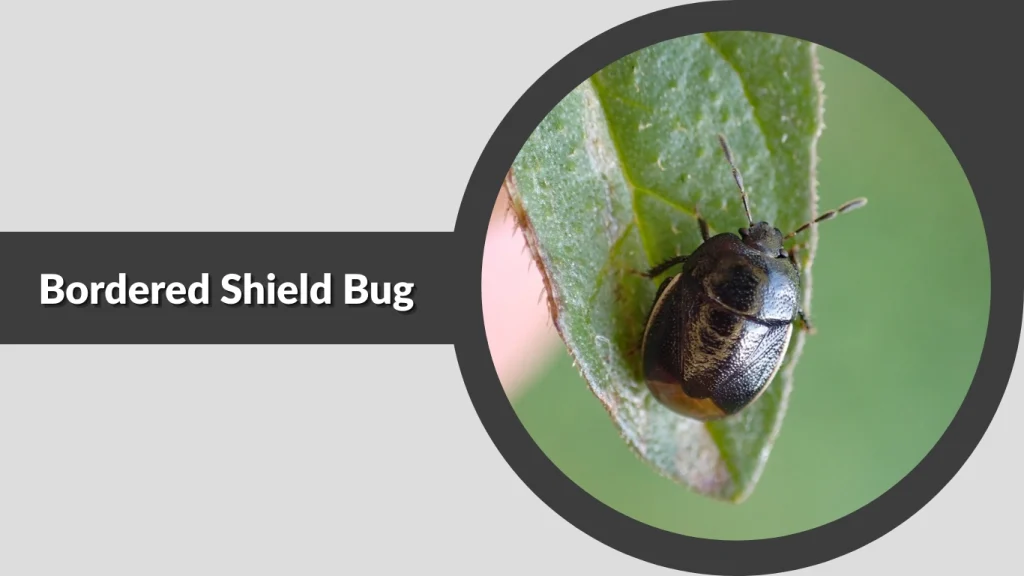
The bordered shield bug is a striking species, easily recognized by its dark body with contrasting pale edges around the pronotum and abdomen. It is less common than some other shield bugs but can be found in warm, sunny habitats with plenty of wild plants.
Identification
- Size: 8–10 mm long
- Shape: Compact, oval shield-shaped body
- Color: Dark brown to black with pale yellowish or whitish margins along the body edges
- Distinctive feature: Strongly marked pale border contrasting with the darker central body
- Antennae: Dark with subtle pale banding
Habitat
This species is usually found in dry grasslands, scrublands, and field margins. It favors areas with wildflowers and low plants, often near sunny slopes or sandy soils.
Behavior
The bordered shield bug is most active during summer, often seen resting on seed heads and leaves. It uses its distinct coloration both as camouflage and as a warning to predators. Like most shield bugs, it defends itself by releasing a pungent odor when disturbed.
Diet
It feeds mainly on the seeds of herbaceous plants, particularly composites and legumes. Its feeding has little agricultural impact and is mostly confined to wild flora.
20. Orange Shield Bug (Carpocoris purpureipennis)
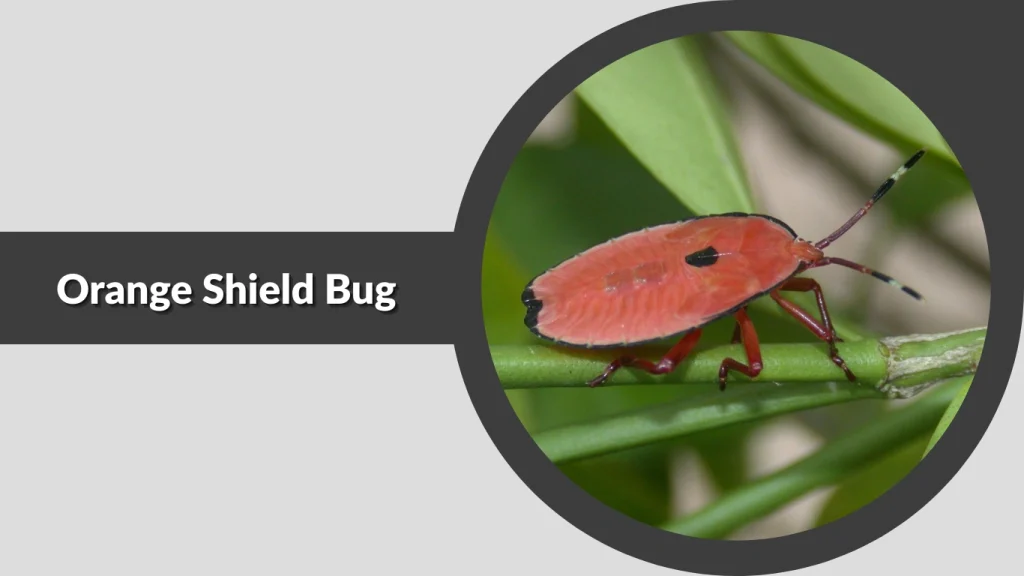
The orange shield bug is one of the most colorful members of the shield bug family. Its bright orange to reddish tones with dark markings make it very noticeable, especially in sunny meadows and fields during late summer.
Identification
- Size: 10–13 mm long
- Shape: Broad shield-shaped body with slightly rounded shoulders
- Color: Orange to reddish with black or dark brown markings across the wings and pronotum
- Distinctive feature: Variable color forms, sometimes leaning more yellowish or reddish, but always with darker patches
- Antennae: Banded with alternating pale and dark sections
Habitat
This species thrives in meadows, fields, hedgerows, and gardens. It prefers sunny environments with plenty of flowering and seeding plants where it can feed and breed.
Behavior
The orange shield bug is highly active during the summer months, often basking on wildflowers and seed pods. Its bright colors help it blend into flowers but also serve as a deterrent to predators. Like others in its family, it emits a foul odor when threatened.
Diet
It feeds mainly on the seeds and stems of herbaceous plants, especially composites and legumes. It is not considered a serious pest, though large numbers can sometimes be found on wildflower patches.
21. Brown Marmorated Stink Bug (Halyomorpha halys)

The brown marmorated stink bug is an invasive species originally from East Asia that has spread widely across North America and Europe. It is notorious as both an agricultural pest and a household nuisance, often invading homes during autumn to overwinter.
Identification
- Size: 12–17 mm long
- Shape: Broad, shield-shaped body
- Color: Mottled brown with a marbled (marmorated) pattern across the back
- Distinctive feature: Alternating dark and light bands on the antennae and edges of the abdomen
- Wings: Light brown with darker tips
Habitat
This species is highly adaptable and found in orchards, farms, gardens, woodlands, and urban areas. It shelters in houses, barns, and sheds during winter, making it one of the most common shield bugs encountered indoors.
Behavior
Brown marmorated stink bugs are strong fliers and very mobile. They enter homes in large numbers in autumn, seeking warmth and shelter. When crushed or disturbed, they release a strong, unpleasant odor that gives them their common name.
Diet
It is highly polyphagous, feeding on more than 100 plant species. Its diet includes fruits (apples, peaches, pears), vegetables (tomatoes, beans, corn), and ornamental plants. Feeding causes discoloration, scarring, and crop losses, making it a serious agricultural pest.
22. Rice Stink Bug (Oebalus pugnax)

The rice stink bug is a major agricultural pest in North America, particularly in southern states where rice is cultivated. Its feeding damages developing grains, making it a significant concern for farmers.
Identification
- Size: 9–12 mm long
- Shape: Elongated shield-shaped body, more slender than many other shield bugs
- Color: Pale brown to yellowish-tan, sometimes with faint darker markings
- Distinctive feature: Elongated head and sharp piercing mouthparts adapted for feeding on grains
- Antennae: Long and slender, pale with darker tips
Habitat
As its name suggests, the rice stink bug is strongly associated with rice fields. However, it can also be found in wild grasses, sorghum, wheat, and other cereal crops, often moving between cultivated and wild hosts.
Behavior
This species is highly active during the growing season of rice and other grains. Adults and nymphs congregate in large numbers on developing seed heads, where they feed continuously. They are strong fliers and disperse easily between fields.
Diet
The rice stink bug feeds primarily on developing rice grains, sucking out nutrients and leaving empty husks or shriveled kernels. It also feeds on wild grasses and other cereals, but rice remains its main host plant. Its feeding reduces both yield and grain quality.
23. Cabbage Stink Bug (Eurydema oleracea)

The cabbage stink bug is a brightly patterned shield bug that is considered a pest of brassica crops. Its striking coloration makes it easy to recognize, and it is commonly found in agricultural fields and gardens across Europe and Asia.
Identification
- Size: 8–10 mm long
- Shape: Broad, rounded shield-shaped body
- Color: Shiny black with vivid red, orange, or yellow markings on the pronotum and wings
- Distinctive feature: Color pattern is highly variable but always includes bold contrasting patches
- Antennae: Dark with lighter banding near the tips
Habitat
This species thrives in cultivated fields, especially where cabbages, kale, mustard, or other brassica crops are grown. It is also found in meadows and gardens where wild cruciferous plants grow.
Behavior
The cabbage stink bug is active throughout the warmer months, often gathering in groups on leaves and stems of host plants. It can overwinter as an adult, sheltering under plant debris or in soil, reappearing in spring.
Diet
It feeds mainly on plants in the cabbage family (Brassicaceae). By piercing leaves and stems, it causes discolored patches and wilting, which can reduce crop quality. Heavy infestations may lead to significant agricultural damage.
24. Crucifer Shield Bug (Eurydema dominulus)
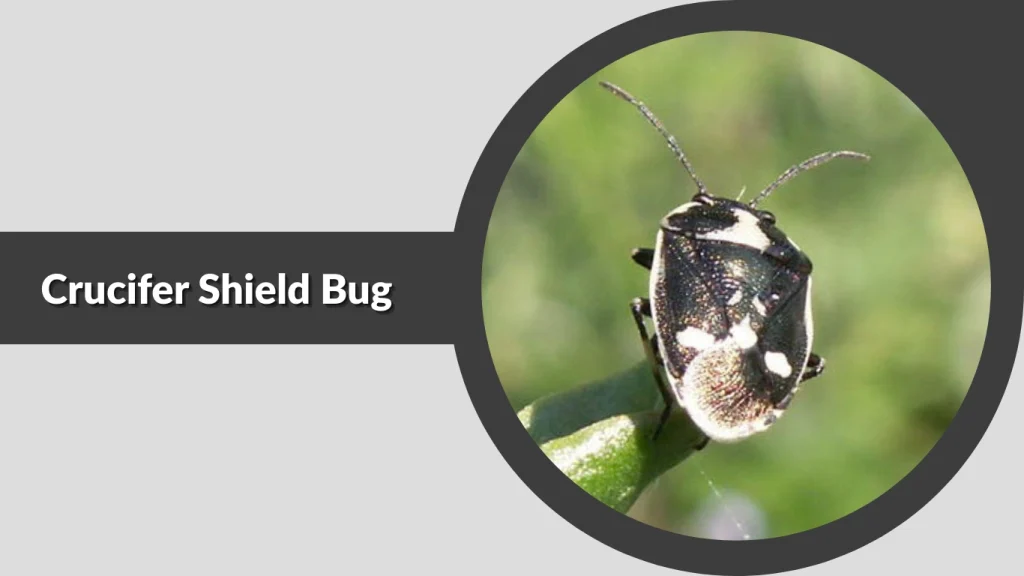
The crucifer shield bug is a close relative of the cabbage stink bug and is also brightly patterned. It is found mainly on cruciferous plants, both wild and cultivated, and can be a localized pest in agricultural areas.
Identification
- Size: 8–10 mm long
- Shape: Rounded shield-shaped body, compact and slightly convex
- Color: Glossy black with bold red, orange, or yellow markings forming a symmetrical pattern
- Distinctive feature: Brighter and more sharply defined markings than Eurydema oleracea
- Antennae: Dark, with slight pale segmentation near the tips
Habitat
This species is strongly associated with cruciferous plants, particularly wild mustards and brassicas. It inhabits gardens, farmlands, and meadows where these host plants grow.
Behavior
The crucifer shield bug is most active in spring and summer, often clustering in groups on leaves and stems. It overwinters as an adult, sheltering under vegetation or in soil, and emerges in spring to feed and reproduce.
Diet
It feeds mainly on wild crucifers and crops such as cabbage, mustard, and kale. By piercing leaves and stems, it causes yellowing and spotting, but it is generally less damaging than the cabbage stink bug unless present in high numbers.
25. Red-Legged Stink Bug (Edessa rufomarginata)

The red-legged stink bug is a large and striking species native to Central and South America. It is well known for its reddish legs and margins that contrast sharply with its darker body. This species is not only an important part of local ecosystems but also a potential pest of some cultivated plants.
Identification
- Size: 14–17 mm long (larger than many common shield bugs)
- Shape: Broad, shield-shaped body with strong, straight edges
- Color: Dark brown to blackish central body with reddish margins along the pronotum and abdomen
- Legs: Bright reddish legs that are the most distinctive feature
- Antennae: Long and dark, sometimes with faint pale segmentation
Habitat
The red-legged stink bug is typically found in forests, agricultural fields, and grasslands across Latin America. It inhabits areas with both wild plants and crops, often moving between natural and cultivated habitats depending on the season.
Behavior
This bug is most active in the warm months, gathering on host plants in large numbers. Adults are strong fliers and disperse easily. Like other stink bugs, it uses its scent glands to emit a pungent odor when threatened. In agricultural regions, it can sometimes form localized outbreaks.
Diet
The red-legged stink bug is polyphagous, feeding on a variety of plants, including beans, soy, corn, and other crops. It pierces developing fruits, seeds, and pods, causing deformities and yield loss. In the wild, it also feeds on seeds and fruits of native plants, helping balance plant populations.
26. Tropical Shield Bug (Peltosticta spp.)

The tropical shield bug refers to a group of brightly patterned shield bugs found in tropical and subtropical regions. These bugs are often admired for their vivid colors and distinctive markings, which make them stand out from more common, camouflaged species.
Identification
- Size: 10–15 mm long, varying slightly among species
- Shape: Broad, shield-shaped body with rounded edges
- Color: Brightly colored—often green, yellow, red, or orange with contrasting black spots or patterns
- Distinctive feature: Striking, ornate color patterns unique to each species in the group
- Antennae: Usually dark with subtle pale banding
Habitat
Tropical shield bugs inhabit rainforests, plantations, gardens, and agricultural areas across Asia, Africa, and South America. They are typically found on shrubs, fruit trees, and flowering plants where they feed and reproduce.
Behavior
These shield bugs are active year-round in warm climates. Their bright coloration often serves as warning signals to predators (aposematism), and like all stink bugs, they emit a strong odor when disturbed. They are relatively slow-moving and rely heavily on camouflage and chemical defense.
Diet
Most species in this group are herbivorous, feeding on fruit, seeds, and plant sap. They are commonly seen on tropical crops and ornamental plants, sometimes becoming minor pests.
27. Spotted Shield Bug (Cosmopepla lintneriana)

The spotted shield bug, also known as the twice-stabbed stink bug, is a small North American species recognized by its distinctive black body with bold white or yellowish spots. Despite its small size, its striking pattern makes it easily identifiable.
Identification
- Size: 5–7 mm long
- Shape: Small, rounded shield-shaped body
- Color: Glossy black with two prominent pale spots (white or yellowish) on the scutellum
- Distinctive feature: High contrast between the shiny black body and bright spots, giving it the “twice-stabbed” look
- Antennae: Dark, proportionally short
Habitat
This species is native to North America and commonly found in gardens, meadows, fields, and woodlands. It is especially associated with plants in the mint and aster families.
Behavior
The spotted shield bug is active in summer, often seen resting on host plants or flowers. Its small size and dark coloration make it easy to overlook unless closely observed. Like others in its family, it releases a foul odor if threatened.
Diet
This bug feeds on the sap of herbaceous plants, particularly composites and mints. It uses its piercing-sucking mouthparts to feed on stems, leaves, and developing seeds. While it may be seen on crops, it is not considered a major pest.
