

Finding a ground beetle inside your house can be surprising and sometimes even unsettling, especially when you are not sure whether these insects are dangerous. Ground beetles are one of the most common beetle species you may encounter indoors. While they usually prefer outdoor habitats, certain conditions draw them inside homes, creating confusion about whether they pose any threat. Understanding their behavior, identification, and impact will help you deal with them effectively.
What Are Ground Beetles?
Ground beetles belong to the family Carabidae, which includes over 40,000 species worldwide. These insects are mostly outdoor dwellers, playing an important role in natural pest control. They are predatory beetles, feeding on insects like caterpillars, ants, slugs, and other pests that can harm crops or gardens. Because of this, they are considered beneficial in agriculture and gardening.
However, despite being helpful outdoors, ground beetles may occasionally find their way indoors. Unlike pests such as cockroaches or ants, they are not searching for food scraps. Instead, they usually enter homes accidentally, either in search of shelter or attracted to artificial lighting at night.
Identification of Ground Beetles

Recognizing a ground beetle is the first step in distinguishing it from other household insects such as cockroaches. They have a distinctive appearance that makes them relatively easy to identify.
Key identification features include:
- Size: Most species range between 0.5 to 1 inch long, though some can grow larger depending on the type.
- Body Color: Shiny black, dark brown, or occasionally metallic hues of blue or green.
- Shape: Flattened, elongated body with long legs that allow quick movements.
- Head & Jaws: A prominent head equipped with strong mandibles used for hunting prey.
- Antennae: Long and slender, helping them sense their environment.
Ground beetles are often mistaken for cockroaches due to their dark coloration and speed. But unlike cockroaches, beetles have hard wing covers (elytra) with visible ridges or grooves running along their back.
Scientific Name and Classification
- Family: Carabidae
- Common Genera: Carabus, Pterostichus, Harpalus, and others.
These species vary slightly in size and color, but their overall body shape remains similar, making them recognizable once you know the traits.
Are Ground Beetles Dangerous in the House?

One of the most common concerns when spotting a ground beetle indoors is whether they are dangerous. The truth is, ground beetles are not harmful to humans or pets. They do not carry diseases like cockroaches, nor do they infest food supplies.
- No venom or poison: Ground beetles are non-venomous and do not release toxins.
- Not aggressive: They avoid human contact and prefer to hide in dark, undisturbed areas.
- No structural damage: Unlike termites or carpenter ants, ground beetles do not damage wood or fabric in your home.
That said, they can be a nuisance when present in large numbers. Some homeowners may feel alarmed by their sudden appearance, especially when they are flying toward lights at night.
Ground Beetle Bite – Should You Worry?
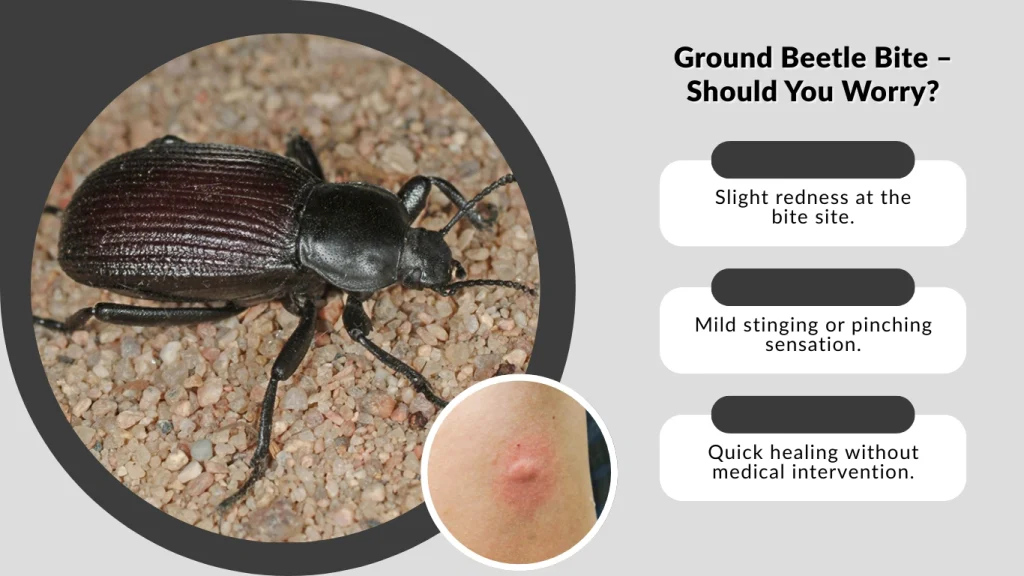
Although ground beetles have strong mandibles, they rarely bite humans. A bite typically occurs only if the beetle is handled roughly or trapped against the skin. Even then, the bite is not venomous and is generally no more painful than a mild pinch.
Symptoms of a ground beetle bite may include:
- Slight redness at the bite site.
- Mild stinging or pinching sensation.
- Quick healing without medical intervention.
Most people never experience bites from ground beetles. In fact, they are far more interested in hunting smaller insects than interacting with people.
Can Ground Beetles Fly Inside Homes?

Ground beetles are excellent runners, but certain species are also capable fliers. When they accidentally enter houses, they are often attracted by artificial lights, which can confuse them and cause them to fly indoors through open windows or doors.
- Some ground beetles are wingless, staying close to the ground.
- Flying beetles usually hover near lamps, ceiling lights, or porch lights.
- Their clumsy flight may cause them to bump into walls or people, leading to unnecessary panic.
If you notice beetles flying around your light sources at night, turning off unnecessary lights or using yellow “bug-safe” bulbs can significantly reduce their presence.
Why Are Ground Beetles in My House?

Ground beetles do not intentionally seek out human homes for food. Their presence indoors is usually accidental. There are several reasons they may enter:
Attracted to Lights: Like many nocturnal insects, ground beetles are drawn to bright lights, which may lead them inside through cracks or open doors.
Shelter: During hot summers, rainy seasons, or sudden temperature drops, beetles may wander indoors for temporary shelter.
Entry Points: Small cracks in doors, gaps in windows, or basement vents provide easy access.
Indoor Prey: Occasionally, they may follow smaller insects that have already entered the home.
While their sudden appearance might cause concern, it’s important to remember they are not invading for food or nesting. They usually leave on their own once conditions outside become favorable again.
Ground Beetle vs. Cockroach: Key Differences

Because of their dark, shiny appearance and fast movements, ground beetles are often mistaken for cockroaches. However, there are several key differences:
Body Shape: Ground beetles have harder wing covers with grooves or ridges, while cockroaches have softer, smoother backs.
Diet & Behavior: Beetles are predators, feeding on insects, whereas cockroaches are scavengers that consume crumbs, grease, and human food.
Risks: Cockroaches spread bacteria, contaminate food, and trigger allergies. Ground beetles are harmless and do not transmit diseases.
Habitat: Cockroaches thrive indoors, while ground beetles prefer outdoor environments and only enter by mistake.
Quick Comparison Table:
| Feature | Ground Beetle | Cockroach |
| Body Texture | Hard, ridged back | Smooth back |
| Diet | Predatory (insects, pests) | Scavenger (food scraps) |
| Health Risks | Harmless | Spreads diseases, allergens |
| Habitat Preference | Outdoors | Indoors |
| Attracted to Light | Yes | Rarely |
How to Get Rid of Ground Beetles in the House

Ground beetles don’t reproduce indoors, which means once you remove them, the problem usually stops. Still, taking preventive and removal steps ensures they don’t keep coming back.
Natural Methods
- Seal Entry Points: Use caulk or weather stripping to close cracks in windows, doors, and basements.
- Reduce Lighting: Keep porch and window lights off when not needed, or use yellow insect-repelling bulbs.
- Remove Clutter: Vacuum regularly and eliminate hiding spots like cardboard piles or basement debris.
- Traps: Sticky traps can help catch individual beetles wandering indoors.
Chemical & Professional Options
- Insecticidal Sprays: Residual sprays around entry points may help if you experience frequent intrusions.
- Professional Pest Control: In cases where beetles appear in large numbers, a pest control service can identify the source and apply safe treatments.
Preventing Ground Beetles from Returning
Prevention is always easier than repeated removal. Here are some long-term steps:
- Seal Gaps: Ensure all doors and windows fit tightly without gaps.
- Outdoor Maintenance: Trim grass, remove leaf litter, and avoid wood piles near the house to limit beetle habitats.
- Moisture Control: Fix leaky pipes or damp basements, as beetles are often found in humid environments.
- Reduce Attraction: Turn off bright outdoor lights during peak beetle activity at night.
Ground Beetle Size & Species Variation
Ground beetles come in many species, and their size depends on the type.
- Small Species: About 0.5 inch long, often found in gardens.
- Larger Species: Can grow over 1 inch and appear bulkier.
- Color Variations: While most are shiny black or brown, some display metallic green, copper, or blue hues.
The exact species that enters your home may vary, but all share similar behavior and are not harmful indoors.
FAQs
Do ground beetles damage the house?
Ground beetles do not cause structural or fabric damage. They do not eat wood, furniture, or clothing. Unlike termites or carpet beetles, they do not infest or chew materials inside the home. Their presence indoors is temporary and usually accidental, making them more of a nuisance than a destructive pest.
Why are ground beetles attracted to lights?
Ground beetles are nocturnal and often guided by natural moonlight. Artificial lights confuse them, causing them to fly or crawl toward porch lights, windows, and lamps. This attraction is the main reason they accidentally enter houses. Switching to yellow “bug-safe” bulbs or reducing outdoor lighting at night can significantly reduce their presence indoors.
Can ground beetles infest food?
No, ground beetles do not infest stored food or pantries. Unlike cockroaches or pantry moths, they are not attracted to human food scraps, grease, or grains. Their diet mainly consists of insects, larvae, and pests found outdoors. If you see them in the kitchen, it’s only by accident, not because they seek food.
What should I do if a ground beetle bites me?
Ground beetle bites are very rare and usually occur only if the insect is handled roughly. If bitten, wash the area with soap and water. The bite may cause mild redness or discomfort but is not venomous. Applying a cold compress can relieve irritation, and the symptoms normally disappear within a short time.
Are ground beetles good or bad?
Ground beetles are considered beneficial outdoors because they feed on harmful pests like caterpillars, ants, and slugs. However, inside the home, they are unwanted because they create discomfort when seen crawling or flying near lights. Overall, they play a positive role in the environment but should be kept outside, not indoors.
