

Spotting a ground beetle crawling across your floor or flying near your light at night can feel alarming, especially if you are not sure whether these insects are dangerous. Their shiny black or brown bodies and quick movements often cause people to confuse them with cockroaches. The truth is, ground beetles are more beneficial than harmful, and most fears surrounding them come from misunderstandings. Let’s explore whether ground beetles are dangerous to humans, pets, and homes, while also learning about their role in the environment.
What Are Ground Beetles?
Ground beetles belong to the family Carabidae, which includes more than 40,000 species worldwide. They are typically found outdoors in soil, gardens, forests, and under rocks or logs. Most species are nocturnal predators, hunting insects, slugs, caterpillars, and other small pests that damage crops.
Unlike many household pests, ground beetles do not seek food scraps or attempt to infest homes. Instead, they may wander indoors accidentally, usually attracted by bright lights at night or searching for temporary shelter. Their beneficial role outdoors makes them one of nature’s natural pest controllers.
Identification of Ground Beetles

Recognizing ground beetles can prevent unnecessary panic. Here are the main features:
- Size: Most species range between 0.5 to 1 inch, though some can be larger.
- Color: Usually shiny black, dark brown, or sometimes metallic green or blue.
- Body Shape: Flattened, elongated with visible ridges along the wing covers.
- Legs: Long legs that make them quick runners.
- Head & Jaws: Prominent head with strong mandibles for capturing prey.
They are sometimes confused with cockroaches, but the hard ridged wing covers set them apart. Cockroaches have softer backs and a different body structure.
Are Ground Beetles Dangerous to Humans?
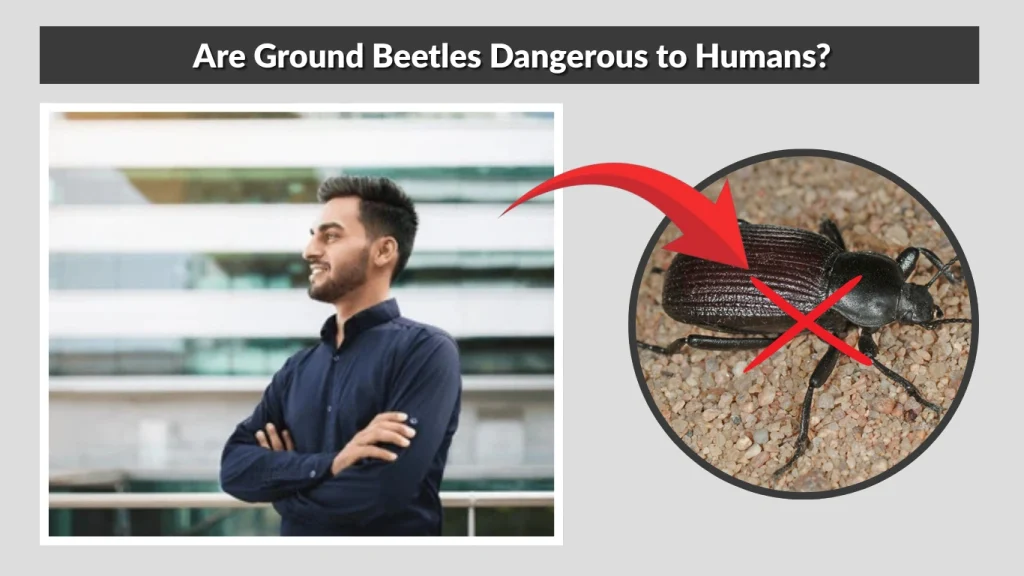
The simple answer is no, ground beetles are not dangerous to humans. They do not carry diseases, infest food, or damage property. Unlike termites, they do not eat wood, and unlike carpet beetles, they do not chew fabric.
Ground beetles may look intimidating, but they are more of a nuisance than a threat. Their only defense mechanism is to move quickly away when disturbed. Some species may release a foul odor as a protective measure, but it is harmless.
Do Ground Beetles Bite?

Ground beetles have strong jaws, and on rare occasions, they may bite if handled roughly or trapped against skin. However, bites are extremely uncommon and not serious.
Ground beetle bite symptoms may include:
- Mild pinching sensation.
- Slight redness or irritation at the site.
- No venom or toxins involved.
Treatment is simple—wash the area with soap and water. A cold compress can reduce discomfort, but no medical attention is usually required.
Are Ground Beetles Dangerous to Pets?
Pets, especially curious cats and dogs, may chase or even eat ground beetles. The good news is that these beetles are not poisonous to pets. A pet that eats one may spit it out due to the beetle’s unpleasant taste, but it will not suffer any health consequences.
Unlike pests such as cockroaches, which can carry bacteria, or toxic insects like blister beetles, ground beetles pose no real risk to household animals.
Are Ground Beetles Poisonous or Venomous?
It’s important to clarify the terms:
- Venomous insects inject venom through bites or stings.
- Poisonous insects are harmful when eaten or touched.
Ground beetles are neither venomous nor poisonous. They lack venom glands and do not produce toxins. Their role as predators makes them beneficial to humans rather than harmful.
Ground Beetles in the House – Should You Worry?
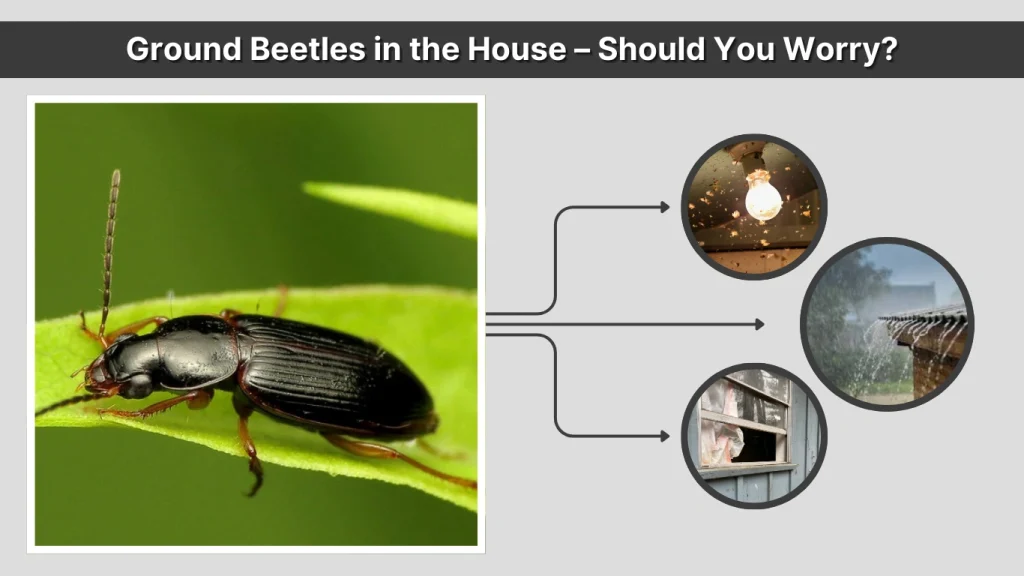
Finding one or two ground beetles indoors is not cause for alarm. They do not reproduce inside homes and will not infest your pantry or living spaces. Their presence indoors is usually accidental.
Common reasons ground beetles enter houses:
- Attracted to bright porch lights or indoor lamps.
- Seeking shelter during rain or extreme temperatures.
- Following prey insects through cracks or open windows.
While they are harmless, their appearance can be unsettling, especially when they fly around lights.
Ground Beetles vs. Harmful Household Insects
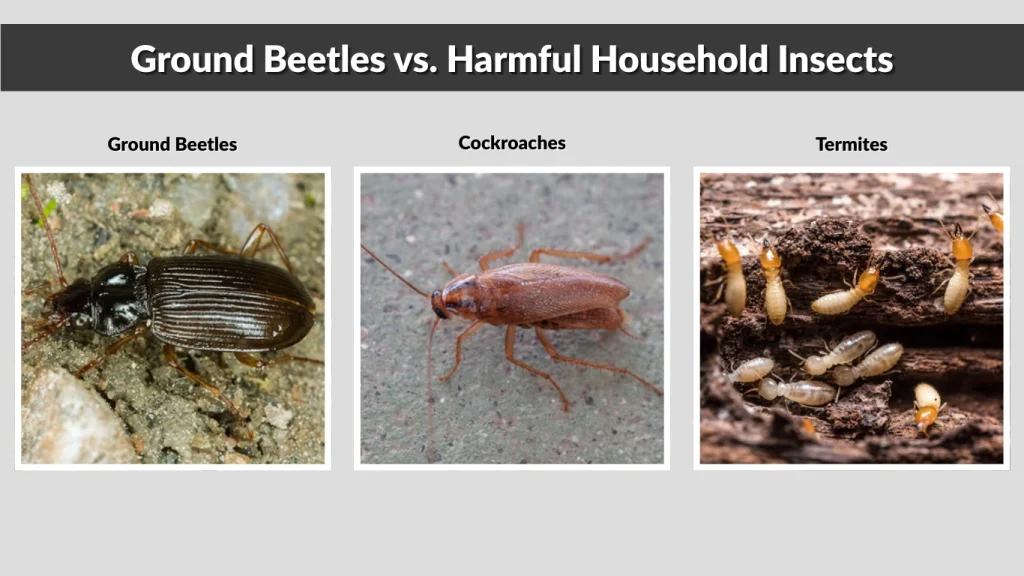
To better understand why ground beetles aren’t dangerous, it helps to compare them with pests that truly cause problems indoors:
- Cockroaches: Spread bacteria, infest food, and trigger allergies. Ground beetles do none of these.
- Termites: Cause serious structural damage to wood. Ground beetles cannot damage homes.
- Carpet Beetles: Destroy fabrics, carpets, and clothing. Ground beetles do not eat household materials.
This comparison highlights that ground beetles are simply outdoor insects that occasionally wander inside, not destructive pests.
Benefits of Ground Beetles Outdoors
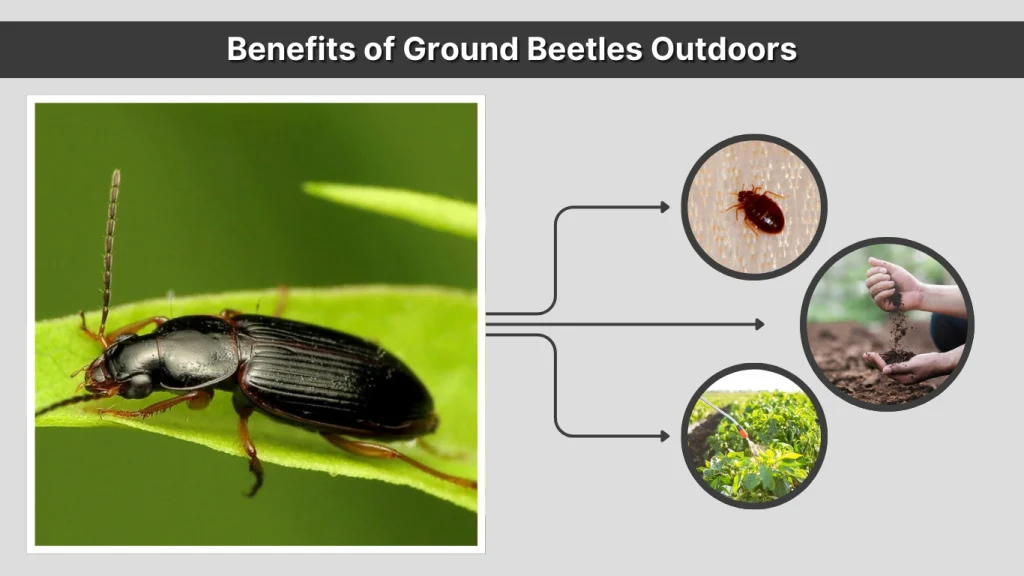
Far from being harmful, ground beetles provide important benefits to the environment:
- Natural Pest Control: They eat harmful insects such as caterpillars, slugs, and aphids that damage crops and gardens.
- Soil Health: Their presence in soil helps with natural balance, contributing to healthy ecosystems.
- Eco-Friendly Allies: Farmers and gardeners appreciate ground beetles as a natural alternative to chemical pesticides.
In fact, having ground beetles in your yard is usually a sign of a healthy ecosystem.
How to Handle Ground Beetles Safely
If you find ground beetles inside, there’s no need for panic. Here’s how to deal with them:
- Do Not Squash: Instead of killing them, gently remove them with a piece of paper or container and release them outside.
- Seal Entry Points: Use caulk, door sweeps, and window screens to prevent further entry.
- Reduce Lighting: Keep porch lights off at night or switch to yellow “bug-safe” bulbs to reduce attraction.
- Maintain Outdoors: Remove leaf litter, wood piles, or debris near your house, as these are common hiding spots.
Professional pest control is rarely necessary since ground beetles are not true household pests.
Myths and Misconceptions About Ground Beetles
There are many myths surrounding ground beetles. Let’s clear up the most common ones:
- “They spread diseases like cockroaches.” False—ground beetles are not disease carriers.
- “They infest food.” False—they do not seek or contaminate human food.
- “They damage homes like termites.” False—they cannot chew wood or structures.
- “They are aggressive.” False—ground beetles are shy and only bite if mishandled.
Most fears come from their intimidating appearance, but scientifically, they are safe.
Conclusion
Ground beetles are not dangerous to humans, pets, or homes. They may bite on rare occasions, but their bites are harmless. Instead of being harmful, they are beneficial predators that help control pest populations outdoors. Inside the house, they are only a nuisance, not a threat.
By understanding their role and taking simple preventive steps, you can keep ground beetles outside where they belong—working for you as natural pest controllers.
FAQs
Can ground beetles bite humans?
Yes, but it is extremely rare. Ground beetles may bite if handled, but the bite is not venomous and causes only mild irritation.
Are ground beetles poisonous if eaten by pets?
No. Cats or dogs that eat ground beetles will not be harmed. The beetle may taste unpleasant, but it poses no toxic risk.
Do ground beetles spread diseases like cockroaches?
No. Unlike cockroaches, ground beetles do not carry bacteria, infest kitchens, or spread illness in homes.
Are ground beetles aggressive indoors?
No. They avoid humans and usually hide in dark corners. If seen indoors, it is accidental and temporary.
Should I kill ground beetles if I find them?
There is no need. They are harmless and beneficial outdoors. The best option is to capture them gently and release them outside.
