

Deer flies are small but aggressive biting insects that can make outdoor activities unbearable in the summer months. Their painful bites often leave behind red welts, swelling, and itching that can last for several days. Found in many parts of the world, deer flies are particularly common near forests, wetlands, and open fields. Understanding what deer fly bites look like, why they happen, and how to treat them is important for protecting yourself from unnecessary discomfort.
What Are Deer Flies?
Deer flies belong to the genus Chrysops in the Tabanidae family, the same group that includes horse flies. However, they are smaller, usually about 6–10 millimeters long, with distinctive banded or patterned wings and brightly colored eyes that make them easy to recognize.
These flies are most active during warm, sunny days, especially in areas with standing water, where they breed and thrive. Unlike their harmless male counterparts, female deer flies require blood meals to produce eggs, which is why they target humans and animals so persistently.
Why Do Deer Flies Bite Humans?

Female deer flies bite because they need protein from blood to reproduce. They have sharp, scissor-like mouthparts designed to slice into the skin, causing immediate pain. Unlike mosquitoes, which use a needle-like proboscis, deer flies inflict a wound that bleeds, allowing them to lap up the blood.
They are strongly attracted to:
- Movement – people or animals in motion draw their attention.
- Carbon dioxide – exhaled breath signals a nearby host.
- Body heat and sweat – making outdoor activities in summer prime conditions for bites.
This explains why deer fly bites are a common complaint for hikers, farmers, fishermen, and anyone spending time in marshy or wooded regions.
Symptoms of Deer Fly Bites
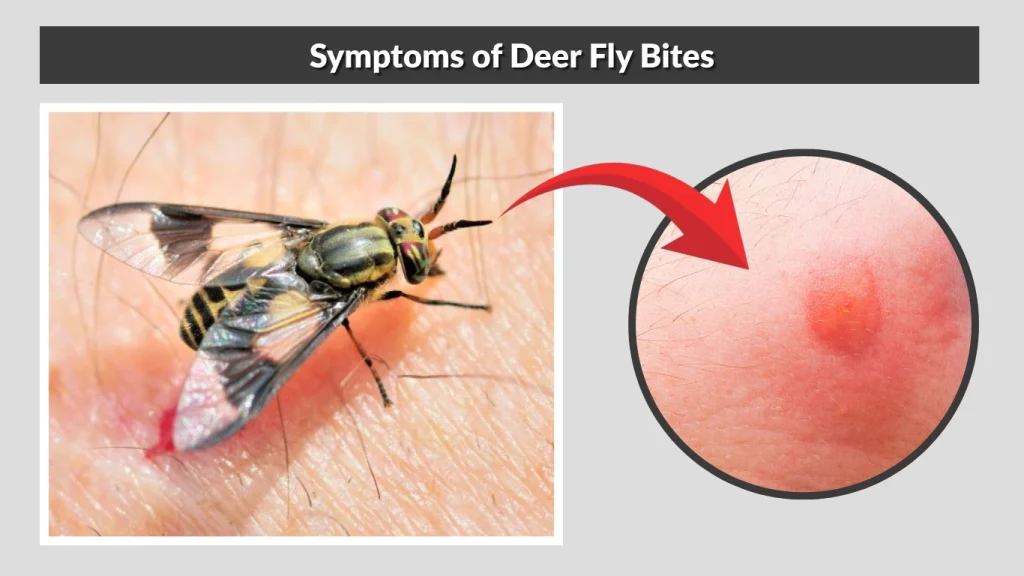
The symptoms of a deer fly bite can appear quickly and often cause more irritation than mosquito bites.
Immediate Symptoms
When bitten, most people feel a sudden, sharp pain. The bite site typically develops redness, mild swelling, and warmth within minutes. Some describe it as feeling like a small cut or stab wound.
Delayed Symptoms
After a few hours, the bite often becomes more noticeable. It may form into a raised welt or lump, sometimes surrounded by redness. Itching and tenderness are common, and bruising can appear if the bite is deep or if the person scratches excessively.
Allergic Reactions (Rare)
Although rare, some individuals may have stronger allergic reactions to deer fly bites. This may include widespread hives, swelling around the face or throat, and difficulty breathing. In such cases, immediate medical care is essential, as these are signs of a severe allergic response.
Body’s Reaction to Deer Fly Bites
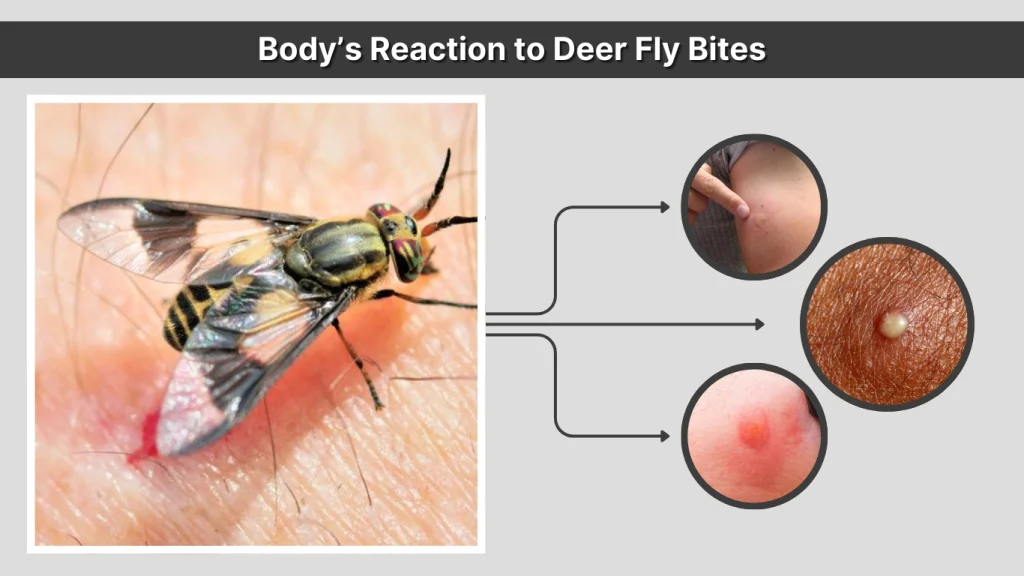
The discomfort caused by deer fly bites is not just due to the wound but also the body’s immune response.
Immune Response
Deer flies inject saliva containing anticoagulants and enzymes that prevent blood clotting. The body reacts to these foreign proteins by releasing histamines, which trigger redness, swelling, and itching. This reaction is what makes the bite site inflamed and irritating.
Risk of Secondary Infection
Because deer fly bites leave a noticeable wound, scratching can easily introduce bacteria. If bacteria enter the open cut, the bite can become infected. Warning signs of infection include:
- Worsening pain and swelling
- Pus or discharge at the bite site
- Spreading redness beyond the original area
Long-Term Effects
For most people, deer fly bites heal within a few days, but for those with sensitive skin, itching may last longer. Excessive scratching can damage the skin, and in rare cases, it may leave a small scar. Individuals with weakened immune systems might also experience slower healing.
Treatment for Deer Fly Bites
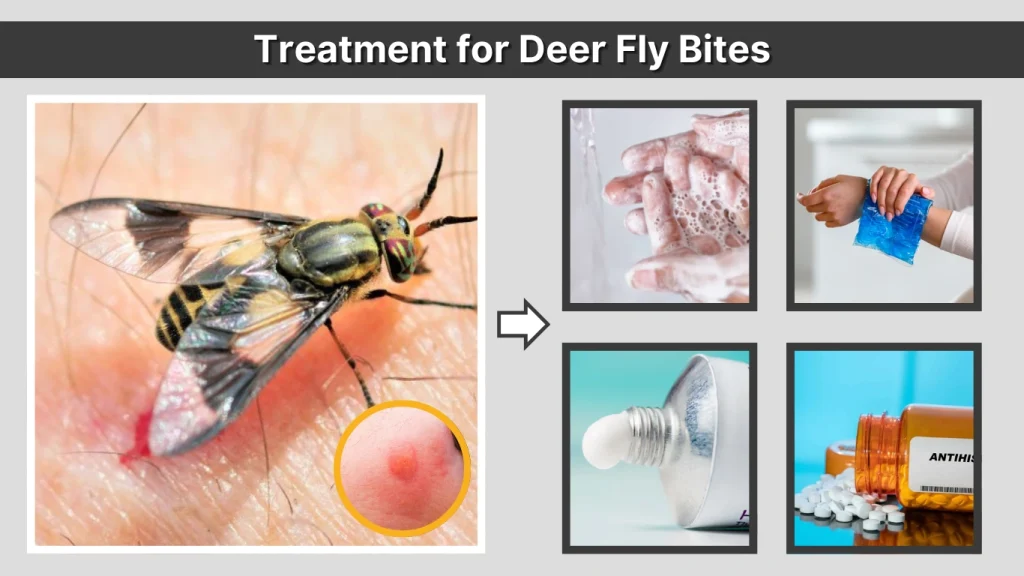
Immediate First Aid
As soon as you notice a bite, wash the area thoroughly with soap and water to reduce the risk of infection. Applying a cold compress or ice pack can help ease pain and swelling. It’s important not to scratch the bite, as this makes irritation worse and increases the chance of infection.
Over-the-Counter Remedies
If the bite continues to bother you, simple over-the-counter medications can provide relief:
- Antihistamine creams or gels to control itching
- Hydrocortisone cream to reduce swelling and redness
- Oral antihistamines for stronger allergic responses or multiple bites
Natural & Home Remedies

If you prefer gentle, natural care, a few home remedies can help calm deer fly bites and speed recovery:
- Aloe vera gel: Provides cooling relief and reduces inflammation.
- Baking soda paste: Mixing baking soda with water creates a paste that helps neutralize irritation.
- Honey: Acts as a natural antibacterial and keeps the wound moist to prevent infection.
- Cold cucumber slices: Placing them on the bite helps soothe burning and swelling.
- Diluted tea tree or lavender oil: When applied carefully, they reduce itching and offer antiseptic protection.
These remedies work well for mild to moderate symptoms, but if pain or swelling persists, medical care may still be necessary.
When to Seek Medical Help
Most deer fly bites heal quickly with basic care, but in some cases professional help is needed. You should see a doctor if:
- Swelling spreads beyond the bite area
- Pain increases instead of subsiding
- The bite shows signs of infection such as pus or fever
- You develop allergic symptoms like hives, dizziness, or breathing difficulties
Doctors may prescribe antibiotics for infection or stronger antihistamines and corticosteroids for severe allergic reactions.
Preventing Deer Fly Bites

Prevention is the best way to avoid the discomfort of deer fly bites, especially during peak summer months.
Protective Clothing
Wearing long sleeves, pants, and light-colored clothing reduces your risk of being targeted. A hat with netting or mesh can provide extra protection if you’re in heavily infested areas.
Insect Repellents
Use repellents containing DEET, picaridin, or oil of lemon eucalyptus. Since deer flies are persistent, frequent reapplication may be needed when outdoors.
Environmental Prevention
- Avoid marshy areas, riverbanks, and dense forests during midday, when deer flies are most active.
- Use fans on patios or campsites, as deer flies dislike strong airflow.
- If working outdoors for long hours, consider protective netting gear commonly used by hikers and hunters.
FAQs
What does a deer fly bite look like?
A deer fly bite usually appears as a red, raised welt with a small cut-like mark in the center. It may swell quickly and feel warm to the touch.
How long do deer fly bites last?
Most bites improve within 2–3 days, though itching and tenderness can last up to a week depending on skin sensitivity.
Are deer fly bites dangerous?
For most people, they are just painful and irritating. However, scratching can lead to infection, and rare allergic reactions may require medical attention.
Can deer flies spread diseases to humans?
Deer flies can transmit diseases to animals, but in humans disease transmission is very rare. The main risk is infection from scratching.
How are deer fly bites different from horse fly bites?
Both are painful, but deer fly bites are often smaller and more frequent in wooded areas. Horse fly bites tend to leave larger welts and more significant swelling.
What’s the fastest way to stop itching?
Apply a cold compress right away, followed by an antihistamine cream or natural options like aloe vera gel to relieve itching and burning.
