
When it comes to biting flies, few insects cause as much irritation as deer flies and horse flies. Both belong to the same family, Tabanidae, and both are notorious for their aggressive biting behavior. Though they share similarities, they differ in size, appearance, habitats, and even how their bites affect humans. Understanding these differences is important for outdoor enthusiasts, farmers, and anyone who spends time in nature during the summer months.
Understanding the Two Flies
Deer Flies
Deer flies belong to the genus Chrysops. They are relatively small, usually ranging from 6 to 10 millimeters in length. Despite their small size, they are fast, persistent, and extremely annoying to humans. Deer flies are often found in wooded areas, swamps, and near streams or lakes, where they thrive in humid, shaded conditions.
What sets deer flies apart is their tendency to target the upper parts of the body. They often bite around the head, neck, and shoulders, making them particularly bothersome for hikers, campers, and hunters.
Horse Flies
Horse flies are the larger relatives in the Tabanidae family. Ranging from 10 to 30 millimeters, they are among the biggest biting flies encountered by humans and livestock. Their size gives them a powerful flying ability, allowing them to chase hosts over short distances.
Unlike deer flies, horse flies are commonly found in open environments such as fields, farms, wetlands, and areas near livestock. Farmers often view them as a major nuisance because they harass horses, cattle, and other animals, causing stress and reducing productivity.
Identification and Physical Differences

One of the easiest ways to tell deer flies and horse flies apart is by their physical traits.
Size Comparison
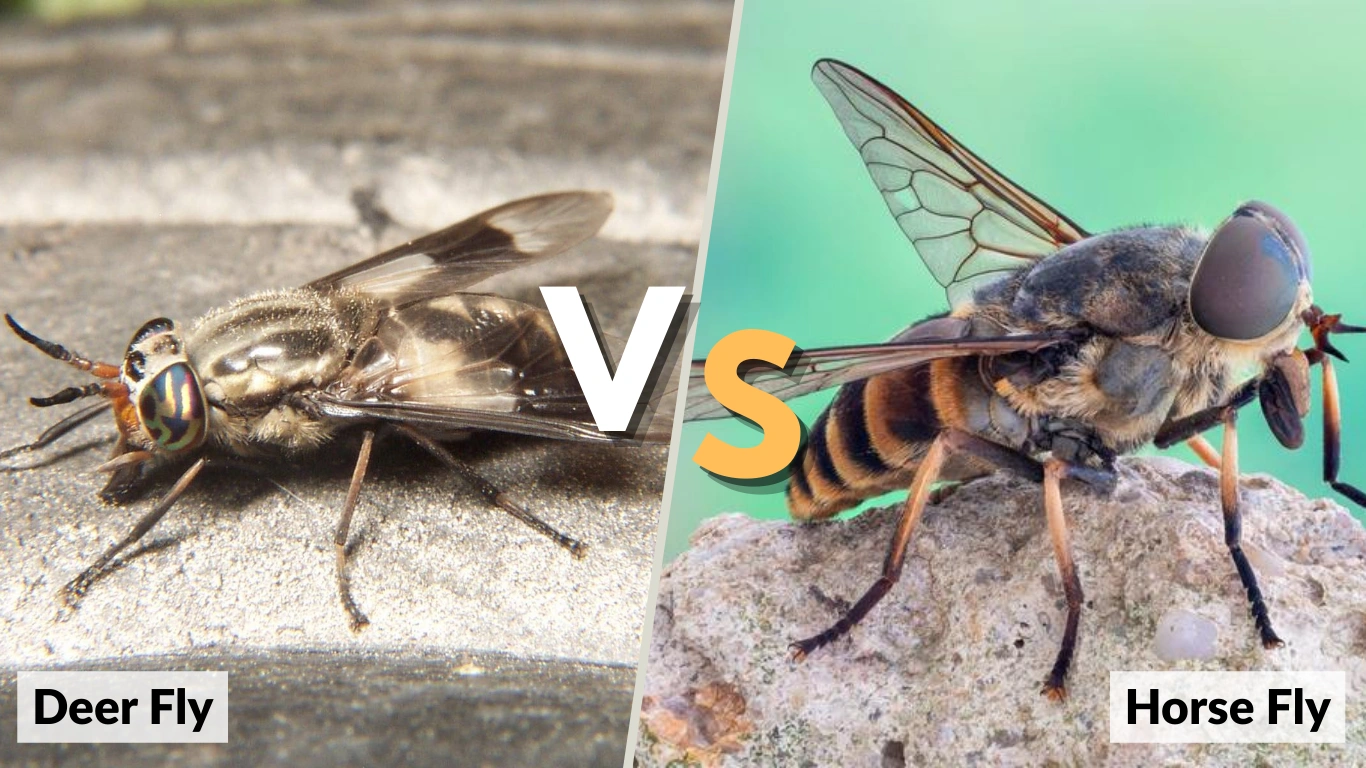
Deer flies are considerably smaller, usually no larger than a small housefly. Horse flies, on the other hand, can grow up to three times the size of a deer fly. Their bulkier bodies make them look more intimidating.
Body Appearance
Deer flies tend to be slender and yellowish-brown, often with patterned markings that help them blend into their environment. Horse flies, in contrast, have thicker, more robust bodies that are usually gray, brown, or black in color.
Wing Patterns
Wing structure is another major difference. Deer flies have wings with dark bands or spotted patterns, giving them a distinct appearance in flight. Horse flies typically have clear or slightly smoky wings, which look less decorative.
Eye Color and Features
One of the most striking features of deer flies is their brightly colored, iridescent eyes with unique horizontal stripes. These eyes often shimmer green, gold, or red in sunlight. Horse flies also have large eyes, but they are usually solid-colored or lightly striped, lacking the vivid brightness of deer flies.
Habitat and Distribution

Though both flies are widely distributed, their preferred habitats differ.
Deer Flies
Deer flies thrive in shaded, humid areas. They are commonly found in forests, swamps, and near streams or marshes. Outdoor enthusiasts often encounter them while hiking or camping in wooded areas during mid-summer. Because of their persistence, deer flies are difficult to escape once they start circling.
Horse Flies
Horse flies prefer open, sunny areas where livestock and large animals are abundant. Pastures, farms, and wetlands are prime habitats. They are especially common around water sources because females need moisture to lay their eggs. Their presence in open environments makes them a serious problem for farmers and ranchers.
Behavior and Feeding Habits
The behavior of deer flies and horse flies highlights their different approaches to feeding.
Activity
Deer flies are swift and often attack the upper body and head. Their small size allows them to maneuver quickly, making them difficult to swat. They are especially drawn to moving targets, which is why hikers often find themselves pursued.
Horse flies, however, are slower but more persistent. They usually circle around their host before landing. Their preference is for the legs and arms, where the skin is easier to penetrate.
Feeding Style
Both types of flies cut the skin with scissor-like mouthparts to draw blood, but the severity differs. Deer fly bites are painful but typically leave smaller wounds. Horse fly bites are much more painful, leaving behind larger welts and open wounds that bleed heavily. Because of this, horse flies are considered more harmful and more likely to cause secondary infections.
Bites: Symptoms and Reactions
Deer Fly Bites
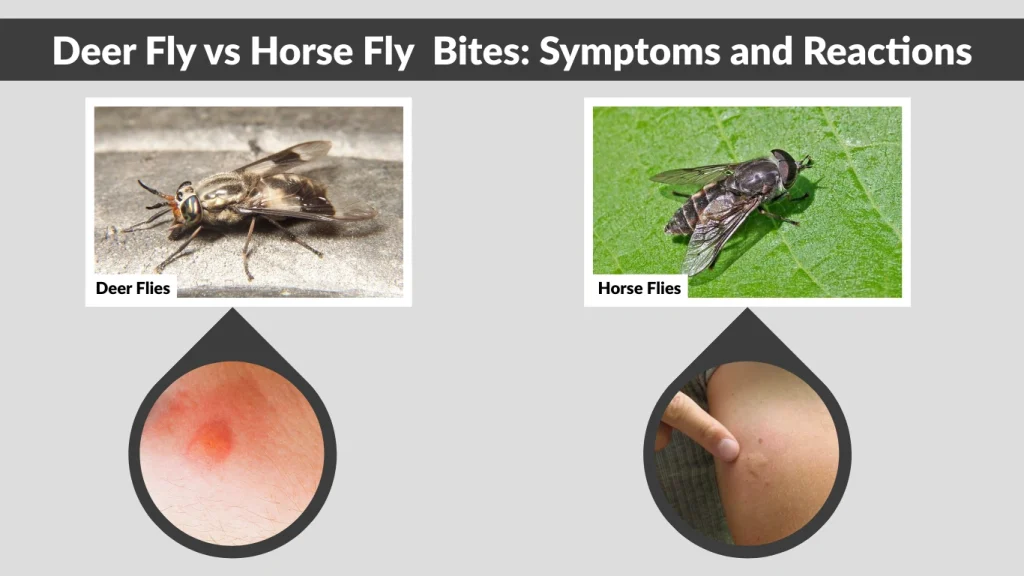
Deer fly bites are sharp and painful, though usually less severe than horse fly bites. They often feel like a quick pinch followed by a burning sensation. The bite area may develop into a small, red bump or welt. Itching and mild swelling are common, and in some people, the bites may blister. Deer fly bites are irritating but usually fade within a few days without complications.
Horse Fly Bites
Horse fly bites are far more painful because of their larger mouthparts and the deeper wound they leave behind. Victims often describe the bite as a stabbing or cutting pain. Within minutes, the site may swell into a large, raised welt that can stay inflamed for several days. Burning, redness, and persistent itching are common. Because horse fly bites cause larger wounds, they are more likely to bleed and become infected if scratched.
Health Risks
While both deer flies and horse flies are mostly just nuisances, they do carry some health risks worth noting.
Disease Transmission
- Deer Flies: In certain regions of Africa, deer flies can transmit Loa loa (the African eye worm), though this is not a concern in most parts of the world.
- Horse Flies: They are known to spread several diseases in livestock, such as equine infectious anemia, but transmission to humans is rare.
Allergic Reactions
Deer fly bites can cause mild to moderate allergic responses like hives or localized swelling. Horse fly bites often cause stronger inflammation and may occasionally trigger more serious allergic reactions.
Secondary Infections
Both types of bites can become infected if scratched excessively. Signs include increasing pain, pus, and spreading redness. Horse fly bites are particularly prone to infection due to the size of the wound.
Prevention and Protection

Avoiding deer and horse fly bites can be challenging, but several strategies are effective.
Clothing & Gear
- Wear light-colored clothing, as both types of flies are attracted to dark shades.
- Long sleeves, pants, and hats help create a barrier.
- Head nets are especially useful in areas heavily infested with deer flies.
Repellents
- Products containing DEET or picaridin are effective against horse flies.
- Deer flies are more resistant to repellents, but applying them can still reduce bites.
- Natural repellents like citronella and eucalyptus oils may help, though less reliably.
Environmental Tips
- Avoid swamps, wooded areas, and shaded trails during peak deer fly season.
- Stay clear of wetlands, farms, and open pastures where horse flies thrive.
- Use outdoor fans or traps when spending time outside, as both flies dislike strong airflow.
- Protect livestock with fly sheets, sprays, or shelters to reduce fly populations around homes and farms.
Quick Comparison Table

| Feature | Deer Fly 🪰 | Horse Fly 🪰 |
| Size | 6–10 mm | 10–30 mm |
| Body Type | Slender, yellow-brown | Bulkier, gray/black |
| Wings | Patterned with dark bands | Clear or smoky |
| Eyes | Bright, iridescent, striped | Large, solid or striped |
| Habitat | Woods, swamps, shaded areas | Farms, wetlands, open fields |
| Bite Pain | Moderate, sharp sting | Severe, stabbing pain |
| Risk | Mild, rare disease spread | Infection risk, livestock disease |
| Persistence | Very fast, hard to repel | Circles host, very aggressive |
FAQs
Which bite hurts more: deer fly or horse fly?
Horse fly bites are more painful. They cut deeper into the skin and cause large, inflamed welts that last longer.
Do deer flies and horse flies bite humans equally?
Yes, both attack humans. Deer flies usually target the head and neck, while horse flies prefer arms and legs.
Which one is more dangerous?
Horse flies are more dangerous because their bites are larger, more painful, and prone to infection. Deer flies, however, are harder to repel and can be very persistent.
Can repellents stop both flies?
Repellents like DEET work better against horse flies. Deer flies are less affected, so physical barriers such as nets are often necessary.
How do I avoid them outdoors?
Wear protective clothing, use repellents, and avoid their habitats. Use fans or traps in outdoor areas to keep them away.
