
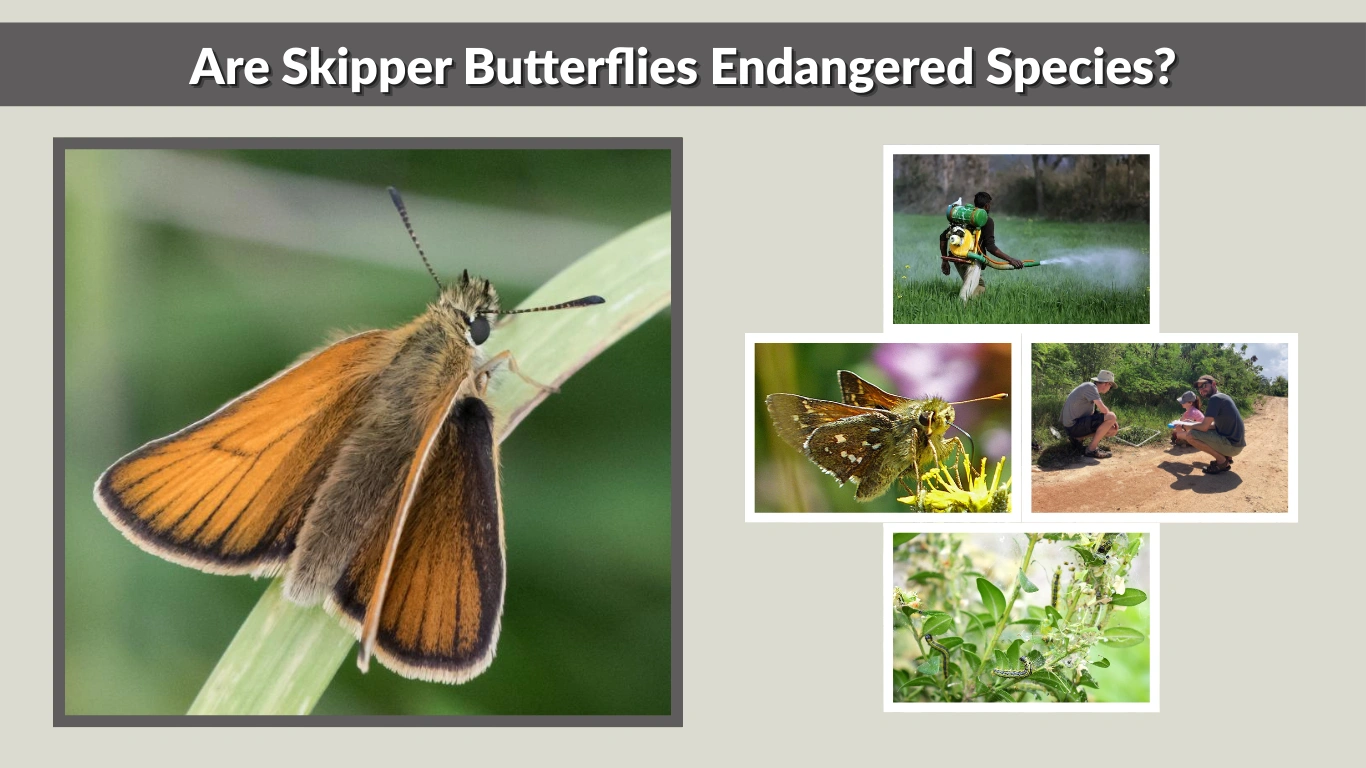
Skipper butterflies, belonging to the family Hesperiidae, are one of the largest groups of butterflies in the world. Known for their quick, darting flight and moth-like appearance, they play an important role in ecosystems as pollinators and prey for other animals. With over 3,500 species distributed across nearly every continent, they are among the most adaptable butterfly families.
But the question remains—are skipper butterflies endangered? While most species are not considered endangered, several face population declines due to habitat destruction, climate change, and agricultural practices.
Skipper Butterflies at a Glance
Skipper butterflies are not only diverse but also widespread. They are found across North America, South America, Europe, Asia, Africa, and Australia, thriving in grasslands, meadows, and woodland edges. Their caterpillars primarily feed on grasses and sedges, making open landscapes their primary habitat. Adults are active nectar feeders, visiting clover, thistles, and other wildflowers.
With their sturdy bodies, hooked antennae, and jerky flight, skippers stand out from other butterfly families. Despite their global presence, their dependence on grasslands and native plants makes them vulnerable to environmental changes.
Are Skipper Butterflies Endangered?
Global Conservation Status
Most skipper butterfly species are not listed as endangered on a global scale. Their large population size and adaptability allow them to thrive in many environments. However, several species are facing declines, particularly in regions where grasslands are disappearing.
The International Union for Conservation of Nature (IUCN) lists some skippers under threatened categories, while others are considered stable. The family as a whole is not endangered, but local populations and species with restricted ranges are at higher risk.
Examples of At-Risk Species
Some skipper species are considered vulnerable or threatened because of shrinking habitats:
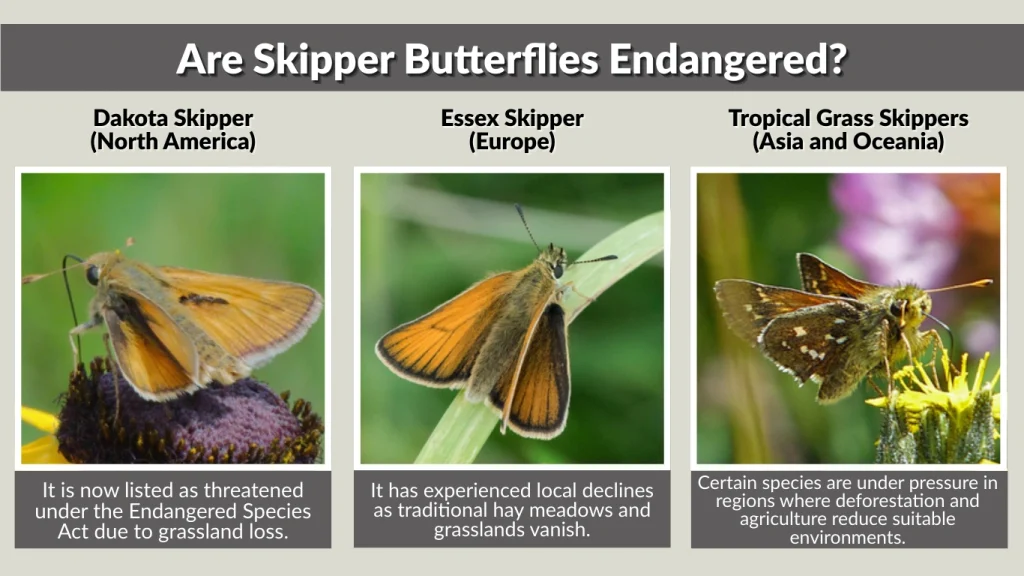
- Dakota Skipper (North America): Once common across the prairies of the U.S. and Canada, it is now listed as threatened under the Endangered Species Act due to grassland loss.
- Essex Skipper (Europe): Once widespread in the UK, it has experienced local declines as traditional hay meadows and grasslands vanish.
- Tropical Grass Skippers (Asia and Oceania): Certain species are under pressure in regions where deforestation and agriculture reduce suitable environments.
These examples show that while most skippers are not endangered, regional species face significant conservation challenges.
Main Threats to Skipper Butterflies
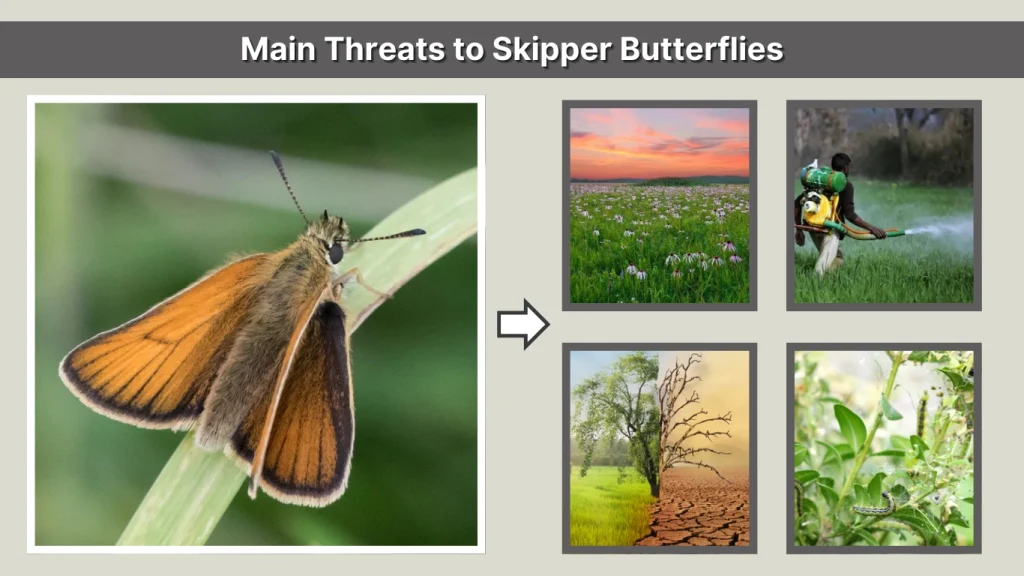
Butterflies are often sensitive to environmental change, and skippers are no exception. Their reliance on grasses and nectar plants makes them especially vulnerable to human-driven changes in landscapes.
4 Major Threats to Skipper Butterflies:
- Habitat Loss: Conversion of grasslands and meadows into urban areas or farmland removes vital host plants and nectar sources.
- Agricultural Intensification and Pesticides: Chemicals used in farming kill both caterpillars and adult butterflies, while herbicides eliminate native grasses and flowers.
- Climate Change: Shifts in temperature and rainfall patterns affect flowering cycles, migration, and grass growth, disrupting the skipper life cycle.
- Decline in Host Plants: Since skipper caterpillars often rely on specific grasses, any reduction in these plants directly reduces populations.
These threats do not affect all skipper species equally, but grassland-dependent species are particularly at risk. For example, the Dakota Skipper population has plummeted in areas where native prairie grasses were replaced by monoculture crops.
Regional Perspectives on Endangered Skipper Butterflies

North America
One of the most concerning cases is the Dakota Skipper, a once-common species in the northern prairies of the United States and Canada. It is now listed as threatened, with populations surviving only in fragmented prairie habitats. Other species remain relatively stable, but many rely heavily on preserved grasslands.
Europe
In Europe, species like the Small Skipper and Essex Skipper are still widespread but have suffered local declines due to farmland intensification and the reduction of traditional meadows. Conservation efforts in the UK and parts of Eastern Europe focus on managing grasslands to ensure their survival.
Asia and Africa
Across Asia, skipper butterflies are generally abundant, though tropical deforestation and agricultural expansion pose growing threats. In Africa, many skipper species live in savannas and grasslands, but increasing drought and land conversion impact their habitats.
Australia and Oceania
Australia is home to several native skippers, including the Dingy Grass Skipper, which depends on native grasses. Land clearing for farming and development reduces their range, while island species in Oceania are particularly vulnerable due to their limited habitats.
Why Skipper Butterflies Matter
Skipper butterflies may be small, but they play important ecological roles. As pollinators, they help maintain wildflower populations and contribute to biodiversity. Their caterpillars provide a food source for birds, reptiles, and small mammals, linking them directly into the food web.
Because they are sensitive to changes in grasslands, they also act as indicators of ecosystem health. A decline in skippers often signals broader environmental problems, such as habitat degradation or pesticide overuse.
Conservation Efforts for Skipper Butterflies
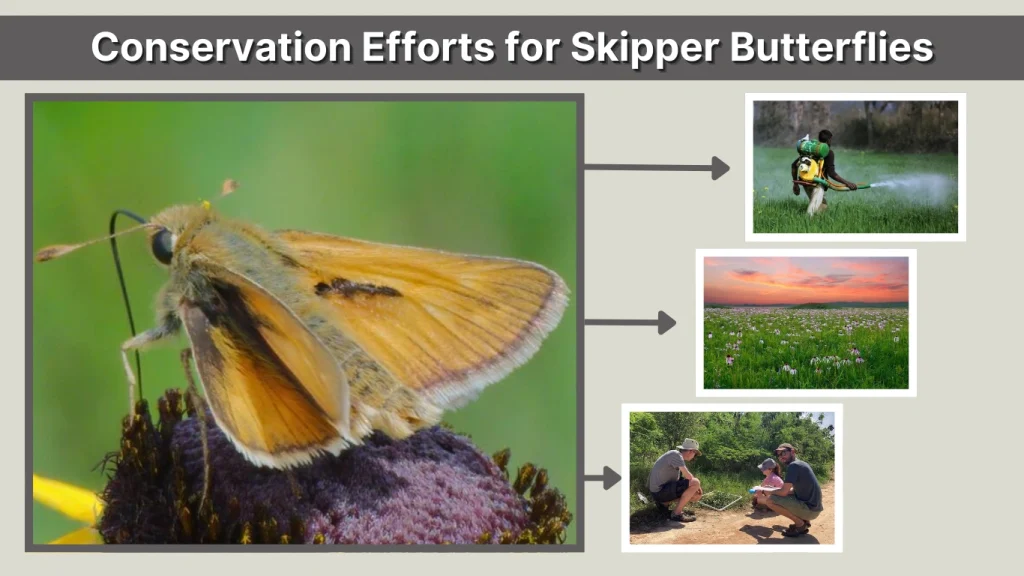
Protecting skipper butterflies requires targeted conservation strategies. Some efforts already show positive results.
- Legal Protections: The Dakota Skipper is protected under the U.S. Endangered Species Act, which restricts harmful activities in its habitats.
- Habitat Restoration: Projects that restore native prairies and grasslands are critical, since skippers depend on these environments.
- Citizen Science: Butterfly counts and surveys conducted by volunteers help monitor populations and guide conservation decisions.
Successful Examples:
- In North America, prairie restoration projects are helping the Dakota Skipper recover.
- In the UK, management of hay meadows has supported Essex and Small Skipper populations.
These successes highlight that conservation can work if habitats are preserved and restored.
How Humans Can Help Protect Skipper Butterflies

Individuals and communities can contribute to skipper survival by making small but meaningful changes.
Simple Actions to Help Skipper Butterflies:
- Plant native grasses and wildflowers in gardens or public spaces.
- Reduce or avoid pesticide and herbicide use to protect host plants and nectar sources.
- Support conservation organizations working on butterfly habitat protection.
- Participate in butterfly counts or local monitoring projects to provide valuable data.
By creating pollinator-friendly environments, people can ensure that skipper butterflies continue to thrive in both rural and urban landscapes.
FAQs
Are skipper butterflies endangered?
Not all skipper butterflies are endangered. Most species are stable and widespread, but some, like the Dakota Skipper in North America, are officially listed as threatened due to habitat loss.
What is the Dakota Skipper’s conservation status?
The Dakota Skipper is listed as threatened under the U.S. Endangered Species Act and is protected in Canada as well. It has declined drastically because of prairie habitat destruction and agricultural expansion.
Why are grasslands important for skipper survival?
Grasslands provide the host plants that skipper caterpillars depend on, as well as nectar sources for adults. Without these ecosystems, skippers cannot complete their life cycle.
Are skipper butterflies declining in Europe?
Yes, some species such as the Essex and Small Skipper have shown declines in parts of Europe due to changes in farming and loss of meadows. Conservation programs are working to restore their habitats.
Can skippers recover if habitats are restored?
Yes, skipper populations can recover when grasslands are protected or restored. Success stories in the U.S. and UK prove that with proper management, threatened species can rebound.
