
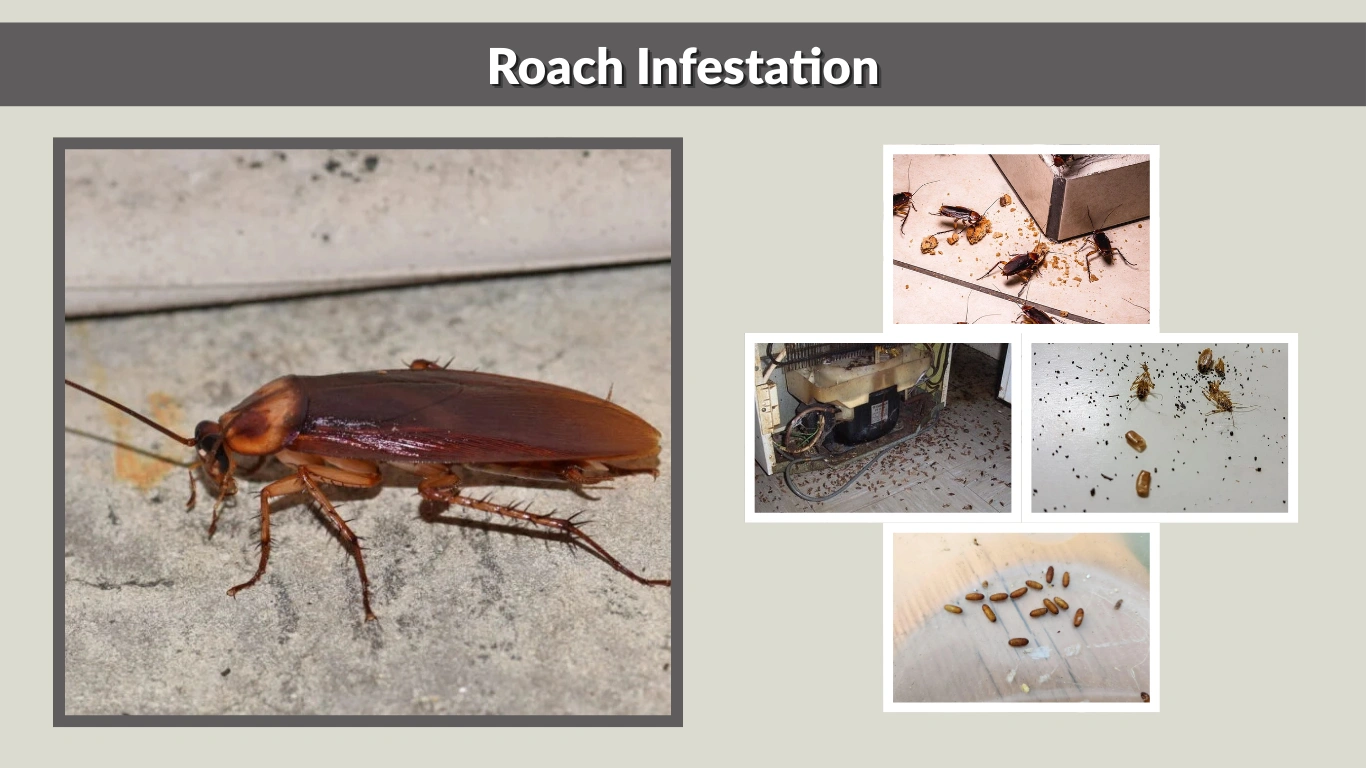
Cockroaches are among the most persistent and unwelcome household pests. A roach infestation doesn’t just cause discomfort — it poses serious health risks by spreading bacteria, triggering allergies, and contaminating food. Whether it happens in a house, an apartment, or a kitchen, these pests can quickly multiply, making early detection and swift action essential. In this guide, we’ll break down what a roach infestation really means, how to spot the warning signs, what causes them, and the most effective solutions to eliminate and prevent them, including tips tailored for high-risk areas like urban apartments and kitchens.
What is a Roach Infestation? (Meaning)
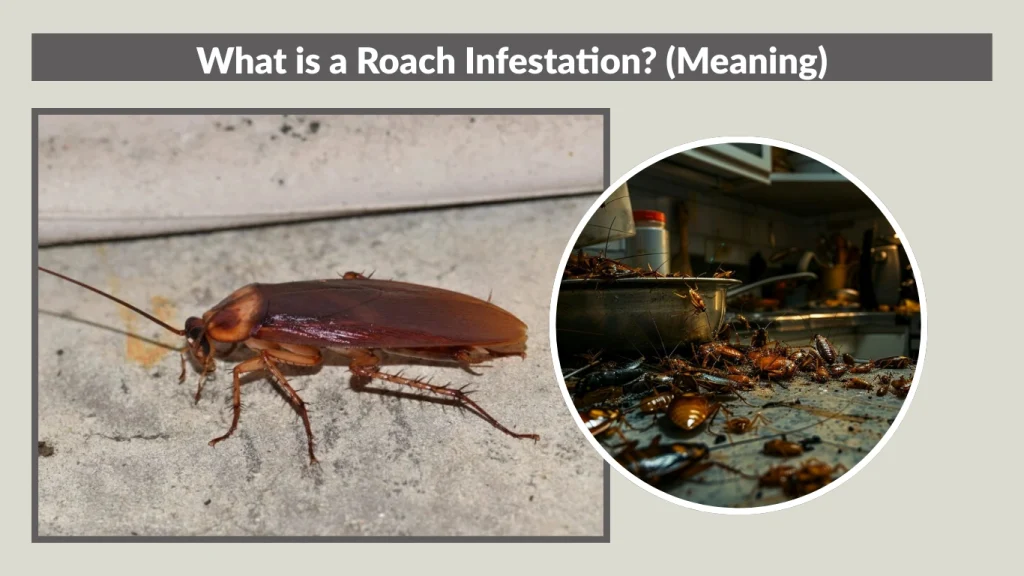
A roach infestation occurs when cockroaches establish a breeding population inside a home, apartment, or building. Unlike spotting a single roach, an infestation means there are multiple roaches — often hidden in cracks, crevices, and dark spaces — reproducing and spreading throughout the property.
An infestation can happen quickly because roaches breed rapidly. For example, a single female German cockroach can produce hundreds of offspring in just one year. The term “infestation” also implies that the pests are present in sufficient numbers to cause noticeable health, sanitation, and comfort issues, requiring targeted control measures rather than just casual cleaning.
Signs of a Roach Infestation

Spotting the signs early can make the difference between a minor problem and a full-blown infestation. Roaches are nocturnal and excellent at hiding, so you’ll often notice indirect evidence before you see the pests themselves.
Visible Droppings
Small roaches leave droppings that look like ground black pepper or coffee grounds, while larger species leave cylindrical droppings with ridged edges. You may find these near baseboards, under appliances, or inside cabinets.
Egg Cases (Oothecae)
Roach egg cases are capsule-shaped and can hold anywhere from 10 to 50 eggs, depending on the species. They are usually found in hidden, warm, and humid spots.
Musty Odor
A strong, oily, musty smell often accompanies larger infestations. This odor comes from chemicals in roach feces and body secretions.
Shed Skins and Dead Roaches
Roaches molt several times before reaching adulthood, leaving behind light brown, papery skins. Dead roaches in hidden areas are also a sign of ongoing activity.
Daytime Sightings
Seeing roaches during daylight usually means overcrowding has forced them out of hiding — a clear sign the infestation is severe.
Roach Infestation in House

Houses provide cockroaches with everything they need — food, water, warmth, and shelter. They can enter through cracks in walls, gaps under doors, vents, or even hitch a ride in grocery bags and boxes. Once inside, they often settle in kitchens, bathrooms, basements, and laundry rooms, where moisture and food particles are easily found.
In single-family homes, infestations can spread quickly between rooms because there are no structural barriers. Common hiding spots include under sinks, inside pantries, behind refrigerators, and within wall voids. Preventing and eliminating roaches in a house involves a combination of sealing entry points, maintaining strict cleanliness, fixing leaks, and using targeted treatments like baits or boric acid in hidden areas. Regular inspections, especially in warmer months, are essential to stop small problems from becoming large infestations.
Roach Infestation in an Apartment

Apartments are particularly vulnerable to roach infestations because units share walls, ceilings, and plumbing systems. This interconnected structure allows roaches to travel freely between apartments, meaning even if you keep your space spotless, pests can still enter from neighboring units.
Roaches often move through wall voids, electrical conduits, and pipe openings, making it challenging to pinpoint the source. Infestations in apartments typically spread faster than in single homes due to the high density of potential food and water sources.
For tenants, controlling roaches requires a cooperative effort with property management or landlords. This might involve sealing shared entry points, coordinating building-wide pest control treatments, and keeping kitchens and bathrooms free from crumbs, grease, and standing water. Without coordinated action, treatments in one unit may only push roaches into another, prolonging the problem.
Roach Infestation in Kitchen

Kitchens are the most common hotspot for roach infestations because they offer easy access to food, water, and warmth. Roaches hide in dark, tight spaces such as under refrigerators, inside cabinets, behind stoves, and even inside appliance motors. Grease buildup, food crumbs, and moisture from sinks or dishwashers make kitchens highly attractive to these pests.
To control roaches in the kitchen, regular deep cleaning is essential — including pulling out appliances to clean behind them, wiping surfaces with disinfectants, storing food in airtight containers, and taking out trash daily. Using bait stations and gel baits near hiding spots can help target roaches without contaminating food preparation areas.
Causes of Roach Infestation
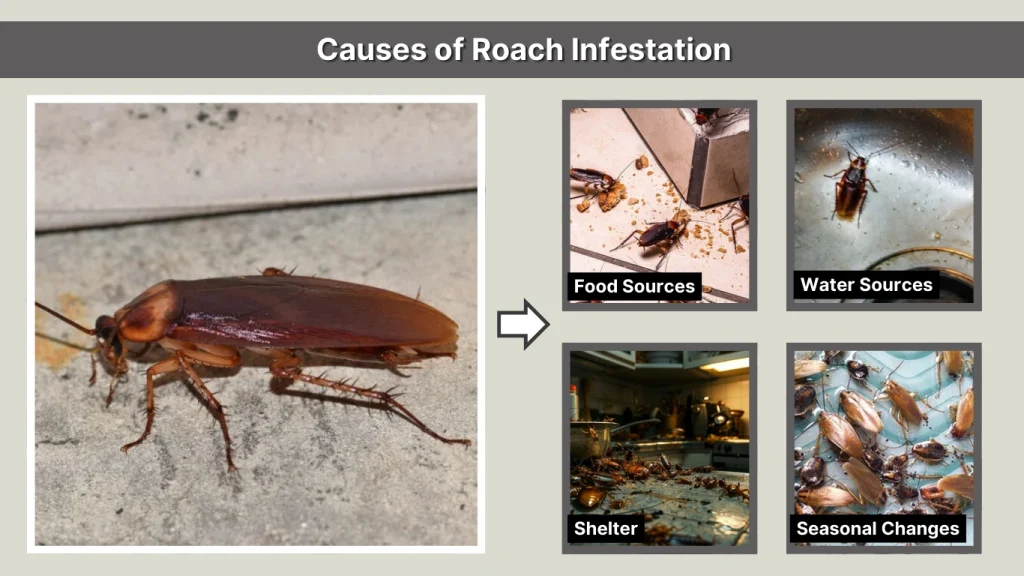
Food Sources
Uncovered food, crumbs, pet food left out overnight, and overflowing garbage bins can all attract roaches. Even tiny traces of grease or sugar can be enough for them to survive.
Water Sources
Cockroaches can live weeks without food but only a few days without water. Leaky pipes, dripping faucets, pet water bowls, and condensation from appliances provide the hydration they need.
Shelter
Cluttered storage areas, stacks of newspapers, cardboard boxes, and cracks in walls offer perfect hiding and breeding spots.
Seasonal Changes
In colder months, roaches seek warmth indoors, while in warmer months, their breeding rates increase, making infestations grow faster.
Roach Infestation Solutions
Sanitation Practices
Clean up spills immediately, wash dishes daily, sweep floors, and remove grease from cooking areas. Empty garbage bins regularly and keep lids tightly closed.
Sealing Entry Points
Use caulk to fill cracks and gaps around windows, doors, plumbing lines, and baseboards. Install door sweeps and mesh screens on vents.
Natural Remedies
Boric acid, diatomaceous earth, and essential oils like peppermint or eucalyptus can be used in hidden areas to repel or kill roaches.
Chemical Treatments
Gel baits, insect growth regulators (IGRs), and targeted sprays can be effective when used according to instructions. Avoid spraying food surfaces.
Professional Pest Control
If home methods fail, pest control experts can provide customized treatments and long-term prevention strategies.
Roach Infestation Killer Options
When dealing with a severe roach problem, using effective roach-killing products can speed up control. Popular over-the-counter options include gel baits, bait stations, and insect growth regulators, which target roaches at different life stages. Gel baits are especially effective because they attract roaches to consume poisoned food and carry it back to their nest, killing others.
Boric acid and diatomaceous earth remain powerful, budget-friendly options when applied correctly in cracks, behind appliances, and along baseboards. For faster knockdown, residual sprays can be applied to non-food-contact surfaces, although they should be used carefully to avoid health risks. In extreme cases, combining multiple methods — such as baiting, dusting, and sealing entry points — offers the highest success rate.
Roach Infestation in NYC
New York City is notorious for its roach problems due to its high population density, older building infrastructure, and abundance of food waste. Many NYC apartments and commercial spaces share plumbing and wall voids, allowing roaches to spread quickly between units and floors.
The city’s warm summers and abundance of restaurants provide ideal breeding conditions. In NYC, prompt reporting to landlords or building management is critical, as pest control may be required by local health and housing regulations. Residents often need to coordinate treatments building-wide to prevent roaches from simply relocating from one unit to another.
Prevention Tips for Long-Term Control
- Maintain Cleanliness: Keep kitchens and bathrooms spotless, and remove food and water sources daily.
- Seal Cracks and Gaps: Use caulk or weather stripping around windows, doors, and plumbing lines.
- Reduce Clutter: Store belongings in sealed containers, and avoid cardboard storage where roaches can hide.
- Inspect Regularly: Check behind appliances, inside cabinets, and around plumbing for signs of activity.
- Act Immediately: Treat small infestations promptly to prevent population growth.
FAQs
How long does it take to get rid of an infestation?
The timeline depends on the severity and treatment method. Small infestations can be controlled in a few weeks with consistent cleaning and baiting, while severe cases may take months and require professional intervention.
Can roaches survive without food?
Yes, roaches can live for up to a month without food, but only about a week without water. This is why eliminating water sources is just as important as removing food.
Are roach infestations worse in summer?
Yes, warm and humid conditions in summer accelerate roach breeding cycles, leading to faster population growth and more visible activity.
What’s the fastest way to kill roaches?
Gel baits are among the quickest DIY options because they target both visible roaches and those hiding in nests. Combining baits with professional treatments yields the fastest results.
