
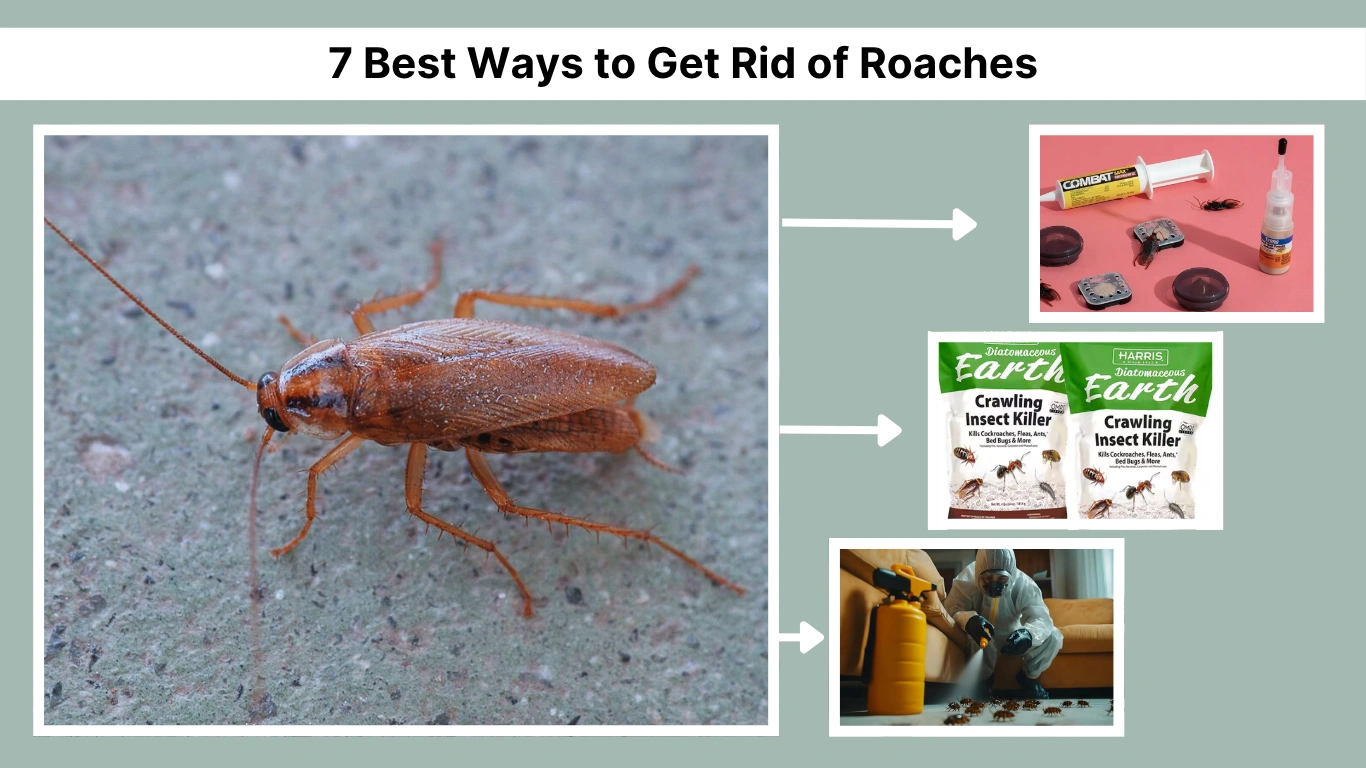
Cockroaches are among the most stubborn pests you can encounter in your home, apartment, car, or even electronics. They spread bacteria, trigger allergies, and breed at alarming rates — meaning a small problem can quickly turn into a full-blown infestation if you don’t act fast.
The good news is that there are proven methods to eliminate roaches effectively, whether you’re dealing with small German roaches in your kitchen, large American roaches in your basement, or palmetto bugs sneaking in from outside. In this guide, we’ll share the seven best ways to get rid of roaches — including quick fixes, long-term prevention strategies, and safe options for homes with pets — so you can reclaim your space and keep it roach-free for good.
Understanding Roach Infestations
A roach infestation occurs when cockroaches find food, water, and shelter in your environment — and start breeding rapidly. While spotting a single roach isn’t always a sign of a major problem, it often means more are hiding nearby, especially since these pests are nocturnal and prefer to stay out of sight.
Roaches can slip into homes, apartments, and vehicles through cracks, vents, plumbing lines, and even in grocery bags or cardboard boxes. Once inside, they reproduce quickly: a single female German cockroach can produce hundreds of offspring in a year.
Infestations are more than just unpleasant — they carry real risks. Roaches can spread harmful bacteria like Salmonella and E. coli, contaminate food, and trigger asthma or allergic reactions. Acting quickly is crucial, as the longer they remain, the harder they are to remove completely.
7 Best Ways to Get Rid of Roaches
1. Use Gel Baits and Bait Stations
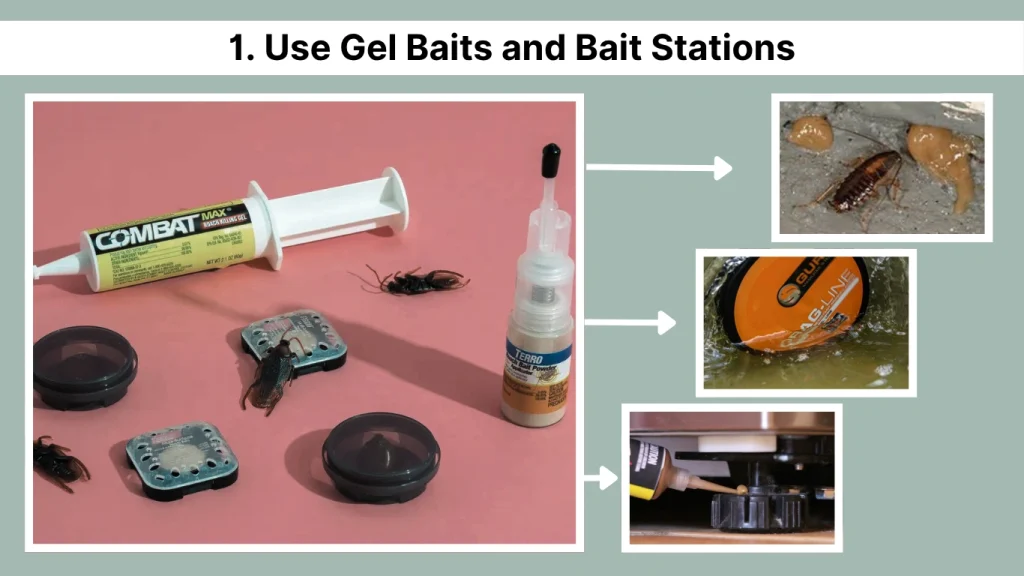
Gel baits and bait stations are among the most effective and fastest DIY roach killers. The bait contains a slow-acting insecticide mixed with food that attracts roaches. Once they eat it, they return to their hiding spots and spread the poison to other roaches through contact and droppings, killing more of the colony.
For best results:
- Place gel baits in areas where roaches travel frequently, such as under sinks, behind appliances, and along baseboards.
- Avoid placing bait where it can get wet or be contaminated by cleaning agents.
- Replace baits every few weeks to keep them fresh and effective.
This method works for most species, including German and American roaches, and is safe to use discreetly in kitchens and bathrooms when placed correctly.
2. Apply Boric Acid and Diatomaceous Earth
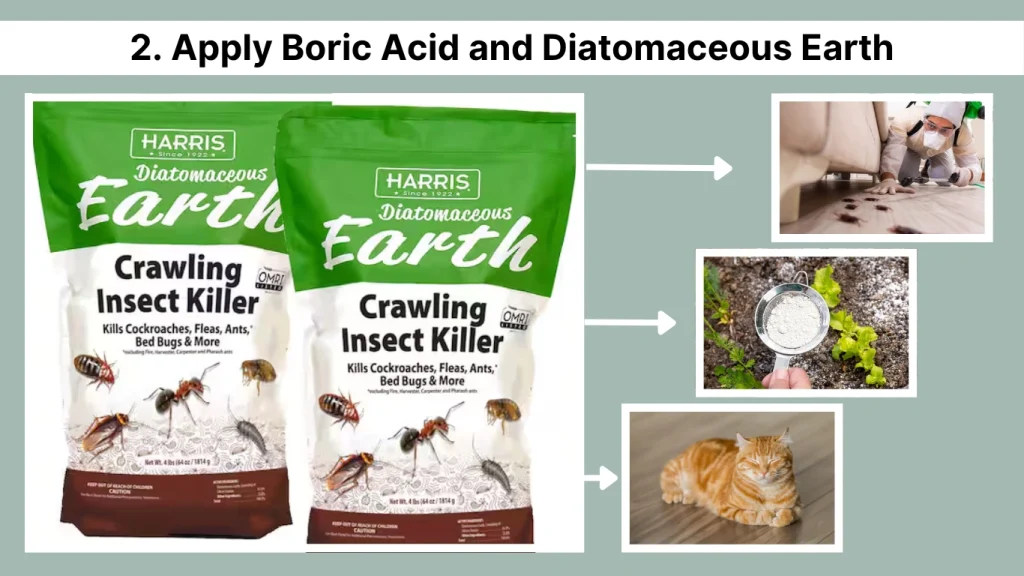
Boric acid and food-grade diatomaceous earth are natural, highly effective powders for long-term roach control. Boric acid damages the digestive and nervous systems of roaches when ingested, while diatomaceous earth works by cutting through their exoskeletons and dehydrating them.
Application tips:
- Lightly dust these powders in cracks, behind appliances, inside cabinet corners, and along wall edges where roaches travel.
- Use a thin layer — too much powder will cause roaches to avoid it.
- Keep boric acid away from children and pets, but food-grade diatomaceous earth is generally safe for homes with animals.
When used properly, these powders provide lasting results and are especially effective for roaches hiding in hard-to-reach areas.
3. Deep Clean and Sanitize Infested Areas
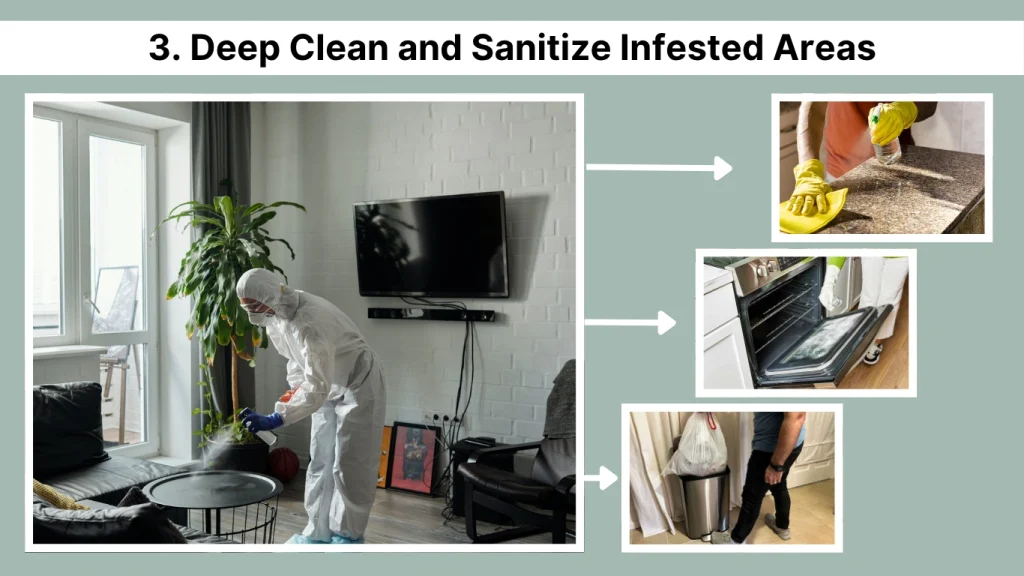
Roaches thrive in environments where food, grease, and moisture are readily available. Even the most effective treatments won’t work long-term if sanitation issues remain. Deep cleaning removes the resources that roaches need to survive and makes baits more attractive.
Cleaning checklist:
- Remove crumbs and spills immediately from counters, floors, and inside cabinets.
- Clean grease from stoves, ovens, and range hoods.
- Empty trash daily and use bins with tight-fitting lids.
- Wash dishes promptly and avoid leaving pet food out overnight.
- Dry out sinks and fix leaky faucets or pipes to remove water sources.
4. Seal Entry Points and Remove Hiding Spots
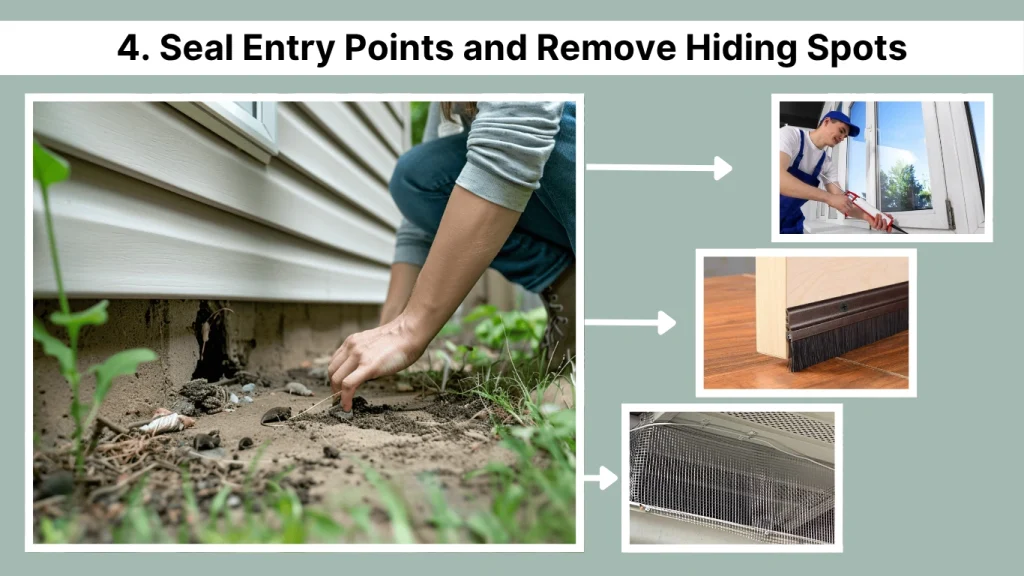
Roaches often enter through small cracks, gaps around plumbing, or spaces under doors. Sealing these areas prevents new pests from getting inside and forces existing ones into baited zones.
Prevention steps:
- Use caulk to seal cracks and gaps in walls, around baseboards, and along window frames.
- Install door sweeps to block entry under doors.
- Add fine mesh screens to vents and drains.
- Reduce clutter, including cardboard boxes, paper stacks, and unused appliances, which provide ideal hiding spots.
5. Use Insect Growth Regulators (IGRs)
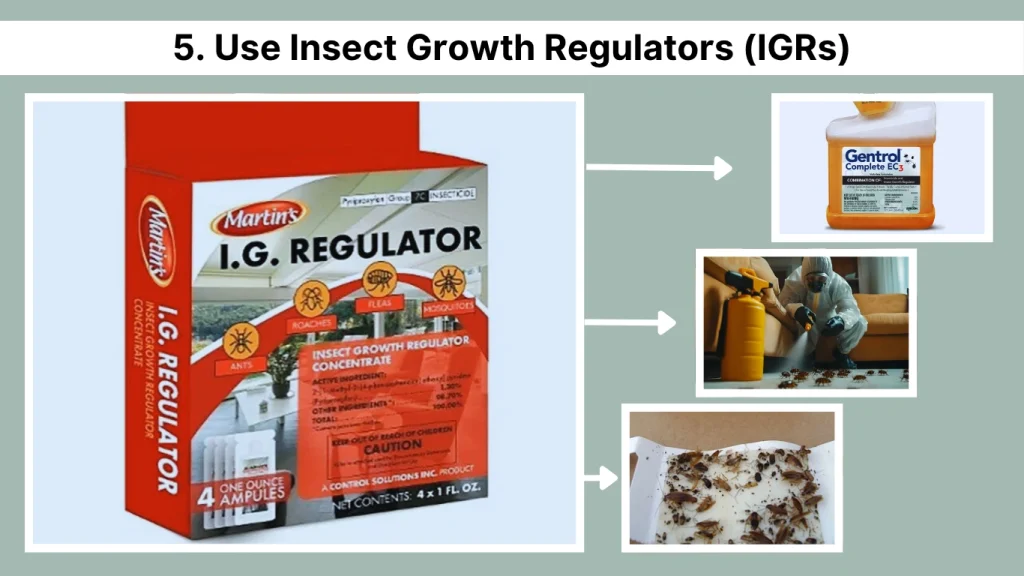
IGRs are chemicals that prevent roaches from reaching maturity or reproducing. They don’t kill instantly but disrupt the life cycle, gradually eliminating the infestation over time.
How to use IGRs:
- Combine them with baits or sprays for best results.
- Place them in high-traffic roach areas — behind appliances, under sinks, and in basements.
- Expect results over several weeks, as they primarily affect younger roaches.
6. Target Specific Roach Species
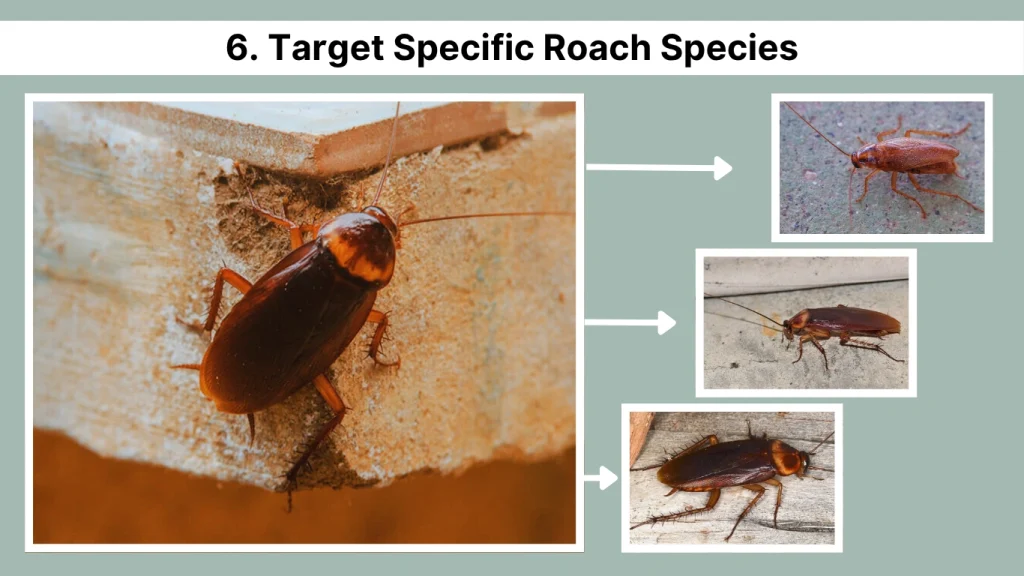
Different roach species require different strategies:
- German Roaches: Use gel baits and frequent cleaning in kitchens and bathrooms; they breed extremely quickly.
- American Roaches: Focus on sealing entry points and treating basements, utility rooms, and drains.
- Palmetto/Wood Roaches: Remove outdoor food sources, seal gaps in walls and roofs, and treat entry points.
- Large Roaches: Use combination baiting and spraying in areas they frequent, such as garages and crawl spaces.
7. Call Professional Pest Control for Severe Infestations

When DIY methods fail or the infestation is severe, professionals can provide guaranteed solutions. Pest control experts have access to stronger treatments, advanced monitoring tools, and strategies for large-scale infestations.
Professional services are especially recommended for:
- Infestations in multi-unit apartments.
- Roaches inside electronics or vehicles.
- Persistent problems despite repeated treatments.
Many pest control companies also offer follow-up visits to ensure the infestation is fully eliminated and provide prevention tips to avoid reinfestation.
Special Situations and Locations
Roaches in Apartments
In multi-unit buildings, roaches can easily travel between apartments through shared walls, plumbing lines, and ventilation systems. Even if you maintain a spotless home, nearby infestations can spread into your space. The best approach is to combine personal prevention measures — like sealing gaps and using baits — with building-wide pest control coordinated by the landlord or property manager. Communication with neighbors can also help ensure treatments happen simultaneously to prevent roaches from simply moving between units.
Roaches in Cars
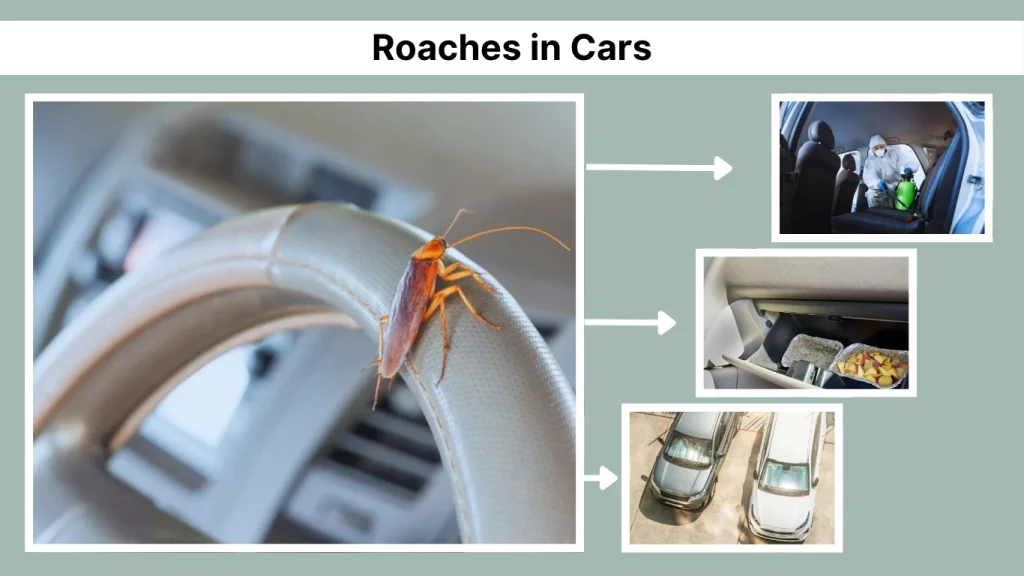
Roaches can enter vehicles through grocery bags, boxes, or even from infested garages. Once inside, they often hide in dark, warm areas such as under seats, inside dashboards, or near the trunk. To remove them:
- Thoroughly vacuum the interior and remove all food or trash.
- Place gel bait stations under seats or in the trunk.
- Park in sunlight when possible, as heat discourages roaches.
Roaches in Electronics (e.g., PS5)
Electronics provide roaches with warmth and hidden spaces, especially when kept in dark rooms. However, treating these devices requires caution to avoid damage. Unplug the device, place it in a large sealed bag with a silica gel or diatomaceous earth packet nearby (not directly on the electronics), and leave it for several days. For severe infestations, professional cleaning by an electronics-safe pest specialist is the safest option.
Roaches with Pets in the Home
If you have cats, dogs, or other pets, you must choose roach control methods that are both effective and safe for animals. Avoid toxic sprays or powders in areas where pets eat or play. Instead, opt for:
- Pet-safe gel baits placed inside bait stations that pets cannot access.
- Food-grade diatomaceous earth applied lightly in hidden areas.
- Essential oil repellents like peppermint or cedar, used sparingly and away from pet food bowls.
Always read labels to confirm a product is safe for use around animals.
Mixed Pest Infestations: Roaches and Rats
When roaches and rats infest the same space, you need a dual approach.
- For rats: Seal larger entry points, set snap traps or bait stations, and remove food sources.
- For roaches: Use gel baits, sanitation, and sealing small cracks.
Addressing one pest but not the other can cause the untreated species to flourish. Coordinating treatment for both ensures the environment becomes unlivable for both pests at once.
Quick and Easy Roach Removal Methods
If you need rapid relief, combine these short-term measures while planning a full treatment:
- Apply gel baits in hotspots to kill active roaches quickly.
- Use a vacuum with a HEPA filter to remove visible roaches and droppings.
- Set up sticky traps to monitor and reduce activity.
These methods won’t eliminate the entire infestation but can drastically reduce numbers in 24–48 hours.
Prevention Tips for Long-Term Roach Control
- Maintain Daily Cleanliness: Wipe surfaces, sweep floors, and store food in sealed containers.
- Remove Water Sources: Fix leaks, dry sinks, and empty pet water bowls before bed.
- Seal Entry Points: Use caulk for cracks, install door sweeps, and block gaps in walls.
- Declutter: Reduce cardboard, paper piles, and unused appliances where roaches can hide.
- Inspect Regularly: Check under appliances, inside cabinets, and along walls for signs of activity.
FAQs
What’s the most effective roach killer for home use?
Gel baits are highly effective because they target roaches inside their hiding spots and spread poison to others in the colony.
How long does it take to get rid of roaches completely?
Small infestations can be eliminated in 2–3 weeks with consistent treatment, while larger infestations may take several months.
Can you get rid of roaches without an exterminator?
Yes, if the infestation is small and you use a combination of baits, sanitation, and sealing entry points. Severe infestations may still require professional help.
Are natural remedies enough for severe infestations?
Natural remedies work best for prevention or mild infestations. Large-scale problems often require chemical treatments or professional pest control.
