
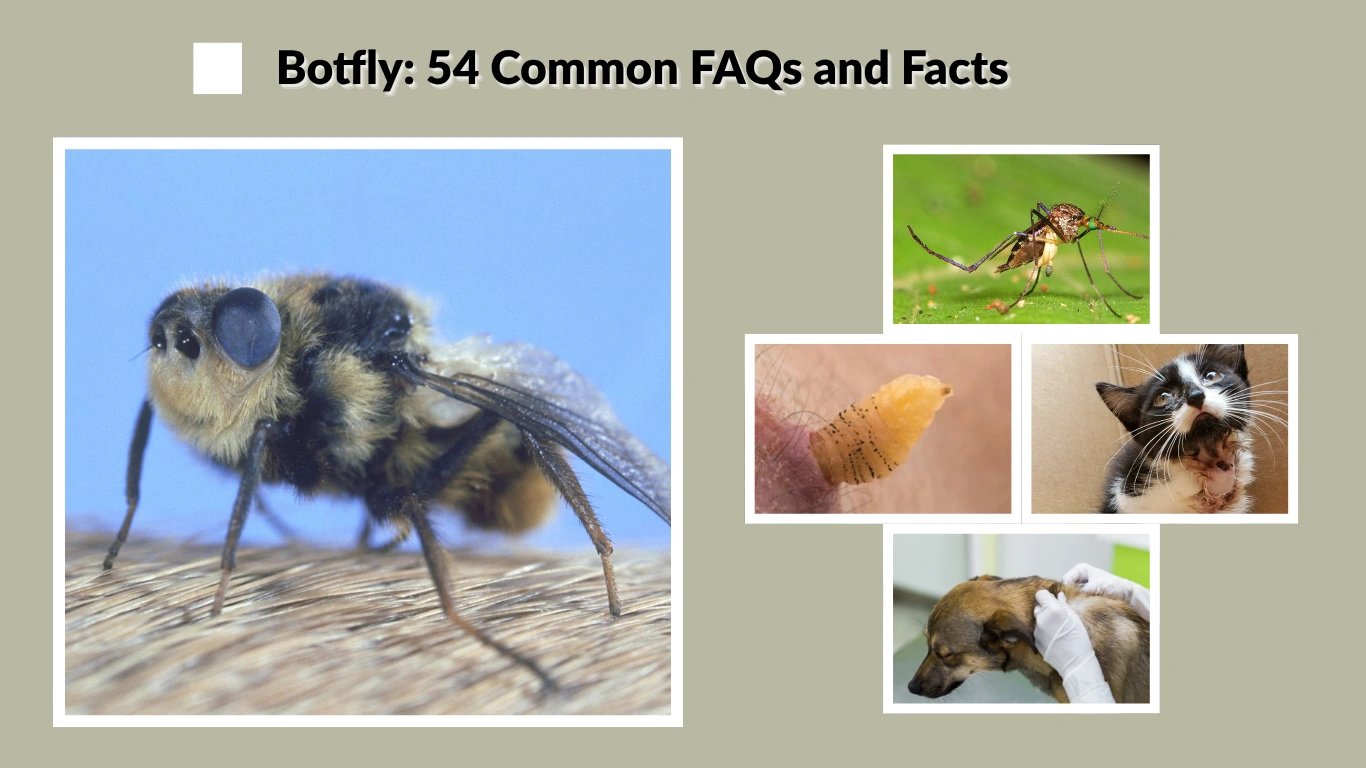
Botflies are one of the most unusual and unsettling parasites found in nature. Known for their ability to implant larvae beneath the skin of humans and animals, these insects raise many questions among curious readers and concerned pet owners alike. In this guide, we’ve answered 54 of the most commonly asked questions about botflies — covering everything from what they are, where they live, and how they infect, to treatment options and regional risks. Whether you’re planning travel to tropical areas, caring for pets, or just curious, this FAQ list gives you accurate and helpful facts about botfly behavior, prevention, and removal.
General Information
What is a botfly?
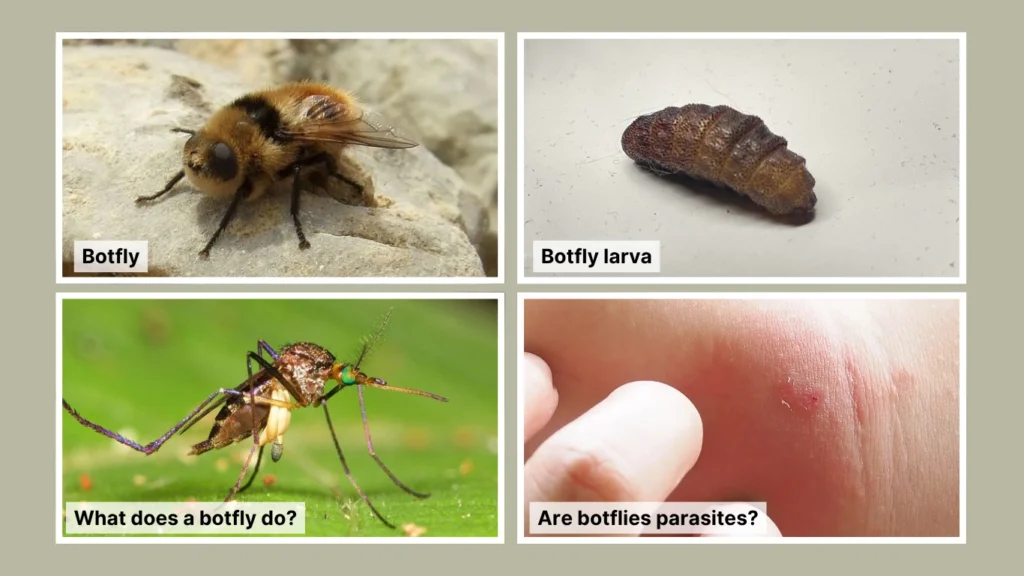
A botfly is a parasitic insect known for laying its eggs on hosts like mammals. When the eggs hatch, the larvae burrow into the skin and develop inside the host’s tissue. Botflies are mostly found in Central and South America and are known for their unique parasitic lifecycle.
What is a botfly larva?
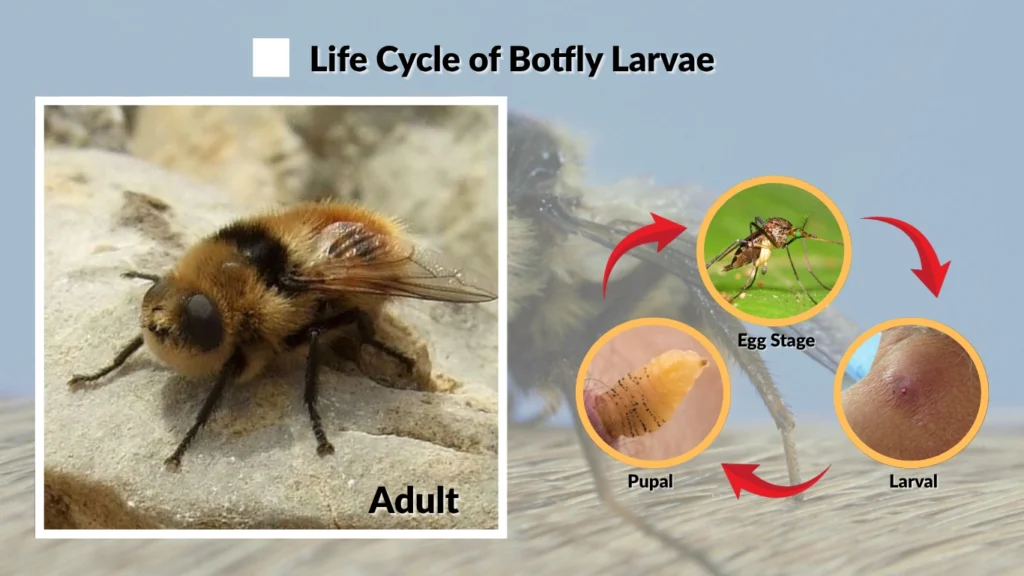
A botfly larva is the immature stage of the botfly, living inside a host’s skin. It feeds on the host’s tissue to grow. Once fully developed, it emerges from the skin and drops to the ground to pupate into an adult botfly. This stage causes discomfort and visible swelling.
What does a botfly do?
Botflies deposit their eggs on other insects or directly on animals. When the eggs hatch, the larvae burrow into the skin of mammals, where they live and grow. This process is parasitic and often causes swelling, irritation, or infection in the host until the larva emerges after development.
Are botflies parasites?
Yes, botflies are obligate parasites. Their larvae must live inside the body of a warm-blooded animal to survive. They cause a condition known as myiasis by burrowing into the host’s skin and feeding on tissue, making them parasitic during the larval stage of their life cycle.
Are botflies dangerous?
Botflies are not typically dangerous to humans or animals, but their larvae can cause painful skin infections and irritation. If not removed, they may lead to inflammation or secondary infections. While rarely life-threatening, the presence of a larva under the skin can be very distressing and uncomfortable.
Are botflies painful?
Yes, the presence of botfly larvae under the skin can be painful. Hosts may feel a sharp, stinging sensation, especially when the larva moves. The affected area can also become red, swollen, and itchy. Pain typically increases as the larva grows inside the host’s skin.
Can a botfly kill you?
It’s extremely rare for a botfly infestation to be fatal. However, if left untreated, severe infections or allergic reactions may occur. Botflies mostly cause localized skin irritation. Medical complications are uncommon but possible if secondary infections develop or if the larva is located near vital tissues.
Habitat & Location
Where do botflies live?

Botflies primarily live in tropical and subtropical regions, especially in Central and South America. Some species are also found in North America. Their lifecycle depends on a warm climate and a host animal, so they thrive in forests, rural areas, and places with abundant mammals or livestock.
Where are botflies found?
Botflies are found in regions with warm climates and abundant wildlife. The human botfly (Dermatobia hominis) is mostly found in Central and South America, while other species occur in North America, including Mexico and parts of the southern United States. They are less common in colder climates.
Where are botflies located in the US?
In the U.S., botflies are mostly found in the southern and southeastern states, such as Texas, Florida, and Georgia. These areas provide a suitable warm climate for their lifecycle. The species found in the U.S. typically parasitize animals like rodents, rabbits, and sometimes domestic pets.
Are botflies found in America?
Yes, botflies are found in parts of North and South America. While human-infesting botflies are mostly limited to Central and South America, other types that target animals are present in the United States, especially in the southern regions. They’re more common in rural or wooded environments.
Are there botflies in Texas?
Yes, botflies are present in Texas, particularly in rural areas and woodlands. The species found there typically infest animals like rodents, squirrels, and pets such as dogs and cats. Though rare, cases of human infestation from animal botflies have also been reported in this region.
Are there botflies in Florida?
Botflies are found in Florida, especially in forested or rural areas. The warm, humid climate makes it a suitable environment for botfly activity. In Florida, animal-infesting species are more common, and pet owners should be cautious about outdoor exposure, especially during warmer months.
Are there botflies in California?
Botflies are less common in California than in southeastern states, but some species may still be found in certain rural or woodland regions. California’s climate in the southern parts can support botfly activity, particularly those species that infest wildlife like rodents or rabbits.
Are there botflies in Canada?
Botflies are rare in Canada due to the colder climate. However, animal-specific botflies, such as those affecting moose or rodents, may be found in certain parts during warmer months. Human infestations are extremely uncommon, as the climate is generally not ideal for their development.
Are there botflies in Australia?
No, Australia does not naturally have botflies. The insect is not native to the region, and there have been no reports of established botfly species. However, travelers returning from countries with botflies could potentially carry larvae if bitten abroad during their trip.
Are there botflies in New York?
Botflies are not commonly found in urban areas like New York City, but some species exist in rural regions of the state. These typically infest animals such as squirrels or rodents. Human infestation in New York is rare and usually occurs when people travel to tropical areas.
Are there botflies in Ohio?
Botflies have been reported in parts of Ohio, particularly in rural or forested areas. They mainly affect wild animals like rodents or rabbits. Although human cases are rare, it is possible to encounter botflies in outdoor settings, especially during warmer weather.
Are botflies found in North America?
Yes, several species of botflies are found throughout North America. Most of them target animals such as rodents, rabbits, and livestock. While human infestation is rare in the U.S. and Canada, it can happen occasionally, especially in regions with warm, wooded environments.
Where do botflies come from?
Botflies originate from tropical and subtropical areas, particularly in Central and South America. Some species are also native to parts of North America. They rely on warm temperatures and host animals to complete their lifecycle, making these regions ideal habitats for their survival.
Where do you find botflies?
Botflies are commonly found in forests, grasslands, and rural areas where host animals are abundant. They are most prevalent in Central and South America but can also be encountered in parts of the U.S. People are more likely to encounter them when spending time outdoors.
Identification & Appearance
What does a botfly look like?
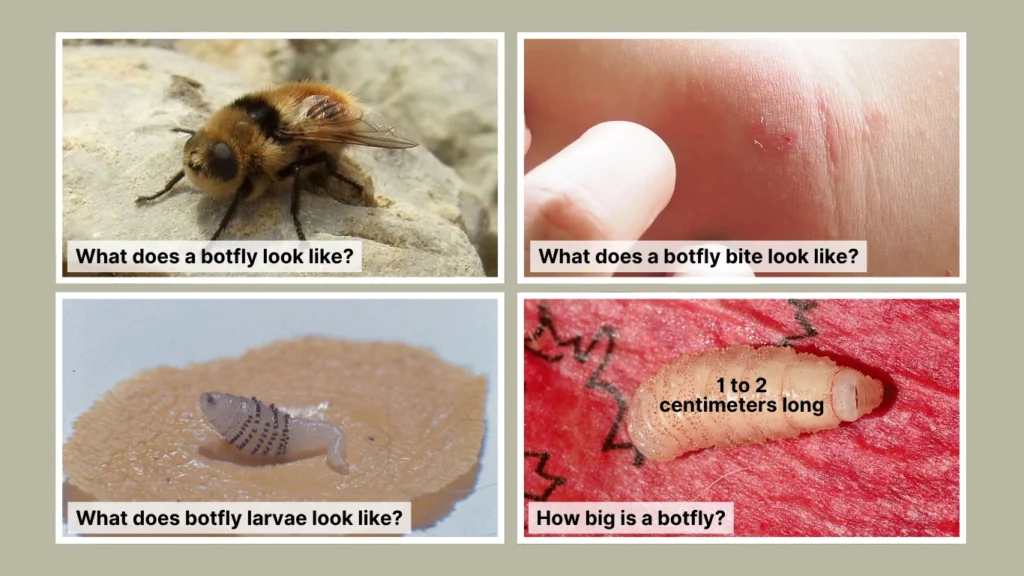
An adult botfly resembles a large hairy housefly or bumblebee, often with metallic blue or gray coloring. It has a robust body, small antennae, and strong wings. Despite their appearance, adult botflies do not bite or sting—they rely on other insects to transfer their eggs to hosts.
What does a botfly bite look like?
A botfly “bite” actually refers to the spot where the larva enters the skin. It looks like a swollen, red bump, similar to a boil or insect bite. The center may have a small hole where the larva breathes, and the area can become itchy, painful, or inflamed.
What does botfly larvae look like?
Botfly larvae are thick, white to yellowish, and segmented with a tapered shape and small hook-like spines. As they grow under the skin, they can reach around 1–2 centimeters in length. When removed or emerging, they appear as wriggling maggot-like worms with a tough exterior.
How big is a botfly?
Adult botflies are typically 1 to 2 centimeters long, about the size of a large housefly. The larvae, once fully grown under the skin, can reach a similar length. Their size varies by species, but they are large enough to cause noticeable skin swelling during infestation.
Lifecycle & Seasonality
When is botfly season?
Botfly season typically peaks during the warm months, from late spring through early fall, depending on the region. In tropical areas, they may be active year-round. In North America, most infestations in animals occur during summer when adult botflies are laying eggs on hosts or carrier insects.
Can there be more than one botfly in a hole?
While most botfly infestations involve a single larva per skin lesion, it’s possible—though uncommon—for multiple larvae to occupy the same area or host. In some animals or in rare human cases, more than one larva may infest close skin sites, but each usually has its own entry point.
Human Risks & Symptoms
How do humans get botflies?

Humans typically get botflies when a female botfly lays eggs on a mosquito or other insect. When that insect bites a person, the warmth triggers the eggs to hatch, and the larvae enter the skin. This indirect method allows the botfly to parasitize humans without direct contact.
How do botflies get into your skin?
Botfly eggs hatch on the skin surface, usually after being deposited by another insect like a mosquito. The larva then burrows into the skin through a hair follicle or the insect’s bite wound. Once inside, it creates a small bump where it lives and develops for weeks.
How do you know if you have a botfly?
Signs of a botfly include a painful, swollen lump with a small hole in the center. You may feel movement under the skin and experience itching or pressure. Sometimes, fluid or pus leaks from the lesion, and you may feel sharp pain as the larva grows.
How to tell if you have a botfly?
A botfly infestation can be identified by a boil-like bump that doesn’t heal, often accompanied by a central breathing hole. The area may be warm, red, and sore. In some cases, people feel the larva wriggling inside, especially when the skin is touched or pressed.
How common are botfly infections in humans?

Botfly infections in humans are relatively rare, especially outside Central and South America. Travelers to tropical regions may be at risk, particularly in rural or forested areas. Most cases occur when people are unaware of insect bites that have introduced botfly eggs or larvae into their skin.
How to prevent botfly in humans?
To prevent botfly infestation, use insect repellent, wear protective clothing, and sleep under mosquito nets when in tropical regions. Since botfly eggs are usually transferred by other insects, avoiding bites from mosquitoes and flies is the best defense. Inspect bites for unusual swelling or prolonged irritation.
Can humans get botflies from dogs?
It’s very unlikely for humans to get botflies directly from dogs. The larvae are species-specific and usually do not transfer between different hosts. However, handling an infested pet without proper hygiene might expose humans to bacteria from the wound, though not to the botfly itself.
Can humans get botflies from cats?
Botflies in cats are generally species-specific and do not infect humans. However, it’s important to handle infested cats carefully and wash hands after contact. While the larvae won’t transfer to humans, secondary infections or exposure to open wounds could pose minor health risks.
Botflies in Dogs
How do dogs get botflies?

Dogs usually get botflies by coming into contact with grass, soil, or burrows where botfly eggs have been laid. When a curious dog sniffs or lies near the eggs, the hatched larvae can enter through their nose, mouth, or skin and embed themselves in tissue to develop.
Are botflies common in dogs?
Botfly infestations in dogs are relatively common in rural or wooded areas, especially during warm months. Dogs that roam freely outdoors are more at risk, particularly if they explore rodent habitats or dig in the soil where botfly eggs or larvae may be present.
Can a botfly kill a dog?
A botfly infestation is rarely fatal for dogs. However, if a larva migrates to vital organs like the brain or spinal cord, it can cause serious complications. Most cases are limited to skin tissue and can be treated successfully with timely veterinary care and proper removal.
How to remove a botfly from a dog?
To remove a botfly from a dog, it’s best to visit a veterinarian. They’ll extract the larva using sterile tools, avoiding rupture, which could cause infection. Home removal is not recommended, as improper techniques can lead to complications, pain, or incomplete extraction of the larva.
How to get rid of a botfly in a dog?
Removing a botfly from a dog requires careful extraction of the larva, usually done by a vet. Afterward, the area is cleaned, and antibiotics may be prescribed to prevent infection. Avoid squeezing the lump, as this can push parts of the larva deeper or cause rupture.
How to remove a botfly from a dog at home?
If professional care is unavailable, you can try applying petroleum jelly to block the larva’s air hole, which forces it to the surface. Once visible, use tweezers to extract it gently. However, this method carries risks of infection and should only be used with caution.
Botflies in Cats
How do cats get botflies?
Cats often get botflies when they explore grassy, wooded, or rural areas where botfly eggs are present. The larvae enter through the skin, nose, or mouth after hatching in the environment. Outdoor cats are more susceptible, especially those that hunt or roam near rodent burrows.
Can indoor cats get botflies?
It’s very rare for indoor cats to get botflies unless they have access to the outdoors or come into contact with infested animals. Botflies lay their eggs in natural outdoor environments, so a strictly indoor lifestyle greatly reduces the risk of infestation.
Are botflies contagious in cats?
No, botflies are not contagious between cats. The infestation comes from direct contact with botfly eggs or larvae in the environment, not from another cat. However, if one cat in a multi-cat household gets infested, it’s wise to check others that share the same outdoor space.
Can a botfly kill a cat?
In most cases, a botfly will not kill a cat. However, if a larva migrates to sensitive areas like the brain, severe neurological issues can occur. These cases are rare. Most infestations are limited to the skin and resolve with proper removal and treatment.
How to treat botfly in cats?
Treatment involves careful removal of the larva by a veterinarian, followed by cleaning the wound. Antibiotics may be prescribed to prevent secondary infections. Pain relievers or anti-inflammatory medications might also be used. Avoid trying to squeeze or remove the larva at home.
How to remove a botfly from a cat?
A veterinarian will usually enlarge the breathing hole and gently extract the larva with forceps. It’s important not to rupture the larva, as this can cause infection. The wound is then disinfected, and the cat may be given medication to support healing and prevent complications.
How much does botfly removal cost for a cat?
The cost of removing a botfly from a cat typically ranges from $50 to $150, depending on location, the severity of the infestation, and whether sedation is needed. Additional costs may apply if antibiotics or follow-up care are required. A vet consultation is always recommended.
Botflies in Cats
How do cats get botflies?

Cats often get botflies when they explore grassy, wooded, or rural areas where botfly eggs are present. The larvae enter through the skin, nose, or mouth after hatching in the environment. Outdoor cats are more susceptible, especially those that hunt or roam near rodent burrows.
Can indoor cats get botflies?
It’s very rare for indoor cats to get botflies unless they have access to the outdoors or come into contact with infested animals. Botflies lay their eggs in natural outdoor environments, so a strictly indoor lifestyle greatly reduces the risk of infestation.
Are botflies contagious in cats?
No, botflies are not contagious between cats. The infestation comes from direct contact with botfly eggs or larvae in the environment, not from another cat. However, if one cat in a multi-cat household gets infested, it’s wise to check others that share the same outdoor space.
Can a botfly kill a cat?
In most cases, a botfly will not kill a cat. However, if a larva migrates to sensitive areas like the brain, severe neurological issues can occur. These cases are rare. Most infestations are limited to the skin and resolve with proper removal and treatment.
How to treat botfly in cats?
Treatment involves careful removal of the larva by a veterinarian, followed by cleaning the wound. Antibiotics may be prescribed to prevent secondary infections. Pain relievers or anti-inflammatory medications might also be used. Avoid trying to squeeze or remove the larva at home.
How to remove a botfly from a cat?
A veterinarian will usually enlarge the breathing hole and gently extract the larva with forceps. It’s important not to rupture the larva, as this can cause infection. The wound is then disinfected, and the cat may be given medication to support healing and prevent complications.
How much does botfly removal cost for a cat?
The cost of removing a botfly from a cat typically ranges from $50 to $150, depending on location, the severity of the infestation, and whether sedation is needed. Additional costs may apply if antibiotics or follow-up care are required. A vet consultation is always recommended.
Transmission & Spread
How do botflies get into animals?
Botflies lay their eggs near animal burrows or on mosquitoes and flies. When animals come in contact with these sites or get bitten by the carrier insects, the eggs hatch and larvae burrow into the skin. The larvae then settle under the skin and begin developing.
How do botfly larvae enter skin?
Botfly larvae enter the skin through hair follicles, open pores, or tiny wounds. Often, they hatch from eggs laid on another insect like a mosquito. When the mosquito bites a host, the warmth triggers the egg to hatch, allowing the larva to penetrate the skin immediately.
Can botflies be transmitted to humans?
Yes, botflies can infect humans, but not through direct contact. Transmission typically happens when a mosquito or fly carrying botfly eggs lands on human skin. The warmth causes the eggs to hatch, and the larvae burrow into the skin. Direct human-to-human transmission does not occur.
Can botfly larvae kill animals?
Botfly larvae rarely kill animals but can cause serious infections or tissue damage if left untreated. In rare cases, larvae migrate to vital organs like the brain or lungs, leading to severe complications. Early detection and removal are important to prevent health risks in infested animals.
