

Many insects are often mistaken for ants with wings, especially during swarming seasons or when they gather in large numbers. While flying ants are the most well-known, other bugs like termites, aphids, and even tiny parasitic wasps share similar traits that cause confusion. This list highlights 7 bugs that closely resemble winged ants, along with their unique features that set them apart.
1. Termites (Alates)

When termites reach their reproductive stage, they develop wings and are commonly known as alates. These winged termites are often confused with ants with wings because of their similar swarming behavior and small size. However, a closer look reveals distinct differences, such as straight antennae, equal-sized wings, and a broader waist compared to ants.
Identification
- Straight, bead-like antennae
- Two pairs of equal-length wings
- Thick, broad waist without a narrow “pinched” middle
- Body color varies from light brown to dark brown
Habitat
Alates emerge from mature termite colonies, often located underground, in wood, or near moist soil. They take flight in warm, humid weather, especially after rainfall, to establish new colonies.
Behavior
Swarming is the most recognizable behavior of termite alates. Thousands of them leave their parent colony at once, flying toward light sources in the evening. Once they land, they shed their wings and pair off to start new colonies.
Diet
Like other termites, alates rely on cellulose as their main food source. They consume wood, paper, plant matter, and other cellulose-rich materials, which makes them significant pests in homes and buildings.
2. Flying Ants (Reproductive Ants)

Flying ants are another common bug that looks like an ant with wings, but unlike termites, they are actually ants in their reproductive stage. These winged ants emerge in large numbers during mating season, often called the “nuptial flight.”
Identification
- Elbowed antennae
- Two pairs of wings, with the front pair longer than the back
- Narrow “pinched” waist
- Dark brown to black body color, depending on species
Habitat
Flying ants appear in summer and are usually seen outdoors near established ant colonies. They can be found in gardens, lawns, and even inside homes when they swarm in search of new nesting areas.
Behavior
During nuptial flights, males and females take to the air to mate. Afterward, males die, while fertilized females shed their wings and establish new colonies. This behavior often causes alarm when large swarms suddenly appear.
Diet
Flying ants eat the same foods as their colony workers, including sugars, nectar, seeds, and in some cases, other insects. They rely on stored energy during their short flight period before founding new colonies.
3. Winged Aphids

Winged aphids are tiny bugs that look like ants with wings, especially when they develop their flying form during seasonal changes. These soft-bodied insects are often mistaken for flying ants due to their size and swarming habits.
Identification
- Small, pear-shaped body
- Two transparent wings, with the front pair slightly larger
- Long, slender legs and antennae
- Usually green, black, brown, or yellow
Habitat
Winged aphids are found on a wide variety of plants, including crops, flowers, and trees. They thrive in gardens, farms, and natural vegetation, where they can feed on plant sap.
Behavior
They form large colonies and can quickly multiply. Winged aphids appear when populations grow too dense, allowing them to fly off and colonize new plants. This dispersal strategy makes them a common pest in agriculture.
Diet
Aphids feed on plant sap using piercing-sucking mouthparts. Their feeding weakens plants, and they also excrete honeydew, which attracts ants and promotes sooty mold growth.
4. Barklice (Psocoptera)

Barklice are small insects sometimes mistaken for ants with wings because of their size and swarming habits. Although harmless, their appearance often causes confusion when they gather in large groups.
Identification
- Soft-bodied with a slender frame
- Two pairs of membranous wings held roof-like over the body
- Long antennae similar to ants
- Usually pale, brown, or gray in color
Habitat
Barklice are commonly found on tree bark, foliage, stored papers, and occasionally indoors in damp areas. They prefer humid environments where mold, algae, or fungi are present.
Behavior
These insects often live in groups, forming colonies that may look like swarms of winged ants. They are not aggressive and do not sting or bite. Their presence is usually an indication of moisture and organic growth.
Diet
Barklice feed on mold, fungi, algae, lichen, and organic debris, making them beneficial in natural ecosystems but a nuisance when seen in large numbers around homes.
5. Sawflies
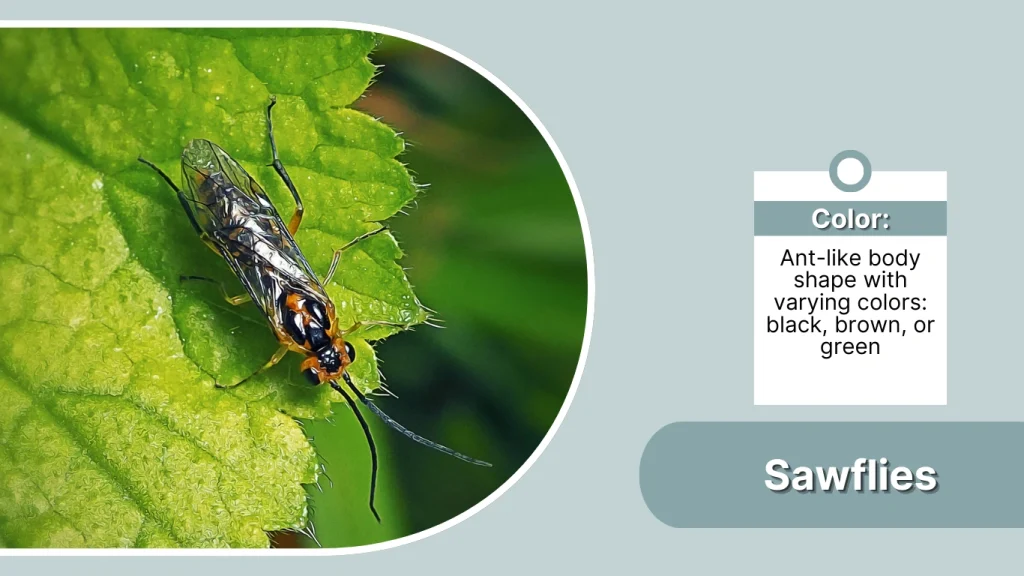
Sawflies are another insect often mistaken for ants with wings, especially because of their slender bodies and swarming activity. Although they are related to wasps, their ant-like appearance can cause confusion.
Identification
- Two pairs of transparent wings of equal size
- Thick waist (not pinched like ants or wasps)
- Ant-like body shape with varying colors: black, brown, or green
- Size ranges from 0.2 to 0.8 inches depending on species
Habitat
Sawflies are commonly found in gardens, forests, and fields. They lay eggs on the leaves of plants, and their larvae feed on foliage, sometimes causing heavy damage to crops and ornamentals.
Behavior
Adult sawflies are weak fliers and usually stay close to plants. They can appear in groups and be mistaken for winged ants. Their larvae often feed together in clusters, resembling caterpillars.
Diet
Adult sawflies feed on nectar and plant fluids, while larvae consume large amounts of leaves from trees and shrubs, sometimes defoliating entire plants.
6. Ichneumon Wasps

Ichneumon wasps are slender parasitic wasps that can be mistaken for ants with wings because of their thin bodies and long antennae. Despite their wasp-like nature, their delicate frame and movements resemble those of winged ants.
Identification
- Long, narrow body with two pairs of transparent wings
- Extremely long, thin antennae
- Often black, brown, or reddish in color
- Females may have a long ovipositor resembling a stinger
Habitat
Ichneumon wasps are widespread, found in forests, gardens, and fields worldwide. They are commonly seen near plants and wood where host insects live.
Behavior
These wasps are solitary and non-aggressive toward humans. Females use their ovipositors to lay eggs inside or on host insects like caterpillars, beetles, or spiders.
Diet
Adults feed on nectar and plant fluids, while larvae are parasitic, consuming their host insects from the inside out. This makes them beneficial for natural pest control.
7. Fairyflies (Mymaridae family)
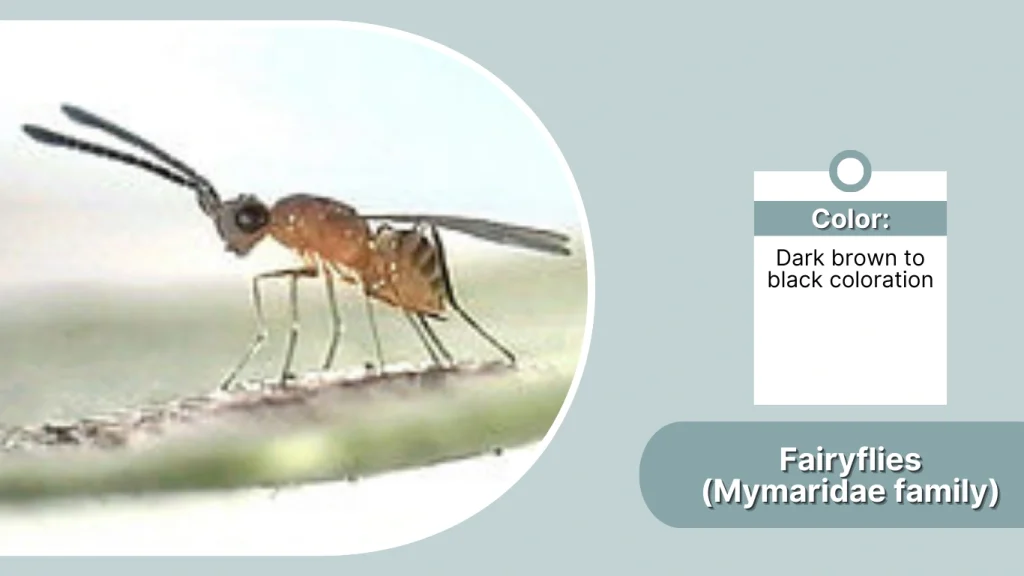
Fairyflies are tiny parasitic wasps that can easily be mistaken for ants with wings because of their small size and delicate build. Despite their name, they are among the smallest insects in the world.
Identification
- Minute size, often less than 1 millimeter
- Slender body with long antennae
- Transparent, fringed wings
- Dark brown to black coloration
Habitat
Fairyflies are found worldwide, usually in gardens, forests, and fields. They live close to the habitats of their host insects, where they lay eggs inside other insects’ eggs.
Behavior
They are excellent flyers despite their small size. Their ant-like appearance in swarms makes them easy to confuse with winged ants. As parasites, they play an important role in controlling pest populations.
Diet
Adult fairyflies feed on nectar and plant sap, while their larvae develop inside the eggs of other insects, consuming them from within.
