

In the world of mimicry, few creatures are as convincing as spiders that look like ants. These clever arachnids have evolved to imitate ants in shape, color, and even behavior, allowing them to avoid predators and sometimes sneak up on prey. From ant-mimicking jumping spiders like Myrmarachne formicaria to ground dwellers such as Castianeira descripta, each species showcases a unique survival strategy. Here are 12 fascinating spiders that resemble ants in the wild.
1. Myrmarachne formicaria

Myrmarachne formicaria is a fascinating spider that looks like an ant, belonging to the ant-mimicking jumping spiders. This species has evolved to resemble ants both in appearance and movement, which helps it avoid predators and hunt efficiently.
Identification
- Slender body with a narrow “waist” mimicking ants
- Reddish-brown to black coloration
- Long front legs held up like antennae
- Size ranges from 5 to 7 millimeters
Habitat
Myrmarachne formicaria is found across Europe and Asia, living in grasslands, forest edges, and gardens. They prefer habitats where ants are common, making their disguise more effective.
Behavior
This spider not only looks like an ant but also moves like one, walking in a zigzag pattern and waving its front legs to mimic ant antennae. The mimicry protects it from predators that avoid ants due to their aggressive nature.
Diet
Like other jumping spiders, it feeds on small insects. Its ant-like disguise allows it to approach prey closely before launching a quick attack.
2. Myrmaplata plataleoides (Kerengga Ant-like Jumper)

Myrmaplata plataleoides, also called the Kerengga ant-like jumper, is a well-known spider that looks like an ant. It specifically mimics the weaver ant (Oecophylla smaragdina), which is highly aggressive and avoided by many predators.
Identification
- Bright reddish-orange body resembling weaver ants
- Long, slender legs with the front pair raised like antennae
- Narrow waist, enhancing its ant-like look
- Body length around 6–10 millimeters
Habitat
This species is common in South and Southeast Asia, especially in gardens, forests, and areas where weaver ants build their nests.
Behavior
It mimics both the look and behavior of ants, walking quickly and waving its front legs like real antennae. This mimicry helps it blend in with ant colonies, gaining protection.
Diet
Despite resembling ants, it is a predator. It feeds on small insects and sometimes even preys on ants themselves, ambushing them with precise jumps.
3. Myrmarachne melanocephala

Myrmarachne melanocephala is another remarkable spider that looks like an ant, known for its convincing mimicry and agile movements.
Identification
- Dark-colored cephalothorax with a shiny black “ant head” look
- Slender body with a narrow waist
- Long front legs imitating ant antennae
- Average size of 6–9 millimeters
Habitat
This spider is widespread in Asia, found in forests, grasslands, and sometimes near human settlements where ants are abundant.
Behavior
It copies ant movements, including rapid walking and antennal imitation. Its mimicry protects it from predators while allowing it to sneak close to prey.
Diet
It primarily feeds on small insects but can also target ants, using its disguise to approach without raising alarm before attacking.
4. Myrmarachne japonica

Myrmarachne japonica is a skilled spider that looks like an ant, belonging to the jumping spider family (Salticidae). Its body structure and movements strongly resemble ants, which helps it survive in predator-rich environments.
Identification
- Slender brown body with a distinct narrow waist
- Front legs held forward like antennae
- Shiny head region resembling an ant’s head
- Size ranges from 5 to 7 millimeters
Habitat
This spider is commonly found in Japan, China, and surrounding East Asian regions. It lives in forests, grasslands, and gardens, particularly where ant colonies are present.
Behavior
It imitates ants by walking in irregular, jerky motions and raising its legs to copy ant antenna movements. This mimicry protects it from predators that avoid ants.
Diet
Feeds on small insects, often using its disguise to approach prey unnoticed before pouncing with its jumping ability.
5. Myrmarachne plataleoides

Myrmarachne plataleoides is another striking spider that looks like an ant, often confused with weaver ants due to its vivid coloration and body design.
Identification
- Bright reddish-orange body resembling weaver ants
- Distinctively narrow waist and elongated body
- Long forelegs that act as “false antennae”
- Grows up to 10 millimeters in length
Habitat
Native to South and Southeast Asia, it thrives in tropical forests, parks, and gardens where weaver ants are common.
Behavior
It lives close to weaver ant colonies, gaining protection by blending in. This mimicry fools predators and even allows it to move safely among real ants.
Diet
It hunts small insects and occasionally ants, using stealth and speed to capture prey. Its ant-like disguise makes hunting more effective.
6. Peckhamia picata

Peckhamia picata is a North American spider that looks like an ant, belonging to the jumping spider family. Its body and movements are carefully adapted to mimic ants, offering protection against predators.
Identification
- Dark reddish-brown body with a segmented ant-like waist
- Long slender legs, with the first pair raised like antennae
- Shiny cephalothorax resembling an ant’s head
- Small size, averaging 4–6 millimeters
Habitat
Found mainly in the United States and Central America, Peckhamia picata lives in forests, grasslands, and leaf litter where ants are abundant.
Behavior
It imitates ant-like walking patterns, with quick movements and pauses. This mimicry helps deter predators that typically avoid ants.
Diet
Like most jumping spiders, it feeds on small insects and occasionally ant workers, using stealth and quick jumps to capture prey.
7. Micaria sociabilis

Micaria sociabilis is a ground-dwelling spider that looks like an ant, especially when moving quickly across leaf litter or soil.
Identification
- Black or dark brown body with a glossy finish
- Slender abdomen resembling an ant’s body shape
- Quick, jerky movements similar to ants
- Average size of 3–5 millimeters
Habitat
This species is found across Europe and Asia, inhabiting meadows, open forests, and dry grasslands. It often lives in close association with ant colonies.
Behavior
Its ant-like body structure and fast running mimic ants perfectly, offering protection from predators. It rarely builds webs, instead hunting actively on the ground.
Diet
Micaria sociabilis feeds on small insects and other invertebrates, ambushing prey while relying on its ant disguise for cover.
8. Castianeira descripta
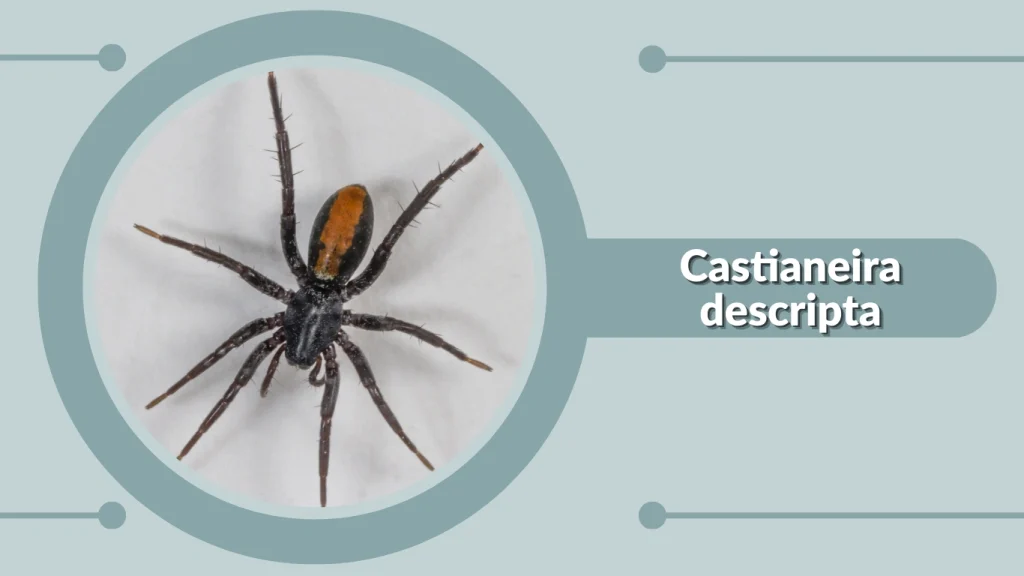
Castianeira descripta, also known as the ant-mimic ground spider, is a striking spider that looks like an ant, using both its body shape and coloration to achieve mimicry.
Identification
- Black body with reddish markings, resembling velvet ants
- Elongated body with a narrow waist
- Moves quickly with ant-like jerks
- Medium size, about 6–10 millimeters
Habitat
This species is native to North America and is often found in woodlands, grasslands, and leaf litter. It prefers dry habitats where ants are active.
Behavior
Unlike web-building spiders, it is an active hunter that roams the ground. Its ant mimicry deters predators and helps it blend in with true ants.
Diet
It preys on small insects and occasionally ant workers, attacking swiftly using its agility.
9. Myrmarachne maxillosa

Myrmarachne maxillosa is another fascinating spider that looks like an ant, particularly known for its elongated jaws and slender body.
Identification
- Long, thin body with a distinctly narrow waist
- Extended chelicerae (jaws) that add to its mimicry
- Reddish-brown to dark brown coloration
- Size ranges from 8 to 10 millimeters
Habitat
Found in Asia and Africa, this spider inhabits forests, shrubs, and gardens. It often stays near ant colonies to enhance its camouflage.
Behavior
It walks with its front legs raised to resemble ant antennae and mimics the zigzag movements of ants. This behavior protects it from predators and aids in hunting.
Diet
It feeds on small insects and sometimes ants themselves, relying on its ant-like disguise to approach prey unnoticed.
10. Synemosyna formica

Synemosyna formica is a New World ant-mimicking jumping spider and an excellent example of a spider that looks like an ant. Its resemblance to ants is so strong that it often goes unnoticed even by experienced observers.
Identification
- Slender black body with a narrow waist
- Two body segments shaped like an ant’s thorax and abdomen
- Front legs raised and moved like antennae
- Small, averaging 4–6 millimeters in length
Habitat
This species is found across North and South America, especially in forests, grasslands, and gardens where ants are abundant.
Behavior
It imitates both the walking style and antennal movements of ants. This mimicry provides protection against predators and helps it hunt without being detected.
Diet
Synemosyna formica feeds on tiny insects, using ambush tactics similar to other jumping spiders. Its disguise often allows it to get close to prey without alarming them.
11. Myrmarachne aussereri

Myrmarachne aussereri is a skilled ant-mimicking jumping spider and a classic spider that looks like an ant, using its slim body and behavior to complete the illusion.
Identification
- Elongated body with a constricted “waist”
- Reddish-brown to black coloration
- Long front legs imitating antennae
- Average size of 6–8 millimeters
Habitat
This spider is found in parts of Europe and Asia, often in meadows, open woodlands, and shrubs where ants are common.
Behavior
It moves in an ant-like zigzag pattern and waves its front legs like real antennae. Predators are fooled into thinking it is an ant, which they typically avoid.
Diet
Like other jumping spiders, it hunts actively for small insects. Its ant-like disguise allows it to get close to prey and strike with precision.
12. Myrmarachne maratha

Myrmarachne maratha is a fascinating spider that looks like an ant, belonging to the ant-mimicking jumping spider group. Its body design and behavior make it almost indistinguishable from real ants at first glance.
Identification
- Slender, elongated body with a narrow waist
- Dark brown to reddish coloration resembling ants
- Long front legs raised and moved like antennae
- Size ranges from 5 to 7 millimeters
Habitat
This species is native to India and surrounding South Asian regions. It is commonly found in gardens, shrubs, and forested areas where ants are abundant.
Behavior
Myrmarachne maratha mimics ants not only in appearance but also in movement, walking in jerky patterns and waving its front legs like antennae. This mimicry helps it avoid predators and blend in with ant colonies.
Diet
It feeds on small insects and occasionally on ants themselves, using its disguise to get close before ambushing prey with its jumping ability.
