

Carpenter bee eggs mark the beginning of the insect’s life cycle, hidden deep within wooden tunnels where females carefully protect them. From their unique appearance to their hatching timeline, understanding these eggs—and the larvae they produce—can help homeowners detect and prevent infestations before they cause significant damage.
This guide explains how to identify carpenter bee eggs, their development stages, hatching process, and effective prevention methods.
Do Carpenter Bees Lay Eggs?
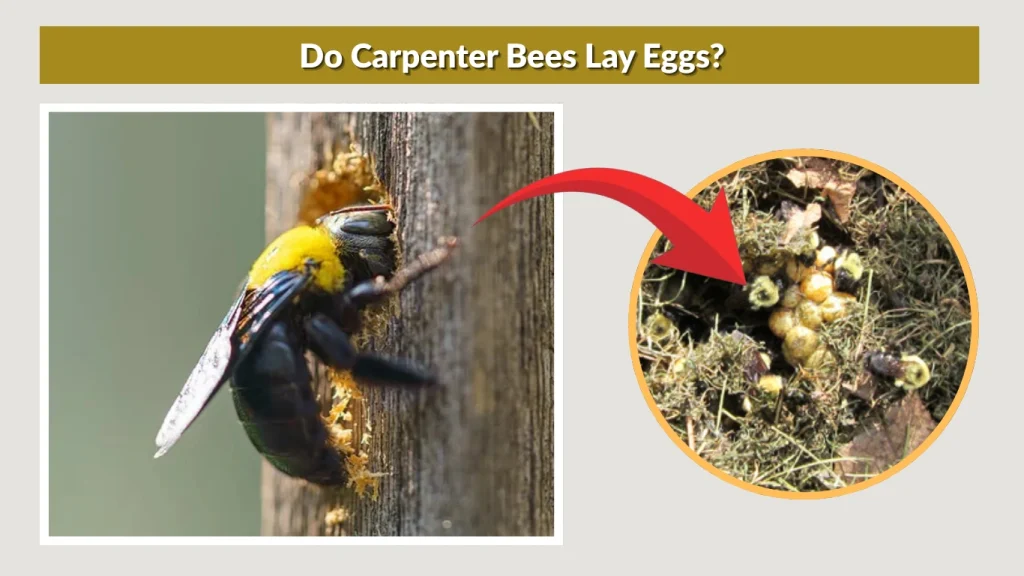
Yes! Carpenter bees reproduce by laying eggs inside carefully crafted wooden tunnels, ensuring protection and a steady food source for their young. Understanding this process helps in identifying and managing potential infestations.
How the Egg-Laying Process Works
After mating in spring, the female carpenter bee bores a tunnel into untreated or unpainted wood, about half an inch in diameter. She creates small chambers inside, each stocked with a mixture of pollen and nectar known as “bee bread.” A single egg is placed in each chamber before being sealed with chewed wood pulp.
Where Eggs Are Usually Placed in Tunnels
Eggs are hidden deep inside the tunnel, away from the entrance. This location shields them from predators, parasites, and weather. The tunnels typically run 6–12 inches into the wood, with eggs laid in sequence, separated by thin wooden partitions.
Seasonal Timing of Egg-Laying
Most egg-laying occurs in late spring to early summer, shortly after the tunnel construction is complete. In warmer regions, this may start earlier, while in cooler areas it may be delayed. Development speed depends largely on temperature and environmental conditions.
What Do Carpenter Bee Eggs Look Like?

Carpenter bee eggs are distinct in their appearance, making them identifiable if a tunnel is opened. Their size, color, and shape are adapted for protection and development inside the wooden chambers.
Shape, Size, and Color of Eggs
Carpenter bee eggs are elongated and oval, often resembling small grains of rice. They are creamy white to pale yellow and can measure up to 0.1–0.2 inches in length, making them larger than many other insect eggs.
Differences Between Eggs and Other Insect Eggs in Wood
Unlike termite or wood-boring beetle eggs, carpenter bee eggs are much larger and are laid individually in separate cells. Termite eggs are tiny, clustered, and found in soil or damp wood, while carpenter bee eggs are isolated and positioned alongside a pollen supply.
Carpenter Bee Egg Sac and Protective Layers
Each egg is surrounded by a thin membrane and protected within a sealed wooden cell. The “egg sac” refers to the enclosed chamber containing the egg and its pollen-nectar food source, secured by a partition of chewed wood pulp.
How Many Eggs Does a Carpenter Bee Lay?
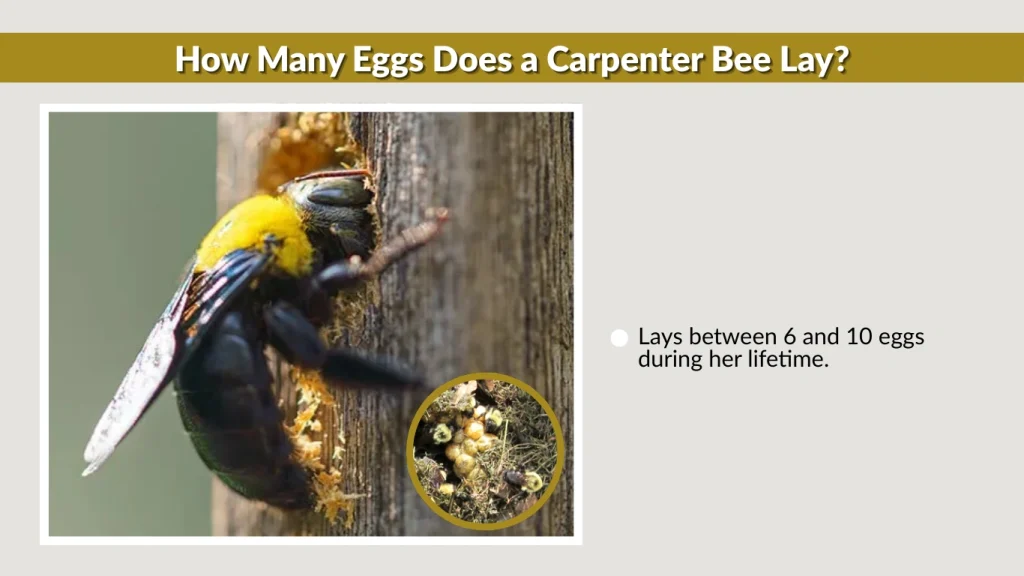
The number of eggs a carpenter bee lays depends on the female’s lifespan, tunnel size, and environmental conditions. Generally, each female produces only a small number compared to social bees.
Typical Number Per Female
A single female carpenter bee usually lays between 6 and 10 eggs during her lifetime. Each egg is placed in a separate chamber, with the oldest egg positioned at the deepest point in the tunnel.
Factors Affecting Egg Quantity
Egg production can vary based on food availability, weather, wood quality, and the bee’s health. Females with access to abundant pollen sources and soft, untreated wood tend to lay more eggs.
Egg-Laying Pattern Inside the Tunnel
The female starts from the deepest part of the tunnel and works toward the entrance. Each chamber is stocked with “bee bread” before an egg is laid and sealed off. This arrangement ensures that the first eggs laid hatch last, allowing younger bees closer to the entrance to emerge first.
When Do Carpenter Bee Eggs Hatch?
Carpenter bee eggs hatch after a short incubation period, influenced mainly by temperature and seasonal conditions. Knowing the timing helps in predicting when larvae will appear and when damage prevention steps should be taken.
Average Hatching Time (How Long It Takes)
On average, carpenter bee eggs take 5 to 19 days to hatch. Warmer weather speeds up development, while cooler conditions can extend the hatching period.
Environmental Factors Affecting Hatching
Temperature, humidity, and food quality inside the chamber all play a role in egg development speed. Optimal conditions occur in late spring to early summer when pollen is abundant and temperatures are mild to warm.
Peak Hatching Season in Different Climates
In warm climates, eggs may hatch as early as late spring. In cooler or northern regions, hatching typically peaks in mid-summer. Understanding your local climate can help determine the best time for preventive measures.
Carpenter Bee Larvae Development
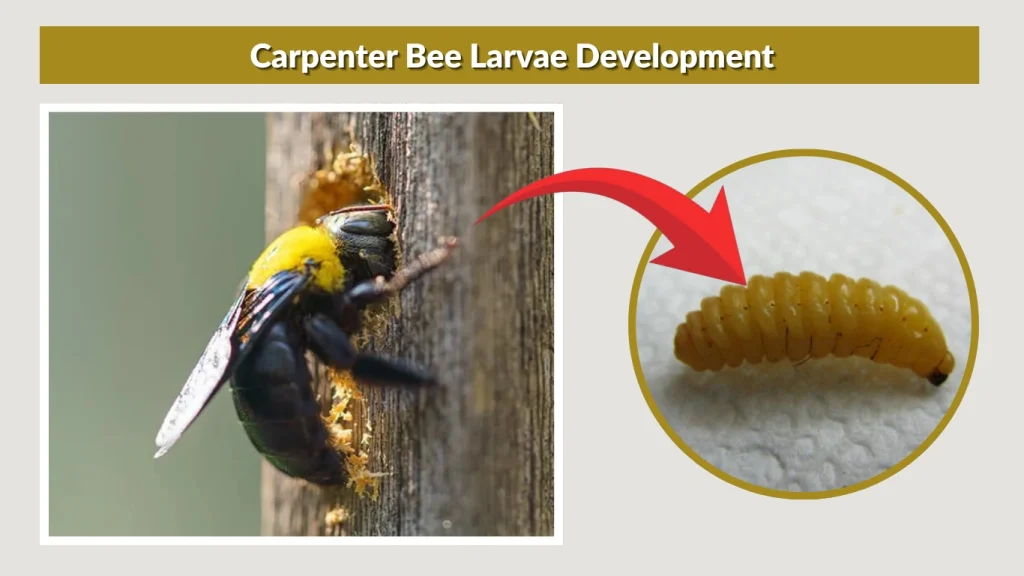
Once the eggs hatch, the carpenter bee larvae begin their growth inside the protected wooden chambers, relying entirely on the food supply provided by the mother. Their development is a crucial stage in the carpenter bee life cycle.
Carpenter Bee Larvae Stages from Egg to Adult
The larvae first emerge as soft, white, worm-like grubs. Over time, they progress through several growth stages, eventually transforming into pupae before emerging as fully developed adult bees. This entire process can take several weeks to months, depending on temperature and environmental conditions.
Physical Appearance of Larvae
Carpenter bee larvae are creamy white, legless, and slightly curved, with a distinct head capsule. They are larger than many wood-boring insect larvae and remain inactive except for feeding.
Where Larvae Are Found (Including Larvae on Ground)
Larvae are typically found inside the sealed wooden cells deep within tunnels. Occasionally, damaged or disturbed wood can cause larvae to fall to the ground, especially if a predator, woodpecker, or human activity exposes the nest.
Do Carpenter Bee Larvae Eat Wood?
Carpenter bee larvae do not consume wood; instead, they survive on the stored food their mother provides. This key difference sets them apart from other wood-boring pests like termites.
Primary Diet of Larvae
The larvae feed exclusively on “bee bread,” a mixture of pollen and nectar packed into each chamber before the egg is laid. This nutrient-rich food supports their growth until they pupate.
How They Get Their Food Inside the Nest
The pollen-nectar mixture is placed directly beneath the egg, so when the larvae hatch, they have immediate access to their food source. This setup ensures they can feed without leaving the safety of the chamber.
Difference Between Carpenter Bees and Termites
Unlike termites, which actively chew and digest wood for nutrition, carpenter bee larvae only tunnel by accident if they are disturbed before pupation. Their diet causes no additional structural damage beyond the original nesting tunnel.
Are Carpenter Bee Larvae Dangerous?

Carpenter bee larvae pose little direct risk to humans or pets, but they can still be a concern because of the structural damage linked to their nesting tunnels and potential attraction of predators.
Risks to Humans or Pets
Larvae themselves do not sting or bite, making them harmless in direct contact. However, handling them can attract the attention of adult carpenter bees, which may become defensive if they feel their nest is threatened.
Structural Damage Concerns
While the larvae don’t eat wood, their presence means tunnels are occupied and active. Over time, repeated nesting cycles in the same wood can weaken decks, siding, and other structures, especially if multiple generations reuse old tunnels.
Myths vs. Facts About Larvae
A common myth is that carpenter bee larvae bore through wood like termites. In reality, they remain inside the pre-built chambers until they develop into adults, causing no new damage beyond the mother’s initial tunneling.
8. Carpenter Bee Eggs Hatching Process
The hatching process of carpenter bee eggs is carefully timed and protected within the sealed chambers, ensuring the larvae emerge into a safe environment with immediate access to food.
Step-by-Step Hatching Sequence
- Incubation period – The egg develops inside its protective membrane for 5–19 days.
- Larvae emergence – The egg membrane breaks, and the larvae begin moving within the chamber.
- Feeding phase – The larvae start consuming the stored bee bread right after hatching.
How Larvae Emerge from the Egg Sac
The larvae break free from the thin egg membrane without assistance from the adult bee. They remain in place, surrounded by pollen and nectar, so they can start feeding immediately.
Transition from Egg to Larvae Stage
Once hatched, the larvae remain hidden inside their cell, feeding and growing until they reach the pupal stage. This enclosed development protects them from predators and environmental hazards until they are ready to emerge as adults.
9. Preventing and Controlling Carpenter Bee Egg and Larvae Infestations
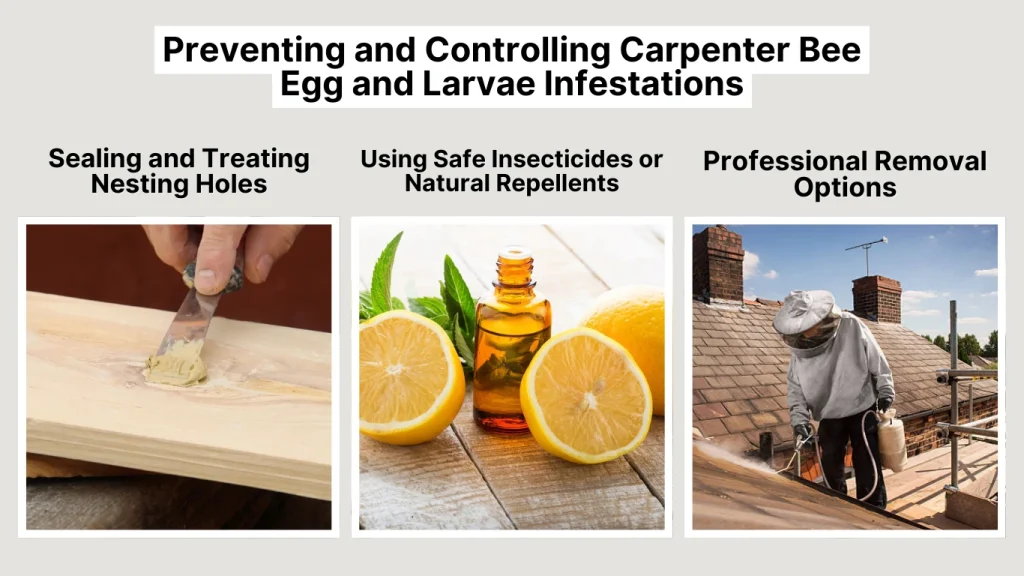
Stopping carpenter bees before they lay eggs is the most effective way to prevent future damage. Addressing active tunnels quickly can also halt larvae development and reduce the risk of repeated infestations.
Sealing and Treating Nesting Holes
Inspect wooden structures for round, dime-sized holes. If active, treat them with insecticidal dust to eliminate any bees or larvae inside. Wait a few days, then seal the holes with wood filler, caulk, or wooden dowels to block reentry.
Using Safe Insecticides or Natural Repellents
Opt for targeted insecticides to avoid harming pollinators. Alternatively, apply citrus sprays, peppermint oil, or almond oil near high-risk wooden areas—these scents deter females from starting new nests.
Professional Removal Options
For large or hard-to-reach infestations, hire pest control professionals. They can safely treat tunnels, remove larvae, and provide preventive measures such as wood treatments or protective coatings to deter future nesting.
FAQs
How long do carpenter bee eggs take to hatch?
Carpenter bee eggs usually hatch within 5 to 19 days, depending on temperature and humidity. Warmer conditions speed up development, while cooler weather slows it down.
Can I see carpenter bee eggs without opening the wood?
No, carpenter bee eggs are hidden deep inside wooden tunnels and sealed off with partitions, making them invisible unless the nest is opened.
Do carpenter bee larvae survive outside the tunnel?
Rarely. Larvae rely on the sealed chamber for protection and a constant food supply. If removed from the nest, they usually cannot survive.
