

Carpenter bee nests are a unique form of shelter, carved directly into wood by the female bee to protect her eggs and larvae. While they don’t live in hives like honeybees, their nesting behavior can still cause significant damage to homes, decks, and other wooden structures. This guide explains what carpenter bee nests look like, where to find them, common myths about their nesting habits, and effective prevention methods to keep your property safe.
Do Carpenter Bees Nest?
Carpenter bees are solitary nesters, meaning each female builds and maintains her own nest rather than living in large colonies like honeybees. Nesting is an essential part of their life cycle, as it’s where they lay eggs and protect developing larvae.
Carpenter Bee Nesting Behavior
After mating in spring, a female carpenter bee selects a suitable wooden surface and begins boring a round entrance hole about ½ inch in diameter. Inside, she constructs tunnels (galleries) where she lays eggs, each separated by partitions made from chewed wood pulp.
How Nesting Differs from Other Bees
Unlike honeybees or bumblebees, carpenter bees do not have hives or wax combs. Their “nests” are simply tunnel systems carved into wood, used only by the mother and her offspring. Males do not help build or guard the nest, although they may hover nearby.
Seasonal Nesting Patterns
Most nesting activity happens in late spring to early summer when females are ready to lay eggs. In some climates, a second nesting period may occur in late summer if conditions are favorable.
What Does a Carpenter Bee Nest Look Like?

Carpenter bee nests are easy to spot if you know the signs. Their appearance is distinctive compared to other insect nesting holes.
Hole Size, Shape, and Placement
The entrance hole is perfectly round, about the size of a dime, and often found on soft or untreated wood. It may appear on railings, eaves, fences, or furniture.
Visible Signs of Activity (Sawdust, Bee Traffic)
Fresh nests often have small piles of coarse sawdust beneath the entrance, caused by the bee boring through wood. You may also see bees entering and leaving the hole repeatedly during the day.
Difference from Other Insect Holes
Unlike irregular-shaped damage from termites or beetles, carpenter bee holes are smooth, round, and clean-edged, showing precision in drilling.
Where Do Carpenter Bees Nest?
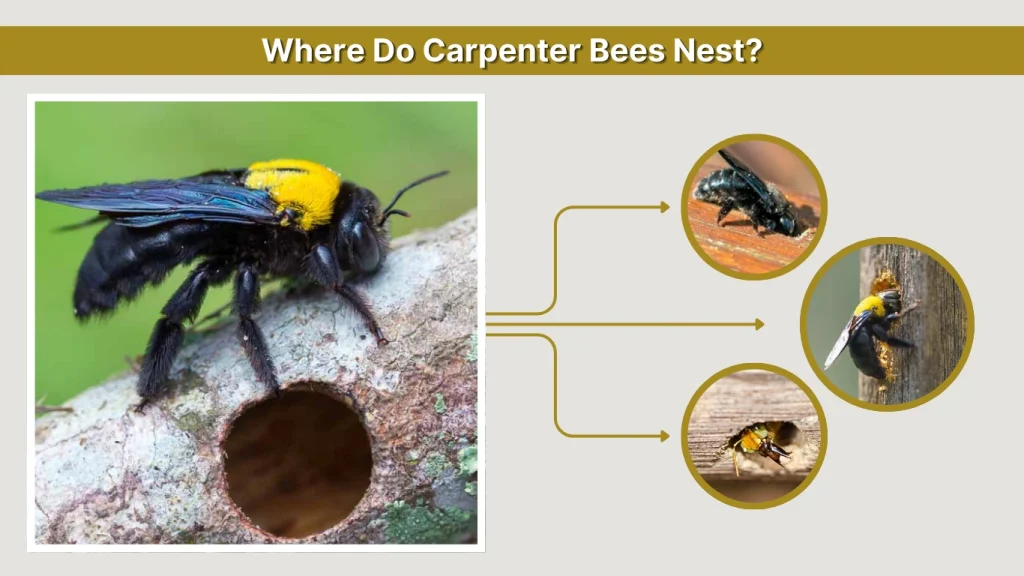
Carpenter bees prefer dry, sheltered areas where wood is easy to bore into and protected from the elements.
Common Outdoor Nesting Sites
You’ll often find nests in decks, pergolas, fences, window frames, and wooden outdoor furniture.
Preferred Types of Wood and Surfaces
They are especially drawn to untreated softwoods like pine, cedar, and redwood. Painted or stained wood is less attractive but not completely immune.
Environmental Factors That Influence Nesting
Sun exposure, dryness, and accessibility all increase nesting likelihood. They tend to choose spots sheltered from rain and wind.
Carpenter Bees Nest in Wood

Wood is the natural nesting habitat for carpenter bees, making them a common problem for homeowners with exposed timber.
Why Wood is the Primary Nesting Material
Wood is soft enough for their mandibles to bore into, yet strong enough to protect their eggs and larvae.
How Deep and Long the Tunnels Go
Tunnels can extend 6–12 inches or longer, with multiple chambers inside for egg-laying.
Risks to Wooden Structures
Repeated nesting in the same spot over years can weaken beams, railings, and siding, leading to costly repairs.
Carpenter Bees Nest in Ground (and Underground Nesting Myths)

Carpenter bees are wood-boring insects, so they do not naturally nest in soil. However, confusion often arises because some ground-nesting bees look similar to carpenter bees.
Can Carpenter Bees Nest in Soil?
No, carpenter bees require wood for nesting. Their mandibles are adapted to chew into timber, not dig through dirt. Any bee seen entering a hole in the ground is likely a mining bee, digger bee, or bumblebee.
Distinguishing Between Carpenter Bees and Ground-Nesting Bees
Carpenter bees are generally larger and have shiny black abdomens, while many ground-nesting bees are smaller and fuzzier. Observing where the bee enters—wood versus soil—quickly clarifies the difference.
Why Misidentification Happens
Because carpenter bees may forage close to the ground, they’re sometimes mistaken for ground nesters. Also, people may see them near ground-level wooden structures like steps or deck supports, adding to the confusion.
Carpenter Bees Nest in House
Carpenter bees can establish nests in homes if they find accessible wooden entry points, especially in exterior structures.
Where They Might Nest in a Home
Common spots include eaves, fascia boards, wooden siding, porches, and window frames. In rare cases, they can tunnel into exposed indoor wood in attics or basements.
Signs of Indoor Nesting
Look for perfectly round holes, piles of sawdust, faint buzzing sounds, or increased bee activity around a specific spot on your home’s exterior.
Steps to Address an Indoor Nest
Treat active tunnels with insecticidal dust or call a professional for safe removal. After confirming no live bees remain, seal the holes with wood filler or caulk and repaint or stain the surface to deter future nesting.
Do Carpenter Bees Nest Together?
Carpenter bees are mostly solitary, meaning each female creates and maintains her own nest. However, certain nesting patterns can make it seem like they live in groups.
Solitary Nature of Carpenter Bees
Each female has her own tunnel, lays her own eggs, and cares for her own brood. There is no shared division of labor like in honeybee colonies.
Exceptions Where Nests Appear in Clusters
Multiple females may choose to nest in the same piece of wood if it offers ideal conditions. Over time, these tunnels can be close together, creating a clustered appearance.
Tunnel Sharing Between Generations
Sometimes daughters reuse or expand their mother’s tunnels, which can result in interconnected galleries. While not social, this does bring multiple bees into the same general nesting area.
Do Carpenter Bees Have a Queen Bee?
Carpenter bees do not have a queen bee like social species such as honeybees or bumblebees. Instead, each female is fully capable of reproduction.
Differences from Social Bees Like Honeybees
In honeybee colonies, only the queen lays eggs, while worker bees perform all other duties. Carpenter bees have no caste system; every female is a potential egg-layer.
Role of the Female Carpenter Bee in Nesting
The female drills the tunnel, lays the eggs, and provisions each chamber with pollen and nectar for the larvae. She also guards the entrance if threatened.
Life Cycle Without a Queen
Since all females are reproductively independent, there’s no hierarchy. This solitary structure means carpenter bee populations depend on individual females successfully nesting each season.
