
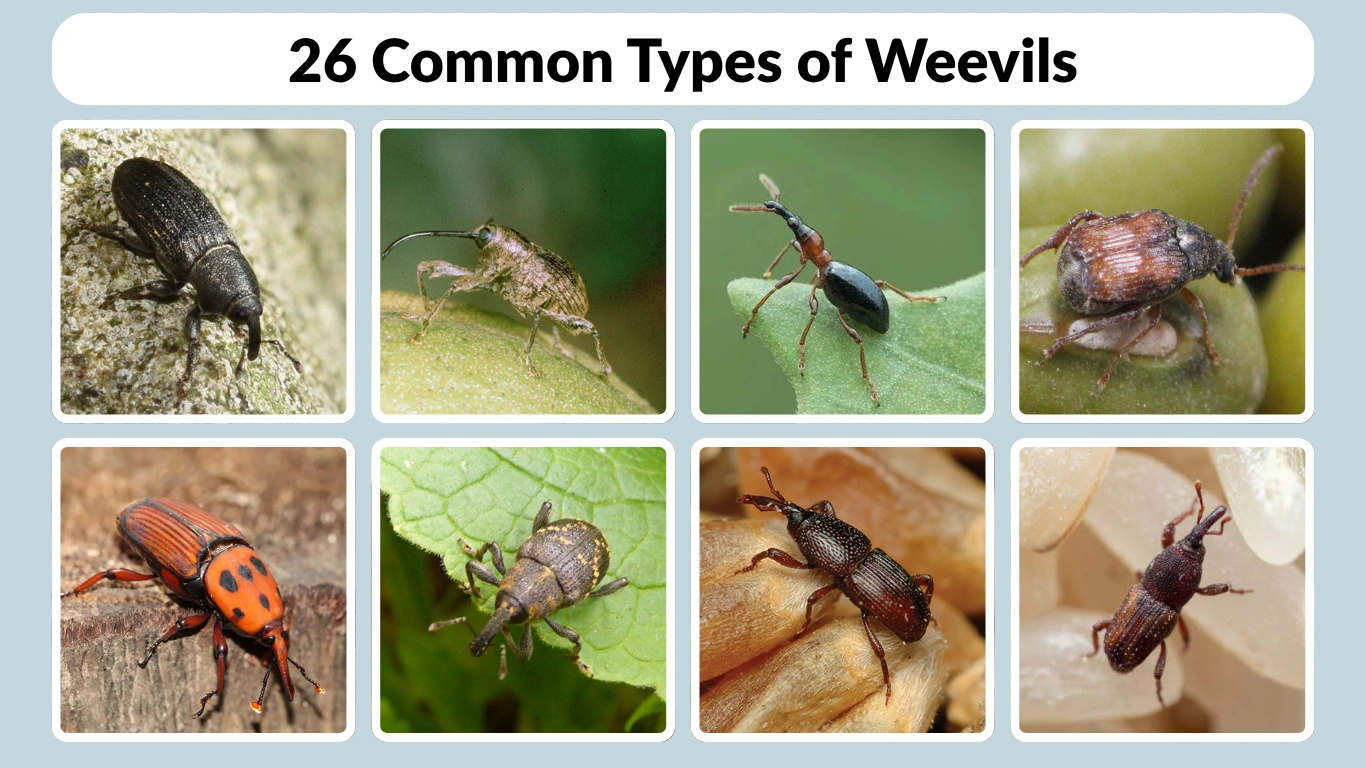
Weevils are a diverse group of beetles known for their elongated snouts and plant-based diets. Found in fields, forests, pantries, and gardens, these insects can be harmless or highly destructive—damaging crops, stored food, or ornamental plants. This guide highlights 26 common types of weevils from around the world, covering pests like the boll weevil and rice weevil, as well as lesser-known but important species across various habitats.
1. Boll Weevil (Anthonomus grandis)
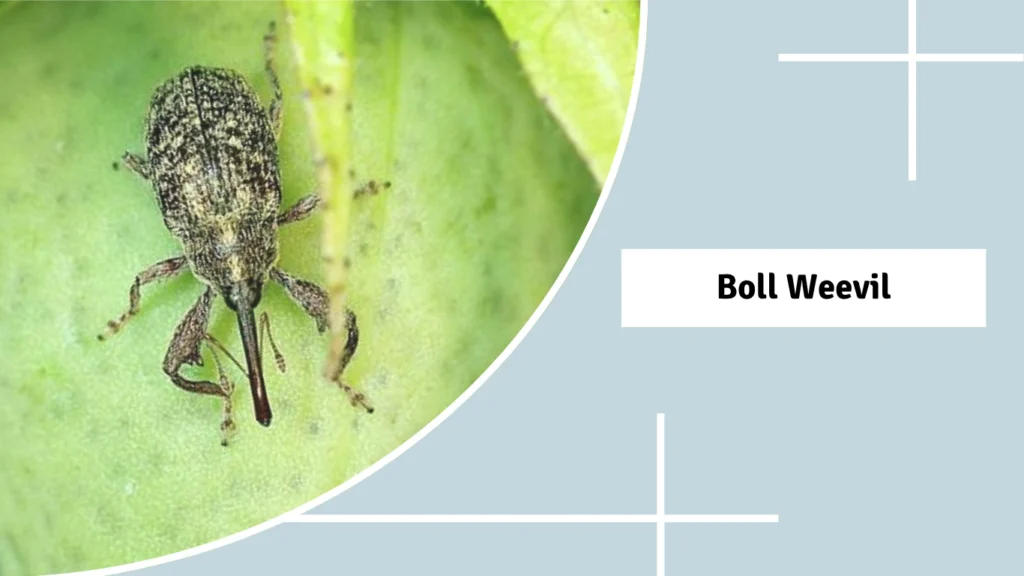
The Boll Weevil is one of the most infamous agricultural pests in history, particularly known for its devastating impact on cotton crops in the southern United States. Originally from Central America, it spread northward in the late 19th and early 20th centuries, causing widespread economic losses.
Identification
- Color: Grayish-brown to reddish-gray
- Size: Around 6 mm long
- Shape: Oval body with a long, curved snout (rostrum)
- Markings: Fine scales on body; often with a darker dorsal stripe
- Antennae: Elbowed and attached to the snout
Habitat
Primarily found in cotton-growing regions of the southern U.S., Mexico, and parts of Central America. Lives in and around cotton fields during the growing season.
Behavior and Diet
Feeds and lays eggs in cotton squares (flower buds) and bolls (seed capsules). The larvae develop inside the bolls, destroying the seeds and fibers. Adults overwinter in plant debris and emerge in spring.
Role in the Ecosystem
A destructive pest rather than a beneficial insect. Its historic spread led to major agricultural changes, including the development of boll weevil eradication programs. Though populations are now controlled in most areas, it’s a symbol of both agricultural challenge and innovation.
2. Rice Weevil (Sitophilus oryzae)
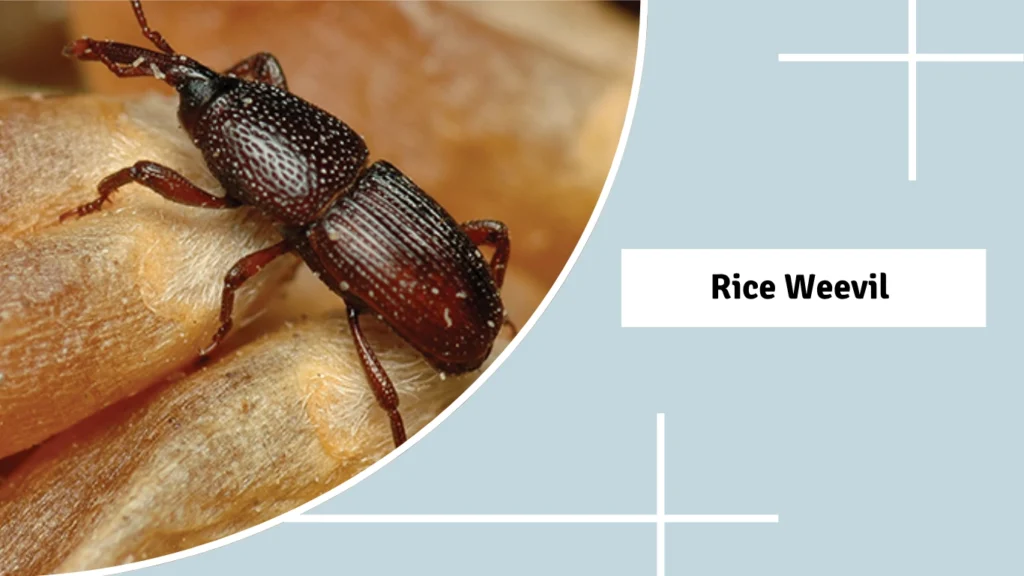
The Rice Weevil is a tiny but highly destructive pest of stored grains. It infests rice, wheat, corn, and other dry food products worldwide. This species is capable of flying and is commonly found in grain storage facilities, pantries, and warehouses.
Identification
- Color: Reddish-brown to dark brown
- Size: Around 2–3 mm
- Shape: Small, cylindrical body with a long snout
- Markings: Four faint yellow or reddish spots on the wing covers
- Antennae: Elbowed and clubbed
Habitat
Common in warm, humid environments, especially inside grain storage bins, silos, pantries, and food processing areas.
Behavior and Diet
Females bore into grains to lay eggs; larvae feed inside the kernel, making infestations hard to detect until the grain is hollowed out. Adults feed on whole grains and dried foods.
Role in the Ecosystem
Acts as a major pest in stored food systems. Infestations result in significant economic losses and contamination. Its ability to breed rapidly makes control essential in grain storage.
3. Granary Weevil (Sitophilus granarius)
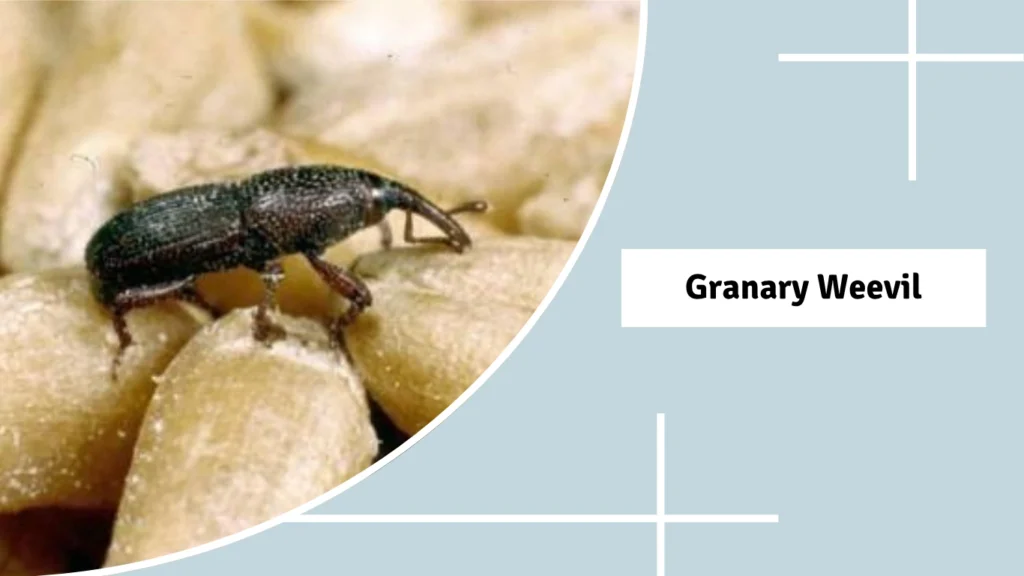
The Granary Weevil is another major pest of stored grains, similar in habits to the rice weevil but lacking the ability to fly. It is more commonly found in temperate regions and has been a known pest since ancient times.
Identification
- Color: Uniformly dark brown or reddish-brown
- Size: About 2–4 mm
- Shape: Cylindrical body with a long, curved snout
- Markings: No visible spots on wing covers (unlike rice weevil)
- Antennae: Elbowed, with compact club tips
Habitat
Found in granaries, silos, warehouses, and homes. Prefers cool, dry conditions in northern climates and is typically associated with stored wheat and barley.
Behavior and Diet
Females chew into grain kernels to lay eggs. Larvae develop inside the seed, destroying its interior. Adults cannot fly, so spread occurs through contaminated shipments.
Role in the Ecosystem
A serious pest in stored food supplies. Historically linked to famine and food spoilage, it has driven the development of better storage and fumigation practices worldwide.
4. Maize Weevil (Sitophilus zeamais)
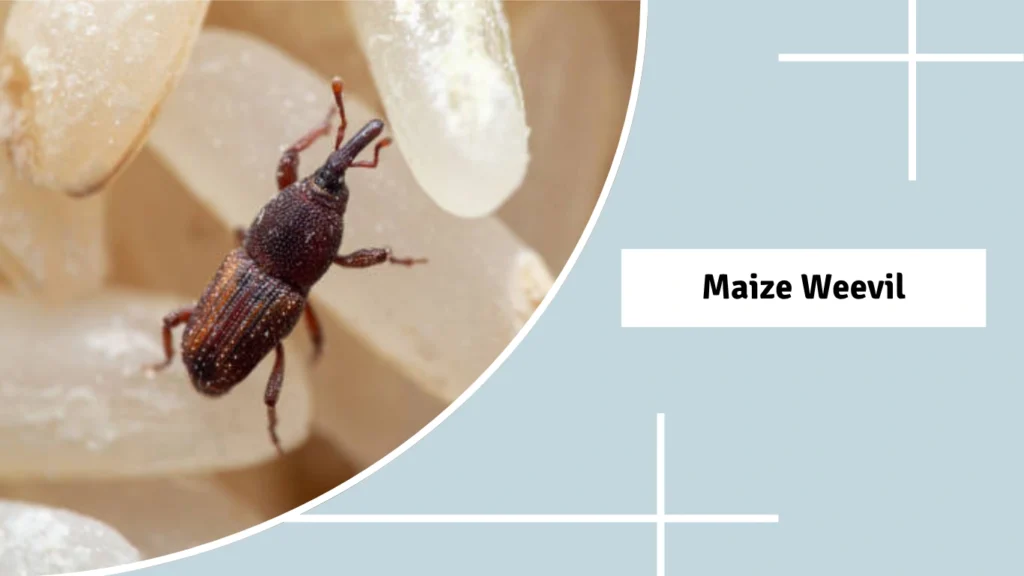
The Maize Weevil is a widespread pest of stored corn and other cereal grains. It closely resembles the rice weevil but is often slightly larger and more aggressive in warmer climates. Its ability to fly and reproduce quickly makes it a serious threat in grain storage.
Identification
- Color: Dark brown to blackish with four faint reddish-yellow spots on the wing covers
- Size: About 2.5–4 mm
- Shape: Elongated oval with a long, curved snout
- Markings: Similar to rice weevil but usually larger and darker
- Antennae: Elbowed, clubbed tips
Habitat
Found globally in grain silos, pantries, and food storage facilities. Common in tropical and subtropical regions where it infests corn, wheat, and barley.
Behavior and Diet
Females bore holes into whole grains to deposit eggs. Larvae feed internally until they emerge as adults. Maize weevils often infest grains in the field before harvest.
Role in the Ecosystem
A significant post-harvest pest, especially in warmer climates. Infestations lead to severe grain loss and contamination, requiring regular monitoring and fumigation.
5. Pine Weevil (Hylobius abietis)
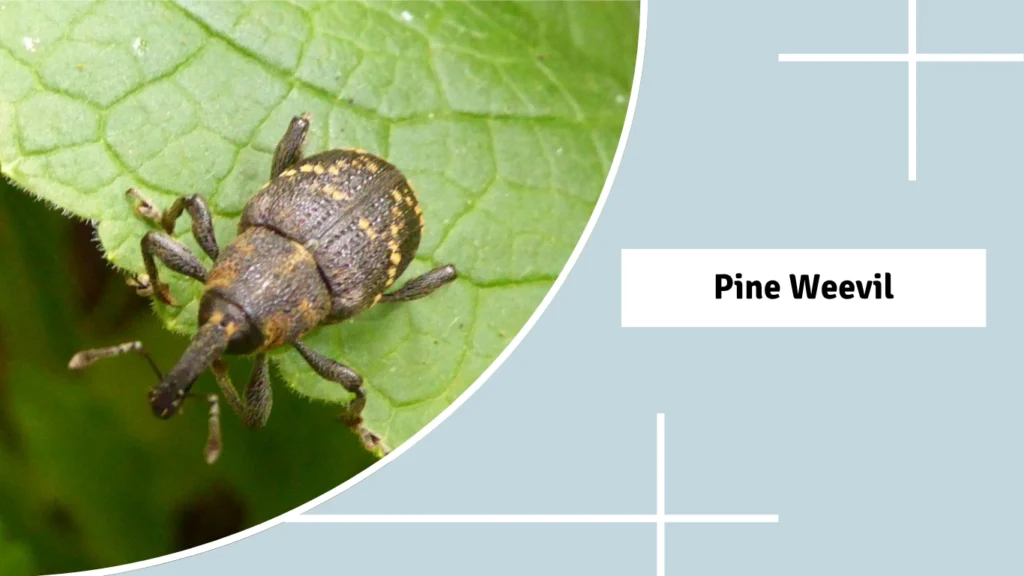
The Pine Weevil is a large, forest-dwelling weevil that damages young conifer trees in Europe and parts of Asia. It feeds on bark and cambium tissue, often girdling seedlings and killing them. It is a major pest in reforestation and commercial forestry.
Identification
- Color: Dark brown to reddish-brown with pale patches or speckles
- Size: Around 8–14 mm
- Shape: Robust body with a long, thick snout
- Markings: Mottled appearance; sometimes indistinct pale patches on wing covers
- Antennae: Clubbed and positioned on the snout
Habitat
Found in pine and spruce forests across Europe, especially in areas of recent logging or replanting. Attracted to freshly cut wood and stumps.
Behavior and Diet
Adults feed on the bark of seedlings, while larvae develop inside dead tree roots and stumps. Adult feeding causes the most economic damage by killing new plantings.
Role in the Ecosystem
While it helps break down deadwood in natural settings, in managed forests it is a serious pest. Forestry operations often apply physical barriers or biological controls to protect seedlings.
6. Black Vine Weevil (Otiorhynchus sulcatus)

The Black Vine Weevil is a nocturnal, flightless weevil that causes damage to a wide range of ornamental and fruit plants. While the adults feed on leaves, the larvae are especially harmful as they feed on plant roots, often leading to plant death.
Identification
- Color: Dull black with faint golden flecks
- Size: About 8–12 mm
- Shape: Oval body with a short, broad snout
- Markings: Pitted texture on the wing covers; flecks form irregular patterns
- Antennae: Elbowed and bent forward
Habitat
Common in gardens, nurseries, greenhouses, and shady landscapes across North America and Europe. Hides in mulch and soil during the day.
Behavior and Diet
Adults feed on foliage of rhododendrons, azaleas, strawberries, and yews, leaving notched edges. Larvae feed on plant roots underground, causing wilting, stunted growth, and plant death.
Role in the Ecosystem
Considered a serious pest of ornamental plants and nursery crops. Its root-feeding larvae are particularly destructive in container-grown plants and landscape beds.
7. Strawberry Root Weevil (Otiorhynchus ovatus)
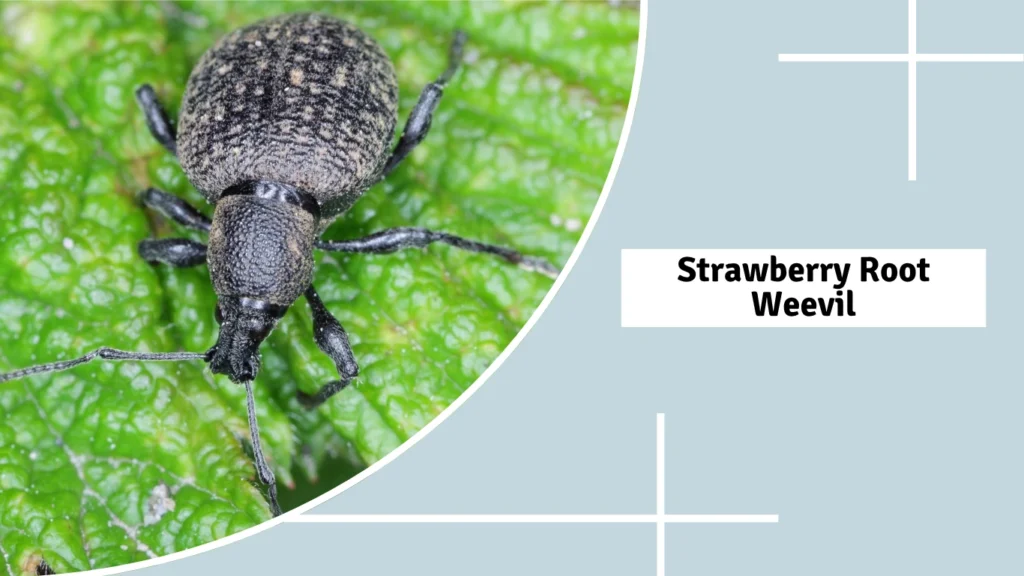
The Strawberry Root Weevil is a small, flightless weevil known for damaging strawberries and other soft fruits. It is often mistaken for other weevils due to its similar shape and notched leaf damage, but its larval feeding is what causes the most harm.
Identification
- Color: Dark brown to black
- Size: About 5–7 mm
- Shape: Oval body with a rounded snout
- Markings: Smooth to lightly pitted wing covers with subtle sheen
- Antennae: Slightly clubbed and bent forward
Habitat
Found in strawberry fields, vegetable gardens, and ornamental landscapes, especially in northern and temperate regions.
Behavior and Diet
Adults feed on leaves at night, leaving U-shaped notches. Larvae live in the soil and feed on strawberry roots and crowns, often leading to reduced yield and plant collapse.
Role in the Ecosystem
A significant pest in strawberry production. While adult feeding is mainly cosmetic, larval feeding causes economic damage. Control often involves nematodes, sticky traps, and crop rotation.
8. Red Palm Weevil (Rhynchophorus ferrugineus)
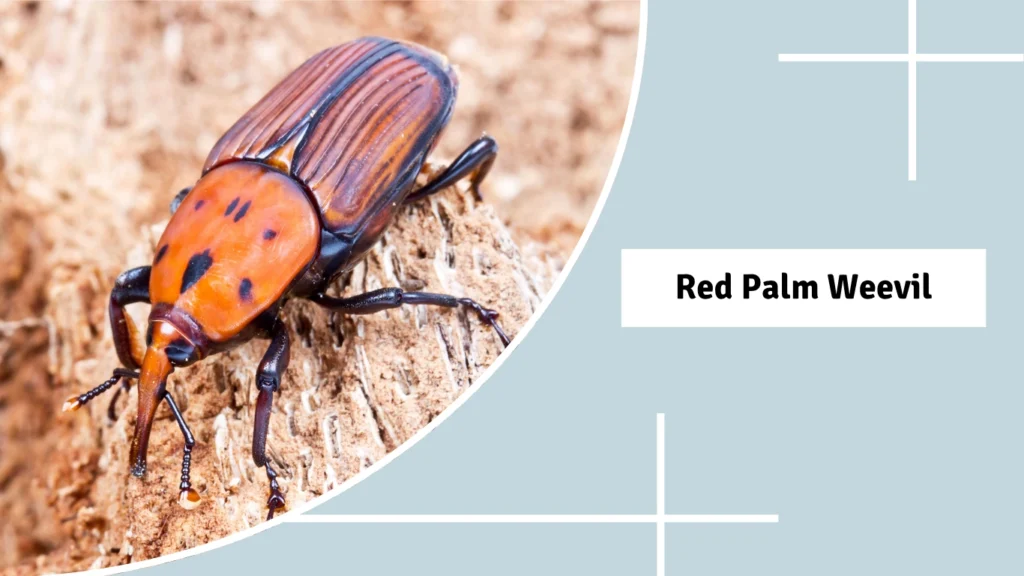
The Red Palm Weevil is one of the most destructive pests of palm trees worldwide. Native to Southeast Asia, it has spread to the Middle East, Africa, and southern Europe. Its larvae tunnel into palm trunks, often killing the tree from within before any external signs appear.
Identification
- Color: Reddish-orange with black markings on the thorax
- Size: Adults measure 2–5 cm
- Shape: Elongated body with a long, curved snout
- Markings: Black spots on the top; sometimes has a striped variation
- Antennae: Long and elbowed, located on the snout
Habitat
Found in coconut palms, date palms, and ornamental palm trees in tropical and subtropical regions. Prefers moist, warm climates.
Behavior and Diet
Females lay eggs in wounds or soft areas of the palm trunk. Larvae bore deep into the tree, feeding on soft tissue, which disrupts water and nutrient flow. Damage is often hidden until the tree collapses.
Role in the Ecosystem
An invasive pest with severe economic impact on palm agriculture and landscaping. Quarantine and pheromone trapping are key to controlling its spread.
9. White Pine Weevil (Pissodes strobi)
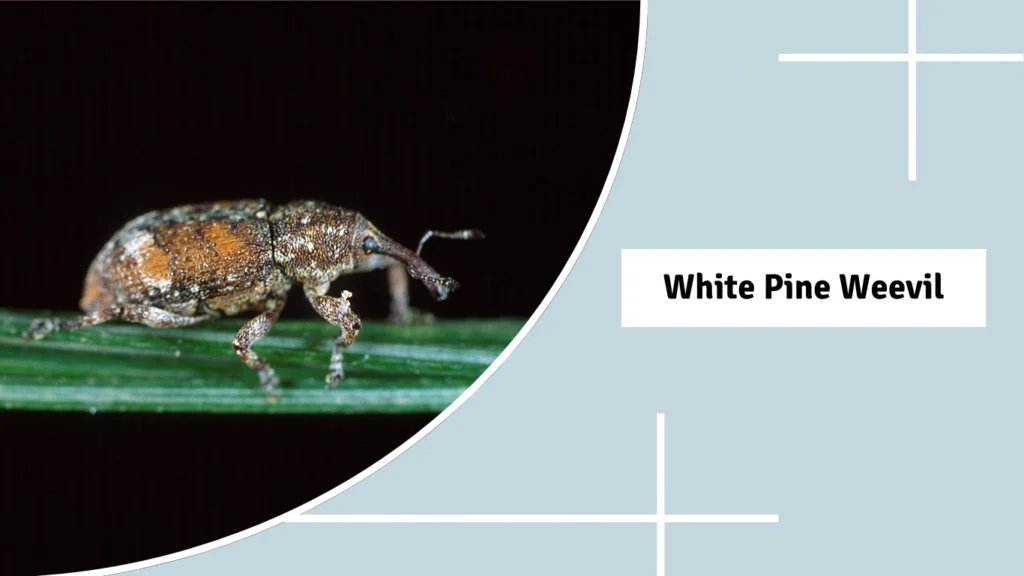
The White Pine Weevil is a serious pest of coniferous trees in North America, especially eastern white pine and spruce. It damages trees by killing the terminal leader (main shoot), which results in deformity and stunted growth.
Identification
- Color: Dark brown to black with irregular white or yellowish spots
- Size: About 6–8 mm
- Shape: Compact body with a short, broad snout
- Markings: Mottled or speckled wing covers
- Antennae: Clubbed, set close to the snout tip
Habitat
Common in pine and spruce forests across the northeastern and central U.S. and Canada. Typically found on the upper parts of young trees.
Behavior and Diet
Females lay eggs in the bark of the terminal leader. Larvae tunnel down inside the shoot, killing it and causing the tree to fork or bend, reducing timber quality and aesthetic value.
Role in the Ecosystem
A major pest in reforestation and timber operations. Though part of natural forest dynamics, its damage often requires intervention in commercial tree plantations.
10. Cabbage Seedpod Weevil (Ceutorhynchus obstrictus)
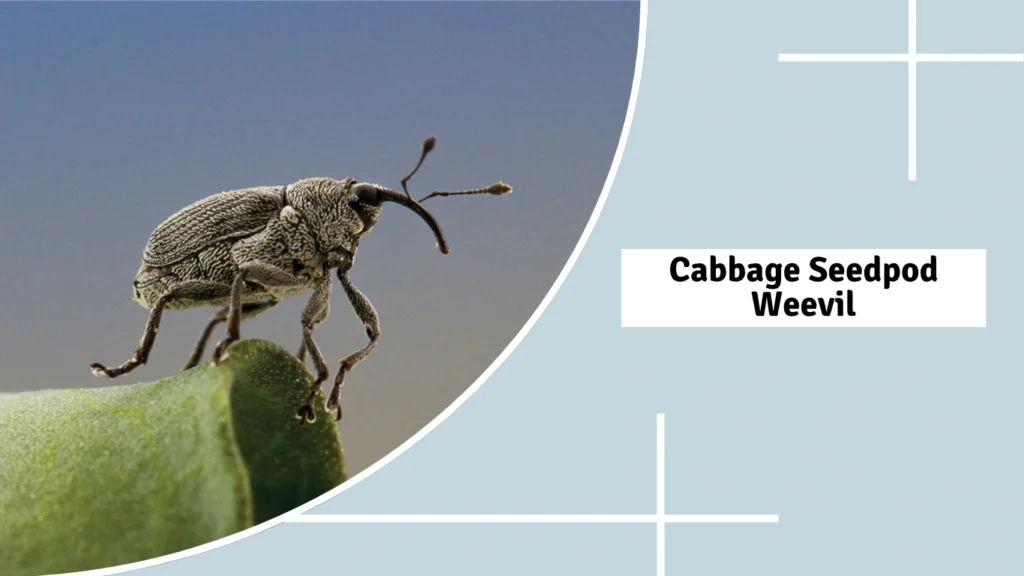
The Cabbage Seedpod Weevil is a small, grayish weevil that targets brassica crops such as canola and cabbage. It’s considered a major agricultural pest in Europe and North America, especially in regions where canola is widely cultivated.
Identification
- Color: Ash-gray or dark gray with a slight metallic sheen
- Size: About 2–3 mm
- Shape: Oval, compact body with a relatively long snout
- Markings: Fine scales give it a dusty appearance
- Antennae: Elbowed and placed on the snout
Habitat
Found in canola fields, mustard crops, and other brassica-rich farmland. Especially common in Canada, the northern U.S., and parts of Europe.
Behavior and Diet
Adults feed on flower buds, while females lay eggs inside seedpods. Larvae feed on developing seeds, significantly reducing crop yield.
Role in the Ecosystem
A serious economic pest in canola farming. Integrated pest management, including scouting and timely insecticide use, is essential for control.
11. Cowpea Weevil (Callosobruchus maculatus)
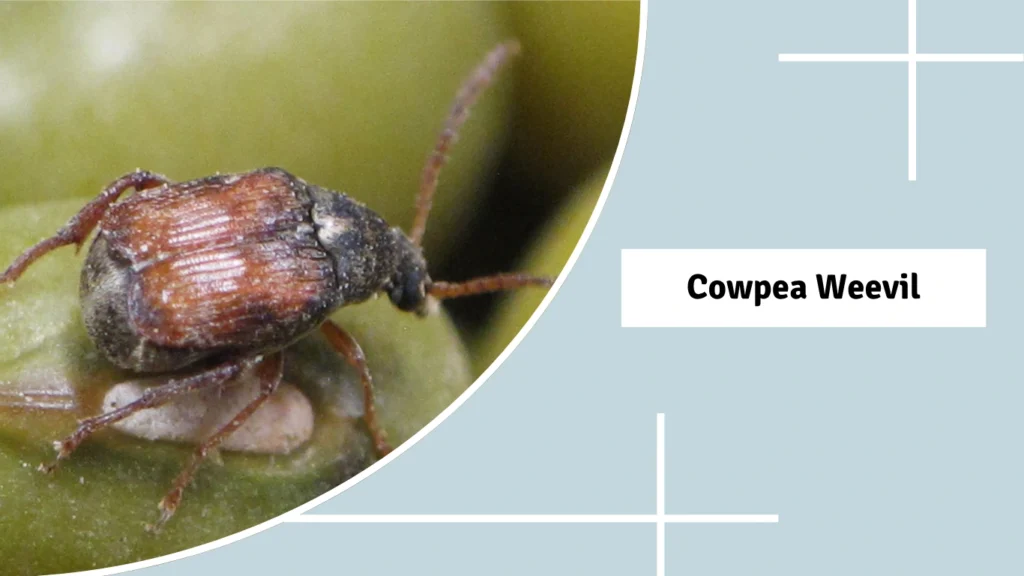
The Cowpea Weevil, technically a seed beetle but commonly referred to as a weevil, is a major pest of stored legumes, especially cowpeas and black-eyed peas. It is found in warm climates and infests dried beans in both fields and storage.
Identification
- Color: Reddish-brown with dark markings and grayish spots
- Size: About 2–4 mm
- Shape: Oval, with a short, blunt snout
- Markings: Distinctive spotted pattern on wing covers
- Antennae: Short and serrated
Habitat
Common in Africa, Asia, and the southern U.S. Infests dried legumes in homes, granaries, and fields.
Behavior and Diet
Females lay eggs on the surface of legumes. Larvae burrow into the seed and feed internally, destroying the seed’s viability. Infestation signs include small round holes in beans.
Role in the Ecosystem
A highly destructive storage pest of pulses and legumes. Its rapid reproduction and seed damage make it a key target in post-harvest pest control.
12. Plum Curculio (Conotrachelus nenuphar)

The Plum Curculio is a small, sneaky weevil that causes major damage to stone fruits such as plums, peaches, apples, and cherries. Native to North America, it is one of the most economically significant fruit pests in orchards.
Identification
- Color: Dark brown to gray with patches of white or orange scales
- Size: About 4–6 mm
- Shape: Oval, with a long curved snout and rough texture
- Markings: Irregular mottled appearance with fine hairs
- Antennae: Elbowed and positioned on the snout
Habitat
Found in orchards, forest edges, and fruit-growing regions across eastern and central North America.
Behavior and Diet
Adults feed on developing fruit, while females cut crescent-shaped slits in the skin to lay eggs. Larvae tunnel inside the fruit, causing premature drop and decay.
Role in the Ecosystem
A serious pest of commercial fruit orchards. Management typically includes early monitoring, insecticide treatments, and removal of fallen fruit to break the life cycle.
13. Pea Weevil (Bruchus pisorum)
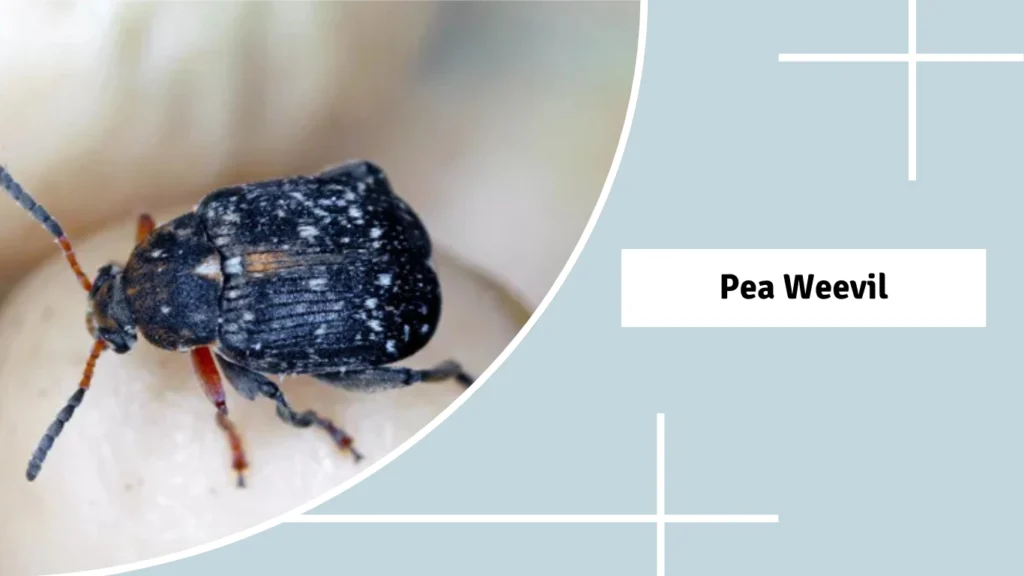
The Pea Weevil is a seed-feeding pest that specifically targets peas, both in the field and in storage. Though it resembles other seed beetles more than true weevils, it is widely recognized as a serious pest of legumes in Europe, Asia, and North America.
Identification
- Color: Dark brown or gray with lighter speckles
- Size: About 4–5 mm
- Shape: Rounded body with a short, thick snout
- Markings: Speckled wing covers with a blunt posterior
- Antennae: Short, serrated
Habitat
Found in pea fields, granaries, and seed storage facilities across temperate regions worldwide.
Behavior and Diet
Females lay eggs on developing pea pods in the field. After hatching, larvae bore into the seeds and feed inside, destroying the seed from within.
Role in the Ecosystem
A major pest of peas, affecting both crop yield and seed viability. Management includes early harvesting, crop rotation, and cold storage to disrupt life cycles.
14. Fuller Rose Weevil (Pantomorus cervinus)

The Fuller Rose Weevil is a flightless, grayish weevil originally native to South America but now found in many parts of the world. It is a pest of ornamental plants and fruit trees, especially roses, citrus, and avocados.
Identification
- Color: Grayish-brown with pale scales and fine hairs
- Size: About 7–10 mm
- Shape: Oval body with a short snout
- Markings: Mottled texture; no wings for flight
- Antennae: Elbowed and forward-curving
Habitat
Common in gardens, orchards, greenhouses, and nurseries. Hides in mulch and soil during the day and climbs plants at night.
Behavior and Diet
Adults feed on leaves, often leaving notched edges. Larvae live in the soil and feed on roots, which can damage young plants and trees.
Role in the Ecosystem
Considered a pest of both ornamentals and crops. Its root-feeding larvae are particularly damaging to potted plants and nursery stock.
15. Alfalfa Weevil (Hypera postica)
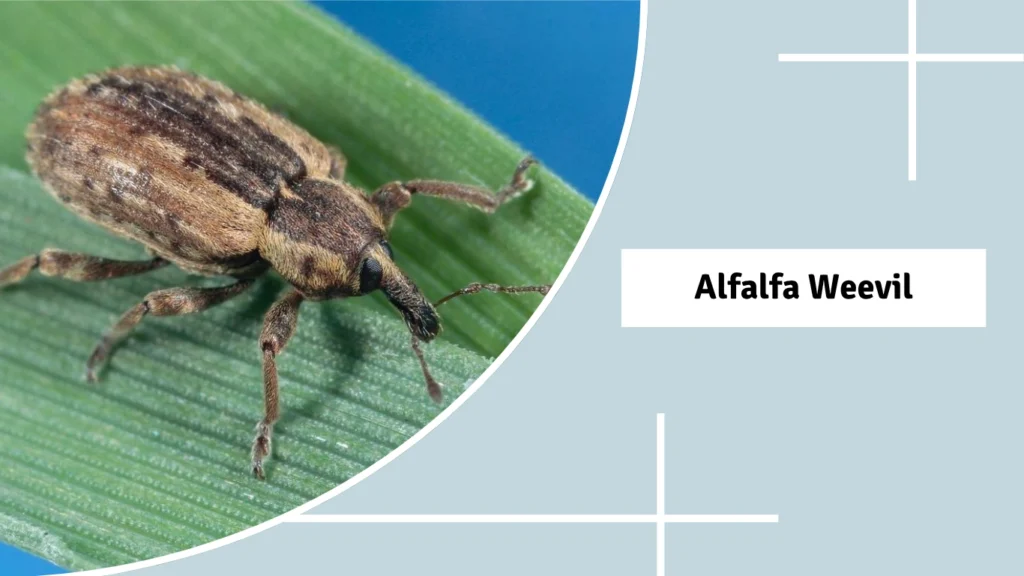
The Alfalfa Weevil is a major pest of alfalfa crops in North America and Europe. Its larvae feed voraciously on leaves, causing defoliation and reducing hay yields. It’s one of the most economically important weevils in forage production.
Identification
- Color: Brown with a dark stripe running down the back
- Size: Adults about 3–5 mm; larvae are green with a black head
- Shape: Compact oval body with a blunt snout
- Markings: Subtle dorsal stripe; larvae are easily spotted on leaves
- Antennae: Short and clubbed
Habitat
Found primarily in alfalfa fields, especially during spring and early summer. Also present in clover and other legume-rich areas.
Behavior and Diet
Larvae feed on leaf tips and margins, skeletonizing the foliage. Adults feed less but also contribute to leaf damage. Heavy infestations can reduce forage quality and yield.
Role in the Ecosystem
A serious pest in forage agriculture. Natural predators and timely cutting of alfalfa are key methods of control. Biological control agents such as parasitic wasps are also used.
16. Clover Leaf Weevil (Hypera punctata)
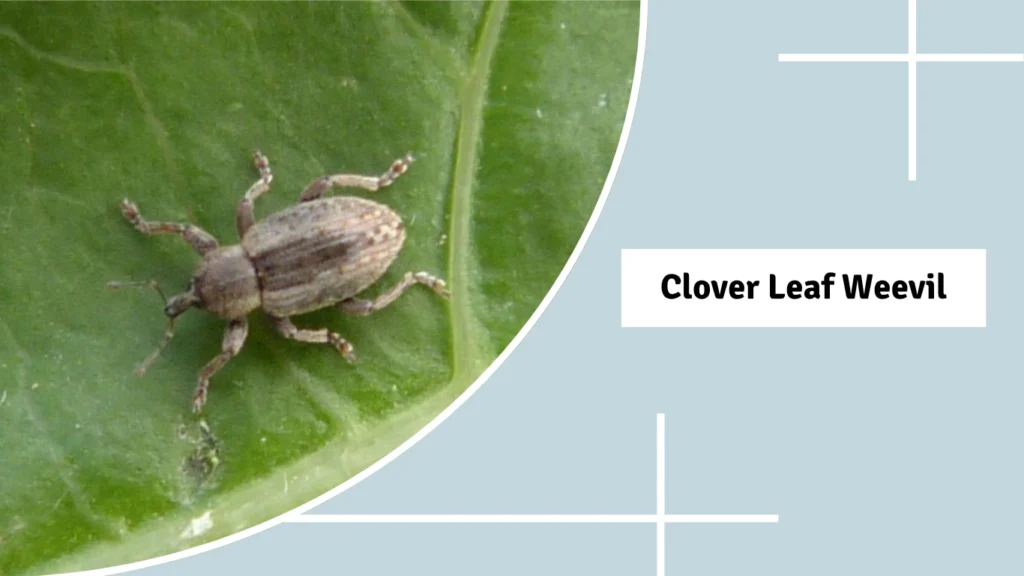
The Clover Leaf Weevil is a large, brownish weevil commonly found in clover and other legume fields. While its damage is typically less severe than the alfalfa weevil, heavy infestations can reduce plant health and yield, especially in forage crops.
Identification
- Color: Brown with faint stripes or mottling
- Size: About 6–8 mm
- Shape: Oval body with a short, broad snout
- Markings: Light stripes running lengthwise on the back
- Antennae: Elbowed and slightly curved
Habitat
Widespread in North America and Europe, particularly in clover fields, hay meadows, and legume pastures.
Behavior and Diet
Adults feed on leaves, chewing irregular holes. Larvae are root feeders and can cause more serious damage by weakening the plants from below.
Role in the Ecosystem
Plays a minor role as a pest but can cause concern in high-density clover cultivation. Natural predators, tillage, and crop rotation help manage populations.
17. Turmeric Weevil (Syntherus turcicus)
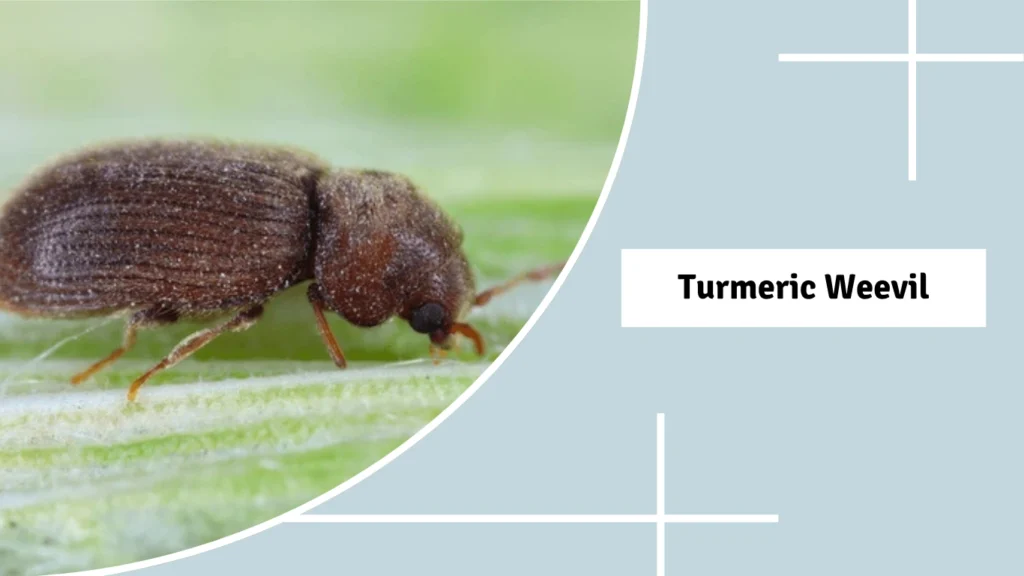
The Turmeric Weevil is a specialized pest that targets turmeric rhizomes. Found primarily in South and Southeast Asia, this weevil causes internal damage to stored turmeric, reducing both quality and market value.
Identification
- Color: Reddish-brown to dark brown
- Size: About 4–6 mm
- Shape: Elongated with a curved snout
- Markings: Smooth body with fine pitting; little contrast in coloration
- Antennae: Long and elbowed
Habitat
Common in turmeric storage areas and in fields where turmeric is grown. Prefers warm, humid conditions typical of tropical climates.
Behavior and Diet
Adults bore into turmeric rhizomes to feed and lay eggs. Larvae develop inside the rhizome, feeding on it and leaving behind tunnels and frass.
Role in the Ecosystem
A significant storage pest of turmeric. Infestations result in post-harvest loss. Management includes proper drying, cool storage, and occasional fumigation.
18. Acorn Weevil (Curculio glandium)
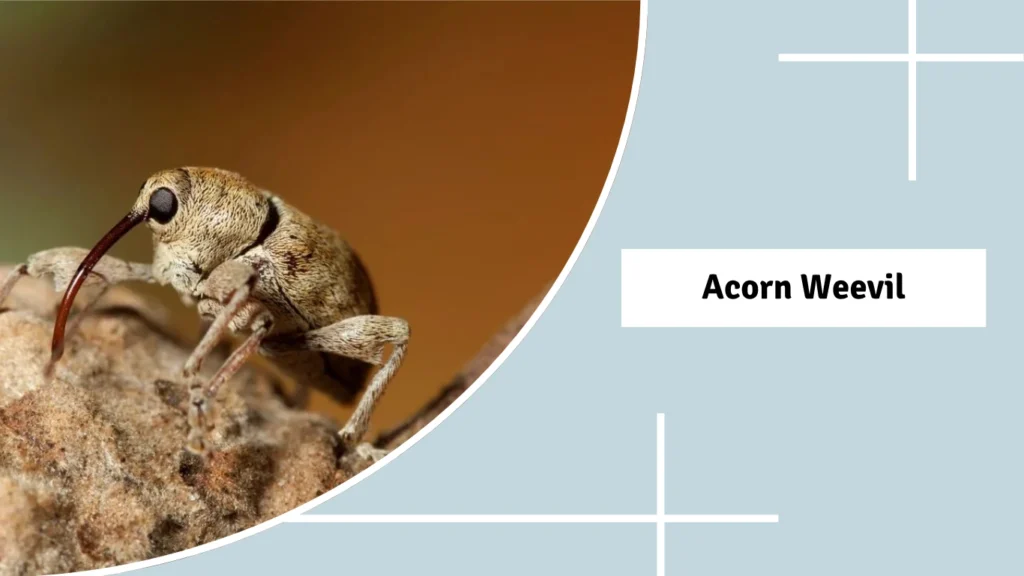
The Acorn Weevil is a fascinating weevil known for its extremely long snout, which females use to bore into acorns and lay eggs. It plays a unique role in oak forest ecosystems, both as a seed predator and as food for wildlife.
Identification
- Color: Brown to reddish-brown
- Size: About 6–8 mm (excluding the snout)
- Shape: Rounded body with a very long, curved snout (especially in females)
- Markings: Often has faint mottling or subtle striping
- Antennae: Attached near the tip of the snout
Habitat
Found in oak forests throughout North America and Europe. Commonly seen around acorn-bearing trees in late summer and fall.
Behavior and Diet
Females drill holes into acorns to deposit eggs. Larvae develop inside the acorn, feeding on the nut, then exit to pupate in the soil.
Role in the Ecosystem
Plays a natural role in controlling oak regeneration. Also serves as prey for birds and small mammals. Its acorn-boring behavior is a notable part of forest nutrient cycles.
19. Apple Blossom Weevil (Anthonomus pomorum)

The Apple Blossom Weevil is a small, early-season pest of apple trees, mostly found in Europe and parts of Asia. It damages fruit production by feeding on and laying eggs inside flower buds.
Identification
- Color: Dark brown to black with fine hairs
- Size: Around 3–4 mm
- Shape: Oval body with a short, narrow snout
- Markings: Slight sheen; not distinctly patterned
- Antennae: Elbowed, arising from the middle of the snout
Habitat
Found in apple orchards and wild apple stands across Europe. Becomes active in spring when temperatures rise.
Behavior and Diet
Adults chew into developing apple flower buds to feed and lay eggs. Larvae destroy the bud from the inside, preventing it from blooming and reducing fruit yield.
Role in the Ecosystem
Considered a pest in commercial apple orchards. Monitoring and early control measures are crucial to limit damage during flowering season.
20. Carrot Weevil (Listronotus oregonensis)
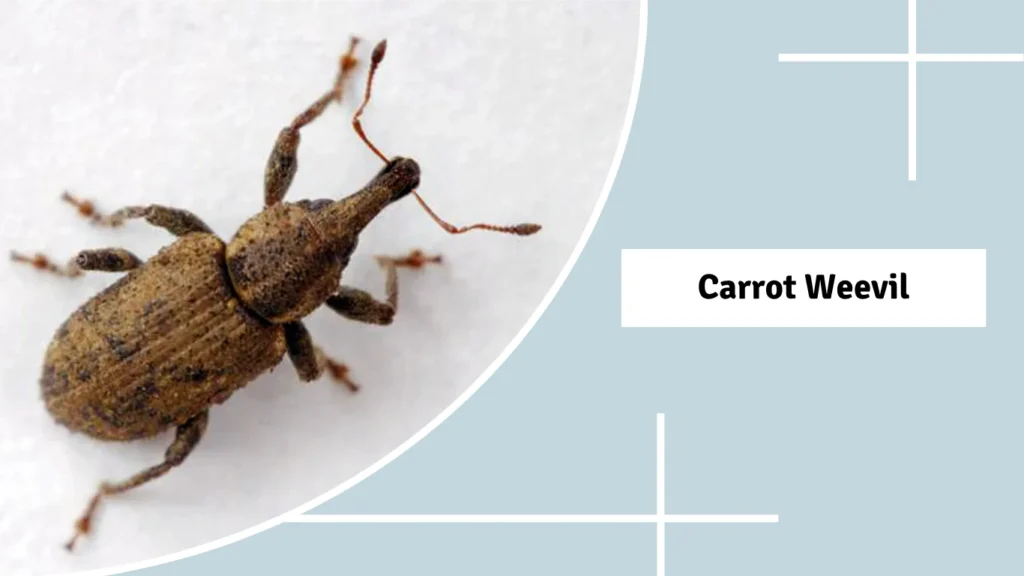
The Carrot Weevil is a root-feeding pest that primarily affects carrots, celery, and parsley. It’s a serious concern for commercial root crop growers in North America, particularly in cooler climates where it thrives.
Identification
- Color: Dark brown to black with a slightly mottled texture
- Size: About 5–7 mm
- Shape: Elongated oval body with a short, curved snout
- Markings: Subtle ridges and pits on wing covers
- Antennae: Elbowed and located midway along the snout
Habitat
Common in carrot fields, especially in northeastern U.S. and Canada. Found near the base of plants and in soil cracks.
Behavior and Diet
Adults feed on foliage and lay eggs in carrot crowns. Larvae bore into the root, causing tunneling and deformation that lowers market quality.
Role in the Ecosystem
A significant agricultural pest of root vegetables. Management includes crop rotation, trap crops, and pheromone monitoring for early detection.
21. Eucalyptus Weevil (Gonipterus scutellatus)
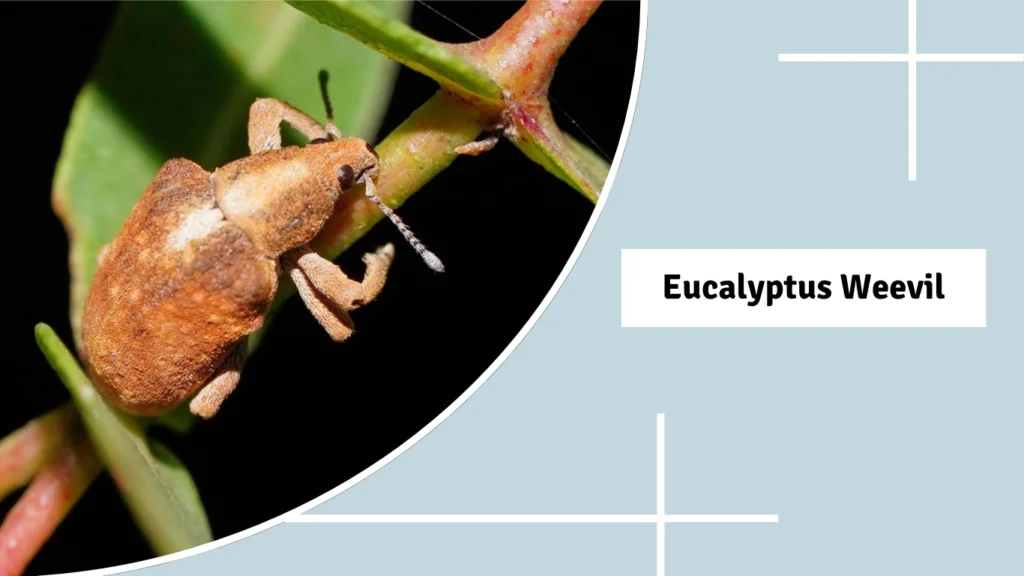
The Eucalyptus Weevil is a specialist pest of eucalyptus trees, native to Australia but now invasive in parts of Africa, Europe, and the Americas. It can cause severe defoliation and stunted growth in eucalyptus plantations.
Identification
- Color: Grayish-brown with a mottled or dusted appearance
- Size: About 8–10 mm
- Shape: Oval, slightly humped body with a short snout
- Markings: Often pale scales or light patches on back
- Antennae: Elbowed and broad-tipped
Habitat
Found in eucalyptus plantations, forests, and ornamental plantings in temperate and subtropical zones.
Behavior and Diet
Adults chew holes in leaves, while larvae feed on the edges, sometimes skeletonizing foliage. Severe infestations can lead to tree dieback.
Role in the Ecosystem
Considered a destructive pest outside its native range. Biological control, including the introduction of parasitoid wasps, has been used to manage outbreaks.
22. Sweetpotato Weevil (Cylas formicarius)

The Sweetpotato Weevil is a highly destructive pest of sweet potatoes, particularly in tropical and subtropical regions. Its ant-like appearance and internal root feeding behavior make it one of the most damaging pests in sweet potato cultivation.
Identification
- Color: Metallic blue-black body with a reddish head and thorax
- Size: About 5–6 mm
- Shape: Slender, ant-like body with a narrow waist and short snout
- Markings: Smooth, shiny body with distinct color contrast
- Antennae: Long, slightly curved
Habitat
Common in tropical Asia, Africa, the southern U.S., and Pacific Islands. Found in sweet potato fields and storage facilities.
Behavior and Diet
Adults feed on vines and lay eggs in cracks on sweet potato roots. Larvae tunnel through the tubers, causing rot, bitterness, and reduced market value.
Role in the Ecosystem
A serious pest in sweet potato agriculture. Management includes crop rotation, clean planting material, and pheromone traps to monitor and reduce adult populations.
23. Blue Gum Weevil (Phoracantha semipunctata)
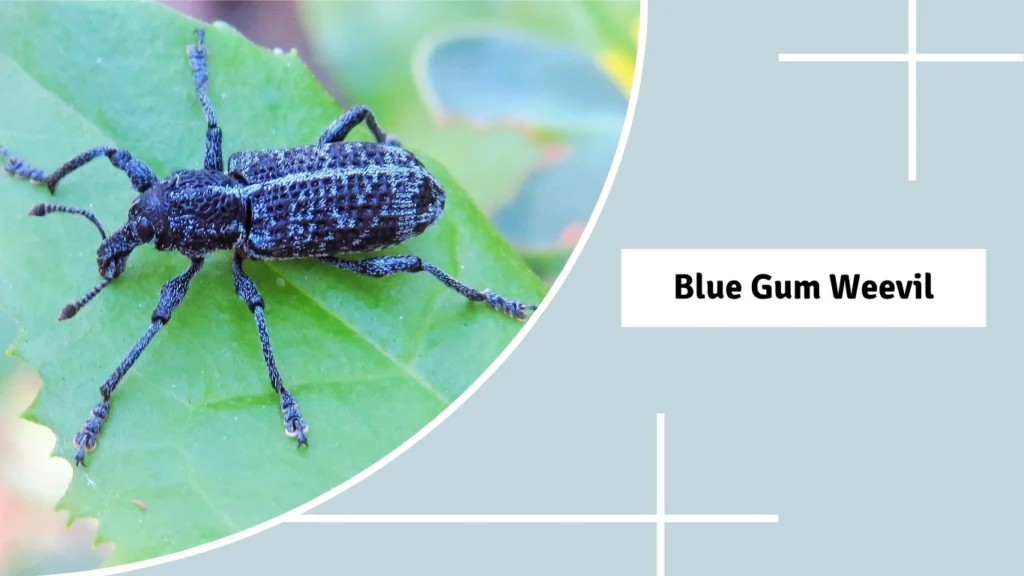
The Blue Gum Weevil is a longhorn beetle often referred to as a weevil due to its wood-boring larvae and eucalyptus-host specificity. Native to Australia, it has spread to many eucalyptus-growing regions, where it damages stressed or dying trees.
Identification
- Color: Brown with cream or yellowish patches and long antennae
- Size: 15–25 mm
- Shape: Elongated cylindrical body
- Markings: Distinct pale spots on wing covers
- Antennae: Very long, longer than the body in males
Habitat
Found in eucalyptus plantations and landscapes globally, particularly in Mediterranean climates and parts of Africa and the Americas.
Behavior and Diet
Larvae bore into the bark and wood of eucalyptus trees, disrupting water flow and weakening the tree. Adults feed on bark and lay eggs in crevices.
Role in the Ecosystem
Considered a secondary pest, mainly attacking weakened trees. Biological controls such as parasitic wasps have been introduced to manage populations in non-native areas.
24. Pecan Weevil (Curculio caryae)
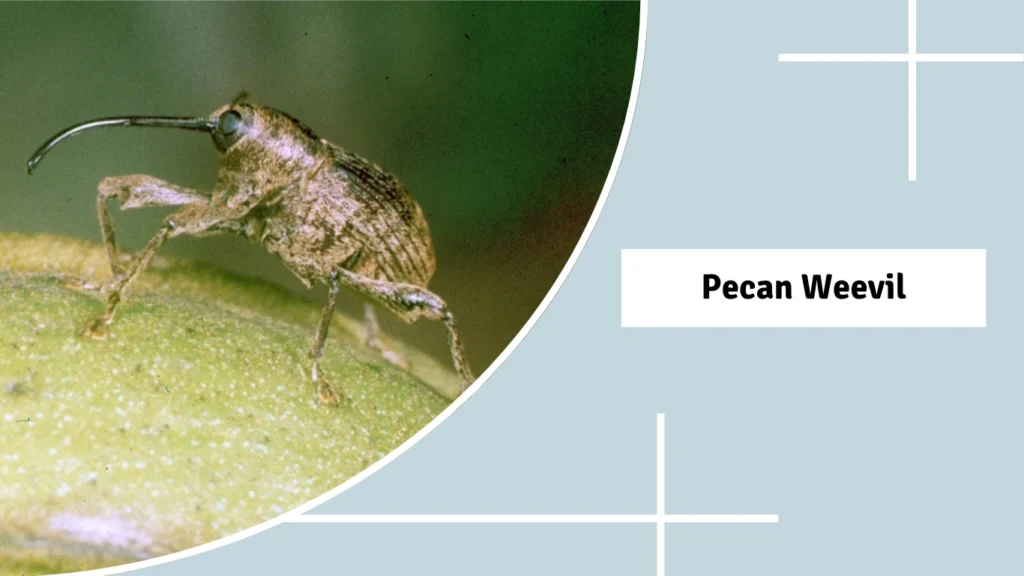
The Pecan Weevil is a major pest of pecan and hickory trees in the United States. It targets developing nuts, reducing both yield and quality. Its larvae feed inside the nuts, often going unnoticed until after harvest.
Identification
- Color: Brownish-gray with a rough texture
- Size: About 8–12 mm (excluding snout)
- Shape: Robust body with a long, curved snout (females longer)
- Markings: No distinct patterns; body is covered with fine scales
- Antennae: Located on the snout and elbowed
Habitat
Primarily found in pecan orchards and native hickory groves throughout the southern and central U.S.
Behavior and Diet
Females bore into ripening nuts to lay eggs. Larvae feed on the kernels, causing internal damage. After exiting the nut, they burrow into the soil to pupate.
Role in the Ecosystem
A significant pest of commercial pecan production. Management includes trunk shaking for adult removal, pheromone traps, and targeted insecticides.
25. Mango Seed Weevil (Sternochetus mangiferae)

The Mango Seed Weevil is a hidden pest that infests mango seeds, making it a quarantine concern for international mango trade. While external fruit symptoms may be minimal, internal seed damage affects germination and marketability.
Identification
- Color: Brown to dark brown with fine pale scales
- Size: About 6–10 mm
- Shape: Compact, oval body with a short, curved snout
- Markings: May have lighter patches or a dusty appearance
- Antennae: Short and elbowed
Habitat
Found in mango-producing regions across Asia, Africa, Australia, and parts of the Americas.
Behavior and Diet
Females lay eggs on the surface of mango fruit. After hatching, larvae bore into the seed and feed internally, often unnoticed until the fruit is cut.
Role in the Ecosystem
A serious pest in mango production and a restricted organism in trade. Management includes sanitation, timely harvest, and post-harvest treatment protocols to prevent spread.
26. Broad-Nosed Weevil (Entiminae subfamily species)

Broad-Nosed Weevils are a large and diverse group within the Entiminae subfamily, consisting of many species that feed on a wide variety of plants. Most are flightless and are often found in gardens, forests, and agricultural areas. Notable examples include the Fuller rose weevil and rough strawberry root weevil.
Identification
- Color: Typically brown, gray, or black; varies by species
- Size: Ranges from 5–12 mm depending on species
- Shape: Robust, oval-shaped with a broad snout
- Markings: Many have a scaly or dusty texture
- Antennae: Elbowed and forward-facing
Habitat
Found globally in ornamental landscapes, forest floors, potted plants, and farms. They prefer moist, shaded environments and are active at night.
Behavior and Diet
Adults feed on leaves, often leaving notched edges. Larvae live in the soil and damage plant roots. Many species reproduce without mating (parthenogenesis).
Role in the Ecosystem
Many are considered pests in nurseries and gardens due to root and foliage damage. However, they also contribute to plant cycling and serve as prey for ground-dwelling predators.
